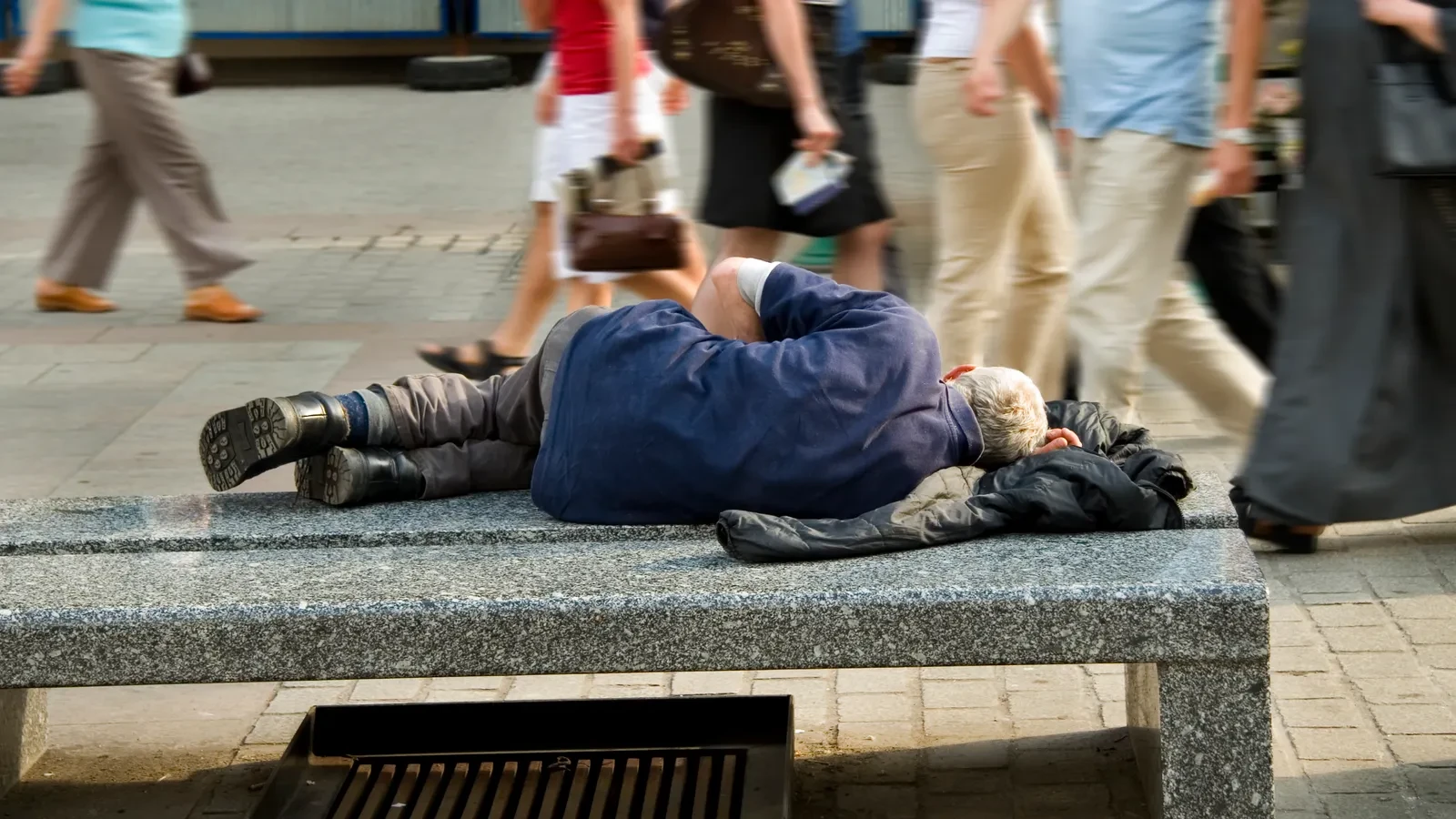
As cities and counties across the United States continue to grapple with persistent upticks in homelessness, local leaders and housing experts warn that municipal systems are facing a compounding demographic emergency: a rapidly aging population.
By the mid-2030s, the United States is projected to have more older adults than children for the first time in its history, according to data from the U.S. Census Bureau. While national conversations around housing insecurity often focus on younger populations or families, demographic data reveals a sobering reality. According to research from the Harvard Joint Center for Housing Studies (JCHS), adults aged 65 and older now constitute the fastest-growing age group among people experiencing homelessness.
This quiet crisis is colliding with an unprecedented milestone. As the oldest members of the baby boom generation turn 80 years old, the nation’s aging demographic is running headfirst into what housing experts describe as a perfect storm of economic and social stressors. Jennifer Molinsky, director of the Housing an Aging Society Program at JCHS, highlighted the severity of the landscape during a recent panel discussion examining the intersection of aging and homelessness.
"We’re talking about it at a time when the older population is growing so much, and we have had a lot of cuts to the social safety net, and we are about to see more cuts to Medicaid," Molinsky said during the webinar. "The consequences I worry about are that there’ll be more housing instability and homelessness."
Housing Policy Decisions
For local governments, the challenge is structural as much as it is economic. Many municipal housing markets across the country were built decades ago to serve nuclear families, leaving them ill-equipped to accommodate the shifting physical and financial needs of an older population. Beaverton, Oregon, Mayor Lacey Beaty pointed to this historical oversight during the panel discussion, noting that municipal planning has often failed to account for aging in place gracefully.
"Leaders before me hadn’t thought about aging in place gracefully," Beaty said. "We had not designed any housing for people to downsize from their four-bedroom home where they’d raised their kids."
Beaty emphasized that deliberate housing policy choices can alter this trajectory. Local leaders can encourage the development of housing options that seniors can more easily transition into, such as cottage clusters, senior cooperatives, and smaller, one-story cottages that simultaneously foster community connection and reduce maintenance burdens. Furthermore, creating these accessible alternatives for older adults can naturally open up larger housing options for younger families struggling to find inventory in competitive markets.
"Housing and homelessness are so interconnected, and the best impact a mayor can have is by making the housing market look different," Beaty added.
Focusing on Prevention
Addressing the crisis effectively requires a pivot toward upstream prevention rather than solely reacting to individuals who are already living unsheltered. According to Molinsky, short-term solutions must begin by identifying and supporting vulnerable populations who are at high risk of losing their housing, including those who are "doubling up." This practice involves staying temporarily with friends, relatives, or acquaintances due to severe economic hardship.
This hidden form of housing insecurity is notoriously difficult to track. Individuals who are doubled-up are typically not included in the U.S. Department of Housing and Urban Development’s official point-in-time counts, leaving their struggles largely unaccounted for in municipal resource allocation.
"Those folks are kind of invisible, but oftentimes it is not a huge amount of money that will help them weather [until] the next thing," Molinsky said. "There’s a lot of people who are unstably housed who are on waiting lists, years-long waiting lists for public housing or housing vouchers, subsidies that could help them get from today to that housing without losing that housing."
Beyond financial capital, panelists stressed the importance of proactive outreach and education within aging communities. Many older adults are completely unaware of the local, state, and federal programs designed to assist them with housing stability, utilities, and healthcare. However, overcoming a lack of information requires navigating deeply ingrained generational attitudes that actively discourage asking for assistance.
"They are taught to weather the storm," Beaty said. "We have a generation of people that are not going to ask for help."
Niki Wilkerson, a social justice advocate and benevolence coordinator, noted that government or charitable assistance is frequently stigmatized by older generations as a sign of personal weakness or failure. Because of this cultural barrier, service providers must exercise acute sensitivity and dignity when offering support.
"If you don’t ask the question, you won’t know," Wilkerson said. "And a lot of the times, people feel they’re taking advantage when maybe the situation they’re facing is overwhelming."
A Compounding Problem
As local leaders look toward the future, the financial and regulatory landscape remains deeply uncertain. With federal funding policies for homelessness facing potential overhauls and adjustments under changing administrations, municipal leaders are finding it increasingly difficult to project long-term financial solutions for aging homelessness. While housing voucher programs frequently operate under the assumption that recipients will eventually stabilize financially, the profound and complex medical, social, and economic needs of aging citizens experiencing housing instability will only continue to multiply.
"It’s going to be long-term, and I think we need to wrap our heads around that," Molinsky warned.
Compounding the housing crisis is an impending caregiving shortage. As birth rates decline and family structures evolve, future generations may find themselves with fewer resources and fewer available family members to care for an aging populace that is living longer than any generation before it.
"We’re not having as many kids," Beaty said of younger generations. "Who is getting ready to take care of all these people? We have some serious planning ahead of us."