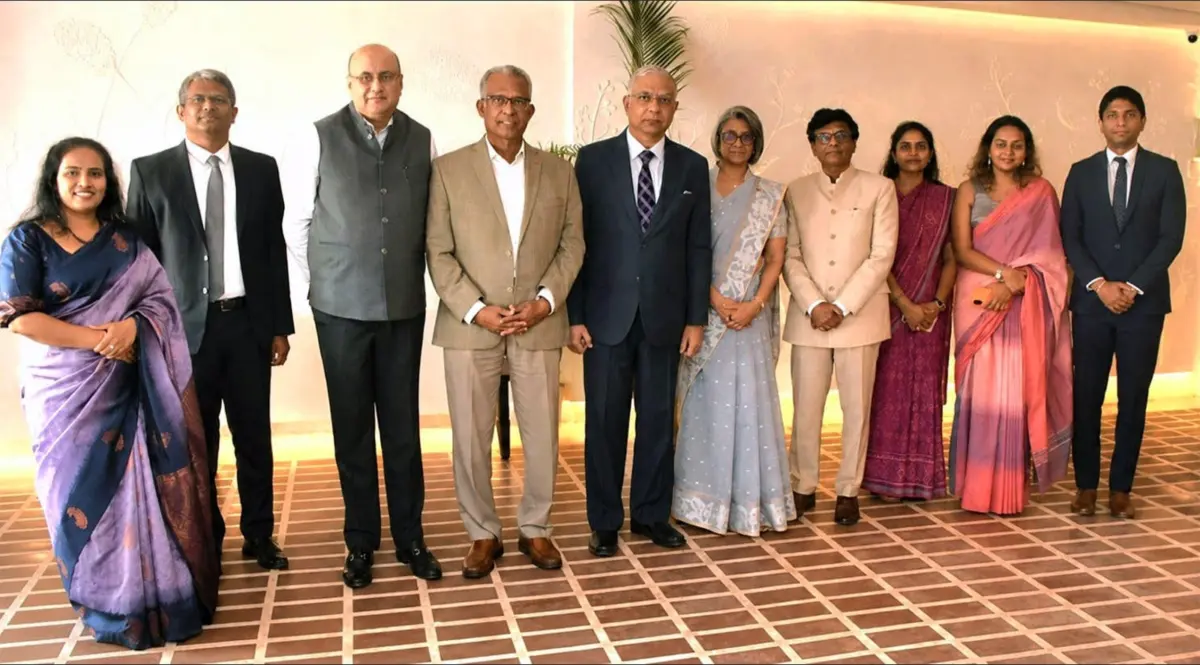
NEW DELHI — In a significant step toward bolstering bilateral cooperation and fostering deeper connections between their citizens, the Board of Directors of the India–Sri Lanka Foundation (ISLF) convened in New Delhi for its 41st meeting on August 28, 2026. The high-level gathering brought together key diplomats and distinguished board members to evaluate ongoing developmental and cultural initiatives, review a massive surge in project proposals, and approve fresh funding for vital sectors spanning education, science, agriculture, and the arts.
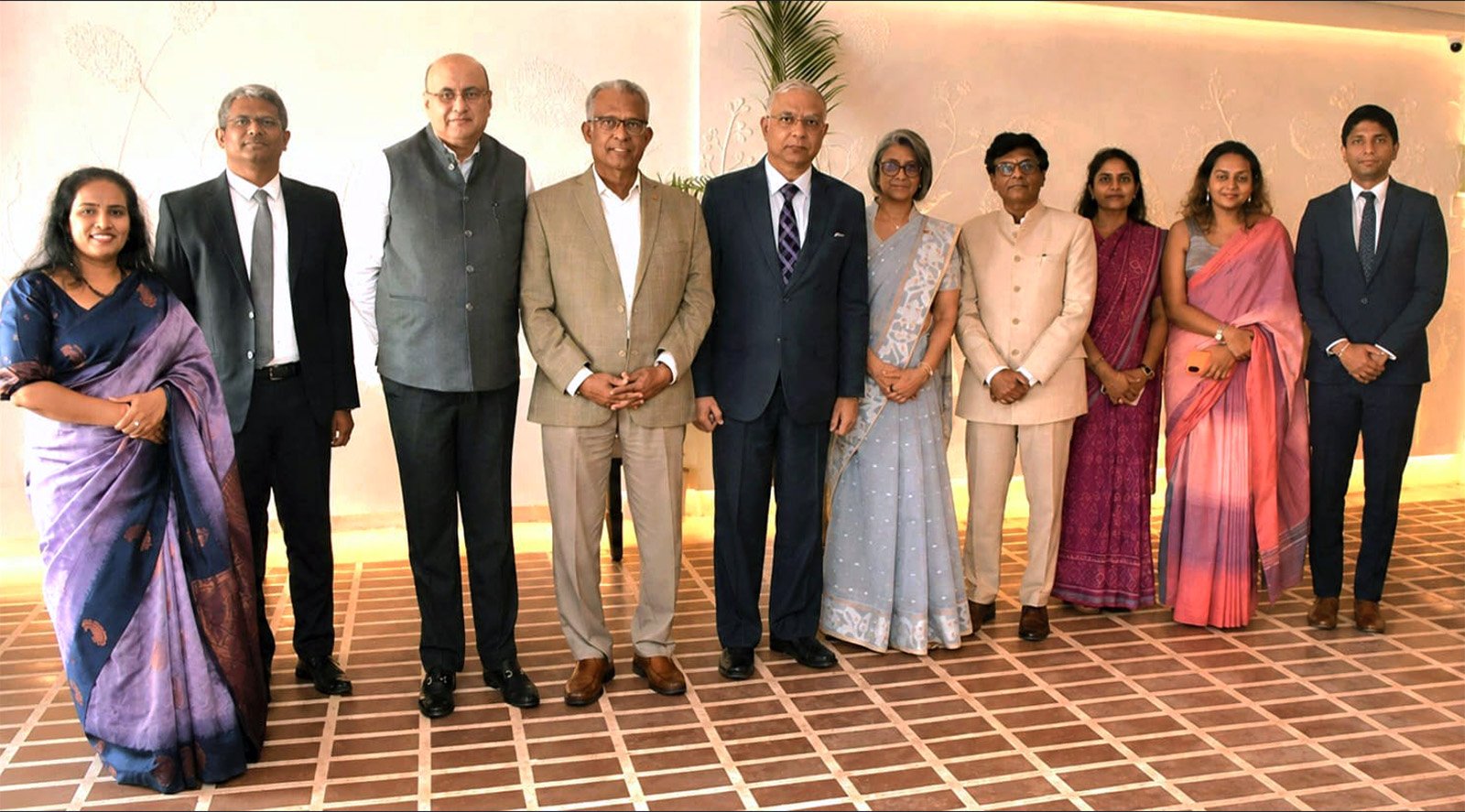
The meeting was co-chaired by the High Commissioner of Sri Lanka to India, Mahishini Colonne, and the High Commissioner of India to Sri Lanka, Santosh Jha. Their joint leadership underscored the enduring strategic and cultural partnership shared by the two neighboring nations. Joining them at the deliberations were esteemed board members Ambassador Prasad Kariyawasam, Ambassador Mohan Kumar, and Mr. Ashok Malik, who brought their extensive diplomatic and administrative expertise to the review of the foundation’s strategic roadmap.
Set against a backdrop of strengthening diplomatic and economic exchanges between New Delhi and Colombo, the 41st board meeting served as an important platform to measure the real-world impact of the foundation’s grassroots initiatives. Established nearly three decades ago, the ISLF has long operated as a crucial bridge connecting the societies of India and Sri Lanka, utilizing academic, scientific, and cultural exchanges to cement a shared regional heritage.
A central item on the agenda for the New Delhi meeting was the rigorous evaluation of project proposals submitted to the Colombo Secretariat. Demonstrating the robust public enthusiasm for bilateral cooperation, the secretariat received more than 500 proposals from various institutions and individuals seeking financial and administrative backing for collaborative ventures. Following a meticulous vetting and shortlisting process, 137 proposals were advanced to a more advanced stage of administrative review, from which 20 finalized proposals were formally presented to the Board of Directors for final consideration.
After thorough deliberations, the board approved 13 distinct projects amounting to approximately 21 million Sri Lankan Rupees (LKR). These approved initiatives cover a diverse spectrum of collaborative fields, including educational exchanges, cultural preservation and promotion, agricultural modernization, and scientific and technological research. By channeling resources into these targeted areas, the foundation aims to produce tangible benefits that directly touch the lives of citizens in both countries, reinforcing the multifaceted framework of the India-Sri Lanka relationship.
Beyond the formal project approvals, the board took special note of a remarkable and unprecedented surge in public interest across both nations regarding the foundation’s mission and activities. This growing engagement was notably highlighted by developments at the New Delhi Secretariat, which received 149 individual proposals from Indian nationals alone. This high volume of interest was particularly striking given that no formal Call for Proposals had been issued by the New Delhi office prior to the meeting, a limitation driven largely by existing financial constraints.
Board members observed that this organic and self-generated influx of interest from individuals and institutions alike reflects an enduring public desire to strengthen the close and historical ties uniting India and Sri Lanka. Furthermore, it demonstrates a widespread public demand for greater opportunities for meaningful people-to-people engagement, proving that bilateral relations extend far beyond government-to-government diplomacy into the everyday aspirations of citizens, scholars, artists, and professionals.
The India–Sri Lanka Foundation was originally born out of a shared vision by the leadership of both countries to institutionalize and expand bilateral goodwill. It was officially established on December 28, 1998, through a landmark Memorandum of Understanding signed by the then Foreign Ministers of India and Sri Lanka, Mr. Jaswant Singh and Mr. Lakshman Kadirgamar, respectively. From its inception, the overarching objective of the foundation has been to foster closer bilateral relations through enhanced economic, scientific, educational, technical, and cultural cooperation, while simultaneously promoting a deeper and more nuanced understanding between the peoples of the two nations.
Over the course of its 28-year history, the foundation has played a pivotal and transformative role in advancing people-to-people contacts. It has achieved this by consistently supporting dynamic exchanges and collaborative initiatives involving students, academic scholars, researchers, industry professionals, artists, and cultural practitioners. By funding projects across a diverse range of mutual interests based on grassroots proposals submitted by individuals and institutions in both countries, the foundation has helped weave a dense fabric of shared knowledge, mutual respect, and cultural affinity.
During the 41st meeting, the board reflected on how the modern geopolitical and socioeconomic landscape has evolved. Members observed that against the backdrop of the growing breadth and depth of contemporary India–Sri Lanka relations, the specific role of the foundation in strengthening foundational people-to-people ties has assumed an even greater degree of importance. The steadily climbing volume of proposals received by both the New Delhi and Colombo secretariats clearly demonstrates both the vibrant demand for such collaborative engagement and the immense untapped potential for the foundation to expand its operational footprint and achieve greater impact.
In light of this expanding mandate and the clear mismatch between the high volume of worthy project proposals and available financial resources, the board dedicated significant time to discussing the future sustainability of the organization. Officials noted the critical importance of strengthening the foundation’s financial capacity moving forward. An enhanced Corpus Fund, the board agreed, would enable the institution to respond positively to a substantially greater number of worthwhile initiatives in both countries. Furthermore, a strengthened financial base would provide significantly expanded opportunities for Sri Lankan institutions and individuals to actively engage in initiatives relating to India–Sri Lanka relations through advanced academic exchanges, institutional collaborations, and grassroots community projects.
Adding a unique cultural touch to the diplomatic proceedings, the 41st Board Meeting was held at Zetu, notable as the first Sri Lankan food-inspired restaurant to open its doors in New Delhi. The venue served as an appropriate backdrop for a meeting dedicated to celebrating and deepening cross-border cultural understanding, blending high-level statecraft with the sensory appreciation of Sri Lankan culinary heritage in the heart of India’s capital.
Administered jointly through active secretariats located in New Delhi and Colombo, the India–Sri Lanka Foundation operates under the governance of a six-member Board of Directors. This leadership structure ensures balanced representation from both nations, comprising the High Commissioner of Sri Lanka to India and the High Commissioner of India to Sri Lanka serving as ex-officio Co-Chairpersons, alongside four additional members nominated directly by the respective governments. Through this cooperative institutional framework, the foundation continues to navigate its mission of cultural bridge-building, ensuring that the historic bonds connecting India and Sri Lanka remain vibrant, resilient, and responsive to the aspirations of future generations.