For many professionals, hearing the phrase “this is a great start, but…” from a manager or senior colleague is enough to induce an immediate sinking feeling in the chest. Whether spending hours pulling together high-stakes client presentation slides or making a first-ever pass at a complex data analysis, those six words have historically functioned as a polite code for failure. Even when a leader’s underlying intention is to offer constructive guidance, the immediate psychological translation for the receiver often defaults to a discouraging reality: this simply isn’t good enough.
This universal workplace anxiety is the focal point of a recent collaboration by Ryan and Alli Torban, two new team members at storytelling with data (SWD). In a joint essay published on the organization’s blog, the authors explore how transitioning into a deliberately cultivated, feedback-rich environment can radically transform an employee’s relationship with critique. By examining how common workplace phrases are reinterpreted through a lens of trust, iteration, and psychological safety, the authors shed light on how organizations can shift feedback from a dreaded punitive measure into a collaborative engine for professional growth.
The journey toward reframing workplace communication began on Ryan and Alli’s very first day at SWD. During a weekly virtual team meeting, both new hires were asked to introduce themselves to their colleagues. Rather than treating the introductions as a one-time icebreaker, the team spent the remainder of the week actively practicing these verbal intros and incorporating continuous feedback from peers. For professionals accustomed to traditional corporate cultures—where work is often guarded until completion out of fear of judgment—this immersive onboarding experience served as an immediate wake-up call. It did not take long for this transparent culture to fundamentally alter how both employees perceived and processed critique.
“Can you share an early version?”
Before joining the SWD team, Ryan’s professional life was characterized by a relentless cycle of deadlines and overwhelming workloads. Operating under the pressure of tight turnarounds, he developed a counterproductive habit common in many fast-paced industries: waiting until a project was nearly finished before asking for feedback, often soliciting opinions just moments before a major deadline.
This approach routinely generated lose-lose scenarios for everyone involved. Feedback providers either felt cornered into withholding true constructive criticism to avoid derailing the timeline, or they offered honest, extensive recommendations that required last-minute overhauls. The latter outcome invariably forced employees to pull late-night shifts at the office, frantically implementing major edits to salvage the project before it was due. In these environments, early drafts are frequently viewed through a lens of vulnerability, driven by the lingering fear that incomplete work will be harshly judged by superiors.
However, during an eight-week onboarding program at SWD, Ryan experienced a starkly different dynamic when he shared his work-in-progress introduction with his peers. Instead of labeling the material as incomplete or deficient, colleagues responded with a mixture of immediate encouragement and tactical edits at every step of the development cycle. This continuous input allowed him to hone his verbal introduction into its strongest possible version long before he would have otherwise finalized an early draft.
Consequently, the lesson learned was profound: rather than dreading early exposure, professionals are better served by asking for feedback early and often, actively welcoming offers from colleagues to review work while it is still in its formative stages. When schedules prevent connection with a feedback group until the final hours, acknowledging that constraint explicitly helps manage expectations regarding the depth of critique that can be realistically implemented.
“This is a great start, but…”
The psychological baggage attached to classic feedback openers runs deep across corporate culture. Alli Torban encountered this dynamic early in her career when working with a more seasoned colleague. Whenever her mentor initiated a review by stating that her work was a “great start,” it invariably signaled a total dismantling and rewriting of everything she had produced. While the comments were ostensibly intended to be kind, the phrase ultimately translated in her mind to a thinly veiled command to step aside and let someone else finish the job.
At SWD, by contrast, the operational culture is designed to be iterative, honest, and fundamentally supportive. During a recent client chart makeover project, Alli shared her in-progress files with a colleague named Amy, who offered the familiar assessment that the work was a great start. Bracing herself for a completely overhauled version of her design, Alli instead received a document filled with detailed comments and annotations that left her with the full agency to implement the changes in her own style. It was not a prescriptive directive list; the feedback genuinely meant that the project was on the right path, and that subsequent iterations would naturally bridge the gap toward the final product.
To help internalize this shift in perspective, Alli utilized an unexpected tool: a classic improvisational theater exercise known as the “bad gifts” game. Alongside colleague Cole, she explored the mechanics of this exercise in episode 99 of the SWD podcast, using the platform to discuss strategies for becoming a more receptive recipient of outside input. Ultimately, in a workplace where feedback is treated as an integrated component of the creative process, hearing that a project is a “great start” signifies trust—specifically, the trust that the creator is fully capable of carrying the work across the finish line.
“What feedback are you looking for?”
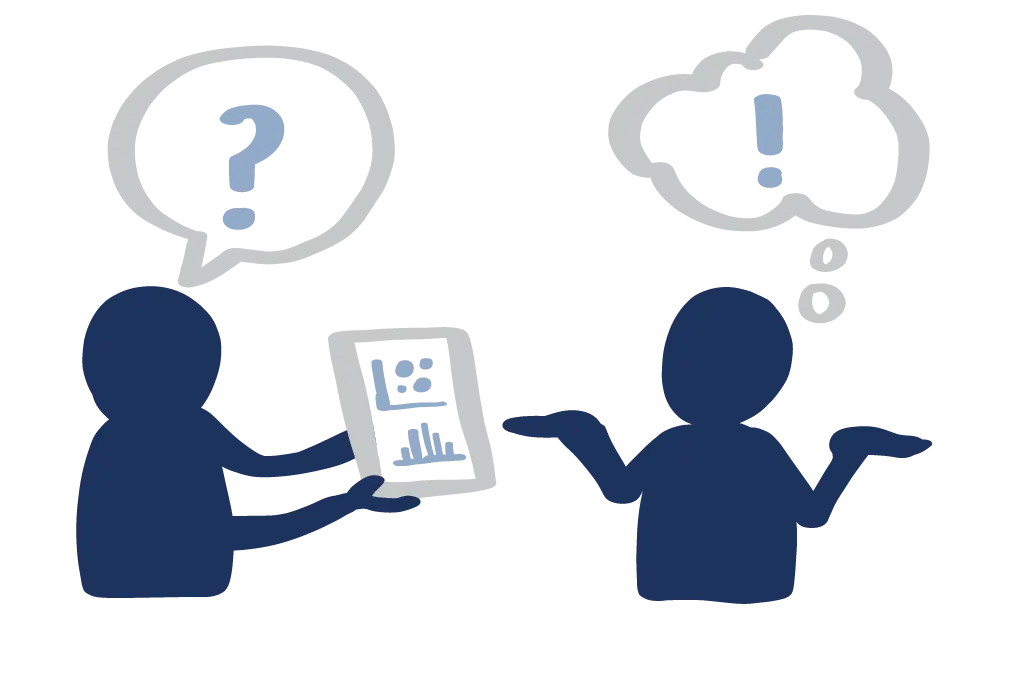
Another major hurdle in traditional corporate communication stems from ambiguous requests for review. Prior to their time at SWD, both authors frequently fell into the trap of casting too wide a net when inviting critique from managers or peers. Sending an unfinished project via email or chat with a generic prompt like “any thoughts?” or “please review when you have a chance” routinely yielded vague, unhelpful responses such as “great work,” “it’s missing something,” or suggestions to simply cut down the length.
Leaving a review cycle with more questions than answers creates a frustrating paradox for the creator. If a piece of work is purportedly great, should any changes be made at all? If something is missing, what specific element requires attention? How can a presentation simultaneously be too long, missing crucial context, and yet considered great?
By contrast, the structured approach at SWD emphasizes the importance of asking targeted, specific questions during the input cycle. By framing inquiries carefully—such as asking a colleague to listen specifically for pacing issues before delivering a verbal introduction—the creator provides clear guidance that gives reviewers the confidence their commentary will be genuinely useful. This practice forces professionals to critically assess their own in-progress work beforehand, prioritizing their actual needs and ensuring they secure the precise editorial insights required to elevate their output.
Through these collective experiences, the SWD team continues to highlight how subtle shifts in perspective can dismantle the dread traditionally associated with professional critique. By transforming feedback from a source of anxiety into an ongoing, collaborative dialogue, organizations can foster environments where employees at all levels feel empowered to share early ideas, trust their own creative agency, and continuously refine their craft.