Leaders from twelve nations converged on Rovaniemi, Finland, for the European Arctic Summit, confronting an unmistakable geopolitical reality: the Arctic is no longer a remote, frozen wasteland acting as a natural buffer against human activity. Instead, it has rapidly transformed into a complex and fiercely contested geopolitical theater where trade routes, energy reserves, national security interests, and technological competition increasingly intersect.
The gathering underscored a profound shift in how global powers view the High North. German Chancellor Friedrich Merz described the Arctic as a definitive “geopolitical hotspot,” while Finnish Prime Minister Petteri Orpo emphasized that the region has become an integral, frontline component of broader European security architecture. As climate change reshapes the physical boundaries of the earth, the consequences are rippling outward, altering strategic calculations from Washington and Brussels to Moscow and Beijing.
Climate Change Rewriting Arctic Geography
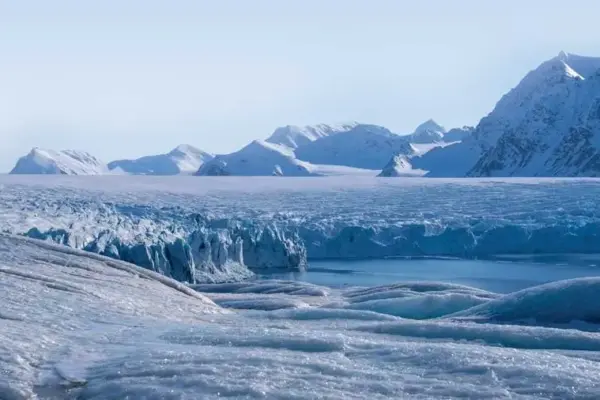
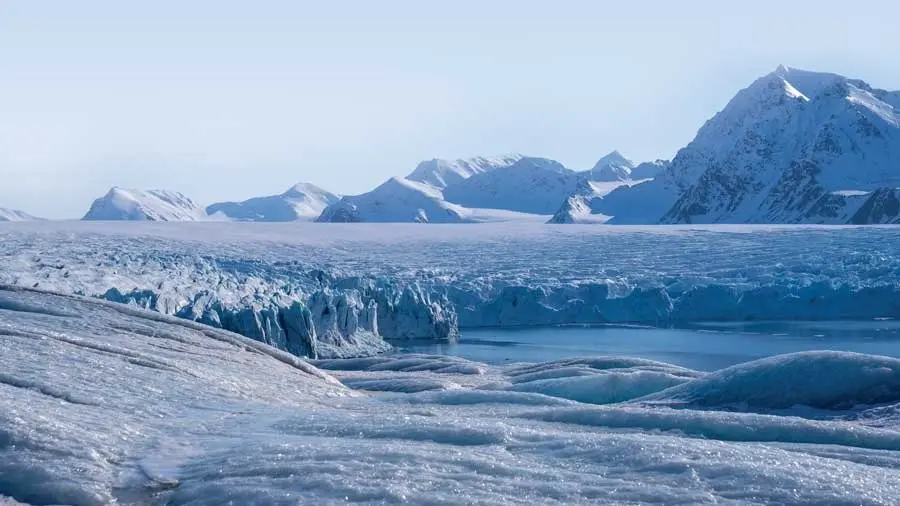
For centuries, the Arctic’s greatest defense against large-scale commercial exploitation and sustained military presence was its unforgiving, ice-locked geography. Today, that protective barrier is eroding at an unprecedented pace.
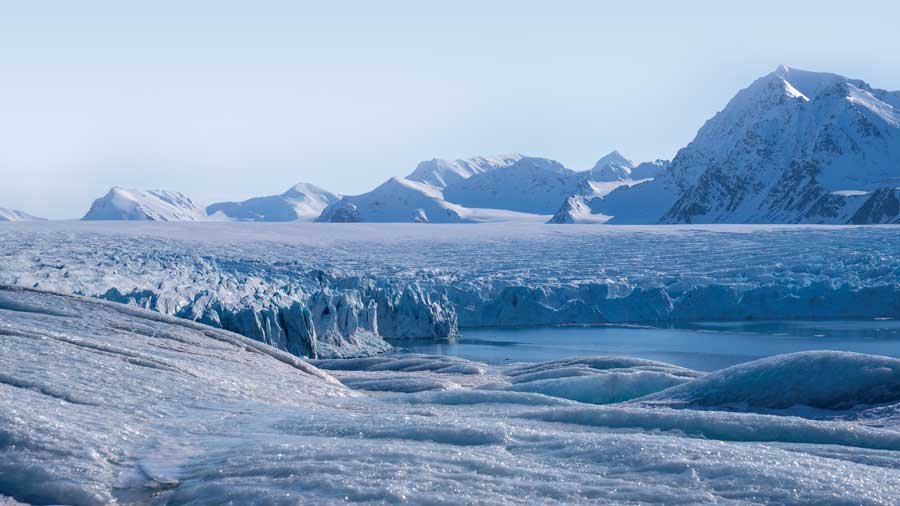
Scientific observations indicate that the Arctic is warming nearly four times faster than the global average. Data from the National Oceanic and Atmospheric Administration’s (NOAA) Arctic Report Card confirms that Arctic sea ice continues to decline steadily in both physical extent and overall thickness. End-of-summer sea ice coverage now falls significantly short of historical averages, while durable, multi-year ice is rapidly being replaced by younger, thinner seasonal ice.
This phenomenon presents a striking strategic paradox: what the global ecosystem loses in ice, nation-states gain in access. Expanses of the ocean that were once impassable for the vast majority of the year are opening up to navigation for extended periods. At the same time, extracting subsurface resource deposits is becoming increasingly feasible, and entirely new maritime trade routes are beginning to emerge as viable alternatives connecting Europe and Asia.
The Northern Sea Route: Russia’s Strategic Arctic Corridor
At the center of this maritime transformation is the Northern Sea Route (NSR). Running along Russia’s rugged Arctic coastline from the Kara Gate to the Bering Strait, the NSR represents the shortest maritime connection between Northeast Asia and Northern Europe, offering a dramatic reduction in travel distance compared to southern routes.
For decades, the route remained largely theoretical, constrained by hostile ice conditions and a lack of supporting infrastructure. Today, however, it is actively utilized for international commerce. Transit voyages through the NSR have seen a steady, notable climb, rising from 43 in 2022 to approximately 79 in 2023, before reaching a record-breaking 97 voyages in 2024. Total cargo volumes transported along the corridor have mirrored this upward trajectory, climbing from roughly 34 million tonnes in 2022 to 36.3 million tonnes in 2023, and nearing 38 million tonnes in 2024.
Despite this growth, the nature of the traffic remains specialized. The vast majority of these commercial vessels are deployed to transport bulk commodities such as oil, liquefied natural gas, and minerals, as well as essential industrial supplies destined for northern settlements and massive Russian resource extraction projects, such as those on the Yamal Peninsula.
The Suez Canal Comparison
While the statistics surrounding the Northern Sea Route demonstrate that Arctic navigation is moving well beyond the experimental phase, experts caution against exaggerating its immediate economic impact. It remains a persistent misconception that Arctic shipping lanes are on the verge of replacing traditional arteries like the Suez Canal.
The Suez Canal routinely handles more than 20,000 vessel transits annually, carrying an estimated 12 to 15 percent of total global trade. By contrast, even in its busiest year on record, the NSR recorded fewer than 100 complete international transit voyages. In terms of sheer volume and commercial scale, there is simply no comparison between the two.
Nevertheless, the true strategic importance of Arctic routes extends far beyond raw cargo numbers. Their value lies in providing a vital alternative to a handful of vulnerable traditional maritime chokepoints—namely the Suez Canal, the Bab el-Mandeb strait, the Strait of Hormuz, and the Strait of Malacca. Recent disruptions in the Red Sea, ongoing instability across the Middle East, and broader geopolitical frictions have starkly exposed the fragility of these conventional sea lanes. Consequently, the Arctic functions less as a direct commercial competitor to southern routes and more as a crucial strategic hedge against systemic crises elsewhere in the global supply chain.
Russia’s Greatest Advantage: Icebreakers
As Western economic sanctions and shifting geopolitical alignments force Moscow to reorient its trade patterns toward Asian markets, Russia has sought maximum flexibility for its resource exports. In doing so, it benefits from an inherent geographical advantage, which is heavily amplified by state-of-the-art technology.
Unlike standard open-ocean maritime regions, Arctic lanes demand specialized support infrastructure, including escort icebreakers, robust search-and-rescue capabilities, advanced navigation systems, satellite monitoring networks, and deep-water ports. Russia has spent decades systematically constructing and maintaining these critical capabilities.
Moscow currently possesses the world’s largest icebreaker fleet and remains the only nation operating nuclear-powered icebreakers, such as the formidable Arktika, which is engineered to break through the thickest Arctic multi-year ice. By comparison, the United States lags significantly behind in this specialized domain. Recognizing this glaring capability gap, European states have begun actively discussing coordinated icebreaker expansion programs. At the Rovaniemi summit, European Commission Vice-President Kaja Kallas explicitly highlighted the urgent need for enhanced European icebreaking capacity to secure northern waters.
The Resource Race Beneath the Ice
Shipping lane development only partially explains the rapidly growing global focus on the Arctic. According to estimates by the United States Geological Survey, the region may harbor approximately 13 percent of the world’s undiscovered conventional oil reserves and roughly 30 percent of its undiscovered natural gas reserves.
Beyond hydrocarbons, critical minerals have taken center stage in modern Arctic discourse. Rare earth elements, lithium, nickel, cobalt, graphite, and copper are indispensable components for manufacturing electric vehicles, advanced battery systems, renewable energy infrastructure, semiconductors, and sophisticated defense technologies. In the twenty-first-century economy, control over the extraction and supply chains of these critical minerals directly translates into formidable geopolitical influence.
Greenland, the United States, and Strategic Geography
This resource and security dynamic helps explain why Greenland has emerged as one of the most strategically significant territories in the circumpolar North. During her visit to Greenland, European Commission President Ursula von der Leyen announced a substantial 200-million-euro investment package aimed at bolstering connectivity, hydropower development, critical raw materials extraction, local infrastructure, and sustainable economic growth. The package was widely interpreted as much more than a routine economic initiative; it was a deliberate geopolitical signal.
During the Cold War, Greenland served as a vital anchor for North American early-warning radar systems. Even today, the strategic Pituffik Space Base remains an indispensable facility for ballistic missile warning, missile defense, and continuous space surveillance. Recent debates in Washington regarding the island’s future underscore its enduring relevance to Western national security calculations.
China’s Arctic Ambitions and the Polar Silk Road
As the High North opens up, external actors are also making their presence felt. China formally describes itself as a “near-Arctic state” and has established itself as one of the most influential external players in the region, systematically expanding its footprint through scientific research expeditions, infrastructure investments, and maritime shipping initiatives.
Beijing’s primary motivations in the Arctic include securing alternative trade routes to mitigate its persistent “Malacca Dilemma”—the strategic vulnerability of relying heavily on the Strait of Malacca for energy imports—and accessing vital raw materials to fuel its advanced industrial and technological sectors. Under the banner of the “Polar Silk Road” initiative, China has sought to integrate Arctic shipping lanes into its broader Belt and Road framework. In 2026, Chinese commercial entities successfully tested the NSR using container vessels to evaluate its long-term commercial viability, signaling that Beijing’s presence in the High North is enduring.
Militarisation of the High North
Alongside expanding economic and commercial opportunities, the Arctic is experiencing a steady and profound process of securitization.
Russia has aggressively reopened Soviet-era military installations, modernized its northern defense infrastructure, expanded strategic airfields, and reinforced its Northern Fleet to protect sovereign assets, including nuclear-powered submarines operating beneath the polar ice pack.
Participants at the Rovaniemi summit openly identified this assertive Russian military activity as a major regional challenge, while simultaneously expressing growing concern over China’s expanding footprint in the High North. Following the historic accession of Finland and Sweden to NATO, virtually the entire European Arctic is now anchored within the Western alliance. In response to these shifting dynamics, NATO has stepped up cold-weather military exercises, enhanced intelligence, surveillance, and reconnaissance operations, and sharpened its strategic focus on northern flank defense. A joint declaration issued at the conclusion of the summit formally urged the European Union to assume a much more strategic, assertive, and proactive role in regional governance.
The ongoing retreat of the Arctic ice represents one of the most consequential structural developments of the twenty-first century, driven primarily by accelerating climate change. Russia is leveraging its geography, specialized infrastructure, and unique technology fleet to expand northern commerce. Beijing views the region as an indispensable future trade corridor and a repository of strategic natural resources. The United States increasingly views Greenland and the High North through the lens of core national security, while European nations are redefining the Arctic as a vital strategic frontier that offers a viable alternative to increasingly volatile southern maritime chokepoints.
No international treaty formally declared the opening of the Arctic, and no single diplomatic summit designated it as the new center of global politics. The melting ice achieved that transition on its own.