As the conflict in Ukraine approaches its fifth winter, Kyiv faces an increasingly grim geopolitical landscape, marked by a public falling out with U.S. President Donald Trump and a growing diplomatic rapprochement between Washington and Moscow. The Trump administration has demanded that Ukraine immediately suspend its highly effective drone campaigns targeting Russian oil refineries, which have historically served as one of Kyiv’s most potent instruments of economic pressure against the Kremlin. Compounding these pressures, Ukraine confronts dangerous gaps in its air defense capabilities against advanced jet-powered drones and an intensifying barrage of Russian ballistic missiles.
At the same time, the diplomatic arena has shifted in Moscow’s favor. The Trump administration has brokered a temporary waiver of U.S. sanctions on Russian diesel exports, delivering a significant diplomatic and economic win to Russian President Vladimir Putin. Furthermore, U.S. envoys have proposed that European nations increase their purchases of Russian natural gas to secure the Kremlin’s cooperation on peace negotiations. This initiative further complicates efforts by Ukraine and its remaining Western allies to economically squeeze Moscow through targeted trade restrictions and sanctions.
Yet this bleak political outlook overlooks the remarkable degree to which Ukraine has already adapted to escalating attacks on its critical infrastructure. Kyiv has engineered innovative strategies to mitigate the devastating impact of Russian energy strikes, successfully keeping its power grid operational despite relentless bombardment. Despite heavy pressure from Washington, Ukraine has continued launching powerful, long-range drone strikes against Russia’s core energy infrastructure. Notable successes include mid-October operations targeting an oil terminal in St. Petersburg and industrial gas processing plants as far away as Surgut and Novy Urengoy, located roughly 1,800 miles from the Ukrainian border. Overall, since mid-2025, these targeted Ukrainian drone strikes have reduced Russian refinery throughput by approximately 30 percent, eroding a significant share of Moscow’s excess refining capacity and triggering a domestic gasoline shortfall of about ten percent.
Nevertheless, this represents only one front in a rapidly evolving energy war. Moscow has developed its own countermeasures to limit the efficacy of Ukrainian strikes while simultaneously intensifying its own assaults on Ukrainian infrastructure. A devastating barrage on October 19 damaged more than ten energy facilities across the country. According to estimates from the DiXi Group, a prominent Ukrainian think tank, Russia launched an unprecedented 12,800 missiles and drones at Ukrainian energy installations through 2025 and early 2026, a staggering escalation compared to the 2,800 launches recorded during the first three years of the war combined. While these figures measure total launches rather than successful impacts, they underscore the sheer scale and relentless nature of the Russian campaign.
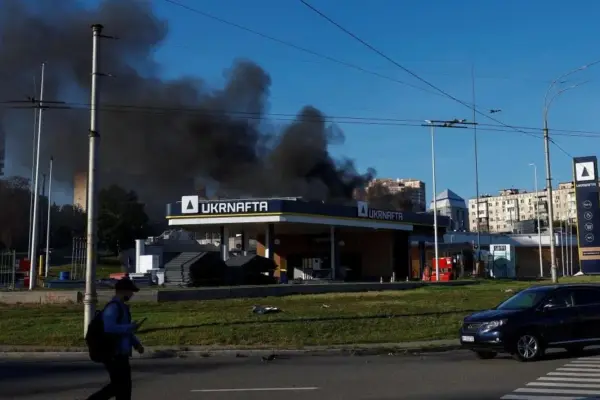
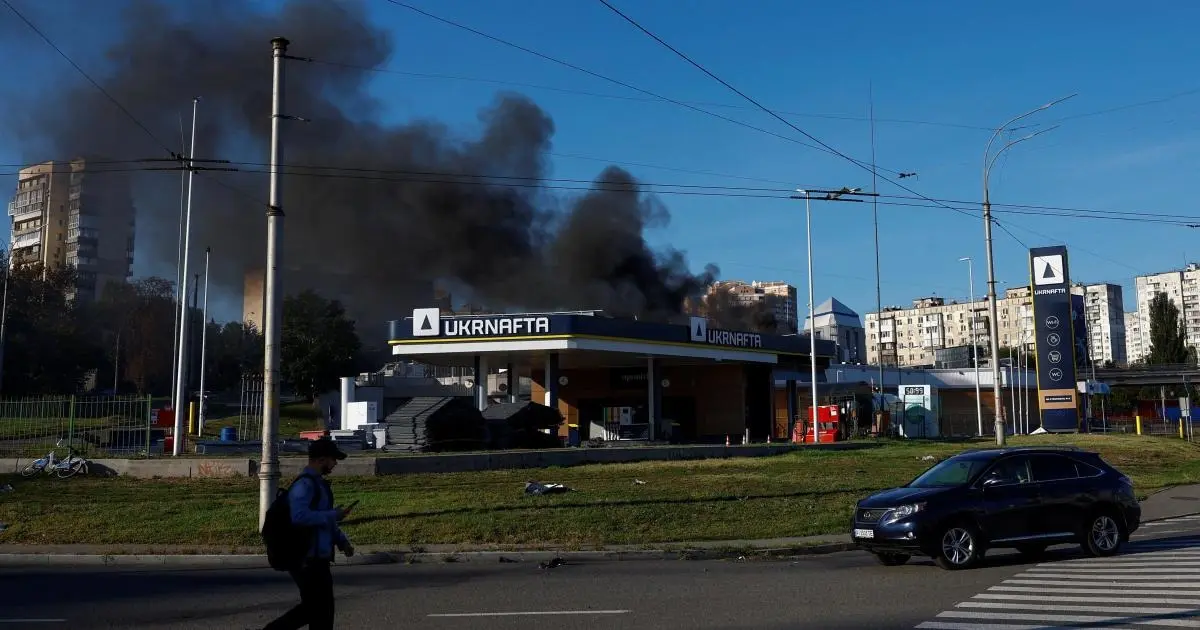
Furthermore, both warring parties have acquired the capability to target the economic substitutes and reserve resources that previously cushioned system losses. Following extensive Russian strikes on local power plants in early October, ordinary Ukrainians experienced widespread blackouts. These outages occurred even though the national grid maintained spare electricity capacity, because Russian forces systematically targeted the transmission lines and electrical substations carrying reserve power. Earlier in the summer, Ukrainian strikes on refineries and pipelines surrounding Moscow forced Russian authorities to transport fuel by rail from locations as distant as Lake Baikal, thousands of miles away.
If ongoing U.S. diplomatic pressure and negotiations fail to halt this escalating energy war, the central question for Ukraine is whether its extraordinary capacity for rapid adaptation can continue to keep pace with relentless Russian attacks. Simultaneously, Kyiv’s fortunes this winter depend on its ability to strike Russian infrastructure in ways that disrupt Moscow’s capacity to repair and rebuild damaged facilities. Both nations must now continuously protect and repair their sprawling national networks around the clock, while attackers can concentrate their forces on the most vulnerable sites, striking repeatedly as soon as repairs are completed. In such a conflict, defensive ingenuity matters just as much as raw offensive capability. Ultimately, energy attacks alone are unlikely to force either side to accept the other’s terms, and neither belligerent may secure a decisive advantage, even as both incur mounting economic and human costs. Recognizing the strict limits, as well as the inherent power, of these infrastructure strikes remains crucial not only to resolving the current conflict but also to understanding the strategic role that energy systems will likely play in future wars.
The Race Against Rockets
For Ukraine, robust international support has proven essential in containing Russia’s punishing energy barrage. By November 2025, prior to the onset of the harshest winter weather, Ukraine had sustained $17.1 billion in direct damage to its electricity infrastructure, according to a comprehensive joint report published by the United Nations, the World Bank, and the European Commission. Despite this immense destruction, Kyiv maintained the flow of electricity by leveraging its remaining nuclear generation facilities, repairing thermal plants, increasing electricity, gas, and diesel imports, and deploying distributed generation systems—smaller, decentralized units running on solar, wind, gas, and diesel energy tied directly into the main grid.
European nations have also supplied vital replacement technology. Throughout 2025, the European Commission facilitated 149 shipments of heavy equipment originating from a retired Lithuanian thermal power plant directly to Ukraine, restoring electrical service to roughly one million people. Such cross-border transfers have effectively integrated foreign utilities and suppliers into Ukraine’s rapid repair architecture. In September, Ukraine and the UN Development Program launched a dedicated coordination center designed to expedite the installation of donated energy equipment.
The expanded deployment of advanced batteries and distributed power networks is playing an increasingly critical role. In September 2025, Ukrainian energy firm DTEK and U.S.-based battery manufacturer Fluence installed localized battery storage systems across six sites in Kyiv and Dnipro. These installations possess enough capacity to supply 600,000 households—approximately half of Kyiv—with power for two hours. Concurrently, municipal authorities in Kyiv have established 150 megawatts of distributed power generation. While insufficient to cover peak winter demand, this capacity provides more than half of the city’s essential services, including municipal water supplies, hospitals, and heating systems. Nevertheless, Ukrainian assessments indicate that between 2,500 and 3,000 of Kyiv’s 12,000 apartment buildings could enter the winter months lacking alternative heat sources.
This vulnerability poses an acute danger because restoring electrical power does not automatically restore domestic heating. While replacement boilers offer a viable solution, they must be installed locally, continuously supplied with fuel, and connected to functioning municipal heat networks—often while cities remain under continuous bombardment. During the previous winter, UN monitors documented at least 74 Russian attacks targeting heating infrastructure across Ukraine, leaving hundreds of thousands of citizens without heat or hot water for weeks amid freezing temperatures. Maintaining the integrity of the national electric grid alone could not render these residential homes habitable in sub-zero weather. While residents frequently attempt to bridge the gap using electric space heaters, widespread reliance on such devices risks overloading an already fragile electrical grid.
To brace for even harsher conditions, Kyiv has systematically accumulated natural gas reserves. As of August, Ukraine’s gas stocks reached 13.1 billion cubic meters, up significantly from 9.6 billion cubic meters the previous year. However, stored gas must physically reach functioning heat and power plants, and electricity must traverse intact transmission networks—both of which remain prime targets for Russian bombardment. Regardless of the broader resilience of the national system, relentless targeting of specific Ukrainian urban centers leaves local populations exposed, particularly when substitute local supply sources are destroyed before damaged facilities can be repaired.
Meanwhile, ordinary Ukrainians are absorbing the heavy costs of system survival in ways that traditional capacity metrics fail to capture. Businesses nationwide are forced to operate expensive backup generators, curtail working shifts, or suspend operations entirely. Households pay higher prices for reduced hours of reliable utility service. Declining industrial demand can superficially improve the national electricity balance sheet, but the underlying reality points to an economy deteriorating under the crushing pressure of relentless attacks. These systemic losses weaken the national tax base and deepen Ukraine’s reliance on foreign financial assistance. Consequently, Russia does not need to completely shut down Ukraine’s power grid to impose an extraordinary economic and social burden.
War at Any Price
Russia has also increasingly felt the broader economic reverberations of the energy war. In theory, Moscow maintains a much larger structural cushion: at the outset of the conflict, its refineries produced surplus fuel well beyond domestic market demands, possessing substantial excess capacity to distill crude oil into finished motor fuel. Consequently, losing a single primary distillation unit did not immediately translate into an equivalent loss of consumer gasoline or diesel supply. However, Ukrainian drone strikes throughout the year have systematically tested the limits of this operational flexibility.
In June, Ukrainian drones struck one of two processing units at Moscow’s Kapotnya refinery, hitting the second unit six days later. Although the facility temporarily resumed operations following the June strikes, subsequent attacks in September halted processing once more. Elsewhere, Ukrainian strikes have damaged complex secondary units specifically designed to raise fuel yields and improve product quality. Because these specialized components can require six to eight months to repair, they may remain offline throughout the winter heating season. Excess primary distillation capacity cannot substitute for the damaged secondary equipment required to transform intermediate petroleum streams into finished gasoline and diesel.
To offset these losses, the Russian government has relaxed domestic fuel standards, permitting naphtha blended with octane boosters to enter the general gasoline supply, while extending state subsidies to encourage imported fuel. Russian enterprises have also routed crude oil to neighboring Belarus for processing or imported finished products from abroad. While these stopgap measures have helped maintain fuel supplies at domestic service stations, they come at a substantial financial cost that consumers, corporations, and the state will ultimately have to absorb.
Not all Ukrainian drone strikes have yielded such long-term strategic impacts. In March 2026, for example, Ukraine launched a sustained two-week campaign against the Ust-Luga oil terminal situated on the Baltic Sea near St. Petersburg, temporarily halting maritime oil shipments. Yet shipments from Ust-Luga resumed within weeks, and by late April, Russia’s total seaborne crude exports averaged 3.8 million barrels per day—marking a seven percent increase from March and an eleven percent rise compared to the previous year. This surge in crude exports helped offset falling exports of refined petroleum products, as refinery damage freed up additional crude for direct export.
For Moscow, managing domestic fuel shortages remains a pressing operational challenge. Through higher retail prices and formal rationing, the government can ensure that military forces remain fully supplied even if civilians must endure severe cutbacks. The Kremlin can also deploy targeted subsidies and price controls to cushion consumers. While none of these options are costless, the government retains considerable room to maneuver as long as it remains willing to impose lower living standards and absorb the resulting political fallout. Ukrainian strikes effectively force Russia to spread its air defense assets thinner, consume valuable labor and financial resources, and accept reduced revenues from fuel refining. While these operations diminish the oil and gas revenues that finance Russia’s war effort, none of these costs are likely to render the conflict economically prohibitive for the Kremlin.
The Blame Game
Paradoxically, the growing tactical success of Ukraine’s strikes against Russian refineries has generated intense diplomatic pressure on Kyiv itself. To shore up its constrained domestic market, Russia has curtailed diesel exports abroad. Under normal economic conditions, higher global prices should encourage refiners in other regions to compensate for the shortfall, but ongoing U.S. military operations involving Iran have complicated market adjustments. According to the International Energy Agency, combined net diesel and gasoil exports from Russia and the Middle East in September stood 1.3 million barrels per day below levels recorded a year earlier. This broader global supply crunch has directly impacted the United States, which has increasingly blamed Ukraine’s refinery strikes for stubbornly high domestic diesel prices.
Ordinarily, the United States maintains a substantial domestic diesel surplus and functions as the world’s largest diesel exporter. However, absent formal export controls, quotas, or tariffs, the U.S. market remains highly exposed to surging international commodity prices, even in the absence of domestic fuel shortages. Consequently, it is politically easier for the Trump administration to pressure Ukraine into halting its refinery attacks—and to broker a separate diesel agreement with Moscow—than to restore lost Middle Eastern fuel supplies.
In reality, Washington’s diplomatic maneuvers are unlikely to generate meaningful additions to global fuel supplies in the near term, as merely redirecting existing exports does not create new production. A durable, larger-scale increase requires Russian refineries to fully recover and maintain continuous operations. This dynamic provides Washington with a clear incentive to restrain Ukrainian strikes, raising the prospect of withholding U.S. intelligence sharing, cutting access to Starlink satellite communications, or blocking European purchases of U.S. weaponry for Ukraine. Should Kyiv capitulate to American demands, a primary risk is that Moscow could secure ironclad protection for its own domestic refineries while continuing its unmitigated bombardment of Ukrainian urban centers.
The United States is far from the only external actor shaping this widening energy conflict. For European nations, a potential collapse of the Ukrainian state would pose a security threat far eclipsing the financial cost of replacing damaged transformers or financing energy imports. In mid-October, the European Union’s ambassador to Ukraine outlined a forthcoming $1.1 billion European energy support package designed to bolster Ukraine’s recovery capabilities through the winter. However, if individual European states—defying the official stance of the European Commission—accede to the Trump administration’s proposals to expand purchases of Russian natural gas in an effort to lower domestic energy costs, such moves would directly bolster Moscow’s financial earnings and its capacity to sustain the war. Europe’s strategic energy choices carry profound weight on both sides of the conflict.
China and India also exert significant influence over the trajectory of the energy war. Thus far, sustained purchases of discounted Russian crude by both Asian economic powers have helped underwrite the Russian war machine. By refining these discounted barrels, Indian and Chinese industrial sectors benefit economically, while their increased exports of refined fuels help alleviate the global supply crunch that currently drives U.S. pressure on Ukraine. Nevertheless, the capacity of these nations to increase exports remains contingent upon available crude supplies and government approvals, particularly within China. Over time, Russia’s economic leverage derived from the current diesel shortage will gradually diminish as alternative suppliers recover, global trade routes adjust, and domestic consumption patterns shift. However, market analysts at the International Energy Agency anticipate that international diesel markets will remain tight well into 2027, ensuring this structural pressure persists.
The Adaptation Spiral
For both Moscow and Kyiv, the strategic objective of the energy war remains straightforward: to disrupt or cripple the adversary’s economy to the point of eroding political support for the conflict or rendering it fundamentally unsustainable. Yet there is scant evidence that either belligerent can achieve such a decisive outcome. U.S. political pressure could conceivably precipitate a cease-fire or a broader diplomatic settlement, even if terms prove deeply unfavorable to Ukraine. A mutual, negotiated halt to energy infrastructure strikes would afford both sides critical relief and recovery time.
At present, however, a vast chasm remains between the minimum conditions Moscow and Kyiv deem acceptable for even a temporary cease-fire. Deep-seated mutual distrust has widened this political gap further. Moreover, a narrow agreement protecting only refineries—as advocated by the Trump administration—would leave Ukrainian cities and broader civic infrastructure entirely exposed to ongoing Russian missile and drone attacks. Moscow has little incentive to accept such a limited arrangement if it can secure unilateral Ukrainian military restraint through pressure from Washington without offering meaningful concessions of its own.
Should diplomacy fail, the most probable scenario is another brutal winter of sustained, mutual strikes targeting energy grids and civic infrastructure. For Russia, the loss of refining capacity has proven manageable thus far, but structural vulnerabilities loom. With each incremental loss of infrastructure, protecting military fuel supplies becomes increasingly expensive. Specific regions already under economic strain, such as the occupied Crimean Peninsula, could become exceptionally vulnerable. If Moscow fails to execute repairs rapidly or compensate for lost refining capacity, regional fuel shortages could trigger wider disruptions across civilian transport and heavy industry.
For Ukraine, the primary risk involves cascading waves of successive Russian strikes targeting the same urban centers. During prolonged periods of sub-zero temperatures, repeated attacks against cities like Kyiv, Kharkiv, or Odessa could exhaust municipal backup systems faster than repair crews can restore service. Extended failures of pumping stations could trigger catastrophic local crises involving ruptured water supplies, district heating networks, and sewage systems, even if electricity remains available in other regions of the country. A milder winter and timely deliveries of replacement equipment could help Kyiv avert such a catastrophe, but delays in air defense provisions or the catastrophic loss of a critical heating facility could overwhelm urban centers whose baseline electricity balance appeared adequate. A key indicator of impending danger will be local power outages that steadily expand despite ongoing repair efforts, demonstrating that municipal recovery can no longer keep pace with incoming strikes.
As it prepares for its most punishing winter yet, Kyiv confronts a stark strategic dilemma: if it reduces or suspends its refinery strikes to preserve vital U.S. military support, it grants Moscow a strategic repair window while the Ukrainian power grid remains exposed. Conversely, if Kyiv persists with its drone campaign, it risks facing punitive intelligence cutoffs or interruptions to Starlink communications that would severely complicate infrastructure defense. While an influx of European financial aid and technical assistance can soften the blow and provide alternative communication networks, it cannot fully substitute for U.S. intelligence and advanced air-defense capabilities. This intractable dilemma will persist as long as Ukraine’s critical infrastructure remains vulnerable to destruction.
Entering its fifth year, the conflict in Ukraine has fundamentally transformed the nature of modern energy warfare in unprecedented ways. The proliferation of affordable, long-range guided munitions grants both belligerents nearly unlimited access to each other’s foundational energy assets. Simultaneously, however, technological innovations in distributed power generation, localized battery storage, and mobile repair equipment have provided defenders with novel methods to preserve essential services and ensure continuous recovery, even amid large-scale bombardment. Russia’s deep industrial reserves and Ukraine’s remarkable adaptive capacity demonstrate that complex national energy systems can absorb staggering amounts of physical damage. This endurance has far exceeded what a conventional tally of destroyed assets on either side would suggest.
Yet this very resilience risks prolonging the conflict and intensifying its human toll. As both Ukraine and Russia have demonstrated, each belligerent draws tactical confidence from its ability to absorb repeated blows while convincing itself that an even more aggressive campaign against the adversary might finally succeed. Within this dynamic, every technical adjustment and workaround engineered by one side invites a fresh retaliatory strike by the other, accelerating the ongoing search for new methods of endurance. This dangerous adaptation spiral continues unchecked as economic and human losses mount. Ultimately, only a formal cease-fire can break this destructive cycle—a political outcome that energy infrastructure strikes alone cannot achieve.