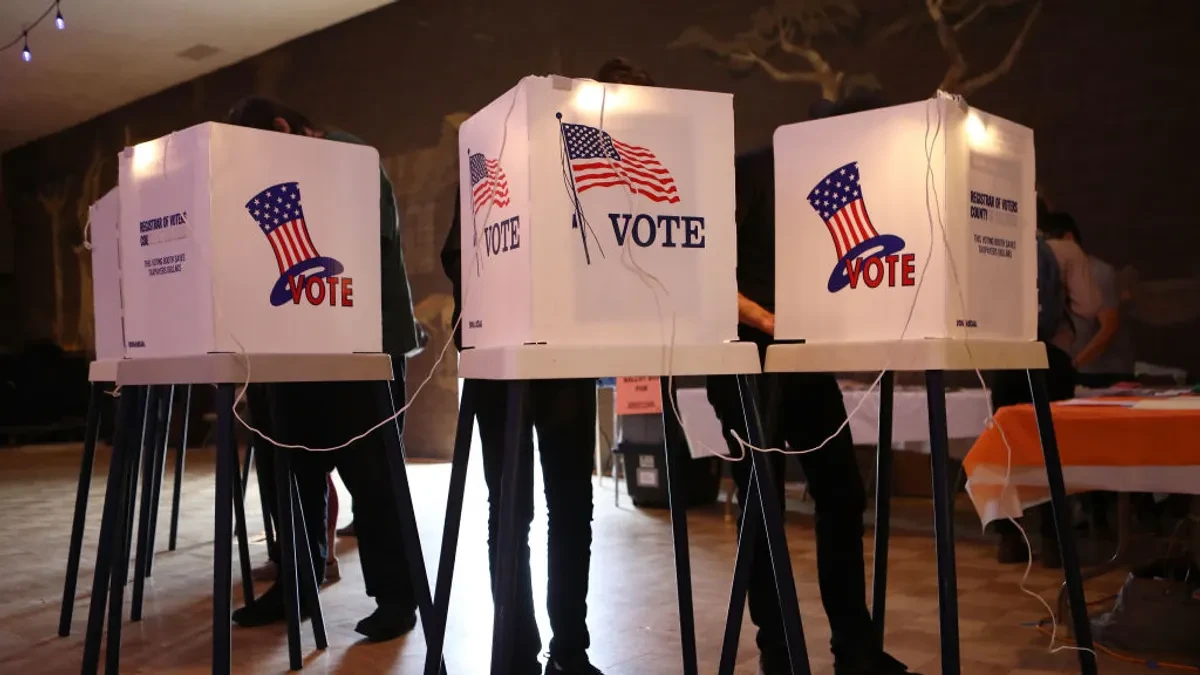
As housing affordability and supply remain at the forefront of local and national policy debates, voters across four states are stepping up to the ballot box this November to decide a historic number of state-level housing measures. According to data compiled by Ballotpedia, six statewide housing policies will appear on ballots this election cycle, marking the highest volume of such measures in a single year since 2006.
The surge in voter-led housing initiatives underscores how state governments are increasingly taking matters into their own hands to address widespread inventory shortages and affordability challenges. For years, housing has been a dominant concern for local government leaders, mayors, and municipal planners trying to balance economic growth with livability. Recently, those local pressures have increasingly drawn the attention of state legislatures.
The national urgency surrounding the issue was further highlighted this summer with Congress passing the 21st Century ROAD to Housing Act, bringing the conversation firmly onto the national stage. Now, as the general election approaches, citizens in California, Hawaii, Massachusetts, and Rhode Island will have direct legislative power over how their states fund, regulate, and approach housing development for years to come.

California
California stands out with three distinct propositions on its November ballot, addressing everything from multibillion-dollar bond investments to environmental review processes.
Proposition 1 asks voters to approve an expansive $11.25 billion in state general obligation bonds dedicated entirely to funding housing affordability programs. Out of that substantial total, $1.25 billion is specifically earmarked to support veteran housing needs, while the remaining funds will be distributed across a broad spectrum of home and rental assistance initiatives, including affordable student housing developments.
In addition to rental and ownership subsidies, California voters will weigh Proposition 37, a targeted homebuying assistance measure. If approved, the measure will establish a second mortgage program designed for qualifying homebuyers. It would authorize the California Housing Finance Agency to issue up to $25 billion in revenue bonds to finance home loans. These loans would eventually be repaid directly by homeowners through their regular mortgage payments.
California’s third housing-related measure, Proposition 45, takes a different approach by focusing on regulatory reform. The proposition alters the California Environmental Quality Act by establishing strict deadlines and streamlined procedures for specific types of infrastructure and construction projects, including housing developments. Furthermore, it would update the judicial review process for these projects, potentially narrowing the scope of what courts can consider during legal challenges brought against new developments.

Hawaiʻi
Across the Pacific, voters in Hawaiʻi are considering a significant proposed amendment to the state constitution. The amendment would formally authorize the state legislature to empower individual counties to issue housing infrastructure bonds.
Under the current framework, real property tax rates are bound by strict debt limits. The proposed constitutional amendment would alter this by allowing counties and municipalities to repay these newly authorized infrastructure bonds through future growth in property tax revenues rather than hikes to tax rates. Proponents argue this mechanism will unlock critical funding for essential infrastructure—such as water, sewer, and roads—needed to support new housing and community development projects without immediately straining local tax bases.
Massachusetts
In New England, Massachusetts voters are facing a major zoning and land-use policy via Question 7. The ballot question asks whether the state should mandate that local governments permit single-family homes on residentially zoned land of at least 5,000 square feet, provided the properties meet specific qualifying criteria, such as having access to public water and sewer services.
Should the measure pass, cities and towns would retain the authority to reasonably regulate certain physical and operational aspects of these single-family homes. This includes oversight regarding building height, parking requirements, setbacks from neighboring structures, and regulations governing whether properties can be utilized on a short-term rental basis. The debate highlights ongoing tensions between state-level density mandates and local zoning autonomy.

Rhode Island
Rhode Island is also asking voters to approve a major financial commitment to the housing sector through Question 2. If approved, the measure will authorize the state to issue $120 million in bonds dedicated to affordable housing development.
According to reports from the Rhode Island Current, at least $25 million of that bond funding would be explicitly set aside for housing intended for homeownership, while $10 million would be directed toward public housing development. This initiative mirrors a similar voter-approved bond from two years prior, which at the time represented the largest housing bond in Rhode Island history. State leaders hope the renewed funding will sustain ongoing momentum in closing the state’s affordable housing gap.