The artificial intelligence landscape has expanded rapidly from simple conversational chatbots into complex, multi-functional technical workspaces designed to handle diverse workloads. Among the platforms emerging to meet this demand is Abacus AI, an environment that consolidates a wide array of AI models, autonomous agents, and application development tools under a single umbrella. As professionals, developers, and casual users increasingly adopt unified platforms to manage their digital tasks, understanding the true capabilities, limitations, and operational dynamics of such systems has become essential. A comprehensive examination of Abacus AI—drawn from user discussions, public reviews, and platform demonstrations—reveals a powerful yet complex ecosystem that offers significant versatility alongside notable learning curves and operational considerations.
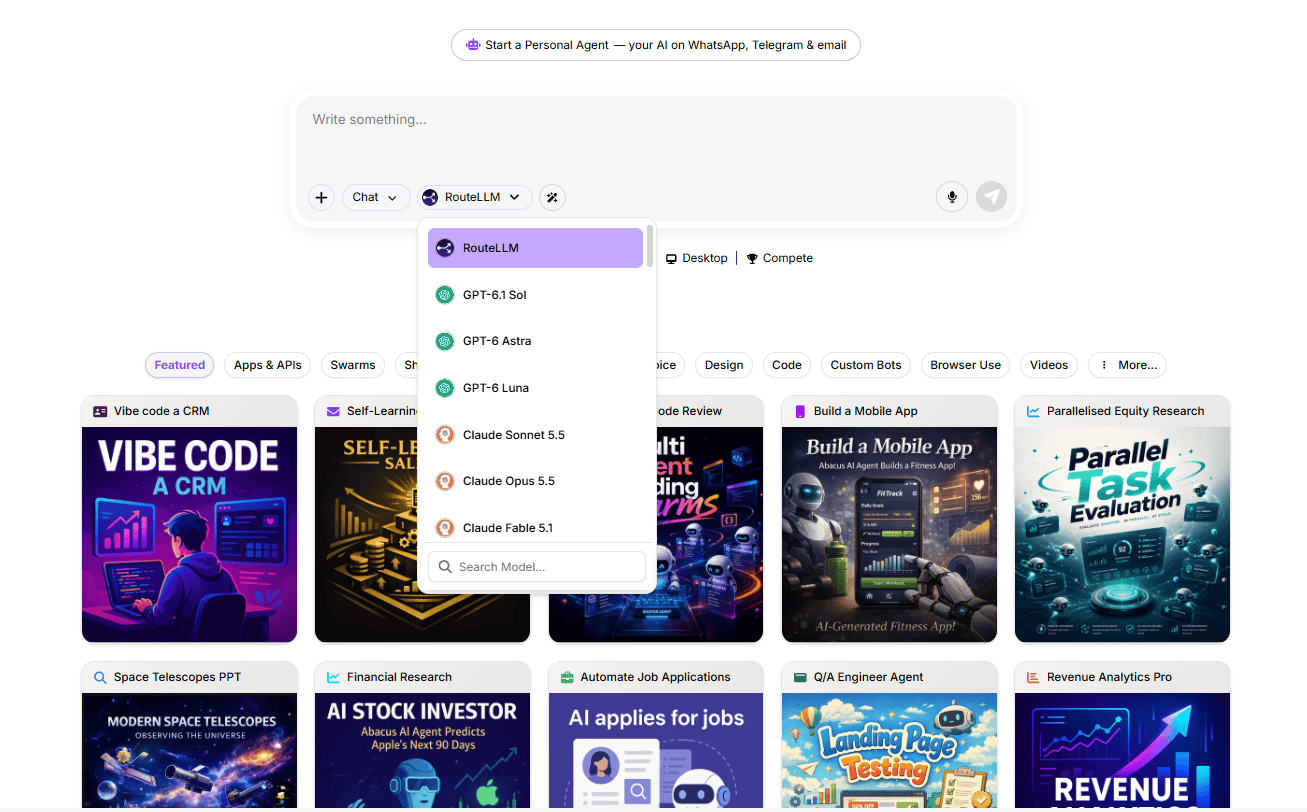
At its core, Abacus AI functions as an integrated technical workspace where users can perform writing tasks, conduct data analysis, generate images and videos, write and review code, and build applications. One of the primary entry points for beginners is its ChatLLM interface, which provides simultaneous access to leading models from providers such as OpenAI, Anthropic, and Google. This unified interface allows users to toggle between different underlying models without needing to open multiple distinct applications, streamlining workflows that require varied linguistic or logical approaches.
While platforms like ChatGPT and Claude specialize primarily in conversational artificial intelligence, Abacus AI is engineered to cover a broader spectrum of individual and commercial needs through a diverse suite of specialized tools. The platform’s product ecosystem comprises several core components designed for specific technical functions. Among these is the Abacus AI Agent, which executes multi-step actions ranging from advanced research and coding to web operations and app development. Another notable tool is Claw, an AI agent capable of performing multi-step actions across messaging channels such as Slack, WhatsApp, and Telegram while maintaining context between sessions. Similarly, Hermes functions as an AI agent designed to execute multi-step tasks while learning reusable skills from prior experiences.
For technical users and developers, the ecosystem extends to environments like Abacus AI Desktop, a dedicated workspace for coding, pair programming, and editing local files. Studio handles media creation, including images, videos, and audio, utilizing a variety of underlying models. Meanwhile, AppLLM, often referred to in the context of vibe coding, assists users in creating and deploying web applications simply by describing desired outcomes. To support these resource-intensive processes, the SuperComputer feature provides a cloud environment where users can run AI agents, code, and background services that continue operating even after a browser session has closed. Additional infrastructure components include Agent Swarms for coordinating multiple AI agents simultaneously, the Smaug family of models built specifically for reasoning and coding workflows, and an open-source coding agent known as the Abacus AI Bot.
Despite the breadth of its features, an evaluation of online reviews and competitor assessments highlights two distinct perspectives among users. Positive feedback frequently comes from individuals who make extensive use of the platform’s wide variety of models and agents, praising its cost-effectiveness and the convenience of a centralized workspace. Conversely, negative reviews often focus on challenges related to credit consumption, pricing transparency, the platform’s learning curve, and occasional workflow interruptions. Analyzing both viewpoints provides a clearer picture of how the platform performs in real-world scenarios.
A significant portion of user criticism centers on the platform’s complex interface and the difficulty of navigating numerous tools housed within a single environment. Users have noted that switching between various AI models can sometimes make it challenging to track which model was utilized in previous conversations. Furthermore, mastering advanced features, particularly autonomous AI agents and custom workflow creation, demands a noticeable investment of time. While basic ChatLLM features remain accessible to general users, many of the platform’s more powerful capabilities are distinctly developer-focused, requiring technical knowledge to navigate effectively.
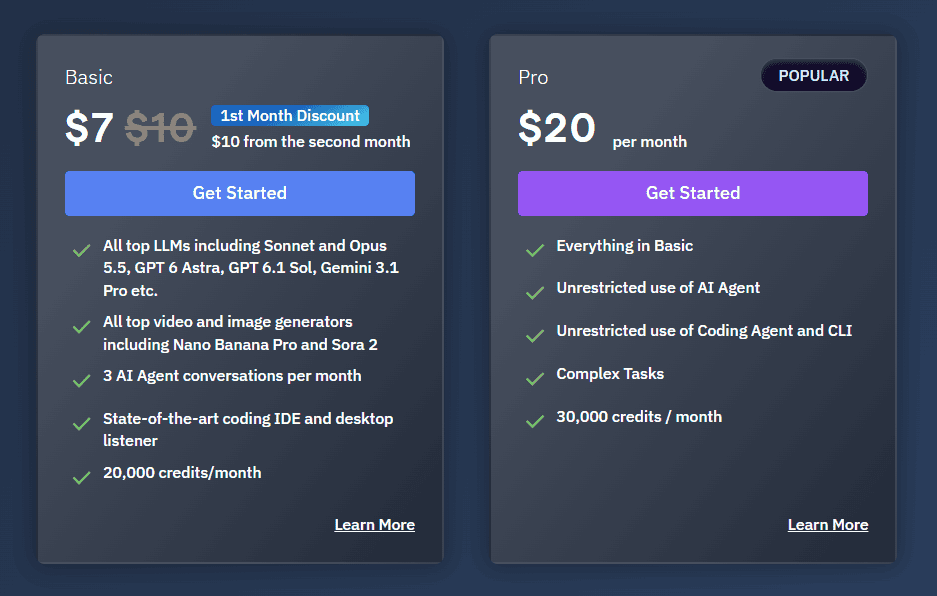
Pricing and credit usage represent another prominent area of discussion among users. Abacus AI operates on a credit system where different actions consume varying amounts of resources based on complexity. Simple text generation requires fewer credits, whereas complex agent workflows, extensive research, and media creation deplete balances much faster. Users have occasionally reported uncertainty regarding how many credits a specific task will consume, making it difficult to predict monthly expenses accurately. Additionally, pacing rules governing credit usage can impact how remaining monthly allowances are distributed throughout a billing cycle, while shifts between introductory promotional rates and standard subscription prices have occasionally caused confusion regarding ongoing costs.
Workflow reliability and performance also shape user sentiment. While AI agents are designed to execute complex, multi-step tasks independently, instances can occur where an agent stops prematurely or produces output that requires manual intervention. Because credits are generally consumed during task execution, failed runs or incomplete workflows can lead to frustration regarding resource expenditure. Multi-step operations often require careful monitoring, precise instructions, and active troubleshooting to ensure the final result aligns with user expectations.
When considering business features and integrations, organizations must evaluate whether the platform supports their existing tools and specialized workflows. Teams seeking preconfigured solutions for customer support, IT operations, or other specific business functions may find that they need to configure custom workflows rather than relying on ready-made templates. Businesses with strict reporting requirements must also assess whether available monitoring and analytics features meet their operational standards. While platforms designed for general AI work offer immense flexibility, they may not always provide the specialized experience of tools built for a single, dedicated function.
Customer support and billing inquiries have also surfaced in public forums, with some users reporting delayed response times or challenges during subscription cancellations. While many of these reports are individual experiences rather than widespread systemic failures, understanding subscription terms, renewal dates, credit limits, and cancellation policies remains crucial for users before committing to paid plans. Additionally, autonomous web research tasks can occasionally produce inaccurate information, underscoring the importance of human verification for critical outputs.
Examining real-world use cases demonstrates how these tools operate in practice. Demonstrations of website creation show how multi-page sites with integrated payment processing can be generated to test consumer demand or handle workshop sign-ups, though developers must still ensure that post-payment and error-handling functions operate correctly. Mobile application development examples, ranging from fitness trackers and running coaches to expense managers and games, highlight the platform’s ability to scaffold functional software applications, which benefit greatly from testing on physical devices.
Similarly, customer relationship management systems built through vibe coding showcase the platform’s capacity to establish core business software workflows, though increasing integrations and user permissions require rigorous validation. Automated invoice processing tools extract vendor information, amounts, and due dates from documents and images, converting unstructured data into structured formats that can be reviewed by human operators. Revenue analytics applications automate spreadsheet analysis to uncover financial patterns, emphasizing the importance of precise metrics and clear definitions when interpreting AI-generated financial insights.
Advanced development tasks are addressed through multi-agent code review systems, where multiple AI agents simultaneously analyze pull requests to identify potential bugs, security flaws, and performance inefficiencies. Automated software testing agents emulate user interactions to evaluate landing pages, form submissions, and user interfaces, generating actionable bug reports. Scheduled browser workflows automate routine administrative tasks, such as logging into external portals, downloading documents, and updating spreadsheets, though robust error-handling mechanisms are necessary to alert operators if an automated login or data extraction fails. Finally, parallelized research tools synthesize data across numerous companies or industries to assist with market entry reports and investment portfolios, reinforcing the necessity for users to verify underlying sources and separate factual data from AI-generated interpretations.
Ultimately, Abacus AI serves as a comprehensive technical workspace tailored for individuals and organizations seeking to integrate multiple artificial intelligence capabilities into a single environment. While its extensive model access, autonomous agents, and application development tools offer significant utility, potential users must carefully weigh the platform’s learning curve, credit-based pricing structure, and the need for active workflow monitoring. By understanding both the strengths and the operational demands of the system, users can determine how effectively the platform aligns with their technical requirements and daily workflow objectives.