United Airlines has announced an extension for its aggressive "Switch To Better Wi-Fi" status-match promotion, giving elite frequent flyers from competing airlines a bit more time to capitalize on the offer. The promotion, which was originally scheduled to conclude on October 15, is now available through October 22, according to the carrier. The campaign has injected a fresh wave of competitive friction into the U.S. aviation market, directly challenging top-tier loyalty members at Delta Air Lines and American Airlines.
The ongoing battle for frequent flyer loyalty has largely moved beyond traditional perks like lounge access and baggage fees, shifting squarely into the technological realm of high-speed inflight internet. While status-match programs are a common fixture in the airline industry—allowing elite members of one carrier to secure equivalent status when moving to another—United’s latest effort carries a uniquely pointed message. Dubbed the "Switch To Better Wi-Fi" offer, the campaign specifically targets rivals over their current and future inflight connectivity strategies, creating significant chatter across both mainstream media outlets and specialized aviation blogs.
An Inflight Wi-Fi Turf War
The catalyst for United’s aggressive marketing push lies in the rapidly evolving landscape of aircraft connectivity. United is currently in the middle of a massive fleetwide rollout of Starlink Wi-Fi, a service widely regarded within the industry as offering the fastest and most reliable internet connection currently available in the skies.
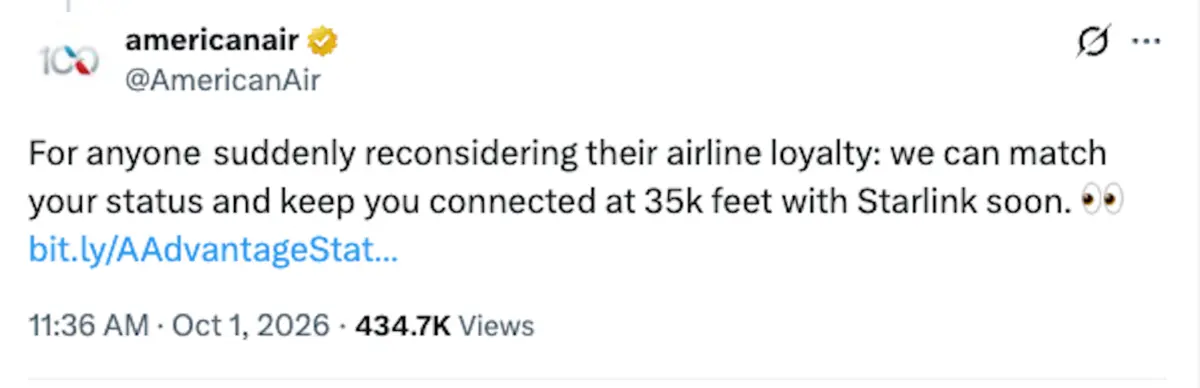
In contrast, competitors are taking distinctly different paths. Delta Air Lines has chosen Amazon’s Leo satellite service for its future connectivity upgrades—a system that remains largely unproven for in-flight capabilities and carries a rollout timeline that lags behind United’s aggressive schedule. Meanwhile, American Airlines has also announced plans to begin installing Starlink Wi-Fi on a portion of its narrowbody fleet starting next year, though it initially responded to the market shift by promoting its standard status match rather than launching a dedicated campaign.
The public rivalry intensified further following reports of internal comments made by Delta CEO Ed Bastian to employees regarding the airline’s decision to bypass Starlink. Reports indicated that Bastian’s remarks touched upon perceived challenges in working with Starlink founder Elon Musk. Those leaked comments quickly ignited a firestorm of online discussion, with numerous Delta frequent flyers openly expressing frustration that their preferred carrier was opting for a slower internet rollout and potentially inferior technology compared to what United is bringing to its fleet.
Recognizing an opening, both United and American moved swiftly to capitalize on the discourse by highlighting their respective status match opportunities. However, United took the rivalry a step further by introducing the dedicated "Switch To Better Wi-Fi" promotion. Featuring blunt marketing language urging travelers to abandon buffering screens in favor of United’s high-speed service, the move has been viewed by industry analysts as a remarkably direct challenge. Airline analyst Henry Harteveldt described the strategy to CNBC as an airline-style war, noting the rare and blatant nature of United’s public pitch against its primary competitors.
Understanding the ‘Switch To Better Wi-Fi’ Status Match Terms
For frequent flyers willing to navigate the corporate rivalry, United’s internet-inspired promotion provides a streamlined pathway to the upper tiers of the MileagePlus loyalty program. The offer is available exclusively to U.S. residents who currently hold elite status with either Delta or American Airlines.
Typically, United enforces a strict rule that restricts customers from requesting a status match more than once every three years. However, the airline has agreed to waive this requirement specifically for the Wi-Fi match campaign.
Approved applicants who successfully transition their status will initially receive equivalent United Premier status for a trial period of 90 days. To retain that status through January 2028, participants must meet specific spending thresholds on qualifying flight purchases made directly with United during the promotional window. The required spending varies depending on the tier, ranging from $1,500 for Premier Silver up to $7,000 for the top-tier Premier 1K status. Equivalent matches are also available for invitation-only levels, such as Delta 360 and American’s Concierge Key.
Contrasting with Standard Status Match Pathways
The temporary Wi-Fi promotion operates distinctly from United’s standard status match program, which remains active and open to loyalty members from a wider variety of global airlines.
Under the standard match framework, participants generally have a slightly longer window of 120 days to complete a structured challenge to earn full-year status. Rather than relying purely on a financial spending threshold, the standard challenge evaluates participants using a combination of Premier Qualifying Dollars and Premier Qualifying Flights, metrics that United traditionally utilizes to gauge ongoing loyalty and revenue generation.
While the standard match demands a more complex combination of flight segments and spending over a longer duration, the new Wi-Fi match offers Delta and American elites a simpler, spend-focused path to high-level status, albeit within a much compressed timeline.
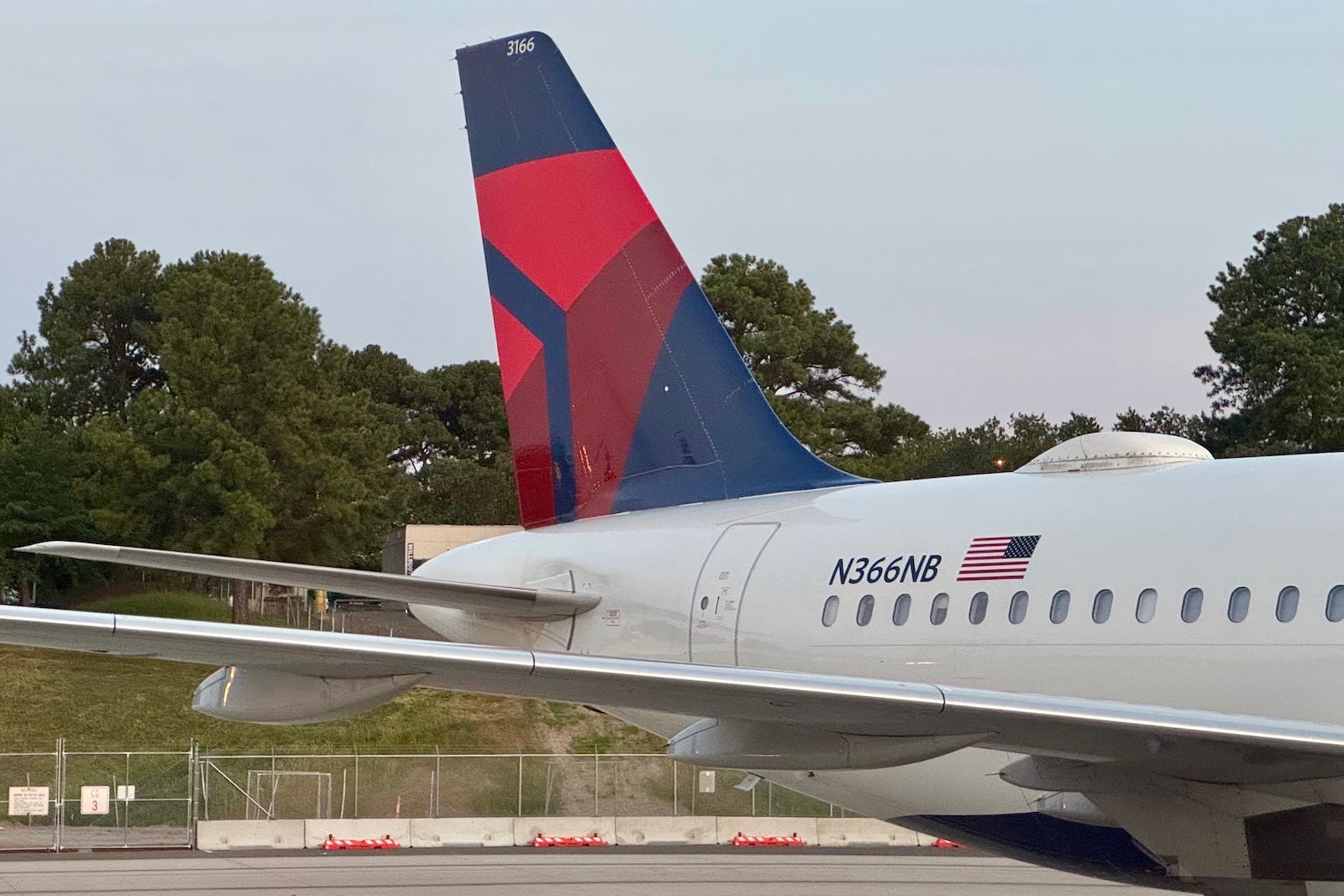
The broader conflict over inflight connectivity underscores how vital fast internet has become in shaping consumer loyalty. Delta has already introduced free connectivity to a substantial portion of its fleet for SkyMiles members through existing providers, though passenger reviews often suggest the speeds trail behind the emerging capabilities of Starlink. Viasat, one of Delta’s current connectivity partners, recently activated a new satellite designed to significantly boost bandwidth performance while the airline prepares for its eventual transition to Amazon-backed technology. Meanwhile, American Airlines continues to map out its own integration of Starlink across roughly 500 narrowbody aircraft, though it has not yet outlined plans to expand the high-speed offering across its entire fleet.
As the extended October 22 deadline approaches, travelers weighing their loyalty options face a shifting landscape where digital connectivity and elite status are increasingly intertwined.