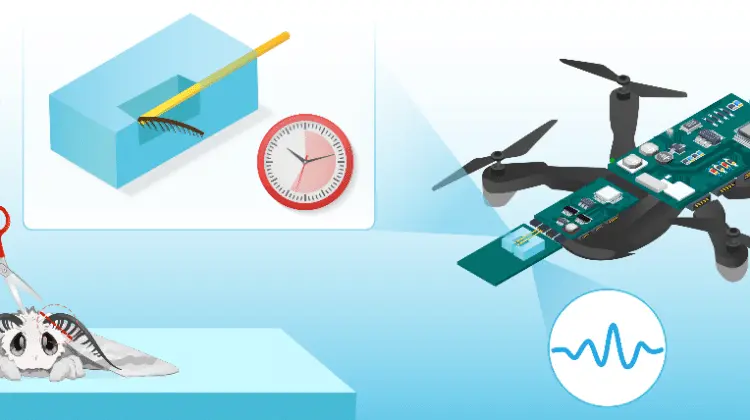
In a significant step forward for the field of biohybrid robotics, a collaborative team of researchers from Shinshu University and Chiba University has developed an innovative water-retaining hydrogel electrode designed to extend the operational lifespan of insect antennae used as biological odor sensors. Published in the journal Sensors and Actuators B: Chemical on July 2, 2026, with an official institutional release following from Chiba University on July 16, this breakthrough directly targets one of the most stubborn limitations in integrating biological components with robotic systems: rapid dehydration and subsequent signal degradation.
The research initiative was led by Associate Professor Daigo Terutsuki of Shinshu University and Associate Professor Toshiyuki Nakata of Chiba University, alongside graduate student Rena Omori of the Shinshu University Graduate School of Science and Technology and Associate Professor Yosuke Kageshima of the Shinshu University Faculty of Engineering. Their work, published in collaboration with the Japan UAS Industrial Development Association (JUIDA), addresses the fragility of living sensors when detached from their biological hosts. By mounting a modified sensor onto a small drone and successfully demonstrating closed-loop odor-tracking capabilities, the team has brought biohybrid aerial robotics a step closer to practical, real-world deployment.
For years, scientists have recognized the immense potential of utilizing insect antennae for technological applications. Insects possess olfactory systems of astonishing sensitivity and response speed, capable of detecting minute concentrations of specific chemical compounds across vast distances. In search-and-rescue operations, environmental monitoring, and hazardous industrial inspections, mechanical gas sensors often struggle to match the low power consumption, rapid response times, and molecular discrimination offered by nature’s own evolutionary designs.
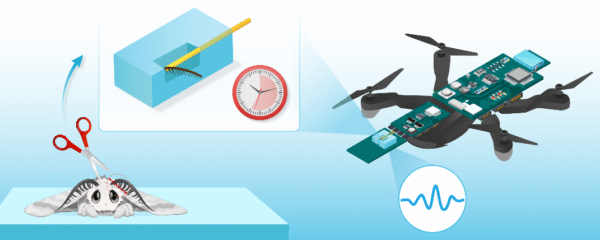
However, translating these biological marvels onto mobile robotic platforms has historically presented severe engineering hurdles. Once an insect antenna—such as that of the silkworm moth commonly utilized in laboratory experiments—is excised, it begins to lose moisture rapidly. In ambient air, particularly when subjected to the downdraft and airflow generated by the rotors of a flying drone, the exposed tissue dries out within a matter of hours. As dehydration occurs, the electrical contact between the antenna and the measurement hardware becomes unstable, causing signal quality to degrade sharply and rendering the sensor unreliable for prolonged missions.
How the Hydrogel Electrode Works
To overcome the persistent challenge of desiccation and signal loss, the research team engineered a specialized multi-component electrode interface. The newly developed system relies on an integration of four distinct elements: a water-retaining hydrogel formulated from a standard food gelling agent, a conductive gel, gold-plated electrodes, and a custom 3D-printed structural frame.
In this configuration, the gold-plated electrodes and the conductive gel work in tandem to capture and transmit the electrical signals generated by the biological tissue. Meanwhile, the newly introduced food-gelling hydrogel plays a crucial supporting role by cradling the delicate junction where the cut ends of the insect antenna meet the conductive gel. By continuously retaining moisture around this critical interface, the hydrogel prevents the tissue from drying out and eliminates the contact shifts that typically plague conventional mounting methods.

To evaluate the efficacy of their design, the researchers conducted rigorous electroantennogram (EAG) testing using silkworm moth antennae, which naturally produce measurable voltage fluctuations upon encountering target odor molecules. Tested under standard indoor, room-temperature conditions, the sensor maintained more than 92 percent of its initial electrical response even seven hours after the antenna had been excised from the insect.
This performance represents a dramatic improvement over traditional mounting techniques. By comparison, a conventional metal electrode setup typically sees its signal response fall below 50 percent of its initial value after just four hours of exposure to ambient air. Furthermore, electrochemical impedance measurements conducted by the team confirmed that the hydrogel successfully preserves the initial electrical coupling between the electrode and the conductive gel, effectively limiting impedance fluctuations over extended periods of operation.
Odor-Tracking Drone Demonstration
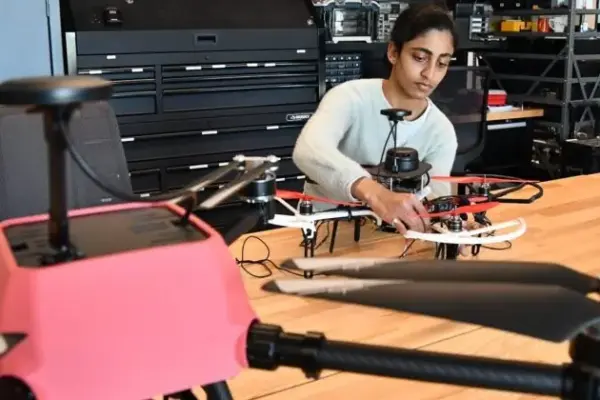
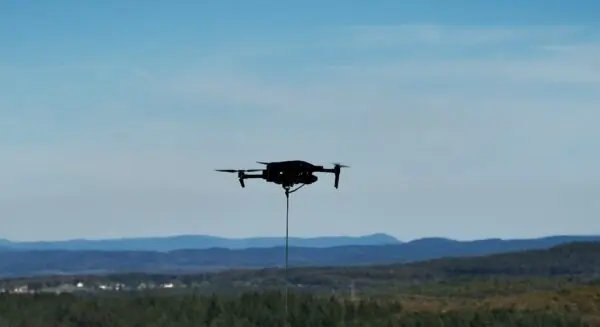
Building upon the success of the benchtop tests, the research group advanced their experiments by mounting the enhanced electroantennogram sensor onto a small, maneuverable drone. In a controlled closed-loop test environment, the team evaluated the system’s viability during active flight.
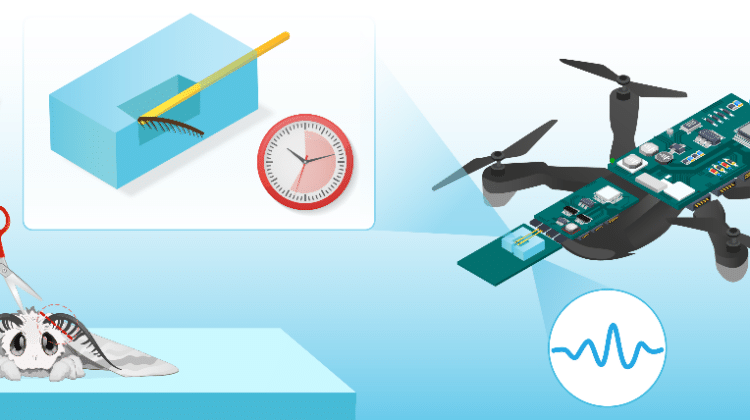
Even while the aircraft was hovering and generating localized air turbulence, the integrated biological sensor successfully detected target odor signals in real time. The research team then utilized these incoming biological signals to trigger a programmed response, prompting the drone to move forward automatically upon detecting the scent.
This successful demonstration bridges the gap between fundamental biological sensing and mobile robotic navigation. The research group has previously focused on refining the search algorithms and movement patterns of odor-tracking drones equipped with insect antennae to optimize how efficiently they locate sources. While those earlier efforts successfully enhanced the search strategies of the aerial vehicles, this latest development fundamentally extends the usable lifespan of the sensors themselves, transforming the technology from a short-lived laboratory curiosity into a more robust, field-ready platform.
Looking toward the future, the research team anticipates a wide array of practical applications for odor-sensing biohybrid drones. Primary targets for future deployment include emergency search-and-rescue missions in disaster zones where survivors may be trapped beneath rubble, industrial gas leak detection in complex or hazardous environments, and comprehensive environmental monitoring initiatives requiring the tracking of specific chemical plumes across large geographical areas. As development continues, the integration of biological sensitivity with mechanical mobility promises to expand the capabilities of autonomous systems across numerous critical sectors.