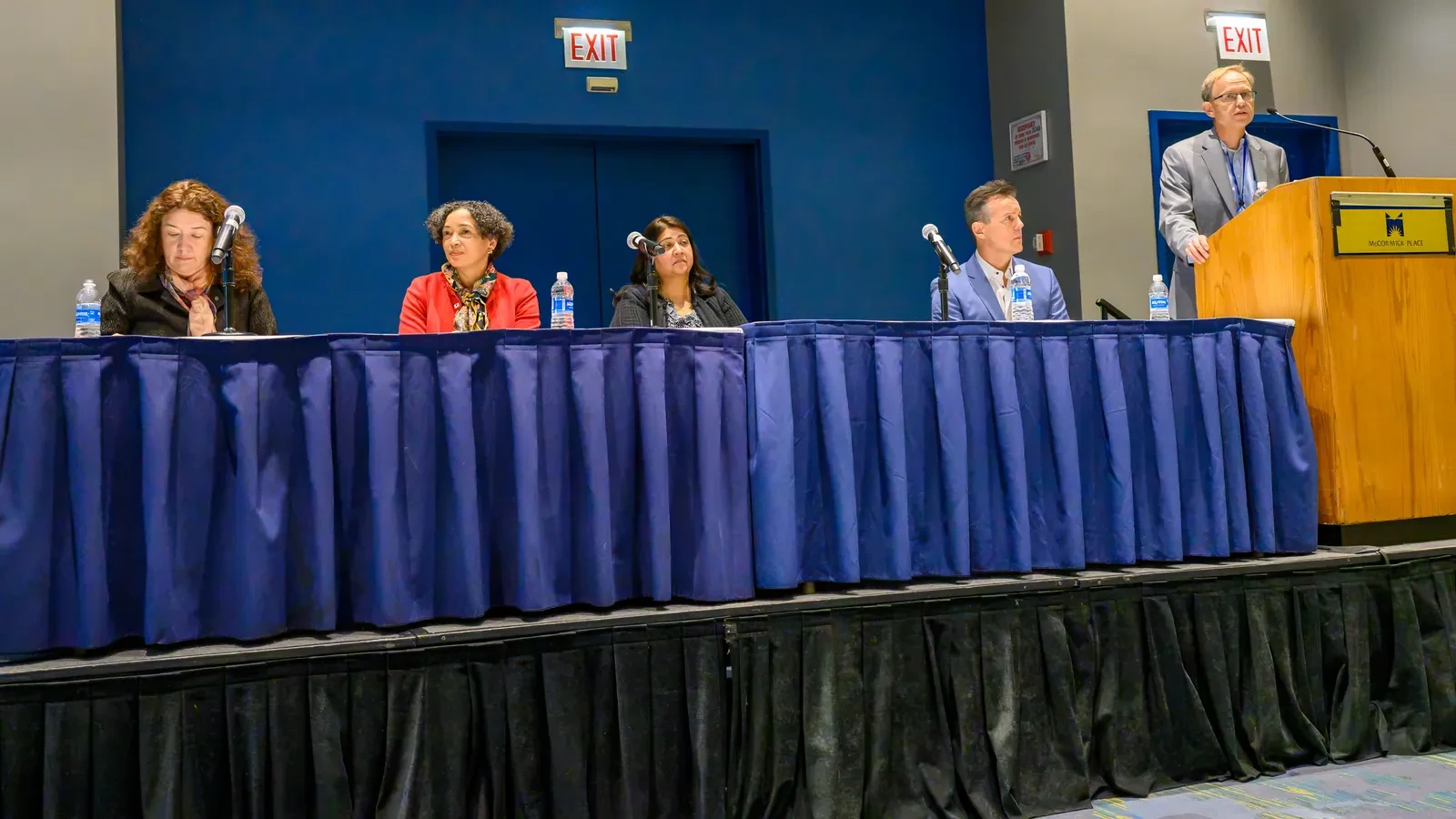
As public transportation agencies across the United States continue to navigate the profound structural shifts brought on by the post-pandemic era, transit leaders are finding innovative ways to stabilize their finances, secure long-term funding, and expand critical infrastructure. At an insightful panel session held during the American Public Transportation Association TransForm conference in Chicago, three executives representing major metropolitan transit systems detailed how their organizations tackled severe revenue shortfalls, managed political hurdles, and positioned their networks for sustainable future growth.
The Oct. 5 panel brought together high-ranking officials from Chicago, New York, and Seattle to discuss the realities of modern urban mobility. While the challenges each city faced were distinct—ranging from multi-billion-dollar budget gaps and contentious policy reforms to engineering marvels crossing bodies of water—the overarching theme of the discussion centered on the absolute necessity of public transit, proactive fiscal management, and the creative pursuit of new revenue streams to ensure the vitality of metropolitan regions.
Saving Chicago from a Fiscal Cliff
The conversation opened with a stark look at the financial precipice facing the nation’s third-largest transit system. “In 2023, we all saw the crisis coming,” said Thomas McKone, the chief financial officer and treasurer for the Chicago Transit Authority. The region’s expansive transit network, which encompasses the CTA’s heavy rail and bus systems alongside the Metra commuter rail and the Pace suburban bus services, was bracing for an impending financial disaster.
Projections indicated that without substantial intervention, the regional transit system would face a budget gap exceeding $770 million by 2026, a deficit that was anticipated to balloon to an alarming $1.2 billion by 2027. This impending shortfall threatened to cripple the daily movement of hundreds of thousands of commuters who rely on the network to access jobs, education, and healthcare across Cook County and the surrounding collar counties.
Faced with these daunting numbers, CTA leadership recognized that traditional funding models were no longer sufficient. “From where we were sitting, we were highlighting the value of transit and the essentiality of the services and the system that we provide,” McKone explained during the panel discussion. He candidly acknowledged a reality that has challenged transit agencies nationwide: “It’s clear that ridership was not going to return to those pre-pandemic levels, at least not in the short term.”
The stakes were extraordinarily high. In 2022, the Regional Transportation Authority of Northern Illinois issued clear warnings that without additional legislative relief, the regional network would have no choice but to implement substantial fare increases, execute drastic cuts in service, or resort to a combination of both measures to balance its books. To avert this catastrophic outcome, the RTA turned to the Illinois state legislature for a lifeline.
Lawmakers recognized that preserving the economic engine of the Chicago metropolitan area required a fundamental reimagining of how transit is funded and governed. According to McKone, legislators cast a wide net when searching for viable solutions, looking not only at examples from other major urban centers across the United States but also examining successful European transit models to determine what structural reforms could best serve the region.
This intensive legislative evaluation ultimately yielded a transformative outcome: a robust $1.5 billion funding package aimed at bolstering public transportation agencies and providing vital support for transit-oriented development. Furthermore, the legislature took the historic step of restructuring the region’s transportation management framework, establishing the Northern Illinois Transit Authority to streamline operations, enhance coordination among the various transit boards, and guide the regional system into a more financially stable era.
New York’s Congestion Pricing Pays Off
Moving from the Midwest to the Eastern Seaboard, the panel also highlighted the dramatic turnaround and early success of New York City’s pioneering congestion pricing program. Developed under a 2019 state law intended to alleviate crippling traffic congestion in Manhattan while generating a dedicated, reliable revenue stream for the capital needs of the New York Metropolitan Transportation Authority, the program faced a tumultuous political and legal journey before finally taking effect. Over the intervening years, the state successfully fended off numerous legal challenges, as well as vocal hostility from the Trump administration, to bring the policy to fruition.
Before the initiative rolled out on the streets of Manhattan, anxieties ran high among business owners, motorists, and certain regional stakeholders. “Before the program launched, there were fears that the businesses would shutter and that the sky would fall,” MTA Chief Financial Officer Jai Patel told the audience during the Chicago panel.
However, Patel reported that none of those dire predictions materialized. Instead, the reality on the ground proved far more positive. “In the first year post-implementation, the region’s economy remained strong,” he noted, emphasizing that local commerce continued to thrive despite the new tolling structure.
Beyond protecting the regional economy, the congestion pricing initiative delivered immediate, tangible benefits to the quality of urban life in New York. Patel pointed out that transit ridership across the MTA system experienced an upward tick as commuters opted for the efficiency of subways and buses. Concurrently, the city observed noticeable improvements in the urban environment, including a reduction in vehicle noise complaints, fewer traffic crashes, and a decline in both injuries and traffic fatalities on Manhattan streets.
Financially, the program has exceeded initial expectations while operating efficiently. “Congestion pricing has met its revenue expectations and cost less than what we had projected in operating expenses,” Patel stated. For the MTA leadership, the successful deployment and operation of the tolling scheme served as a powerful validation of large-scale public policy. The program, Patel concluded, “was proof that government can do things better and bigger.”
Seattle: Trains Across the Water
The panel’s third perspective came from the Pacific Northwest, where Sound Transit has achieved a major milestone in regional connectivity. In March, the agency made history by opening the world’s first light rail floating bridge, a groundbreaking engineering feat that successfully carried trains across the waters of Lake Washington. This vital infrastructure link seamlessly connected downtown Seattle with the eastside communities of Mercer Island, Bellevue, and Redmond, Washington.
Known as the Crosslake Connection, the new alignment has dramatically transformed regional mobility. Victoria Baecher Wassmer, the deputy CEO for finance and business administration at Sound Transit, reported that light rail now routinely carries over 160,000 daily riders across the system, knitting together disparate communities that were previously separated by heavy traffic and geographic barriers.
The foundation for this ambitious expansion was laid back in 2008, when voters overwhelmingly approved a ballot measure authorizing Sound Transit to construct the cross-lake line and significantly expand regional express bus and commuter rail services. Wassmer explained that the agency’s financial health is sustained by a diversified revenue base, which includes sales and use taxes, excise taxes, car rental taxes, and property taxes. “The strong financial policies and management practices show that we’re responsible stewards of taxpayer resources,” she emphasized to the conference attendees.
The system’s capacity and resilience were put to the test during major international events, such as the FIFA World Cup matches hosted in Seattle. Wassmer shared that the transit network experienced record-breaking ridership during the tournament. Specifically, for the match held on July 6, the system recorded an extraordinary 312,000 boardings in a single day, an achievement she described as truly remarkable for the regional network.
Looking toward the horizon, Sound Transit is not slowing down. The agency is currently executing an ambitious expansion plan stretching out through 2052, which was originally authorized by a 2016 ballot initiative. “We’re going to be nearly doubling our track miles, and we’re going to be making some changes in our commuter rail, and we’re adding bus rapid transit,” Wassmer said.
Like many infrastructure providers across the country, Sound Transit has had to carefully navigate the headwinds of rising inflation and escalating construction costs. To keep its long-term vision on track, the agency has adapted its timeline, strategically deferring certain components while ensuring that all core light rail projects continue moving forward toward completion, as outlined in a comprehensive system update provided by the agency.