The Federal Aviation Administration is moving forward with updates to its foundational remote pilot knowledge test, introducing a modernized question format that will challenge applicants to interpret unfamiliar aviation charts. Set to take effect on October 26, 2026, the upcoming modification represents a notable shift in how prospective commercial drone operators are evaluated on their understanding of the National Airspace System. While the core regulations governing small unmanned aircraft systems remain entirely unchanged, the way the regulatory knowledge is assessed is undergoing a significant technological and structural refinement.
The update specifically targets the Unmanned Aircraft General-Small knowledge test, commonly referred to as the UAG exam. This test is a mandatory hurdle for anyone seeking to earn their initial remote pilot certification under Federal Aviation Regulation Part 107, which authorizes commercial drone operations across the United States. According to details outlined in the official August 2026 Airman Testing Community Advisory published by the regulatory agency, the administration is collaborating closely with its primary testing provider, PSI, to integrate image-based questions directly into the digital examination interface.
What Is Changing in the Exam Structure?
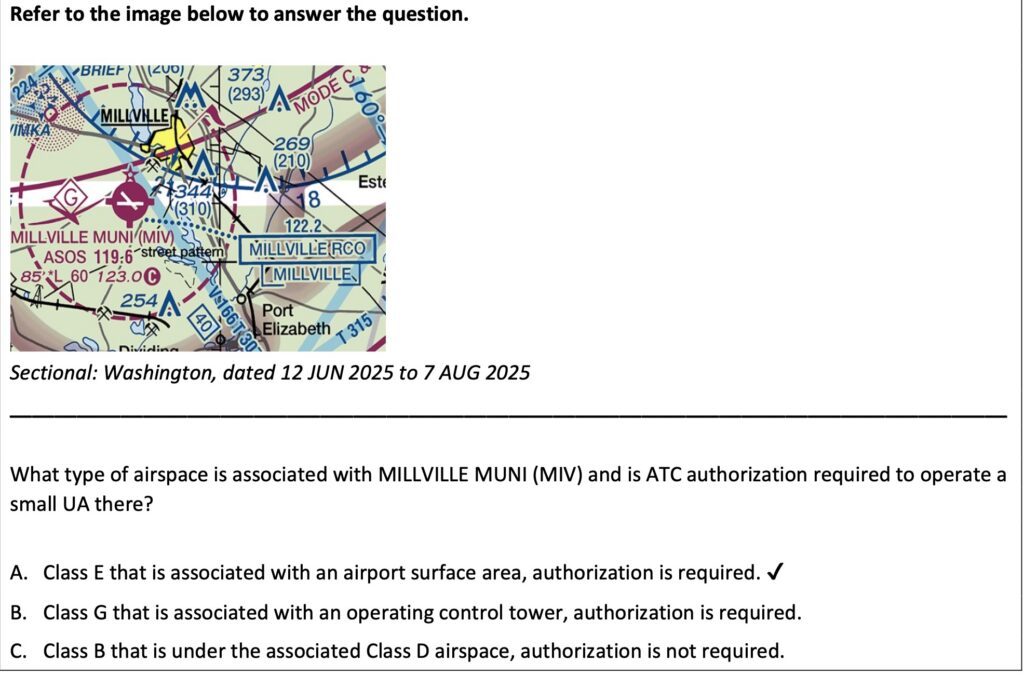
Beginning October 26, individuals sitting for their initial remote pilot certification may encounter questions that feature updated aviation chart images. Crucially, these specific graphic excerpts do not appear in the existing printed testing supplements that candidates have relied upon for years during their preparation. Instead of referencing memorized figures or familiar, static diagrams found in standard study guides, examinees will be expected to demonstrate a dynamic, real-time ability to analyze graphic data presented directly within the digital test environment.

The federal aviation agency has provided initial sample questions in its advisory to illustrate the nature of the upcoming transition. One prominent example requires test-takers to carefully examine a graphic to identify specific airspace classifications surrounding an airport, subsequently asking them to determine whether intended drone operations within that zone legally require prior air traffic control authorization. Another sample scenario challenges applicants to locate and identify the correct airport communications frequency from an unfamiliar visual excerpt.
These adjustments signal a deliberate move away from rote memorization. Because the excerpts may feature variations or entirely new chart sections not pre-loaded into legacy study materials, prospective pilots must cultivate a deeper, more conceptual comprehension of chart symbols, sectional legends, and airspace boundaries.
Despite the introduction of these new visual elements, the regulatory agency has indicated that traditional printed testing supplements will remain available for the time being. An official timeline for the complete retirement of these printed supplements has not yet been announced, meaning applicants can still utilize them as secondary references until further notice from testing authorities. Furthermore, it is critical for candidates to understand that this testing update does not alter the underlying Part 107 operating regulations themselves, nor does it establish any new legal requirements for obtaining or maintaining a remote pilot certificate.
Resources and Guidance for Future Applicants
As the implementation date approaches, industry observers and training organizations are stepping up efforts to help candidates adapt to the modernized format. The federal agency strongly encourages all prospective applicants to review the newly released sample questions directly through the official testing provider portal managed by PSI. Utilizing this portal allows candidates to familiarize themselves with the digital interface and the manner in which the new graphic elements will be displayed on examination screens.
In the private training sector, independent educational providers are also responding to the upcoming modifications. Organizations such as Fly107Prep have published comprehensive explanations regarding the October 26 changes, offering specialized study tools designed to strengthen a student’s ability to interpret complex aviation charts under exam conditions. These independent offerings range from complimentary informational guides to paid mobile preparation applications, reflecting a growing commercial demand for updated educational resources tailored to the revised testing standards.
This upcoming adjustment forms part of a broader, long-term initiative by federal aviation authorities to modernize airman knowledge testing across multiple aviation sectors. By transitioning toward dynamic, image-based digital questions, the administration aims to ensure that certified remote pilots possess robust, practical interpretive skills that translate effectively to real-world operational environments. For future drone pilots entering the commercial space, the fundamental knowledge requirements regarding safety, weather, loading, and airspace remain entirely consistent, but the method by which that competence is verified is evolving to meet modern technological standards.