Federal Bureau of Investigation agents have arrested a high-profile executive at a Canadian cybersecurity firm in Pennsylvania, marking a significant escalation in the sprawling international investigation into the notorious "ShinyHunters" hacking syndicate. The arrest comes on the heels of a devastating cyberattack by the group that compromised sensitive internal files belonging to thousands of federal law enforcement agents, according to multiple sources familiar with the matter.
The high-stakes arrest was first reported by The New York Times, which confirmed that federal authorities had taken a Canadian man into custody in Pennsylvania on suspicion of providing illicit assistance to the ShinyHunters cybercrime enterprise. While neither the initial newspaper report nor a public social media statement issued by FBI Director Kash Patel explicitly named the individual, subsequent reporting and federal court filings have illuminated the identity of the suspect and the broader context of the operation.
Sources close to the ongoing investigation disclosed that the arrested Canadian citizen had traveled to Pennsylvania to attend a prominent cyber insurance conference. The suspect’s professional background is deeply intertwined with the specialized field of handling complex ransomware negotiations on behalf of victimized corporations, a niche sector within the broader cybersecurity and threat-intelligence industry. Furthermore, sources indicated that the overarching direction and control of the multi-jurisdictional ShinyHunters investigation have recently been centralized under the supervision of a dedicated FBI field office in Texas.
An examination of public event registries and online schedules reveals that the annual Cyber Risk Summit was held at the Loews Philadelphia Hotel. The conference featured numerous industry stakeholders, but according to the summit’s official disclosures, its primary corporate sponsor was Cypfer, a prominent Canadian cybersecurity and incident response firm.
Public professional networking profiles indicate that one of Cypfer’s prominent early figures was Edward Dubrovsky, an industry veteran who transitioned to another Canadian security enterprise and conference sponsor known as CyberSteward. Approximately a month prior to the summit, Dubrovsky shared a public update on social media expressing his anticipation for attending the Philadelphia event alongside his new colleagues.

Following widespread reporting on the arrest, a spokesperson for Cypfer clarified that Dubrovsky was never a founder or co-founder of the firm, contrary to claims on his professional profile, but instead held the position of managing director prior to his resignation in late 2025. In previous public statements and writings, Dubrovsky frequently emphasized the nuances of global coercive threat advisory, extortion handling, and settlement mediation.
Federal court documents subsequently unsealed or indexed on legal tracking platforms show that an individual named Edward Dobrovsky—with a minor spelling variation in the surname—was taken into custody in Pennsylvania on October 8, facing serious criminal counts including cyber extortion and conspiracy. While several core investigative documents and the primary complaint remain shielded from public view, available dockets outline charges of conspiring to threaten the impairment of information confidentiality for financial extortion, alongside interference with commerce through threats.
U.S. Bureau of Prisons inmate records indicate that a 54-year-old Edward Dubrovsky is currently being detained at a federal detention facility in Philadelphia. However, court dockets reflect a formal notice filed on October 9 ordering the immediate transfer of the case to the U.S. District Court for the Eastern District of Texas, which sources identify as the nerve center for the federal government’s concerted offensive against the ShinyHunters network. Representatives for the FBI have consistently declined to comment on the ongoing operational developments.
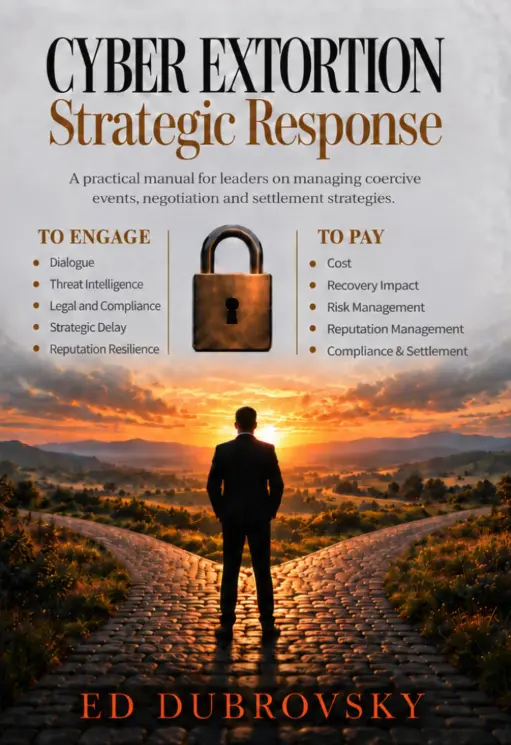
Beyond his corporate work, Dubrovsky is the author of a specialized volume dedicated to strategic responses against cyber extortion, a publication designed to guide organizations through the complex decision-making processes required during major ransomware incidents. The text stresses a fundamental operational distinction between communicating with malicious actors and formally negotiating a financial payout, noting that active engagement can serve alternative defensive objectives such as validating attacker claims, gathering intelligence, buying valuable operational time, and preserving institutional options.
Legal records indicate that Dubrovsky has not yet retained private counsel, nor has the court formally appointed a public defender to represent him in the proceedings.
The ShinyHunters syndicate has established a fearsome reputation within the global threat landscape by systematically leveraging targeted phishing campaigns and compromised corporate credentials to siphon massive repositories of proprietary data from software-as-a-service providers and enterprise networks. The group routinely threatens to publicize the stolen archives unless exorbitant ransom demands are satisfied. According to internal federal estimates, the hacking collective has successfully extorted upward of $70 million from corporate victims throughout the current calendar year.

Law enforcement authorities have been aggressively analyzing electronic devices and digital media seized last month during an international operation in the Netherlands, where Dutch law enforcement apprehended reformed hacker Pepijn van der Stap in connection with the escalating ShinyHunters probe. Investigators hint that additional criminal indictments and arrests targeting principals at other specialized ransomware negotiation firms could be forthcoming as the dragnet widens.
The investigation took a particularly brazen turn immediately following Van der Stap’s arrest, when an operative operating under the alias "Rey" assumed leadership of the ShinyHunters faction. This new figure began openly taunting federal investigators over a significant breach that compromised the FBI’s own online recruitment portal, exposing sensitive personnel data including individual unit assignments, specializations, and confidential medical and psychiatric histories.
Law enforcement pressure intensified when international media outlets reported that the individual operating as Rey—subsequently identified as a teenager named Saif Al-din Khader—had been detained and was actively cooperating with federal investigators. Court and investigative disclosures revealed that Khader was apprehended just as the cybercrime unit attempted to execute an extortion scheme targeting a digital navigation and aviation spin-off recently divested by aerospace giant Boeing.
As federal authorities continue to execute search warrants, analyze seized digital infrastructure, and coordinate with international partners, the investigation remains exceptionally fluid, with further developments expected as the judicial process unfolds.