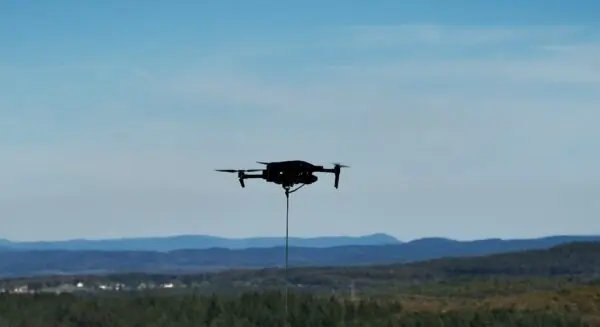
A high-stakes legal battle argued before the U.S. Court of Appeals for the D.C. Circuit this week has the potential to fundamentally reshape the regulatory power of the Federal Communications Commission, specifically regarding its ability to restrict telecommunications and technology equipment that has already received federal authorization. While the immediate case centers on surveillance and security technology from a major international manufacturer, the implications extend directly into the Unmanned Aircraft Systems (UAS) industry, where federal regulators are weighing similar restrictions on foreign-produced drones and critical components.
The judicial proceedings, which took place on October 6, involved oral arguments in the case Hikvision USA, Inc. v. FCC, designated as Case No. 25-1274. In this proceeding, Hikvision is actively challenging a specific portion of a 2025 FCC order that targets equipment currently featured on the agency’s "Covered List"—a registry of communications and surveillance hardware deemed to pose an unacceptable risk to national security or the safety of U.S. persons. The official court record confirms that a judicial panel consisting of Judges Sri Srinivasan, Patricia Millett, and Bradley Garcia heard arguments from the competing legal teams.
At the core of the legal dispute is a novel and controversial FCC rule establishing a formal procedure through which the Commission can restrict, alter, or revoke equipment authorizations it had previously granted. Historically, once the FCC approved a piece of hardware for import and commercial marketing, that authorization remained stable. However, under the newly contested rule, the regulatory landscape has shifted.
In its formal legal briefs submitted to the court, the FCC describes the rule as a mechanism designed to limit previously granted authorizations of covered equipment. The explicit intent of the procedure is to prohibit the continued importation and marketing of such devices, while notably stopping short of prohibiting the ongoing use of hardware that is already owned and operated by end-users.
Hikvision’s legal challenge directly attacks the FCC’s statutory authority to adopt and enforce this retroactive rule. The company argues that the agency is overstepping its bounds by trying to claw back or invalidate permits and authorizations that were legally granted under prior agency standards. Conversely, the FCC maintains that it possesses broad, inherent authority under existing federal communications and national security laws to address evolving threats through its equipment authorization program. The agency argues that this power necessarily includes the authority to limit, condition, or revoke existing authorizations when national security concerns arise.
A Direct Connection to the FCC’s Drone Proposal
While the courtroom drama in the D.C. Circuit focuses on surveillance equipment, the underlying legal question carries a direct, profound connection to the commercial and industrial drone sector. The regulatory framework being tested in the courtroom is the exact same mechanism that the FCC is currently considering applying to a wide range of foreign-produced drones and drone components.
The intersection between the court case and the unmanned aviation industry became clear when the FCC opened a major administrative proceeding on July 21 under PS Docket No. 26-189. In that docket, the Commission formally sought public comments on a far-reaching proposal involving foreign-produced UAS and critical UAS components. According to the agency’s public notices, the proposal contemplates prohibiting the continued importation and marketing of specific foreign-produced drones and associated parts that currently reside on the Covered List and simultaneously satisfy the agency’s proposed definitions for "military-grade UAS and UAS critical components."
The phrase "previously authorized" serves as the critical bridge connecting the Hikvision litigation and the unfolding drone policy. The Hikvision case challenges the very foundation of the FCC’s authority to reach back and restrict previously granted equipment authorizations for items on the Covered List. Simultaneously, the FCC is moving forward with plans to use that exact authority to halt the continued importation and marketing of certain previously authorized foreign-produced drones and components that share the same Covered List designation.
There is, however, a crucial distinction in how these rules affect day-to-day operations. Under the FCC’s drone proposal, commercial operators, public safety agencies, and hobbyists who currently own foreign-manufactured drones would not be barred from continuing to operate the equipment they already possess. This operational carve-out mirrors the framework at issue in the Hikvision litigation, where the FCC emphasizes that its rule targets future importation and commercial distribution channels rather than confiscating or criminalizing the continued use of devices already deployed in the field.
Although the ongoing D.C. Circuit case does not explicitly involve drones—and its eventual ruling will not automatically answer every complex legal question surrounding the FCC’s broader UAS proposals—it places the core legal issue squarely before a federal appellate court. The timing means that a federal bench is evaluating the true scope of the FCC’s authority over previously authorized Covered List equipment precisely as the Commission considers applying that exact regulatory model to foreign-manufactured drones and their critical subcomponents. As the legal community and the aviation industry await the D.C. Circuit’s decision, the outcome is expected to set a critical precedent for how federal agencies manage national security risks in technology supply chains moving forward.