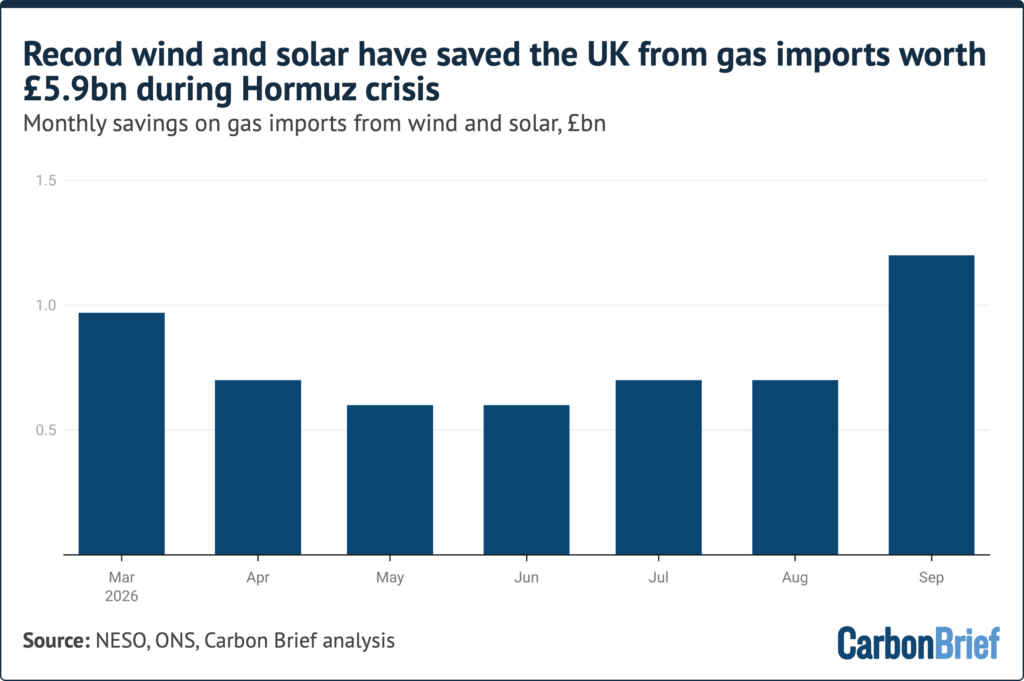
The United Kingdom has successfully averted the need for gas imports valued at an estimated £5.9bn since the onset of the Hormuz crisis, new energy analysis reveals. According to data published by Carbon Brief, the massive financial and resource savings are a direct result of record-breaking electricity generation from domestic wind and solar power sources across the country.
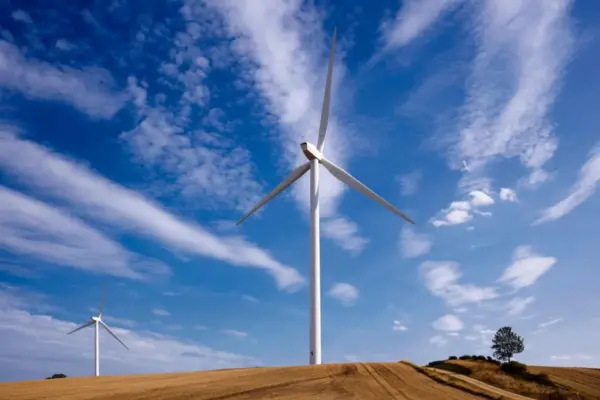
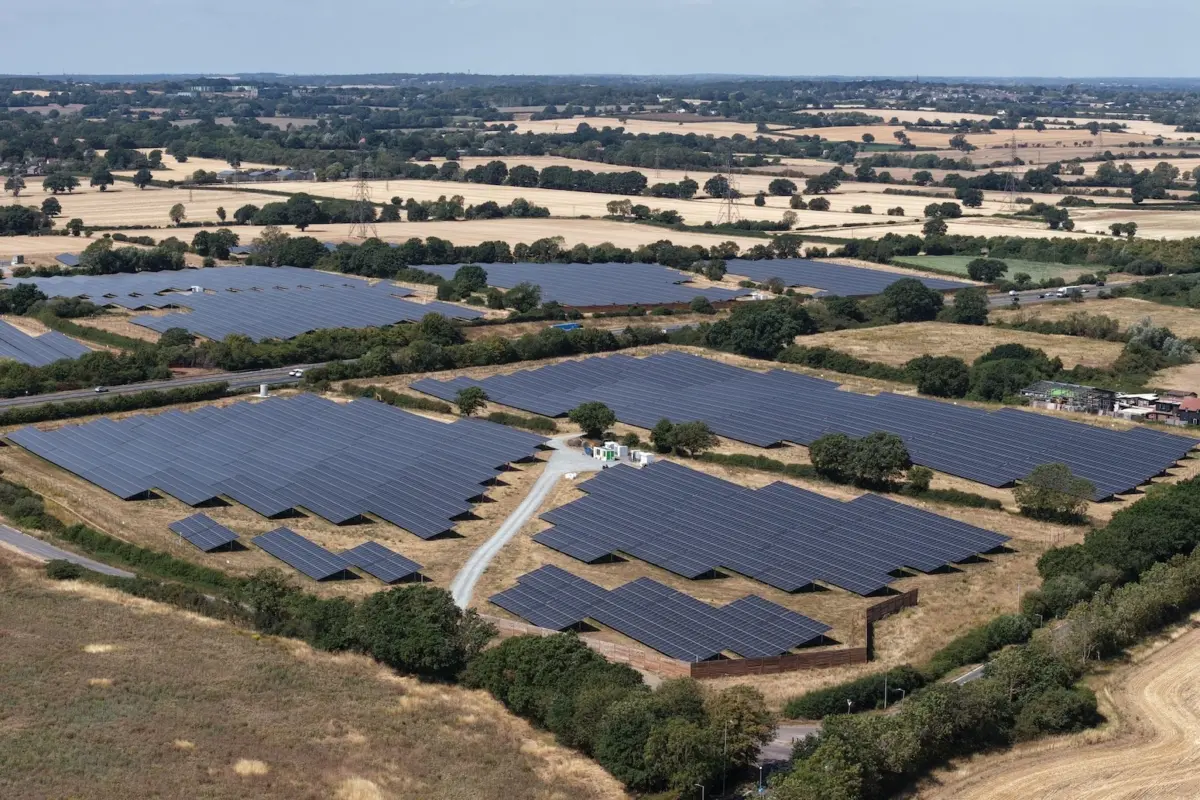
While international gas markets experience severe price volatility—pushing wholesale costs to heights not witnessed since the 2022 global energy crisis—the UK power sector has leaned heavily into renewable infrastructure. Wind and solar output has surged by 14% year-on-year, fundamentally altering the domestic generation mix and insulating parts of the wider energy system from the worst of the external shocks.
This unprecedented acceleration in clean-power generation has directly suppressed the demand for gas-fired electricity. Gas generation across the UK has plummeted by nearly 10% year-on-year through 2026. Consequently, wind and solar combined have captured a record-breaking 41% share of the nation’s total electricity demand so far in 2026, outstripping gas, which accounts for approximately 25% over the same timeframe.
The economic shield provided by renewables has grown substantially since the outbreak of armed conflict involving the US and Iran in February 2026. The £5.9bn figure highlights the immense volume of fossil fuels that the UK would otherwise have been forced to procure on a tight international market. Analysts note that these avoided imports represent the equivalent of more than 100 additional tanker deliveries of liquefied natural gas (LNG), easing logistical pressures on domestic supply chains during a period of acute geopolitical instability.
The financial relief has been particularly pronounced in recent weeks. In September 2026 alone, estimated import savings reached £1.3bn. This monthly milestone was driven by a combination of surging wholesale gas prices and exceptional weather conditions that pushed wind and solar output to nearly 10 terawatt hours (TWh). These findings update previous assessments published by Carbon Brief in earlier months of the year, tracking the compounding benefits of renewable expansion as the geopolitical crisis in the Middle East developed.
Global Fossil Fuel Markets and Escalating Costs
The UK’s ongoing vulnerability to international fossil fuel markets stems from structural dependencies that have persisted since the disruptions of 2022. Wholesale gas prices in the UK remained significantly elevated following Russia’s decision to curtail supplies to Europe in the wake of its invasion of Ukraine.
Between 2023 and the beginning of 2026, UK gas averaged roughly 90p per therm—about three times higher than the baseline prices recorded in 2019, prior to the convergence of the Covid-19 pandemic and the Ukraine conflict. However, the outbreak of war in the Middle East in March shifted market dynamics upward once more. Gas prices climbed to an average of 134p per therm, nearly fourfold the 2019 levels.
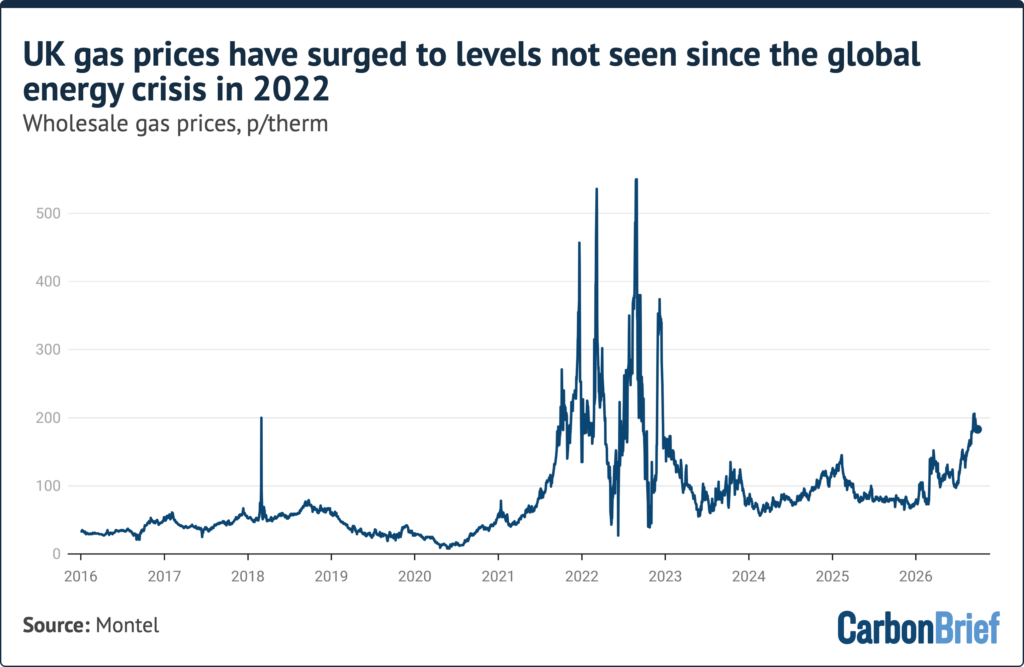
As autumn transitions toward winter, prices have faced renewed upward pressure. In September 2026, wholesale gas prices spiked to an average of 189p per therm, hitting their highest point since the peak of the 2022 energy crisis. This renewed surge is attributed to the seasonal increase in demand for home heating as colder weather approaches, compounded by the prolonged and unresolved disruption in the Strait of Hormuz.
Compounding the pricing pressure, European natural gas inventories remain low heading into the winter months. This structural deficit means that European nations must engage in fierce international competition with Asian buyers to secure the necessary LNG cargoes required to maintain adequate heating reserves and grid stability.
The fallout extends beyond natural gas. Fossil fuel importing economies worldwide are absorbing severe financial shocks across oil, diesel, and other refined petroleum products. Reports indicate that the European Union has faced an additional €100bn bill for fossil fuel imports since the crisis began, with low- and middle-income nations bearing an even heavier proportional burden according to independent analyses.

In the UK, diesel prices have climbed to historic highs of around £200 per litre. Conversely, parallel analyses underscore the widening economic divergence between fossil-fueled transport and electrification, noting that operating electric vehicles remains significantly cheaper than running traditional petrol or diesel cars.
Political and Consumer Impacts
The divergence between fossil fuel costs and renewable generation is now directly impacting consumer finances, albeit unevenly across energy vectors. Under the price cap established by energy regulator Ofgem, high wholesale gas costs are quickly transmitted to household heating bills, whereas electricity bills have remained comparatively stable.
Data from the independent think tank Nesta highlights that household gas bills are set to rise significantly, climbing roughly 33%—or about £200 per year—compared to previous rates. In sharp contrast, household electricity bills have experienced a modest increase of just 4%, a direct reflection of the mitigating influence provided by expanding volumes of domestic clean energy.
Andrew Sissons, director for a sustainable future at Nesta, observed on social media that the traditional economic coupling between electricity and gas prices has begun to fracture as renewables claim a larger share of the generation mix.
Political leaders have similarly seized upon the data to highlight both the risks of international market exposure and the strategic importance of domestic energy transitions. Addressing the Labour Party conference, Energy Secretary Miatta Fahnbulleh emphasized that consumer pain stems directly from the UK’s exposure to volatile global fossil-fuel markets.

Echoing these remarks during his conference address, Prime Minister Andy Burnham pointed to the rapid expansion of home-grown renewables and nuclear power as a vital mechanism for regaining national control over energy economics. He confirmed that he has instructed the Energy Secretary to accelerate efforts to decouple domestic electricity pricing from the international gas market to secure long-term relief for bill payers.