Across Latin America, governments increasingly view public procurement as a transformative instrument for driving broader policy objectives. From fostering environmental sustainability to empowering small and medium-sized enterprises, public purchasing power represents one of the most potent levers available to the state. However, successfully translating high-level policy frameworks into everyday administrative practice has historically presented a formidable obstacle. Limited technical capacity, a lack of clear operational guidance, perceived reputational risks, and an institutional bias favoring short-term budgetary efficiency over long-term strategic value often conspire to stall implementation. Consequently, many national procurement systems find themselves trapped in a frustrating cycle where progressive policies are drafted and theoretical indicators are established, but actual execution flags and tangible results go entirely unmeasured.
Paraguay has recently emerged as a compelling regional model for breaking free from this implementation trap. Having previously built a robust legal and institutional foundation for integrating sustainability into public purchasing, the nation faced the persistent challenge of measuring the actual uptake and real-world impact of its sustainable procurement policy. To close this critical monitoring gap, Paraguay’s public procurement agency, the Dirección Nacional de Contrataciones Públicas (DNCP), forged a strategic partnership with the Open Contracting Partnership (OCP). Through a sustained, collaborative effort combining multi-stakeholder engagement, enhanced data collection methodologies, and digital innovation, the initiative successfully bridged the divide between policy design and administrative execution.
The scope of the challenge in Paraguay was significant. Despite possessing one of the more comprehensive sustainable procurement frameworks in the region—supported by pivotal legislative pillars introduced in recent years—the system lacked a systematic mechanism to evaluate whether these green and social mandates were genuinely translating into practice. To overcome what practitioners term the "valley of death" in sustainable public procurement, the DNCP and OCP adopted a phased, hands-on approach. Continuous technical assistance and collaborative working sessions ensured that sustainable procurement principles were deeply embedded into day-to-day purchasing workflows while being rigorously tracked through structured data.

Incorporating Sustainable Clauses into the Electronic Government Procurement System
The foundational step toward effective measurement required defining and standardizing sustainability clauses within the nation’s electronic government procurement (e-GP) architecture. These clauses represent mandatory or preferred rules integrated directly into tender documents, establishing the specific environmental, social, or economic conditions that suppliers must fulfill throughout the entire procurement lifecycle—from bidding and contract execution to final payment. For instance, a typical social clause might obligate a supplier to source a designated percentage of goods from family farming cooperatives, while environmental provisions might enforce strict ecological standards during project delivery. Compliance with these requirements is generally verified during contract execution rather than at the initial bid evaluation phase.
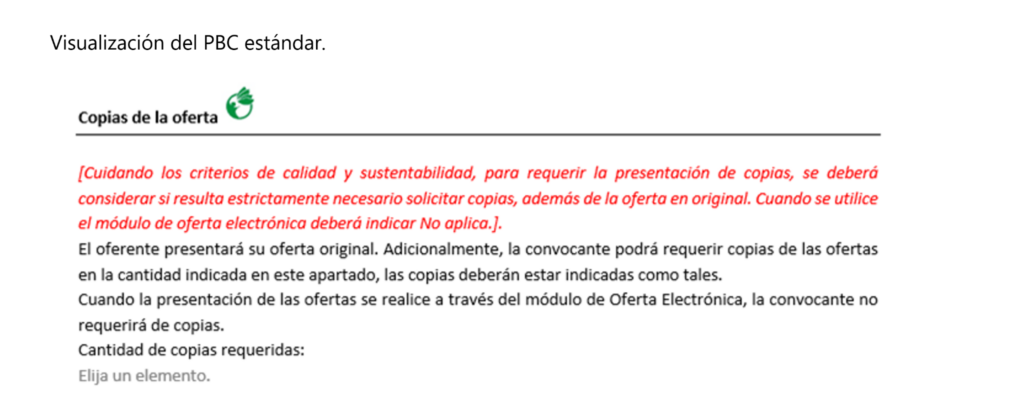
Working closely alongside the DNCP’s specialized sustainability committee, project stakeholders conducted a comprehensive review of all standard bidding documentation. They systematically compiled and categorized every clause contributing to sustainability dimensions, separating them into environmental, social, and economic classifications. Although Paraguay’s legal framework had already established these standards through prior regulations, they had not previously been integrated into the digital e-GP system in a measurable format. Initial efforts focused on cross-cutting administrative rules, such as capping the number of physical bid copies required to reduce paper waste, followed by sector-specific requirements like mandatory accessibility standards for public construction works.
The introduction of a flexible new e-GP system in 2024 provided the technological agility needed to embed these sustainability clauses directly into standard digital tender formats. To ensure external visibility and internal tracking, these elements were assigned a distinct marking system utilizing the acronym CPS, denoting Compras Públicas Sustentables. Furthermore, a visual green badge was introduced alongside each sustainability-related clause within the electronic interface, allowing public buyers to identify and apply them intuitively during the tender preparation stage.
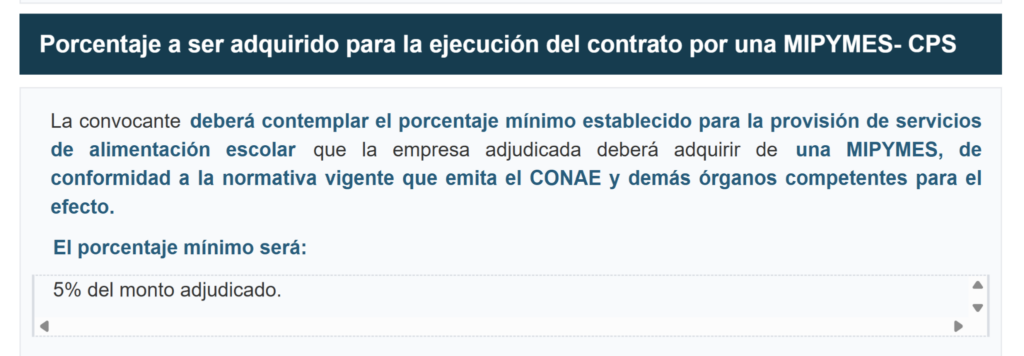
Whenever a contracting authority utilizes these standardized digital documents today, the e-GP system automatically captures structured data regarding which clauses have been invoked. This automated process converts abstract policy mandates into actionable data points. Internally, the database extracts these markers to perform a daily tally of active procurement processes incorporating specific sustainability criteria, establishing a continuous digital audit trail for public oversight.
Developing an Internal Dashboard for Monitoring Policy Uptake
Once these clauses were successfully integrated into standard bidding templates, the DNCP gained the capacity to systematically query and monitor their utilization across the entire public procurement landscape. To maximize the utility of this new data flow, the agency collaborated with OCP to define key performance indicators through a series of focused workshops centered on developing a robust theory of change. These sessions mapped out the necessary administrative actions required to advance policy implementation, evaluated available data fields within the e-GP architecture, and established optimal update frequencies for monitoring tools.
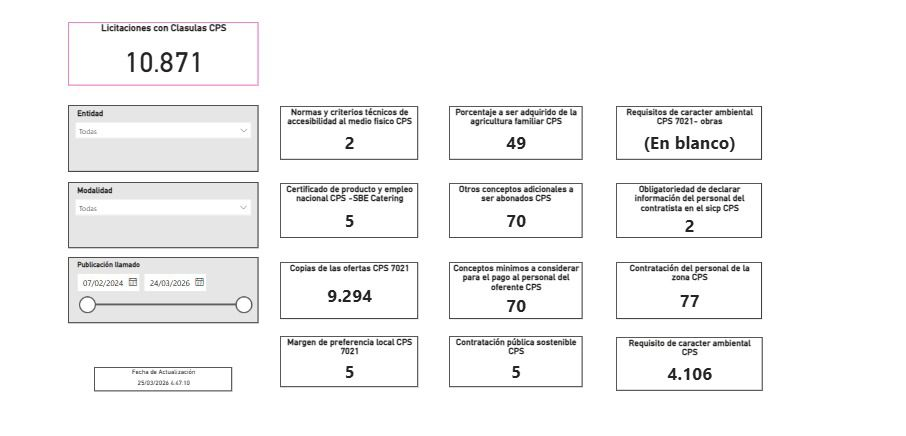
This preparatory phase proved vital in building institutional trust and consensus within the DNCP, ultimately empowering leadership to spearhead the creation of a dedicated monitoring dashboard. Deployed in early 2025, the internal dashboard emerged as the most significant tangible output of the collaborative intervention, providing an agile and user-friendly interface for tracking the adoption of sustainability clauses. Metrics collected between February 2024 and March 2026 now serve as reliable empirical baselines for measuring ongoing progress. Against a backdrop of roughly 9,000 published tenders per year, data from the dashboard reveals wide variations in uptake—ranging from near-universal compliance in administrative measures like minimizing offer copy requirements to more selective adoption in specialized clauses.
At present, the internal dashboard is utilized primarily by members of the sustainable procurement committee and the agency’s director, though leadership anticipates making the interface publicly accessible in the future. Additional technical enhancements are already underway to yield more granular insights at the contract level. For example, while the primary dashboard tracks overall compliance with family farming sourcing mandates under the national school meals program known as Hambre Cero, complementary data from the Open Contracting Data Standard allows analysts to examine actual subcontracting volumes and financial disbursements awarded to small agricultural producers and micro-enterprises.
Refining Market-Aligned Sustainability Criteria
Beyond operationalizing clause tracking within the e-GP system, the partnership also focused on refining how sustainability criteria are defined and applied during the bid evaluation and supplier qualification stages. Prior to the project, the DNCP had engaged technical specialists to identify appropriate social, economic, and environmental requirements that public buyers could reasonably demand without exceeding prevailing market capacities. Building upon this groundwork, the agency established a strategic distinction between universal criteria applicable across all procurement categories and targeted, category-specific requirements tailored to particular industries.
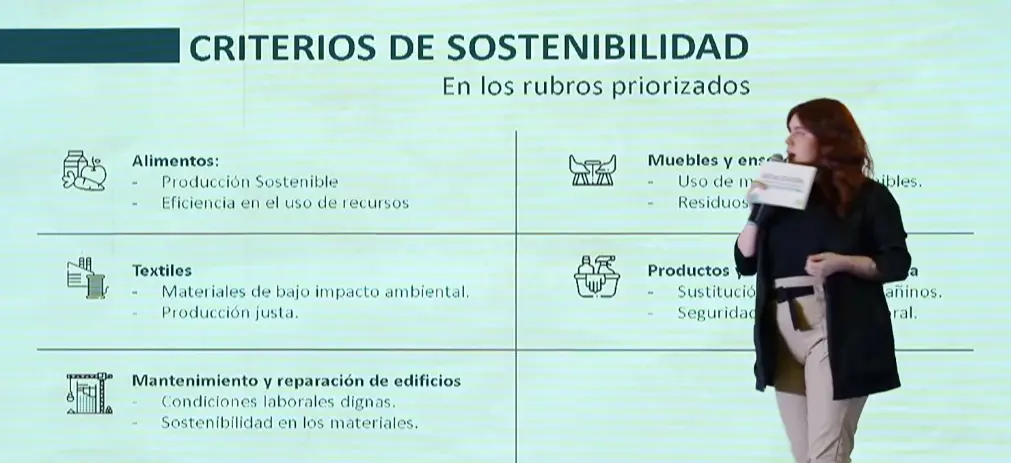
To identify which sectors warranted prioritized intervention, the DNCP developed a sophisticated scoring matrix utilizing five weighted variables. Each variable is assigned a numerical score to rank specific goods and services categories according to their strategic impact. Facilitated through collaborative workshops bringing together procurement officials, sectoral experts, and industry representatives, this process yielded a refined shortlist of five priority categories: food, building maintenance and repair, textiles, furniture and fixtures, and cleaning supplies and services.
For each prioritized category, authorities established distinct sustainability criteria categorized by their impact type, whether pass/fail thresholds or evaluation scores. These criteria were meticulously calibrated to reflect real-world market readiness and product characteristics. For instance, procurement rules for office furniture, air conditioning units, and accessories now incorporate mandatory energy efficiency thresholds and eco-label verifications, which can be integrated into tender documentation instantly by tagging them with the designated CPS marker.
While operationalizing the monitoring of contractual clauses has advanced smoothly, actively integrating these sophisticated evaluation criteria into everyday tenders remains a more complex administrative undertaking. Nevertheless, the legal framework provides public procurement units with broad discretionary authority to incorporate sustainability standards into their purchasing processes. OCP continues to provide advisory support to the DNCP as the agency works to systematically measure supplier compliance with these criteria beyond simple text-based queries, reinforcing Paraguay’s position as a regional leader in transparent and sustainable public governance.