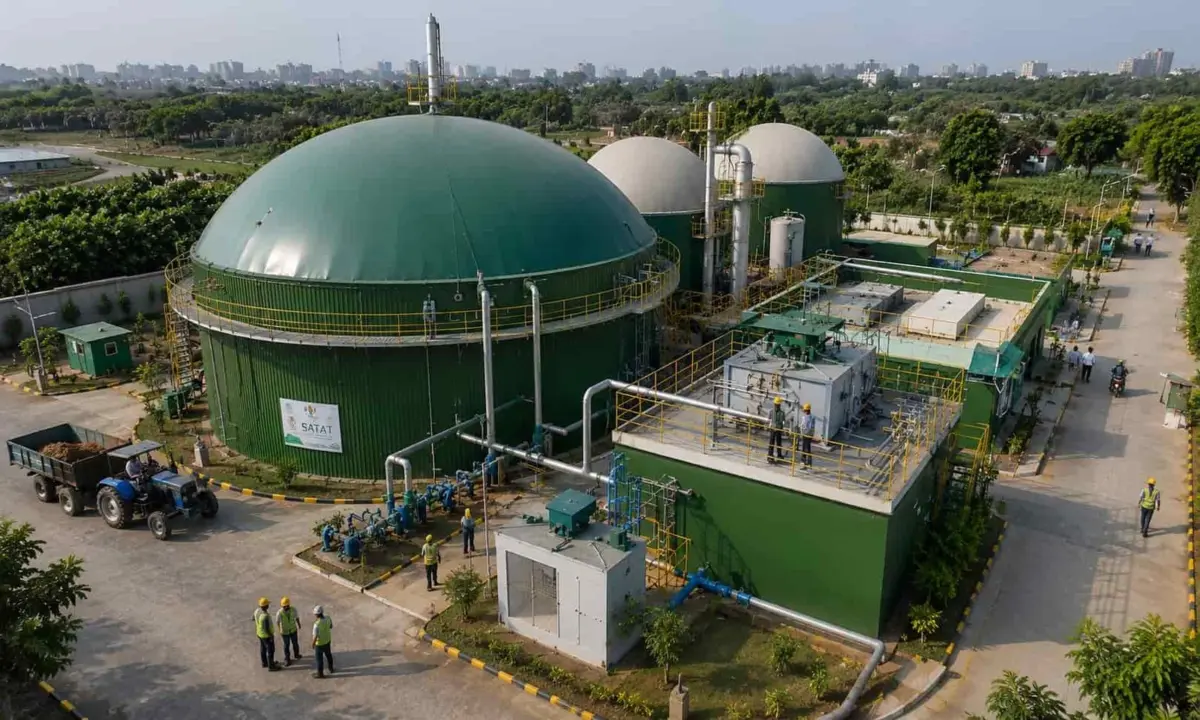
India’s sweeping ambitions to ramp up compressed biogas (CBG) production cannot be realized by simply constructing more processing plants across the countryside. While the nation sits on an immense reservoir of potential—boasting an estimated 62 million metric tonnes of annual CBG potential driven by agricultural residue, animal dung, and municipal solid waste—it faces a foundational bottleneck that threatens to stall its green energy transition. What the country currently lacks is a cohesive, robust system to efficiently collect, transport, and store that waste, ensuring it arrives at processing plants in the right quantities, at the right quality, and at viable prices.
This oversight represents the hidden infrastructure problem of India’s broader bioenergy transition. Experts argue that the next logical step in national CBG policy must be a decisive shift away from a plant-centric model and toward a comprehensive supply-chain approach. The ultimate success of any individual biogas plant relies just as heavily on remote farms, local collection centers, rural roads, storage facilities, municipal waste management systems, and local support services as it does on the technical efficiency of the anaerobic digester itself. Without a reliable year-round stream of feedstock, even the most technologically advanced facilities risk becoming stranded assets.
Energy Security Beyond Imports
The urgency surrounding this infrastructural pivot extends far beyond standard environmental or domestic energy policies. International energy supply lines have repeatedly proved inadequate and vulnerable when confronted with intensifying geopolitical tensions, critical shipping disruptions, and escalating trade conflicts across vital global trade corridors. These vulnerabilities were underscored at the recent BRICS summit, where member nations adopted the New Delhi Declaration. The declaration placed a heavy emphasis on securing stable energy markets, maintaining uninterrupted flows of energy from diverse sources, protecting critical infrastructure, and fostering closer international cooperation on energy supply chains. Crucially, the landmark document formally named bioenergy and other low-carbon technologies as key components of a resilient strategy for achieving long-term energy security alongside sustainable development.
For India, these global dynamics demand a much wider perspective on national energy security. While securing conventional crude oil and natural gas imports and maintaining strategic petroleum reserves remain vital to powering the economy, the country’s vast reserves of agricultural waste, cattle dung, and organic municipal refuse are still frequently treated primarily as a domestic disposal problem rather than a national strategic asset. When processed correctly through modern anaerobic digestion, these materials serve as prime CBG feedstock while simultaneously yielding valuable organic fertilizer as a secondary by-product.
The Union Cabinet’s approval of the Galvanizing Organic Bio-Agro Resources Dhan, or GOBARdhan scheme, provides formidable financial and institutional backing to this mission with an outlay exceeding Rs 23,731 crore. The comprehensive scheme is designed to offer assured offtake mechanisms, pricing support, financial assistance, pipeline connectivity, credit facilitation, and formalized feedstock arrangements. Yet, as energy and agriculture experts point out, no amount of capital injection can entirely substitute for a reliable, functioning biomass supply chain on the ground.
Where the Chain Breaks
A commercial CBG plant can never function as a standalone energy project. Instead, it operates as the central hub of a complex local supply chain that must seamlessly link farmers, dairy cooperatives, municipal bodies, waste contractors, commercial aggregators, transporters, storage operators, and downstream buyers of both gas and organic fertilizer. If any single link in this intricate chain breaks down, the entire project becomes economically unviable, even if the core technology operates flawlessly and a willing buyer for the compressed biogas exists.
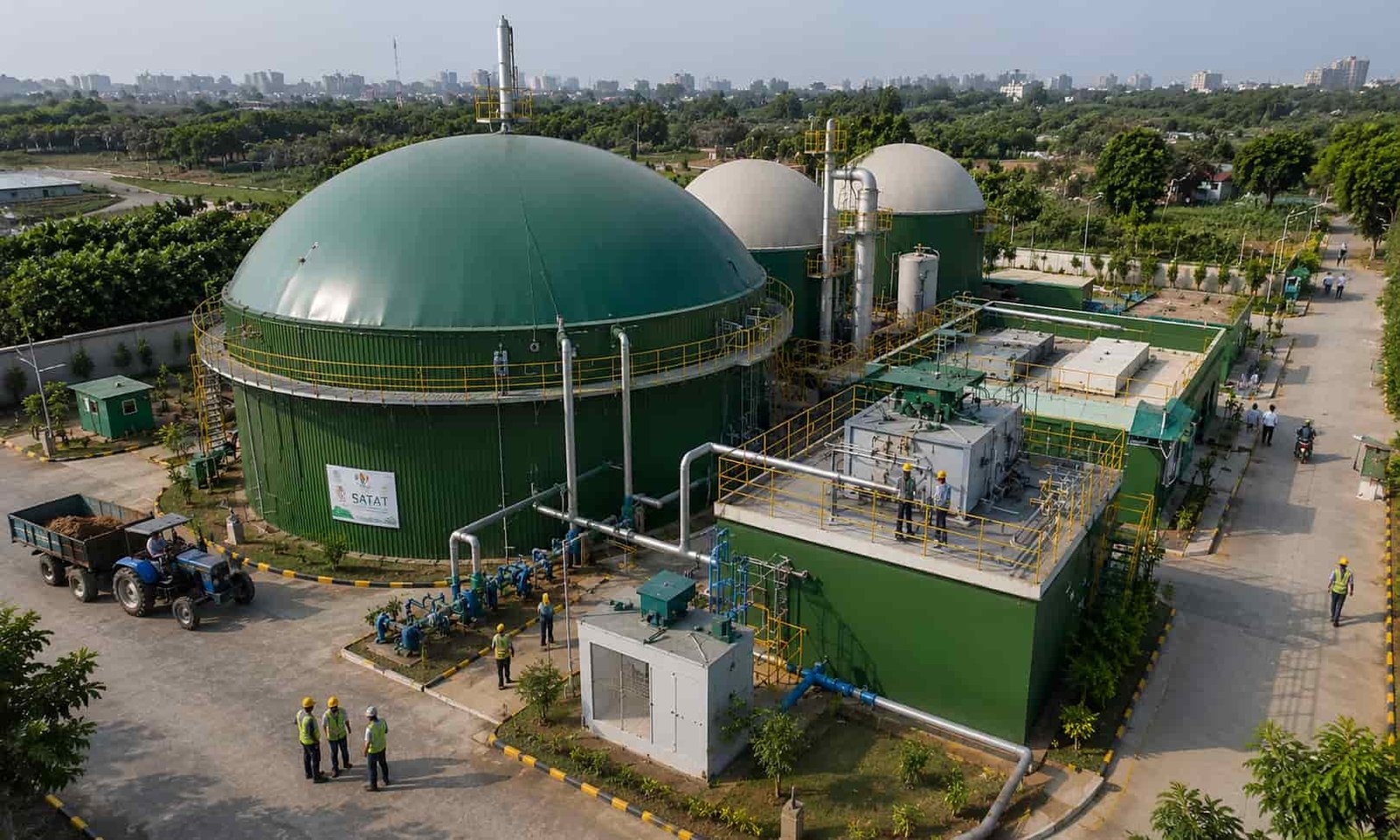
The collection phase presents the initial and often most formidable hurdle. Agricultural waste is widely dispersed across thousands of fragmented smallholder farms and typically remains available only during short, intense windows following seasonal harvests. This material must be systematically gathered, meticulously separated from contaminating plastics and dirt, baled or processed, moved to localized aggregation points, and safely stored until it is required for processing.
Meanwhile, cow dung and wet municipal biomass demand much more frequent, daily collection cycles. Seasonality dictates the core economics of the sector: while agricultural biomass is only harvested for a few weeks of the year, a commercial CBG plant requires a steady, uninterrupted supply of feedstock every single day. Consequently, working capital management, large-scale storage capacity, and precise supply forecasting ultimately determine whether a plant can maintain efficient, continuous operations.
Furthermore, regional biomass estimates can often prove misleading in practice. Not all physically available waste is commercially recoverable. Individual farmers may urgently require crop residues for animal fodder, soil incorporation, or traditional uses, while variables such as high moisture content, contamination, long distances, and prohibitive transport costs can quickly erode the commercial viability of a project.
The widening gap between national ambition and on-the-ground delivery is clearly reflected in government data. As of August, the national CBG portal listed 1,908 registered plants across the country, but only 217 were actually operational, while 339 remained under various stages of construction. While this disparity does not solely prove that feedstock scarcity is the singular constraint—as financing hurdles, regulatory approvals, construction delays, and technology sourcing also play significant roles—it starkly demonstrates that registered capacity is far from synonymous with operational capacity.
Plan the Supply Before the Plant
Commercial planning for bioenergy projects must begin long before a single brick is laid or equipment is installed. Regulatory project approvals should ideally be tied directly to comprehensive district-level biomass mapping, realistic seasonal availability assessments, competing local uses, collection costs, rural road connectivity, storage capacity, plant siting, and the regional market absorption capacity for the resulting digestate. Every prospective project should be required to present a credible feedstock plan complete with named aggregation partners, established storage arrangements, strict quality control protocols, signed offtake agreements, and a confirmed market for organic manure before construction work is authorized to begin.
Grassroots institutions such as Farmer Producer Organisations (FPOs), dairy cooperatives, local panchayats, women’s self-help groups, and rural entrepreneurs can play a pivotal role in bridging the gap between scattered rural suppliers and large industrial processing companies. These community-level entities are uniquely positioned to organize farmers, manage heavy collection machinery, run local aggregation centers, enforce rigorous quality standards, and ensure timely payments to individual producers. Therefore, public policy support and subsidies must extend far beyond the digester itself to encompass essential mid-stream equipment, including baling machinery, short-haul transport vehicles, covered storage warehouses, and accessible working capital loans.

Financial institutions must also learn to recognize and accommodate the vital economic role played by local aggregators. While these intermediary businesses are commercially indispensable to the biomass supply chain, they frequently lack the substantial collateral traditionally required to secure conventional bank loans. Targeted financial instruments such as government-backed loan guarantees, equipment leasing programs, and dedicated working capital loans could effectively bridge this persistent funding gap.
The long-term economic viability of CBG projects also heavily depends on the handling of outputs generated after digestion. If the nutrient-rich digestate cannot be successfully sold or disposed of locally, what should be a valuable revenue stream quickly transforms into a burdensome operational cost. Projects require deep integration with agricultural extension services, commercial fertilizer supply chains, and broader soil health initiatives, supported by standardized testing and certification regimes that can secure a stable, trusted market for organic fertilizers.
Partners Abroad, Coordination at Home
While international cooperation can significantly strengthen India’s domestic bioenergy ecosystem, it cannot serve as a substitute for foundational domestic logistics. During their annual summit in New Delhi, India and Japan reinforced their strategic commitment to energy security by launching the Cooperative Biogas for Growth Initiative, which envisions the establishment of 1,000 biogas plants across India. However, experts emphasize that the success of such ambitious international partnerships should be measured by strict operational metrics rather than simply counting the number of new facilities announced. Pilot districts can serve as critical testing grounds, linking rural communities, milk producers, municipal bodies, collection hubs, processing plants, gas distributors, and agricultural markets while being continuously evaluated on plant utilization rates, feedstock acquisition costs, methane leakage control, and the reliability of gas output.
The broader BRICS framework offers another valuable arena for practical mutual learning among emerging economies. Brazil’s extensive experience with large-scale biofuels demonstrates how thoroughly successful renewable energy production relies on sophisticated agricultural supply chains and efficient logistics. Similarly, China’s historical record in rural biogas offers important lessons regarding the enduring value of decentralized collection models and dedicated local service organizations.
Nevertheless, the most challenging coordination efforts must take place entirely within India’s borders. Currently, the petroleum, agriculture, rural governance, urban local bodies, state governments, city gas distribution companies, commercial banks, and project developers frequently operate within rigid administrative and commercial silos. A private developer may successfully win all necessary regulatory approvals only to discover a lack of segregated municipal waste. A farmer may be fully willing to supply agricultural residue but lack access to necessary harvesting machinery and transparent digital payment systems. Simultaneously, a city gas distributor may be eager to absorb CBG into its grid yet face persistent delays in physical pipeline connectivity.
Moving forward, the true measure of success for India’s green energy transition should be defined by plants that operate continuously, pay their suppliers on time, maintain high feedstock quality standards, successfully sell their gas, and fully utilize their organic digestate, rather than the raw tally of registered projects. While the GOBARdhan scheme provides the overarching policy framework, international partners like Japan contribute valuable technology and finance, and multilateral groupings like BRICS broaden South-South cooperation, India must ultimately construct a resilient domestic logistics network capable of carrying biomass from fragmented rural and urban sources to processing plants 365 days a year. The ultimate success of the bioenergy transition will be decided not only inside high-tech digesters, but out on the farms, along rural roads, and within municipal infrastructure networks.