Technology is no longer simply supporting the travel experience; it is increasingly becoming part of the journey itself. From complex visa processing and seamless airport navigation to hyper-personalised travel services and holistic wellness retreats, artificial intelligence is beginning to bridge the gaps across the many fragmented stages of a modern traveller’s journey.
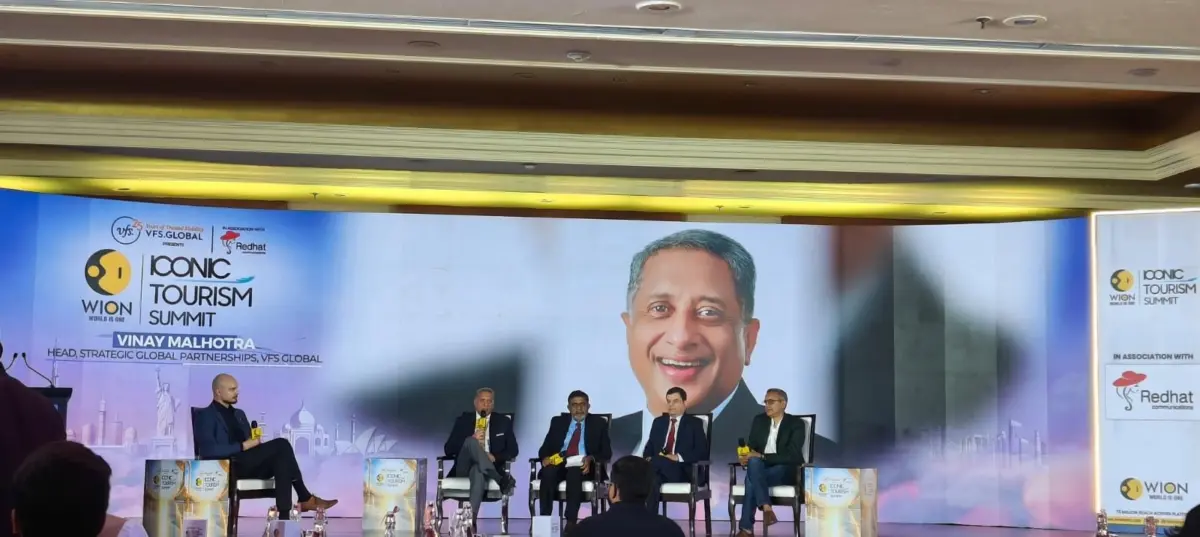
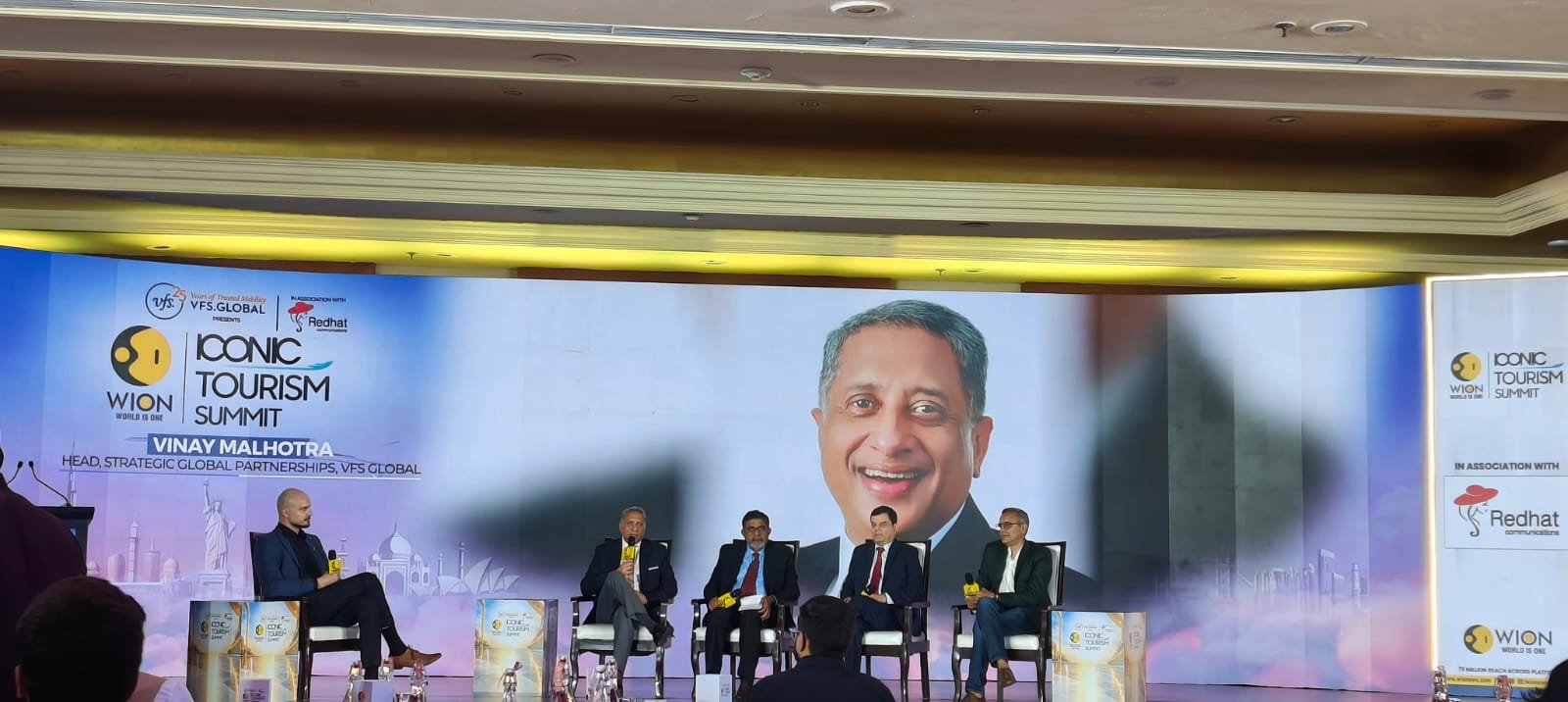
This evolving dynamic served as the central theme of the high-profile panel discussion titled "Tech Frontiers: Reshaping Journeys," held on September 23rd at the WION Iconic Tourism Summit in New Delhi. The session brought together an elite group of industry leaders and innovators, including Anil Parashar, Executive Director of ITQ Technologies Pvt Ltd; Vinay Malhotra, Head of Strategic Partnerships at VFS Global; Achin Sharma, Chief Digital Officer of WAISL; and Abhilash Kalathil, Executive Director of the Kairali Ayurvedic Group.
As the conversation unfolded, the panellists quickly moved past the familiar, well-worn debate over whether artificial intelligence will eventually transform the global tourism sector. Instead, the discussion focused on a much more pertinent and pressing question: how emerging technologies can make travel genuinely simpler, faster, and more intuitive without stripping away the essential human element that defines hospitality and exploration.
Streamlining Bureaucracy Behind the Scenes
For Vinay Malhotra and the extensive operations at VFS Global, the sheer scale of the organisation makes the adoption of advanced technology an absolute necessity. VFS Global currently provides vital administrative services to 70 client governments, operating more than 4,000 application centres spread across 167 countries worldwide. Managing millions of visa applications annually requires robust systems that can handle staggering amounts of data efficiently and securely.
Malhotra pointed to the company’s sophisticated Intelligent Document Processing (IDP) capabilities as a prime example of how artificial intelligence is being deployed behind the scenes to support the rigorous visa processing lifecycle. These advanced systems are designed to assist visa officers by rapidly identifying inconsistencies, verifying data integrity, and generating structured information packages. However, Malhotra was careful to clarify that the actual decision-making authority regarding visas remains strictly with the relevant government authorities. VFS Global’s IDP solution is deliberately built with strict human-in-the-loop controls to ensure accuracy and accountability.
The challenges of modern travel documentation are substantial. Malhotra highlighted the increasing complexity of financial records submitted by applicants, noting that bank statements and supporting financial files can frequently run into hundreds of pages. Manual scrutiny of such voluminous records is inherently time-consuming and leaves room for human error or oversight. Artificial intelligence steps in as a powerful tool capable of scanning these extensive documents to flag subtle anomalies and data inconsistencies that might otherwise go unnoticed during a manual review.
Yet, Malhotra emphasised that technology is by no means confined strictly to back-office administrative operations. VFS Global has successfully extended its digital services directly into the realm of customer interaction, leveraging AI and generative AI technologies to facilitate smooth communication across multiple languages, breaking down barriers for international travellers.
Among the most practical and customer-centric innovations Malhotra highlighted is the "Visa At Your Doorstep" service. This mobile initiative takes the entire visa application process directly to a traveller’s home, corporate office, or any other convenient location. Equipped with secure mobile technology, the set-up can seamlessly capture essential documentation, biometric data, photographs, and digital signatures before transmitting the encrypted information securely to the relevant diplomatic missions or government authorities. This service has proven particularly invaluable for large corporate groups, multi-generational families, medical travellers who require immediate assistance, and individuals residing in remote locations far away from traditional visa application centres. For Malhotra, technology ultimately proves its true worth when it successfully removes friction from the traveller’s path.
Avoiding the Trap of Technology for Technology’s Sake
That underlying sentiment quickly became a recurring motif throughout the summit panel, echoing across perspectives from different sectors of the travel and tourism industry.
Anil Parashar offered a cautionary perspective, arguing that stakeholders within the travel industry must remain vigilant and avoid confusing mere technology adoption with genuine progress. In his view, technological tools should serve the fundamental purpose of simplifying the overall experience rather than inadvertently constructing yet another complex layer of digital processes and hurdles for both travellers and travel professionals to navigate.
Parashar’s broader argument centred on the premise that artificial intelligence should never be viewed as a wholesale replacement for human judgment, intuition, and empathy. Traditional and modern travel agents, he suggested, will continue to play a vital, irreplaceable role precisely because technology lacks the capacity to anticipate every unpredictable human circumstance or emotional nuance.
The core of Parashar’s thesis was encapsulated by a fundamental question: what is it that technology simply cannot do? The complex tasks and unique situations that automated systems cannot handle effectively will always require skilled human intervention.
This distinction becomes critically important when automated digital systems fail or make erroneous determinations. Drawing on examples from the commercial airline industry, Parashar noted that data-driven predictive systems frequently generate automated recommendations based strictly on historical patterns and statistical trends. In contrast, a human decision-maker can instantly recognize unique, real-time circumstances—such as unexpected weather events, personal emergencies, or nuanced passenger needs—that the underlying algorithm has failed to capture adequately. The overarching lesson from this dynamic is clear: while vast troves of data can certainly inform decisions, they should never automatically dictate them without human oversight.
Connecting the Disconnected Airport Ecosystem
Bringing the conversation from administrative processing directly into the physical infrastructure of travel, Achin Sharma focused on the ongoing digital transformation of modern airports. As airports worldwide become increasingly digitised, Sharma argued that the single greatest opportunity lies not in deploying isolated, standalone technologies, but rather in effectively connecting the various fragmented parts of the wider travel ecosystem.
WAISL has been actively pioneering solutions in this exact direction, developing comprehensive technological frameworks spanning passenger processing, complex airport operations, advanced biometrics, deep data analytics, the Internet of Things (IoT), and cutting-edge digital-twin technology. The company’s current AeroWise platform serves as a prime example, bringing together disparate operational data to provide airport management with a unified, real-time view of both airside and landside activities.
For Sharma, the true promise of artificial intelligence lies in its unparalleled ability to reduce friction across the entirety of a passenger’s journey. Ideally, a modern traveller should never have to repeatedly move between disconnected systems, disjointed apps, and isolated portals for flights, hotels, ground transfers, and ancillary services. Advanced AI has the potential to seamlessly connect these distinct stages, proactively anticipating operational problems and resolving them before they snowball into major travel disruptions.
Consider the common scenario of a delayed flight. In a traditional operational setup, a delay simply triggers a generic notification. However, an intelligent, interconnected travel ecosystem could instantly recognize that the specific delay threatens a passenger’s tight connecting flight, automatically identify viable alternative itineraries, and present ready solutions directly to the traveller before they even reach the gate.
Airports themselves are rapidly evolving into highly intelligent hubs. WAISL’s collaborative work with GMR Airports has integrated advanced AI-enabled operational systems, while national initiatives like DigiYatra and facial-recognition-based passenger processing are successfully driving the creation of more paperless, contactless, and efficient travel journeys. Sharma’s visionary outlook even extends to indoor navigation within sprawling airport terminals, where smart technology can accurately guide passengers from one boarding gate to another while intelligently highlighting relevant airport services, lounges, and amenities along the way.
Despite these remarkable advancements, the panellists repeatedly returned to a shared warning: implementing technology simply for the sake of having technology can easily become counterproductive to the user experience.
A digital check-in procedure that clumsily requires a traveller to manually enter the exact same personal information repeatedly is not a seamless experience. Similarly, an unresponsive automated chatbot that fails to resolve a customer’s pressing issue while aggressively blocking access to a human customer service agent does little to improve overall satisfaction. Furthermore, an automated process that relies entirely on unstable or unreliable internet connectivity can quickly transform from a convenience into yet another frustrating bottleneck.
"Automate the predictable and humanise the exceptions," Sharma stated, neatly encapsulating what many consider to be the most vital guiding principle to emerge from the extensive summit discussion.
Transforming Wellness Travel Through Personalised Care
Shifting the focus to one of the fastest-growing niches in the modern global tourism market, Abhilash Kalathil demonstrated how technology is proving equally relevant to the wellness travel sector.
The Kairali Ayurvedic Group has been actively experimenting with artificial intelligence, not with the intention of replacing experienced Ayurveda practitioners, but rather to securely support them and foster deeper, more personalised engagement with wellness guests. To this end, the group introduced KAAI alongside its specialised AI assistant, Aarika. These tools were deliberately designed to assist practitioners by quickly surfacing relevant health information, managing case histories, and generating tailored wellness recommendations.
Kalathil painted a picture of a future where technology maintains a continuous, meaningful relationship with a guest even long after their physical wellness retreat has concluded. Instead of bombarding former guests with generic promotional marketing messages, an intelligent, AI-enabled system can securely remember specific personal preferences, health interests, and previous retreat experiences to cultivate a genuinely personalized, long-term relationship between the wellness brand and the traveller.
For a specialised wellness business built fundamentally on long-term health relationships, that distinction is profoundly important. At the same time, Kalathil readily acknowledged that there are sensitive moments during any health consultation where technology must step aside. If a guest needs to discuss a complex medical condition, specific medications, or nuanced clinical questions that require professional medical judgment, the digital interaction must be immediately escalated to the appropriate human expert.
The Collaborative Future of Travel
Ultimately, the comprehensive summit discussion revealed that the future of travel is not about forcing a stark choice between human workers and automated machines. Instead, it is about thoughtfully deciding where each entity is most naturally useful and effective.
Artificial intelligence excels at processing vast quantities of complex information at lightning speed, identifying hidden patterns, predicting operational disruptions, personalising recommendations, and automating repetitive administrative tasks. Meanwhile, human professionals bring irreplaceable empathy, rich situational context, nuanced judgment, and the vital ability to respond dynamically to exceptional circumstances that simply do not fit neatly into a rigid dataset.
As Anil Parashar aptly summarised, the real, enduring opportunity lies in making technology work for people rather than forcing people to constantly work around technology.
The next frontier of global tourism, therefore, may not simply be defined by smarter airports, faster visa processing times, or more sophisticated AI assistants. Rather, it may emerge as a unified travel ecosystem in which these diverse technologies finally begin to speak to one another, quietly and efficiently removing friction from the journey while leaving the deeply human parts of travel firmly in human hands.