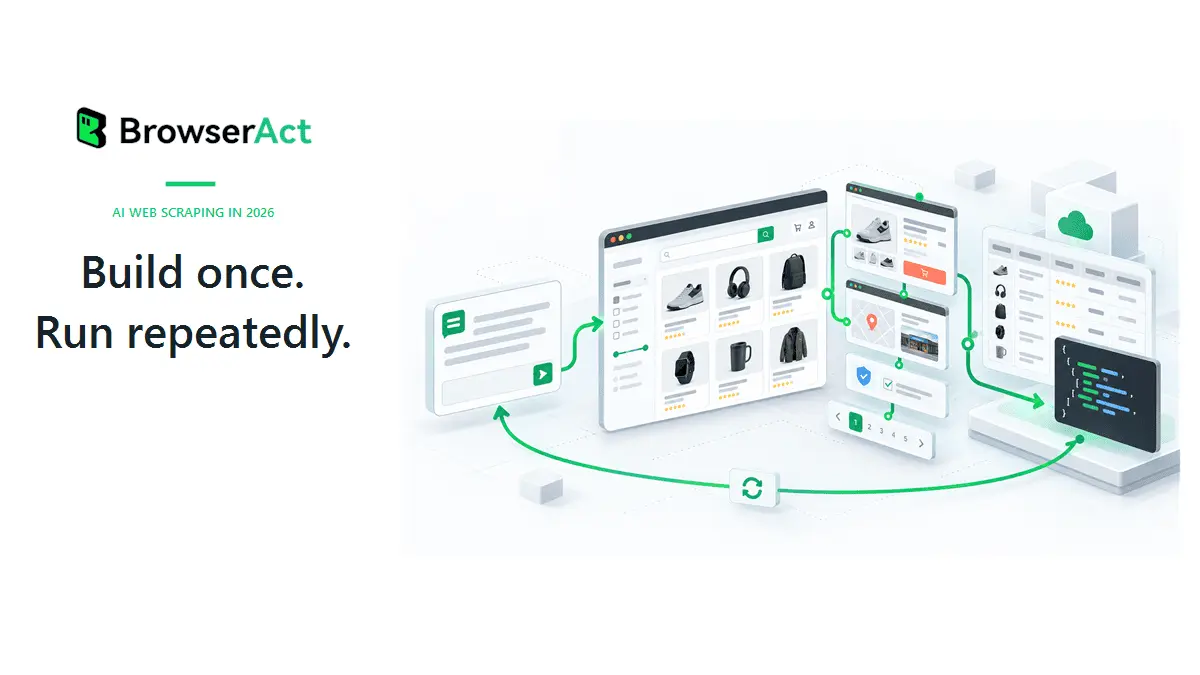
In the fast-paced landscape of modern business intelligence, gathering accurate, up-to-date data from the web remains a persistent operational challenge. Whether tracking competitor pricing across dynamic e-commerce platforms, updating product rankings, or harvesting comprehensive supplier details, data professionals routinely find themselves bogged down by tedious manual searches, intricate filtering processes, and the frustrating task of stitching together information scattered across dozens of separate pages. While modern automated web scrapers have sought to simplify these procedures, recurring tasks still demand a dependable, reusable path to avoid compounding overhead costs. When identical jobs must be executed weekly or daily, traditional scripts require constant maintenance, while pure artificial intelligence agents that attempt to explore target sites afresh consume excessive time and computational tokens.
To address these enduring bottlenecks, platforms like BrowserAct have emerged to bridge the gap between intelligent web navigation and scalable, recurring data extraction. By transforming one-off exploratory sessions into reusable digital agents, organizations can maintain fresh data pipelines without incurring the heavy maintenance overhead traditionally associated with custom scripts or the unpredictable expenses of running generative AI reasoning models from scratch on every single execution.
Why Traditional Web Scraping Tools Struggle With Complex Websites
Extracting information from a stable, static HyperText Markup Language page is typically a straightforward endeavor for developers and data analysts. However, traditional web scraping tools encounter significant friction when confronted with the modern web’s dynamic architecture. Today’s websites frequently require scrapers to wait for complex JavaScript rendering to complete, simulate user search queries, apply multifaceted filters, navigate through deep pagination layers, and visit individual detail pages to capture complete datasets. Furthermore, the modern browsing experience is frequently complicated by sudden pop-up windows, regional content variations, and rigorous human-verification steps that introduce a multitude of shifting page states.
Attempting to overcome these hurdles using traditional coded scripts demands continuous developer intervention. Teams must meticulously maintain fragile element selectors, manage underlying browser environments and proxy rotations, and rapidly diagnose parsing failures whenever a website undergoes a minor structural redesign. As data collection efforts scale across multiple product categories, geographic regions, and distinct web domains, this ongoing code maintenance burden grows exponentially, draining valuable engineering resources that could otherwise be dedicated to core product development.
Why AI Web Scrapers Need a Reusable Path for Recurring Tasks
The advent of artificial intelligence in data collection promised a paradigm shift, allowing users to articulate their objectives directly in natural language. Instead of writing complex parsing rules, an analyst might simply instruct a system to search for specific items, filter by particular quality thresholds, and return structured attributes like names, pricing information, seller identities, and real-time inventory availability. An advanced AI web scraper can intelligently explore a target domain, manipulate interactive filters, and traverse pagination structures to isolate and extract those exact data fields.
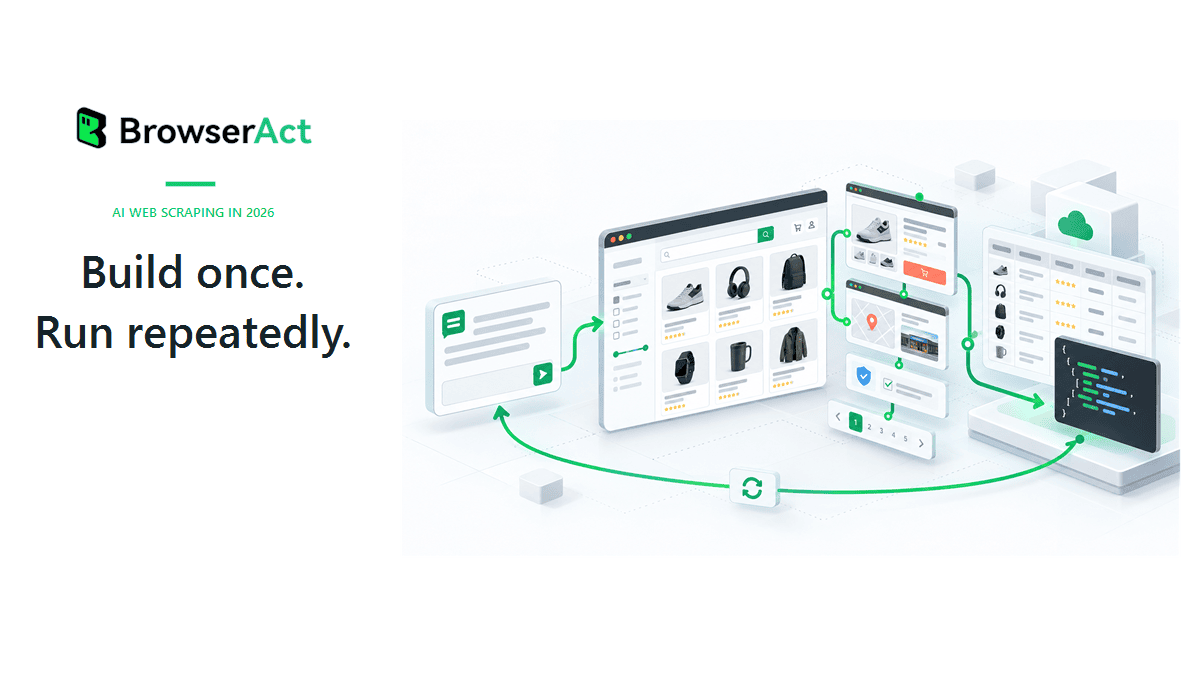
Yet, successfully completing an ad hoc research task once does not inherently establish a reliable, repeatable collection process. Without a saved and thoroughly tested operational path, subsequent runs of an AI agent may re-interpret target pages and re-plan navigation actions from the ground up. While this flexibility is ideal for one-off market research, applying it to routine operations that execute on a daily or weekly schedule leads to inefficient resource allocation. Repeated reasoning cycles consume substantial tokens and execution time, rendering operational costs unpredictable and slowing down the delivery of time-sensitive business intelligence.
To solve this dilemma, platforms such as BrowserAct convert the initial phase of site exploration and validation into a permanent, reusable Bot. Subsequent data collection runs leverage this validated logic to reliably deliver clean, structured data without repeating the expensive exploratory reasoning phase.
BrowserAct: Reliably Scrape Structured Data From Complex Websites at Scale
BrowserAct operates as a no-code AI web scraping platform designed to navigate complex digital environments and extract vital data fields from dynamic pages, intricate filter sets, and paginated archives. By eliminating the need to write custom code, configure fragile selectors, or deploy local infrastructure agents, the platform democratizes access to sophisticated web data extraction.
When handling recurring data collection mandates, the platform preserves the extraction logic within a dedicated Bot. When fresh data is required, operators can simply modify parameters such as target URLs, search keywords, product categories, or geographic regions, enabling the Bot to collect the most up-to-date information efficiently.
How the BrowserAct AI Web Scraper Works
For organizations seeking rapid deployment without building custom configurations, BrowserAct provides an extensive library of more than 400 prebuilt web scraping templates. Users can select an established template, input the necessary parameters, and initiate data extraction with a single click. For instance, utilizing the Amazon Best Sellers Scraper template allows an analyst to choose a specific marketplace and category, define the desired product volume, and execute the job to retrieve comprehensive metrics including product rankings, titles, direct links, pricing figures, consumer ratings, and review counts. This template can be re-run whenever an updated view of market leadership is required.
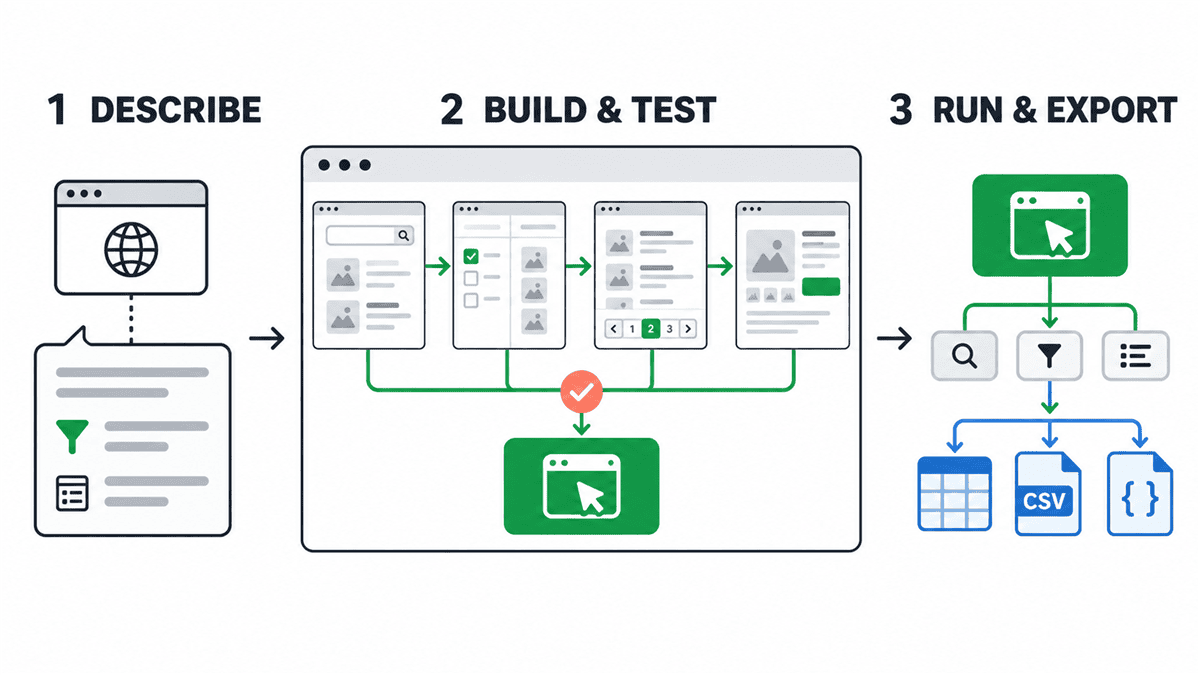
When dealing with niche websites, specialized filters, or custom data schemas, users can bypass prebuilt templates and articulate their specific requirements in plain language. The platform translates these natural language instructions into a custom AI web scraper through a streamlined three-tier approach. First, the user specifies the target website, desired filters, and required data fields. Next, the underlying system explores the live web pages, rigorously tests the navigation path, and constructs a reusable Bot. Finally, operators input their specific run parameters to receive structured data ready for immediate download or downstream system integration.
Automated Web Scraping for Complex, Recurring Data Collection
By uniting automated web scraping capabilities with reusable Bots, modern platforms successfully address the complexities of continuous enterprise data collection. This architecture ensures that initial AI intelligence handles the unpredictable work of site exploration and path validation, while routine, scheduled runs rely primarily on established scripts. This hybrid model dramatically curtails repeated reasoning overhead, minimizes token consumption, and eliminates unnecessary waiting periods. Once a custom Bot is published, operational costs per run are kept low, transforming high-frequency data collection into an economical business practice.
To maintain high success rates across diverse and heavily defended web properties, these modern scraping environments rely on managed cloud browsers equipped with stealth fingerprinting, residential and dynamic proxy management, and region selection capabilities. These features ensure seamless interaction with heavy JavaScript applications and multi-step extraction funnels. Furthermore, built-in mechanisms for handling supported CAPTCHAs and human-verification challenges significantly reduce the internal infrastructure burden typically shouldered by data engineering teams.
When target websites inevitably update their user interfaces or underlying codebases, maintenance tools allow teams to analyze failure records, optimize the extraction path, and publish revised versions of their Bots. Once extracted, the resulting data can be exported in standard formats like CSV or JSON, or channeled directly into business intelligence reports and automated workflows through application programming interfaces, webhooks, and native integrations with popular automation platforms such as Make, n8n, and Zapier. Furthermore, published Bots can be configured as specialized tools for compatible artificial intelligence clients connected to corresponding servers.
E-commerce organizations frequently deploy these automated capabilities to monitor competitive pricing, inventory fluctuations, and product visibility across multiple regional markets. Simultaneously, academic researchers and corporate data teams leverage them to keep large industry directories, employment listings, and supplier databases synchronized with real-world changes.

Choosing the Right Web Scraping Tool for Recurring Data Collection
When evaluating data extraction technologies for complex and recurring operations, decision-makers must weigh the initial setup investment against the long-term maintenance required to handle inevitable website modifications. Traditional custom coding approaches demand significant initial development and ongoing internal engineering oversight to keep scripts functional. Web scraping APIs provide convenient endpoints but often require custom development to navigate highly intricate web applications. Visual scraping software offers graphical configuration interfaces, yet frequently falters when confronted with sudden structural page updates. Meanwhile, isolated one-off AI agents excel at flexible ad hoc research but struggle with cost predictability during high-frequency execution.
Modern hybrid platforms like BrowserAct seek to harmonize these competing demands by combining natural language accessibility and template-driven deployment with managed cloud infrastructure and reusable execution logic. By allowing teams to update parameters effortlessly and adapt to site changes through optimized failure handling, these tools offer a sustainable pathway for continuous enterprise data harvesting.
As organizations increasingly rely on real-time market insights to drive strategic decisions, the demand for resilient, cost-effective, and scalable web data extraction will only accelerate. By moving beyond the limitations of fragile scripts and expensive exploratory reasoning agents, automated platforms provide a robust foundation for maintaining pristine, up-to-date data pipelines across every sector of the digital economy.