DELFT, NETHERLANDS — Responding to a dramatic surge in global demand for advanced counter-drone technology, Robin Radar Systems has officially opened a sprawling new 9,000-square-meter headquarters in Delft, Netherlands. The state-of-the-art facility effectively triples the company’s operational capacity, providing dedicated space for radar research, advanced engineering, large-scale production, system testing, and enhanced customer service as airspace security becomes a paramount concern for governments, military forces, and critical infrastructure operators worldwide.
The grand opening of the Delft campus represents a major milestone in the Dutch company’s rapid trajectory. This European expansion directly follows the August inauguration of a significantly larger Robin Radar operations center in Northern Virginia, establishing a powerful dual-hemisphere footprint. Together, these strategic facilities dramatically increase Robin Radar’s production and engineering capacity across both Europe and North America, positioning the firm to respond swiftly to international tenders and urgent operational requirements.
Behind this massive capital investment lies a period of unprecedented commercial expansion. Robin Radar reports that it has recorded consistent 60% year-over-year revenue and operational growth for three consecutive years. Today, the company’s footprint spans the globe, with more than 800 specialized radar systems successfully installed and operational in diverse environments worldwide.
The new Delft headquarters has been meticulously designed to support every phase of the radar lifecycle. It includes specialized zones for early-stage prototyping, advanced manufacturing, complex system integration, rigorous environmental testing, and lifecycle customer service. Furthermore, to keep pace with accelerating order books, Robin Radar has announced plans to forge strategic alliances with specialized manufacturing partners, a move designed to facilitate high-volume series production without compromising the precision engineering required for military-grade hardware.
Expanding Counter-UAS Production and Tapping Into Academic Talent
To support its expanding manufacturing output and research initiatives, Robin Radar anticipates growing its workforce to more than 300 employees by the end of 2026. This scaling of human capital has already yielded tangible results for the company’s service infrastructure, with customer support and technical service capacity increasing fourfold.
Location was a critical factor in selecting the Delft site. Situated in close proximity to the renowned Delft University of Technology (TU Delft), the headquarters grants Robin Radar immediate access to a deep pool of engineering talent, top-tier researchers, and technical graduates specializing in radar technology, aerospace engineering, and software development. This proximity is expected to feed a continuous talent pipeline into the company’s research and development divisions.
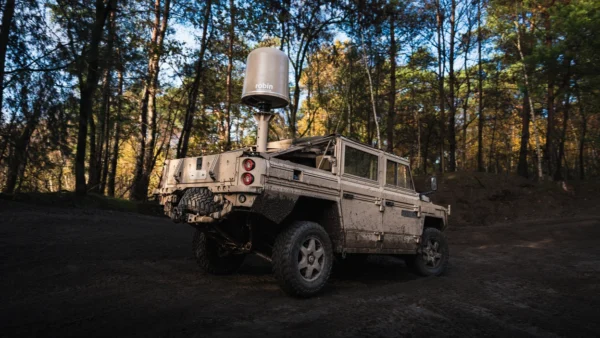
The company emphasizes that its engineering advancements are deeply informed by real-world deployments. Feedback gathered directly from operational environments has driven crucial, rapid-fire improvements to its flagship IRIS drone detection radar. Among these field-inspired upgrades is a newly developed Long Range Mode, which successfully extends the system’s instrumented detection range from an initial five kilometers out to an impressive 12 kilometers. Additionally, engineers have engineered a novel maritime capability, enabling the IRIS system to be deployed aboard large vessels to protect naval assets and commercial shipping from asymmetric drone threats at sea.
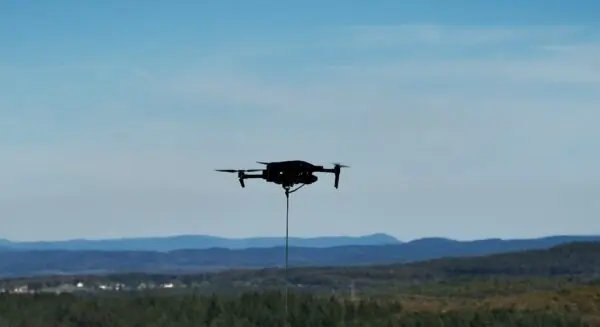
The IRIS system itself is purpose-built to address one of the most persistent challenges in modern low-altitude airspace management: the detection and tracking of small, highly agile, low-flying drones, including First-Person View (FPV) racing drones and fixed-wing unmanned aircraft. By leveraging advanced 3D radar technology alongside proprietary classification algorithms, the system can reliably distinguish hostile drones from harmless biological targets such as flocks of birds and other environmental clutter, drastically reducing false alarms in high-stakes environments.
Meeting the Economics of Modern Warfare and Civil Security
Industry analysts view the opening of the Delft facility as a strategic investment in European defense manufacturing independence. Across the continent, European governments are placing a renewed, urgent focus on strengthening regional supply chains and ensuring the domestic capacity to produce critical defense technologies at scale, reducing reliance on non-European suppliers.
Siete Hamminga, CEO of Robin Radar Systems, highlighted the shifting dynamics that make such investments vital during the facility’s opening events.
"Drones have changed the economics of the battlefield, where high-value assets can be taken out by low-cost drones that are mass-produced, while the countermeasures can cost many times more than the threat they address," Hamminga stated. "There is an urgent need for counter-drone systems, not just in defence, but also to protect high-profile events and critical infrastructure across our societies."
Hamminga stressed that confronting these challenges demands a fundamentally different kind of defense enterprise—one capable of operating with commercial agility.
"That requires a new breed of companies that can deliver fast, shorten innovation cycles and are willing to work together to combine individual solutions into crucial capabilities," Hamminga added. "Robin Radar is Europe’s new breed of radar company, adaptive to change. We bring military-grade capabilities at a price-performance ratio that meets urgent and growing demand, both within and beyond defence."
Proven Performance on the Global Stage
Robin Radar’s technology has already moved far beyond the testing phase, earning the trust of military organizations, national government agencies, and operators of critical infrastructure such as airports, energy grids, and government facilities.
Demonstrating its capacity to secure major global events, the company recently deployed more than 30 IRIS radar systems across North America to provide critical airspace surveillance and security operations during the 2026 FIFA World Cup. These large-scale deployments underscore the reliability, mobility, and operational readiness of the company’s hardware in high-profile public safety scenarios.
With the completion of the expansive Delft headquarters and the concurrent scaling of its U.S. operations, Robin Radar Systems is exceptionally well-positioned to capitalize on the accelerating global market for advanced drone detection and counter-UAS solutions. By bridging the gap between rapid technological innovation and industrial-scale manufacturing, the company aims to remain at the forefront of modern airspace security.