Japan, a nation constitutionally bound to a strict post-World War II pacifism, is undergoing a profound and unprecedented transformation in its national defense strategy. Tokyo has quietly yet decisively dismantled decades-old military self-imposed restrictions, nearly doubling its defense budget, procuring long-range strike capabilities, signing overseas deployment agreements, and lifting its total prohibition on lethal arms exports. These historic shifts are not born of a desire for unilateral strategic autonomy, but rather out of a calculated effort to reinforce the durability of American power in the Indo-Pacific.
Yet, even as Tokyo anchors its security future to Washington, the bilateral alliance is rapidly approaching a dangerous inflection point. Compounding geopolitical pressures, combined with a perceived lack of reciprocal enthusiasm and diplomatic backing from the United States, risk alienating a vital partner. Experts warn that Washington’s current complacency and recent administrative missteps could inadvertently drive Japan to lower its ambitions for the alliance, ultimately threatening long-term American influence across the world’s most consequential geopolitical theater.
PATROLLING ALONE
For generations, the foundational architecture of the U.S.-Japanese alliance rested upon a clear, if asymmetric, division of labor. The United States guaranteed external security for the Japanese archipelago, while Tokyo concentrated its national energies on post-war economic reconstruction and technological ascent. During the Cold War, this arrangement served both nations effectively. Washington secured a permanent, forward-deployed regional presence to contain Soviet power in Asia while simultaneously preventing any potential resurgence of Japanese militarism, and Tokyo obtained the stable security umbrella necessary to build a thriving, modern economy.
However, a cascade of severe external shocks over the past two decades has forced Japanese leaders to critically reassess this postwar bargain. The turning point began in earnest in 2010 during a diplomatic crisis over the disputed Senkaku Islands—known in China as the Diaoyu Islands—when Beijing imposed an informal, punitive embargo on rare-earth mineral exports to Japan. The move laid bare Tokyo’s deep economic vulnerability and demonstrated China’s willingness to weaponize critical supply chains for geopolitical leverage.
Subsequent international events further eroded Tokyo’s confidence in Washington’s security guarantees. When U.S. President Barack Obama famously declared the use of chemical weapons in Syria to be a "redline" but ultimately failed to enforce it, and as Washington offered minimal resistance to China’s aggressive militarization of artificial islands and shoals across the South China Sea, Japanese policymakers grew deeply anxious about the credibility of U.S. commitments. The shattering of European security norms following Russia’s 2022 invasion of Ukraine reinforced the sobering reality that major powers were once again willing to use overt military force to redraw international borders.
That same year, following U.S. Speaker of the House Nancy Pelosi’s high-profile visit to Taiwan, China launched massive, aggressive live-fire military exercises that dropped ballistic missiles directly into Japan’s exclusive economic zone. This aggressive display made it clear to Tokyo that a cross-strait conflict was no longer a distant, theoretical concern, but an immediate geographic peril. Consequently, Japanese leadership concluded that the nation could no longer rely solely on others and must invest heavily in its own independent deterrent capabilities.
Since 2016, Japan has spearheaded a diplomatic and strategic initiative known as the "free and open Indo-Pacific," aimed at linking nations along the Indian and Pacific Oceans through a shared commitment to the rule of law, freedom of navigation, and open trade. As a core pillar of this strategy, Tokyo worked closely with Washington to revitalize the Quad—a strategic security partnership comprising Australia, India, Japan, and the United States—which has focused heavily on maritime domain awareness and the protection of vulnerable undersea communications cables.
Furthermore, since 2022, Japan has forged reciprocal access agreements with Australia, the United Kingdom, and the Philippines, allowing military personnel from these allied nations to train and operate seamlessly within one another’s territories. These bilateral and multilateral pacts laid the immediate groundwork for deeper operational integration. Earlier this year, Tokyo took the historic step of deploying 1,400 troops to participate in combat roles during annual U.S.-Philippine joint military exercises, where Japanese forces fired a surface-to-ship missile from Philippine soil for the first time in the postwar era. Within domestic political circles in Tokyo, discussions regarding the potential revision of Article 9 of Japan’s pacifist constitution—which renounces war and prohibits a traditional standing army—are no longer viewed as taboo.
Japan is also actively translating its formidable industrial and technological capacity into concrete security partnerships abroad. Tokyo is currently collaborating with Italy and the United Kingdom on the joint development of an advanced sixth-generation fighter jet. In 2023, the Japanese government launched an official security assistance program to provide vital military equipment and defense infrastructure to regional partners, including the delivery of coastal radar systems and patrol boats to the Philippines to help monitor Chinese maritime incursions. In 2026, Tokyo officially lifted its decades-old ban on exporting lethal military hardware, swiftly agreeing to build three naval frigates for Australia while jointly producing eight additional vessels.
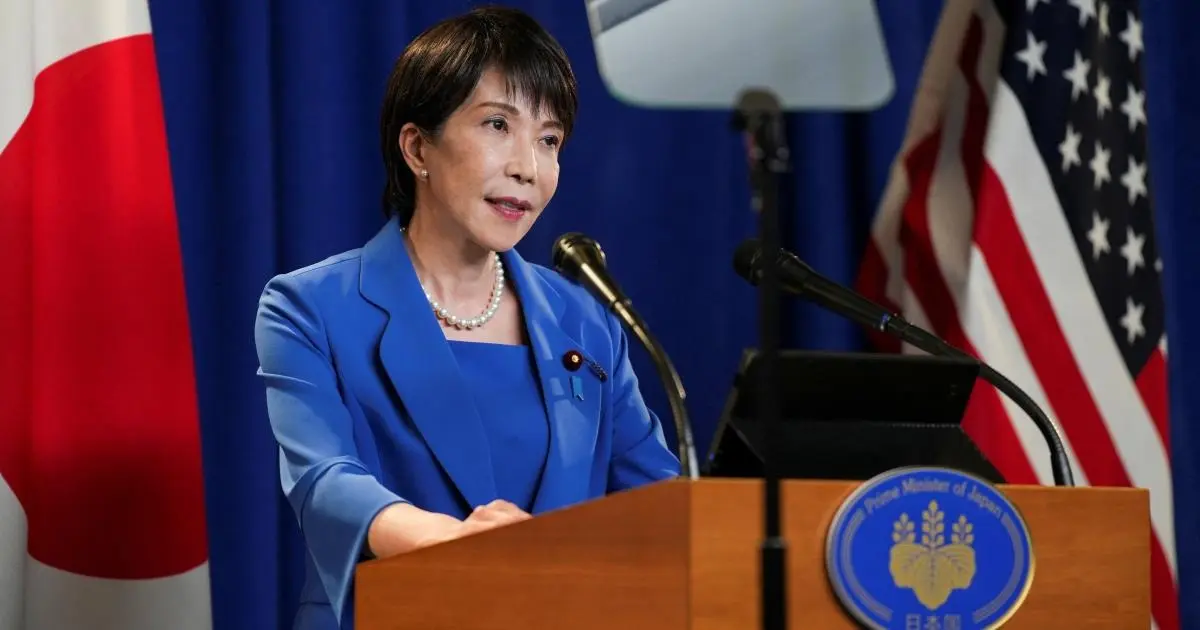
Most significantly, Japan has signaled an unprecedented willingness to play a proactive role in U.S.-led efforts to deter a potential military conflict over Taiwan. Prime Minister Sanae Takaichi stated publicly that a Chinese maritime blockade of Taiwan could constitute a "survival-threatening situation" for Japan—a formal legal designation that would grant Tokyo the constitutional authority to exercise collective self-defense and respond with military force. A solid majority of the Japanese public has supported these assertive stances, fully recognizing that geographic proximity leaves them vulnerable; Yonaguni, Japan’s westernmost inhabited island, lies a mere 70 miles from Taiwan.
To match this strategic rhetoric with operational readiness, Japan has rapidly upgraded its military infrastructure throughout the Ryukyu Islands chain, which stretches toward Taiwan. In 2024, the Japanese navy transited the sensitive Taiwan Strait for the very first time, and Tokyo formally procured 400 long-range Tomahawk cruise missiles from the United States. To streamline command structures, Japan established a permanent Joint Operations Command in 2025, unifying its land, sea, air, and cyber domains under a single operational commander designed for direct, real-time tactical coordination with U.S. forces in the region.
ATROPHY IS NOT A TROPHY
Despite these monumental strategic shifts by its closest Asian ally, the United States has been slow to publicly embrace Japan’s policy evolution or take meaningful steps to reassure a visibly nervous region. Beyond delaying crucial missile shipments to Tokyo and temporarily repositioning its only permanently forward-deployed aircraft carrier from East Asia to the Middle East to support operations related to the war in Iran, Washington has scaled back or canceled joint military exercises with South Korea. Additionally, major arms sales slated for Taiwan have been placed on hold, with ongoing global commitments threatening further delays in weapons deliveries.
During the Shangri-La Dialogue in Singapore, U.S. Secretary of Defense Pete Hegseth notably omitted any mention of Taiwan from his keynote remarks—marking the first time in a decade that the democratic island had been excluded from such an address—further fueling regional doubts regarding the steadfastness of U.S. security commitments. While some U.S. administration officials maintain that these diplomatic omissions and logistical delays are merely calculated maneuvers to avoid unnecessarily antagonizing Beijing, critics argue that rhetoric matters deeply, particularly when China is actively weaponizing narratives of American decline to project an air of inevitable regional dominance.
Japan remains officially committed to its alliance with Washington and continues to seek ways to deepen the partnership. However, experts warn that this dedication should not breed institutional complacency in Washington. Without sustained, visible backing from the United States, the bilateral relationship risks erosion, potentially depriving Washington of its most capable and reliable partner in the world’s most critical strategic theater. If future U.S. leadership were to enact major concessions to Beijing regarding Taiwan’s political status, withdraw military forces from South Korea, or hesitate to defend regional partners during a maritime clash, Tokyo would face immense pressure to fundamentally reorient its foreign policy away from Washington.
An isolated and uncertain Tokyo would be forced to recalibrate its diplomatic architecture, potentially seeking accommodations with U.S. adversaries in ways directly antithetical to American interests. To alleviate geopolitical pressure on its northern flank and secure access to desperately needed energy supplies, Japan might be compelled to appease Moscow by drastically reducing its diplomatic and financial support for Ukraine. Furthermore, Tokyo could pursue closer diplomatic ties with the military junta in Myanmar to secure access to critical mineral deposits or explore purchasing discounted Iranian oil. Most consequentially, in the complete absence of reliable U.S. leadership, Japan could abandon its nascent support for Taiwan, leaving the island dangerously exposed to aggressive reunification efforts by Beijing.
Furthermore, if Tokyo concluded that it could no longer rely on the U.S. nuclear umbrella for extended deterrence, it would likely feel compelled to develop its own independent nuclear arsenal to protect itself from the massive nuclear capabilities held by China, North Korea, and Russia. Such a move by Japan would likely prompt South Korea to follow suit, instantly transforming Northeast Asia into a volatile nuclear powder keg.
Simultaneously, a self-reliant Japan would almost certainly embark on an even more massive conventional military build-up. Beijing, calculating that Japan was diplomatically isolated yet possessing growing military might, might feel a closing window of opportunity to press its territorial claims in the East China Sea, exponentially increasing the risk of an accidental or calculated military conflict. Without Washington acting as a traditional regional mediator, historical animosities between Tokyo and Seoul could easily resurface, undermining crucial trilateral security cooperation.
If Japan ultimately decided it no longer wished to host substantial U.S. military forces on its soil, Washington would forfeit its premier forward operating foothold in Asia, severely crippling its ability to project power across the Indo-Pacific and secure vital maritime trade routes. While American forces could theoretically relocate to Guam or seek expanded access in Australia, those locations are vastly more distant from potential flashpoints such as Taiwan and the South China Sea, heavily constraining Washington’s tactical response options during a crisis.
WHAT’S GOOD FOR TOKYO IS GOOD FOR WASHINGTON
Rather than ignoring or downplaying Tokyo’s historic investments in defense, the United States has a rare opportunity to actively reward Japan’s faith in the alliance. By taking deliberate steps to encourage this strategic trajectory, Washington can bolster regional deterrence at a time of growing anxiety over American reliability, while sending an unmistakable signal to Beijing that its economic and political coercion against Tokyo will not succeed.
As an immediate starting point, the United States and Japan can expand their bilateral cooperation in the joint production of cutting-edge precision-guided munitions. Such collaboration would simultaneously help Washington alleviate its own concerning domestic shortages of critical munitions while providing a massive boost to Japan’s emerging defense industrial base. The two nations have already committed to pursuing the joint manufacturing of U.S.-designed interceptors and advanced medium-range air-to-air missiles—weapons that remain in desperately short supply and are vital for any defense of Taiwan. By streamlining regulatory bottlenecks and granting Japanese industrial suppliers expanded licensing to manufacture necessary component parts domestically, Washington can significantly accelerate overall production timelines.
Additionally, the United States and Japan can achieve deeper operational integration by jointly planning military maneuvers and making fuller use of Japan’s strategically vital southwestern islands. U.S. and Japanese force posture adjustments in the Ryukyu Islands, situated off Taiwan’s northeastern coast, naturally complement ongoing security efforts with the Philippines around the Bashi Channel to the south. Establishing a rotational U.S. military presence in strategic outposts such as Ishigaki—where the Japan Ground Self-Defense Force already maintains active camps equipped with mobile anti-ship missile units—would create a formidable defensive barrier capable of denying Chinese maritime dominance on both flanks of Taiwan.
Recent advancements in Japan’s intelligence architecture have also created new pathways for closer operational cooperation. Following the 2026 establishment of Japan’s National Intelligence Council and National Intelligence Bureau, alongside the implementation of top-secret cloud infrastructure developed in partnership with U.S. firms, Tokyo has largely resolved longstanding concerns regarding its cybersecurity standards and classification protocols. This progress paves a viable path for Japan’s eventual integration into the elite Five Eyes intelligence-sharing network, enabling the real-time exchange of sensitive information necessary for unified tactical planning.
Economic cooperation offers yet another avenue to eliminate shared vulnerabilities, particularly concerning China’s near-monopoly on critical minerals and rare-earth elements. By utilizing their respective development finance institutions to establish a joint critical minerals fund, Washington and Tokyo can co-invest heavily in international mining, refining, and magnet-manufacturing capacity. Furthermore, energy cooperation remains a natural bridge: with the United States operating as the world’s leading natural gas exporter and Japan possessing world-class import terminals, storage facilities, and gasification infrastructure, Tokyo could easily serve as the primary transshipment and distribution hub for U.S. liquefied natural gas destined for South Korea, Taiwan, and Southeast Asia.
The mixed strategic signals emanating from Washington in recent months have undoubtedly sown doubt across Asia regarding the future trajectory of American power. Yet, charting an ambitious, highly visible course for its most critical regional alliance offers an immediate remedy. Japan has effectively staked its national security future on its partnership with the United States, but the endurance of that commitment ultimately depends upon Washington’s willingness to loudly and publicly embrace its closest ally. The United States now stands at a defining juncture; seizing the moment to elevate the alliance will secure American interests in the Indo-Pacific for decades to come, while allowing the relationship to atrophy would invite strategic failure for Washington, Tokyo, and the entire region.