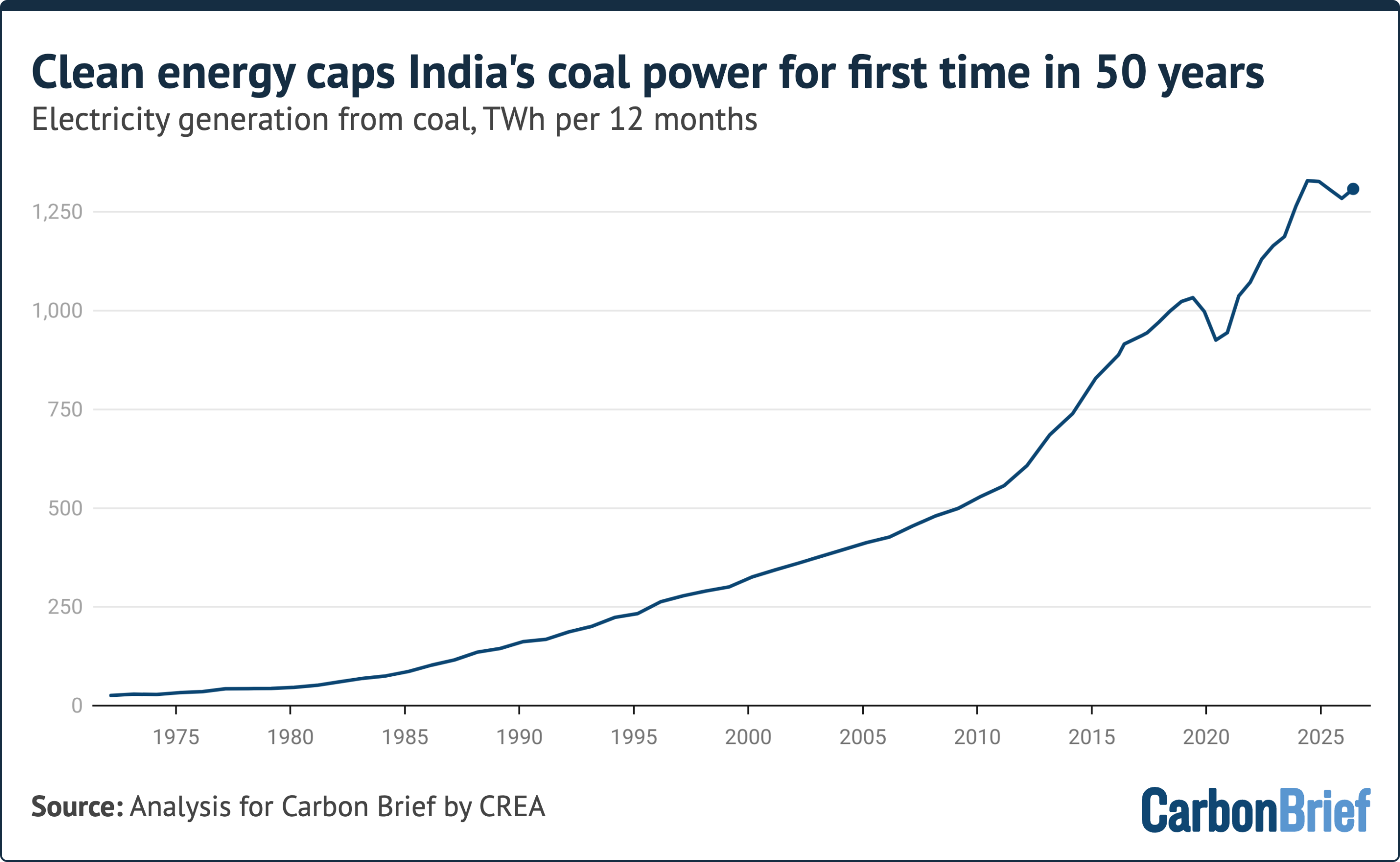
A historic transition is underway in South Asia as a massive surge in clean energy keeps carbon dioxide emissions firmly in check across India’s power sector. For the first half of 2026, emissions from electricity generation showed no growth compared to the same period in 2024. This marks a significant milestone: it is the first time in more than 50 years that India has experienced zero growth in coal power over a consecutive two-year period, a trend that persisted even as overall electricity demand continued to climb.
At the same time, national consumption of both oil and gas has declined for two consecutive years. This unexpected drop in fossil fuel demand has played a critical role in cushioning the country against severe energy shocks, helping alleviate the immediate domestic pressures of the Hormuz crisis.
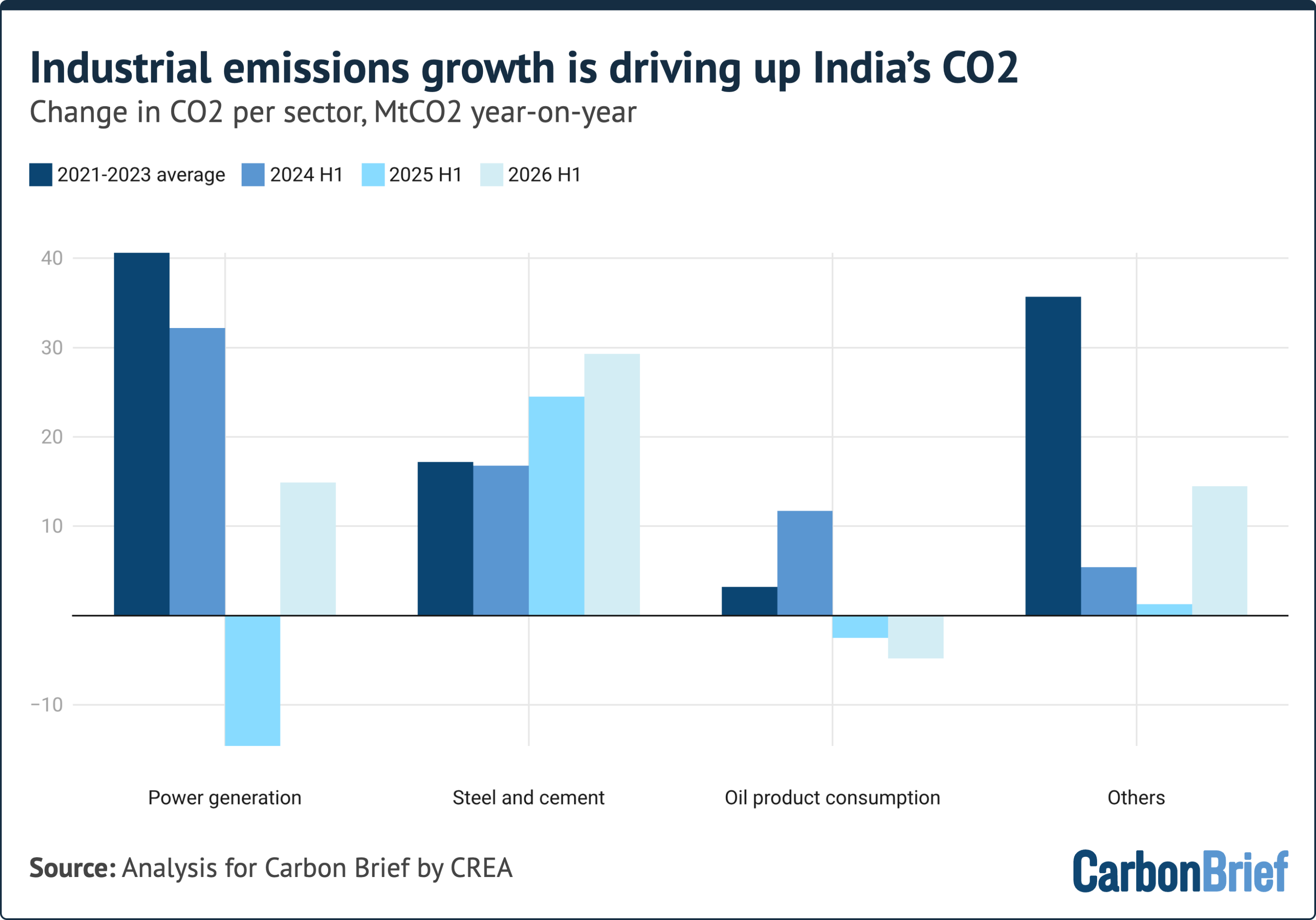
Nevertheless, a new six-monthly analysis highlights a competing reality. While the power sector has successfully flatlined its emissions, India’s economy-wide greenhouse gas output grew by 3.7% year-on-year in the first half of 2026. This broader increase was driven by sharp rises in heavy manufacturing sectors, particularly steel and cement production, where direct fossil fuel use and process emissions accelerated.
Experts note that if India is to maintain the remarkable pace of its clean-energy expansion, it will need to undertake significant structural updates. These include rapidly upgrading its electricity transmission infrastructure, building out large-scale energy storage capacities, and boosting the operational flexibility of existing coal-fired power plants. Meanwhile, despite the flatlining of power-sector emissions, the traditional fossil fuel industry continues to pursue major capital investments, including new coal-power plants, ambitions to convert coal into chemical feedstocks, and efforts to ramp up domestic coking coal production for heavy industry.
Flatlining Fossils and Divergent Industrial Trends
Last year, India’s carbon dioxide emissions from fossil fuels and cement grew at their slowest pace in two decades, a sharp deceleration spurred by rapid renewable energy growth and stagnant oil demand, offset only by rising industrial activity. The first half of 2026 represents a direct continuation of these trends.
Most strikingly, the ongoing expansion of wind, solar, and other non-fossil sources has kept power-sector emissions completely flat for two years. Power-sector carbon output in the first half of 2026 matched levels seen two years prior, effectively erasing a small, temporary dip recorded in 2025.
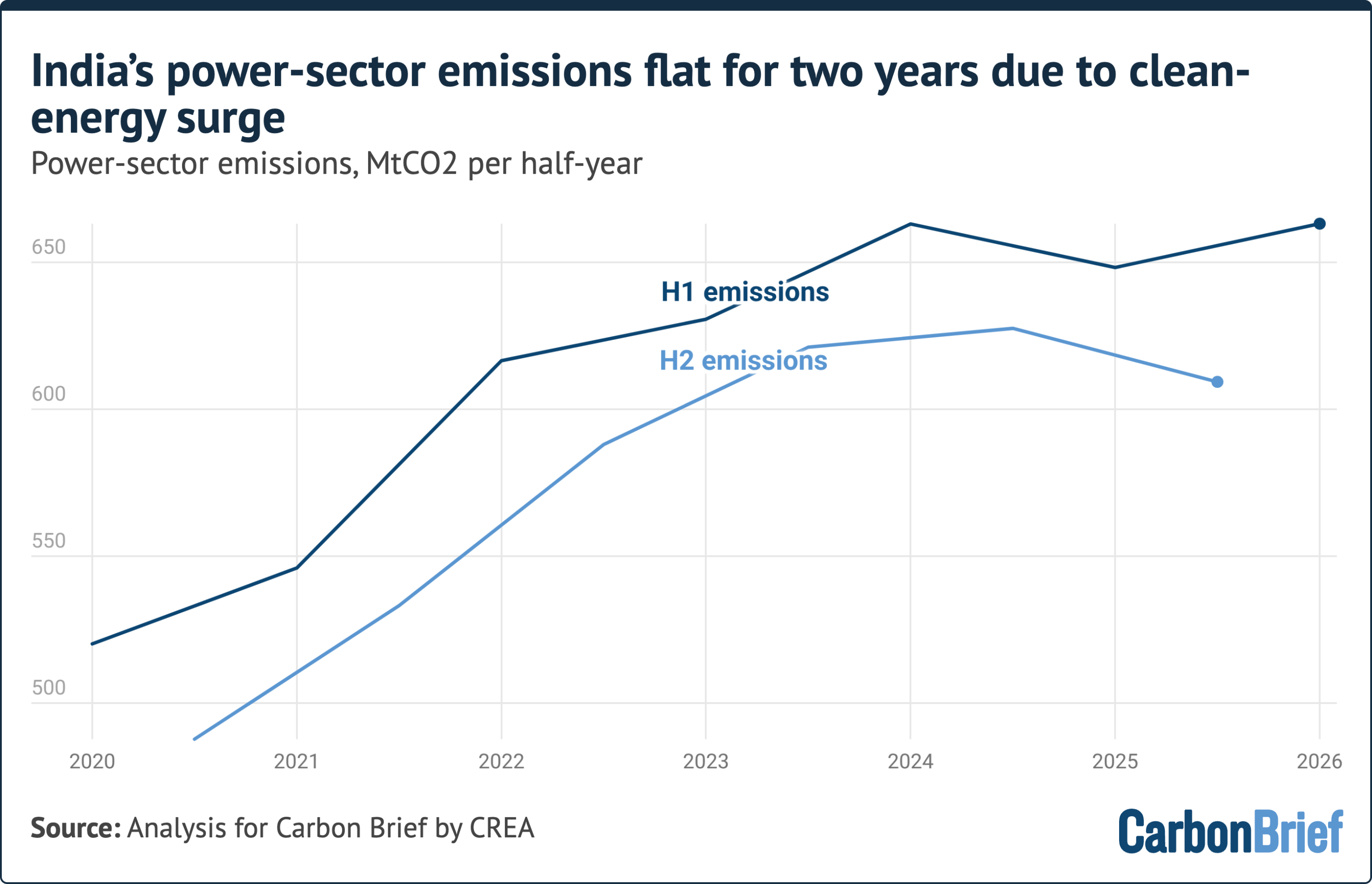
Beyond electricity generation, however, India’s key emitting sectors displayed deeply divergent trajectories. While power-sector emissions grew by a modest 2.3%—reversing the previous year’s minor decline—and demand for oil and gas products continued to drop, heavy industry moved in the opposite direction. Emissions from the steel and cement sectors accelerated by 8% year-on-year in the first half of 2026, significantly outpacing recent historical trends.
Clean-Energy Growth Matches Surging Power Demand
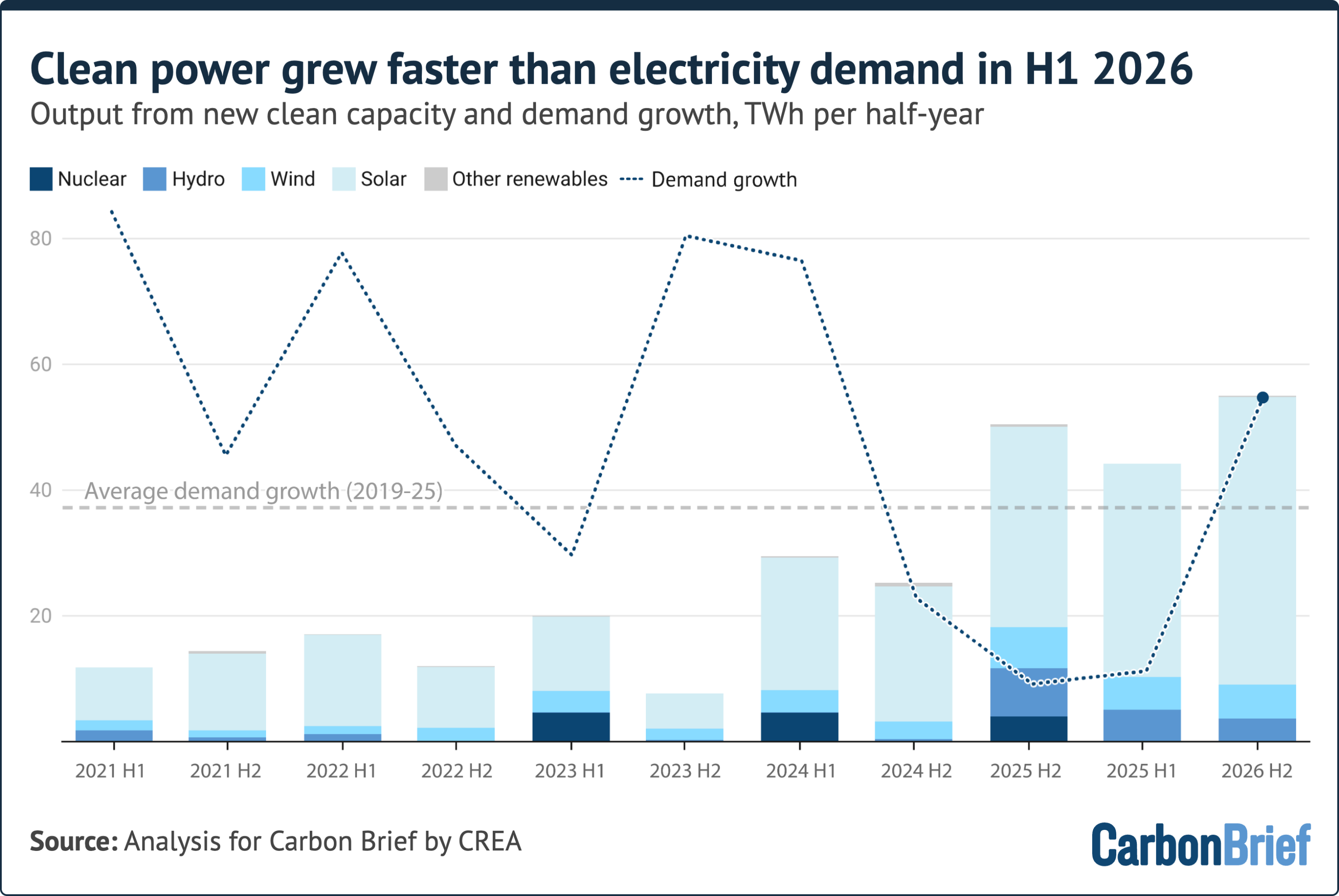
The period stretching from the first half of 2024 to the first half of 2026 witnessed the largest increase in non-fossil power generation on record in India. This unprecedented deployment enabled fossil-fuel consumption and sector-wide emissions to remain completely flat, despite a robust expansion in overall electricity consumption.
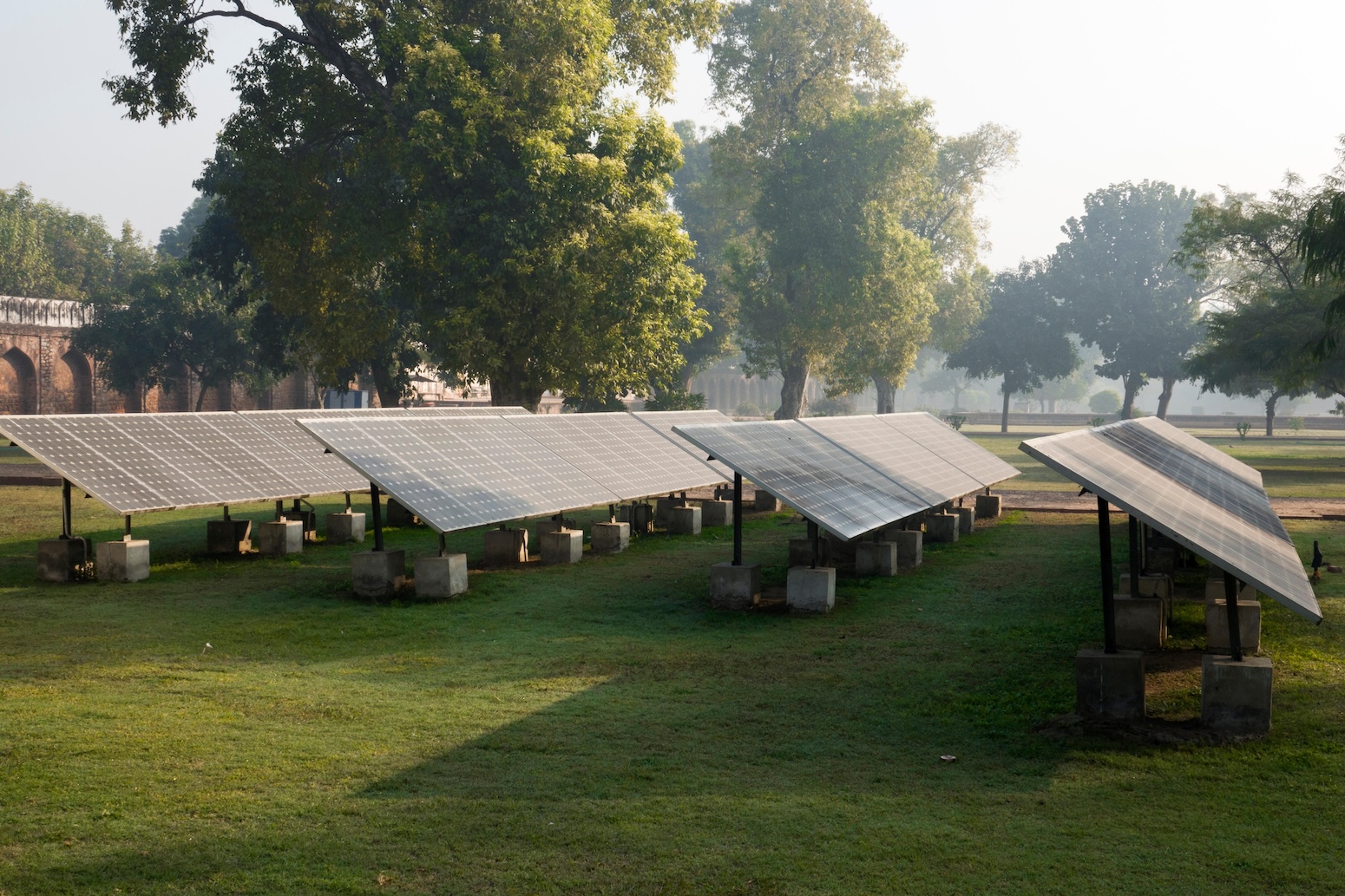
Over this two-year window, India’s total power generation jumped by 7%, adding roughly 63 terawatt-hours (TWh)—an amount roughly equivalent to the total annual electricity consumption of nations like Singapore or Switzerland. Crucially, this additional power requirement was met entirely by clean energy sources. Solar power led the charge with a 44 TWh increase, supported by additional output from wind (13 TWh), hydro (8 TWh), and nuclear (7 TWh). Together, non-fossil sources added 70 TWh over the two years, comfortably outpacing the net growth in demand.
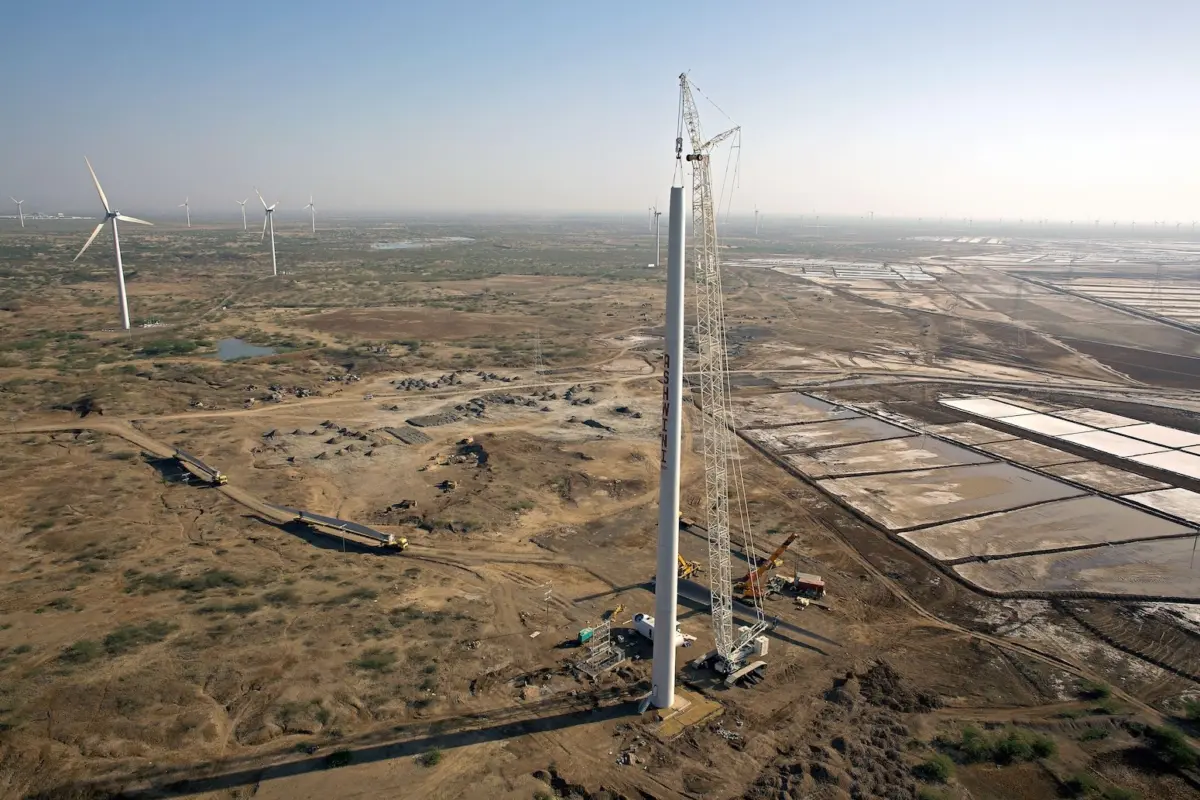
This green surge was powered by massive capacity additions. Over the past two years, India installed 77 gigawatts (GW) of new solar capacity, alongside 11 GW of wind, 5 GW of hydro, and 0.6 GW of nuclear power. While solar continues to dominate the renewable landscape, alternative non-fossil sources still accounted for 40% of the overall increase in generation.
Power demand itself remained exceptionally robust in 2026, driven in part by severe meteorological factors. An intensified El Niño cycle delayed the annual monsoon and triggered prolonged, severe heatwaves across the subcontinent, causing an immediate spike in cooling demand and residential air conditioning usage.
To manage this variable generation and support further renewable expansion, India is rapidly accelerating its investments in energy storage. The government’s National Electricity Plan previously projected a requirement of 82 gigawatt-hours (GWh) of storage capacity by 2026–27, scaling up to 411 GWh by 2031–32. By mid-2026, authorities had already issued tenders for approximately 272 GWh of storage capacity, split between pumped hydro projects and advanced battery energy storage systems, aiming to outpace current operational storage levels.
State-Level Leadership in the Clean-Power Shift
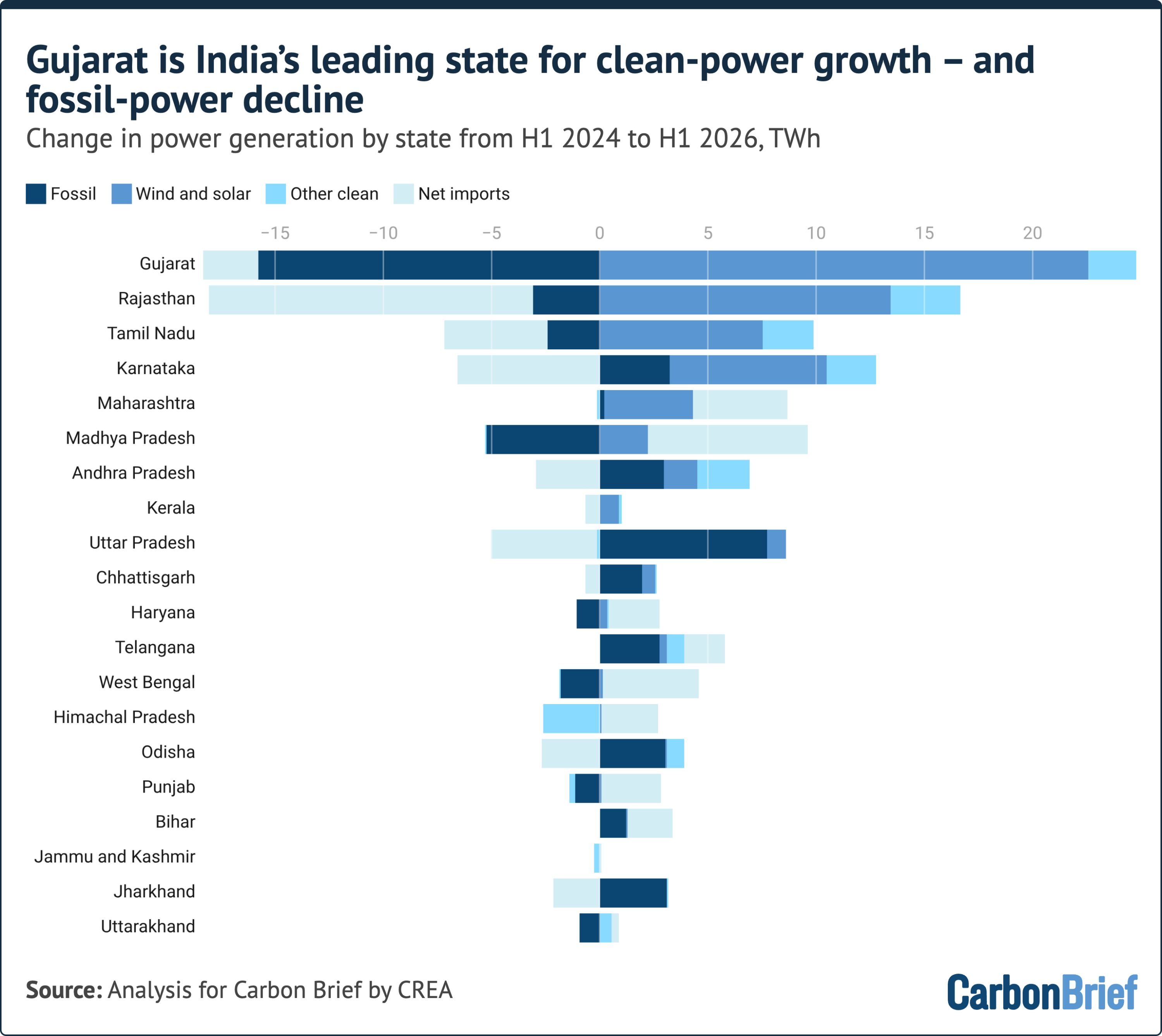
The reduction in fossil fuel power generation over the two-year period was largely concentrated in a handful of pioneering states. Western India’s Gujarat emerged as the national leader, recording both the largest reduction in fossil-fuel power generation and the most aggressive expansion of clean energy infrastructure.
Following Gujarat, states like Rajasthan and Tamil Nadu posted the largest increases in clean-power generation while simultaneously cutting back on fossil-fuel output. Conversely, other regions, such as Madhya Pradesh, West Bengal, and Punjab, saw reductions in local fossil-fuel generation primarily due to higher net imports from neighboring regions rather than local renewable expansion.
States with the highest surges in electricity demand—most notably Maharashtra and Telangana—managed to almost completely offset their rising consumption by aggressively scaling up local clean energy generation.
Oil and Gas Consumption Continues to Fall
National oil consumption maintained a downward trajectory through the first half of 2026, contracting by 1.3% year-on-year and accelerating slightly from the 0.7% reduction recorded during the same period in 2025. Although standard transport fuels like diesel and petrol continued to grow, overall oil demand was dragged down by notable declines in liquefied petroleum gas (LPG), petroleum coke used in cement manufacturing, and vital industrial chemical feedstocks.
Diesel consumption growth accelerated from 1.8% to 4.1% in early 2026, supported by robust freight movement and agricultural demand. The delayed monsoon forced farmers to rely heavily on diesel-powered irrigation pumps. Meanwhile, petrol consumption rebounded with a 6.9% year-on-year increase, reflecting sustained growth in the passenger vehicle and two-wheeler markets.
This petrol demand growth was partially tempered by a significant acceleration in ethanol blending. India successfully achieved its ambitious target of 20% ethanol blending in petrol five years ahead of its original schedule, though the policy has encountered localized economic and agricultural opposition. Simultaneously, electric vehicle adoption gathered considerable momentum across multiple vehicle classes, particularly in urban centers like Delhi, where targeted municipal EV policies have accelerated the electrification of commercial fleets and two-wheelers.
In contrast, aviation fuel demand growth slowed sharply from 5% to 2%. This cooling coincided with geopolitical disruptions in the Middle East, including airspace closures and flight cancellations stemming from the Hormuz crisis, which kept jet fuel prices elevated and increased airline operating costs.
Industrial feedstocks were heavily impacted by international supply disruptions and surging prices. Naphtha demand contracted sharply as global import prices nearly doubled, forcing domestic petrochemical manufacturers to cut operating rates and curtail production. Bitumen consumption remained subdued due to a slowdown in major road construction projects, driven by land acquisition hurdles and rising material costs.
Heavy Industry Drives Rapid Emission Growth
Despite rising input costs and squeezed profit margins, India’s steel and cement industries posted strong production growth during the first half of 2026, expanding by 8% and 9% year-on-year, respectively. This industrial output was bolstered by strong investments in the real estate sector, particularly during the second quarter.
However, profit margins across steel and cement manufacturers remained under severe pressure throughout the period. Producers faced elevated raw material expenses, particularly for imported coking coal, alongside inflated maritime freight costs caused by Middle East shipping disruptions.
Outside of core manufacturing, coal consumption in secondary industrial sectors accelerated to 14% in early 2026. This spike was driven in part by widespread LPG shortages that forced commercial kitchens, hospitality businesses, and small industries to temporarily switch back to alternative fuels, including coal and furnace oil, under emergency regulatory relaxations issued by various state governments.
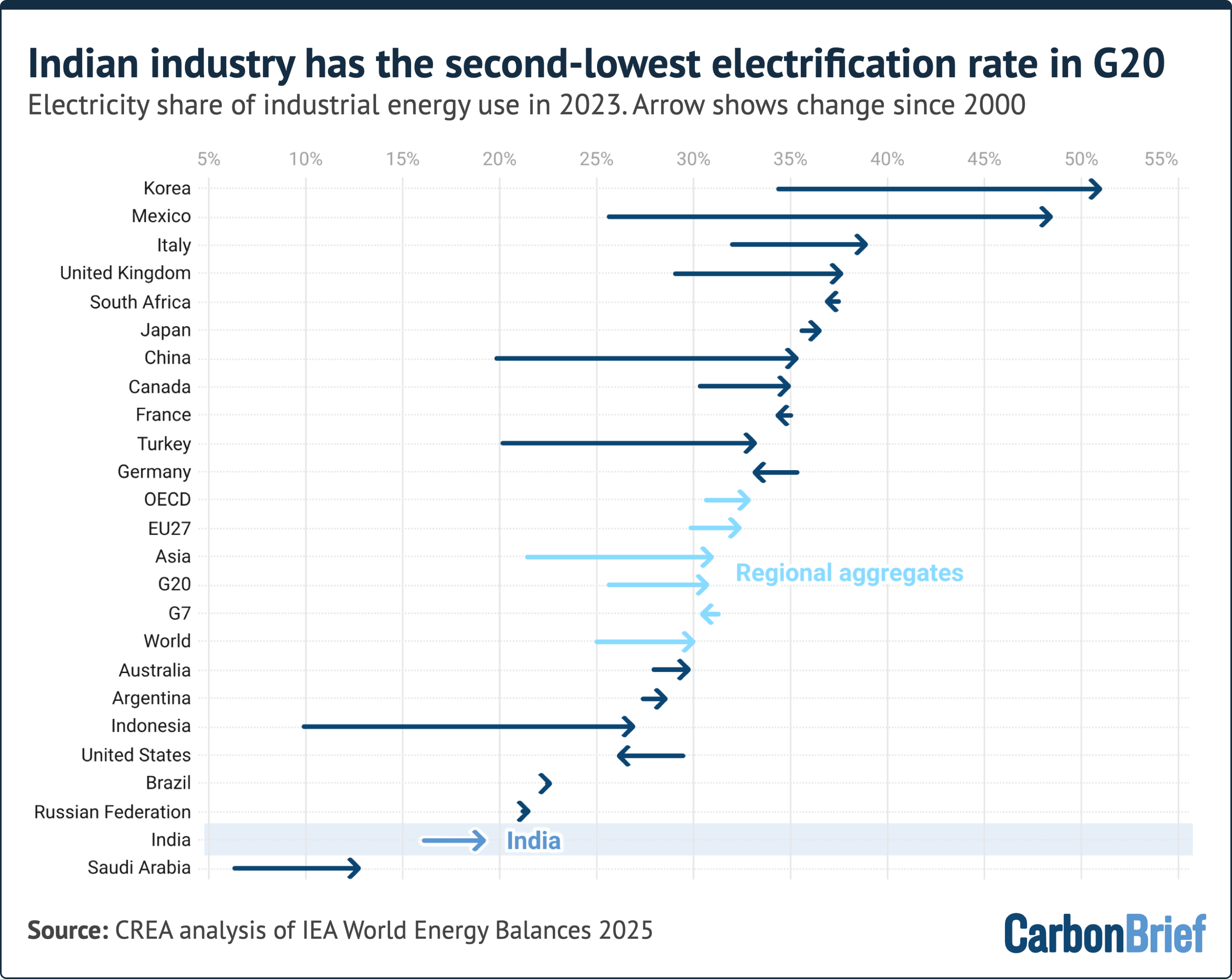
A core structural challenge remains India’s industrial energy profile, which remains heavily dependent on direct fossil fuel combustion rather than electricity. According to international comparisons, Indian industry possesses the second-lowest electrification rate among G20 economies, lagging far behind the global average. This low baseline highlights a massive, untapped potential to transition heavy industrial heating and manufacturing processes to clean electricity, provided the necessary infrastructure and economic incentives are put in place.
New Coal Investments and Future Infrastructure Hurdles
Even as renewable energy capacity absorbs the majority of new electricity demand, India continues to pursue substantial capital investments across the traditional coal supply chain. By the end of June, approximately 43 GW of new coal-fired power capacity remained under construction. Policymakers defend these additions as necessary to guarantee reliable baseload power and meet extreme peak evening demand, even as battery storage and solar installations take on a larger share of the daily load.
Beyond the power sector, national ambitions remain high for coal gasification projects aimed at producing chemical fertilizers and plastic feedstocks domestically. The government has targeted a processing capacity of 100 million tonnes of coal per year over the next four years, despite the technology remaining largely nascent within the country. Plans are also underway to increase domestic coking coal production and expand mining operations to secure long-term supplies for the domestic steel industry.
However, sustaining the rapid growth of clean energy will require overcoming critical infrastructure bottlenecks. Renewable energy developers faced mounting challenges related to interstate transmission constraints, leading to localized project curtailments where clean electricity generation had to be wasted because the grid could not absorb it. Regulatory delays have also stalled a national mandate requiring existing coal-power plants to retrofit their systems for greater operational flexibility, a step essential for allowing thermal plants to ramp down quickly when renewable output peaks.
To ease these grid pressures, regulatory authorities have proposed mandatory battery storage requirements for all new government-backed wind and solar projects moving forward. Whether these market and policy mechanisms can successfully harmonize India’s massive renewable rollout with its surging industrial demand will determine the trajectory of the nation’s carbon emissions in the years ahead.