Researchers studying the origins of Stonehenge’s enigmatic Altar Stone have proposed a compelling new possibility for how the enormous rock began its remarkable journey from Scotland to southern England. The findings offer fresh insight into one of the most persistent mysteries surrounding prehistoric Britain and point toward a complex, multi-stage voyage across land and sea.
A collaborative team of researchers from Sheffield Hallam University and Curtin University in Australia has analyzed ancient ice movement and determined that glaciers during Britain’s last ice age may have transported the stone from Scotland’s Orcadian Basin as far south as Dogger Bank in the North Sea. From that submerged region, however, ancient people would still have been forced to move the heavy monolith hundreds of kilometers overland or via coastal waters to Salisbury Plain.
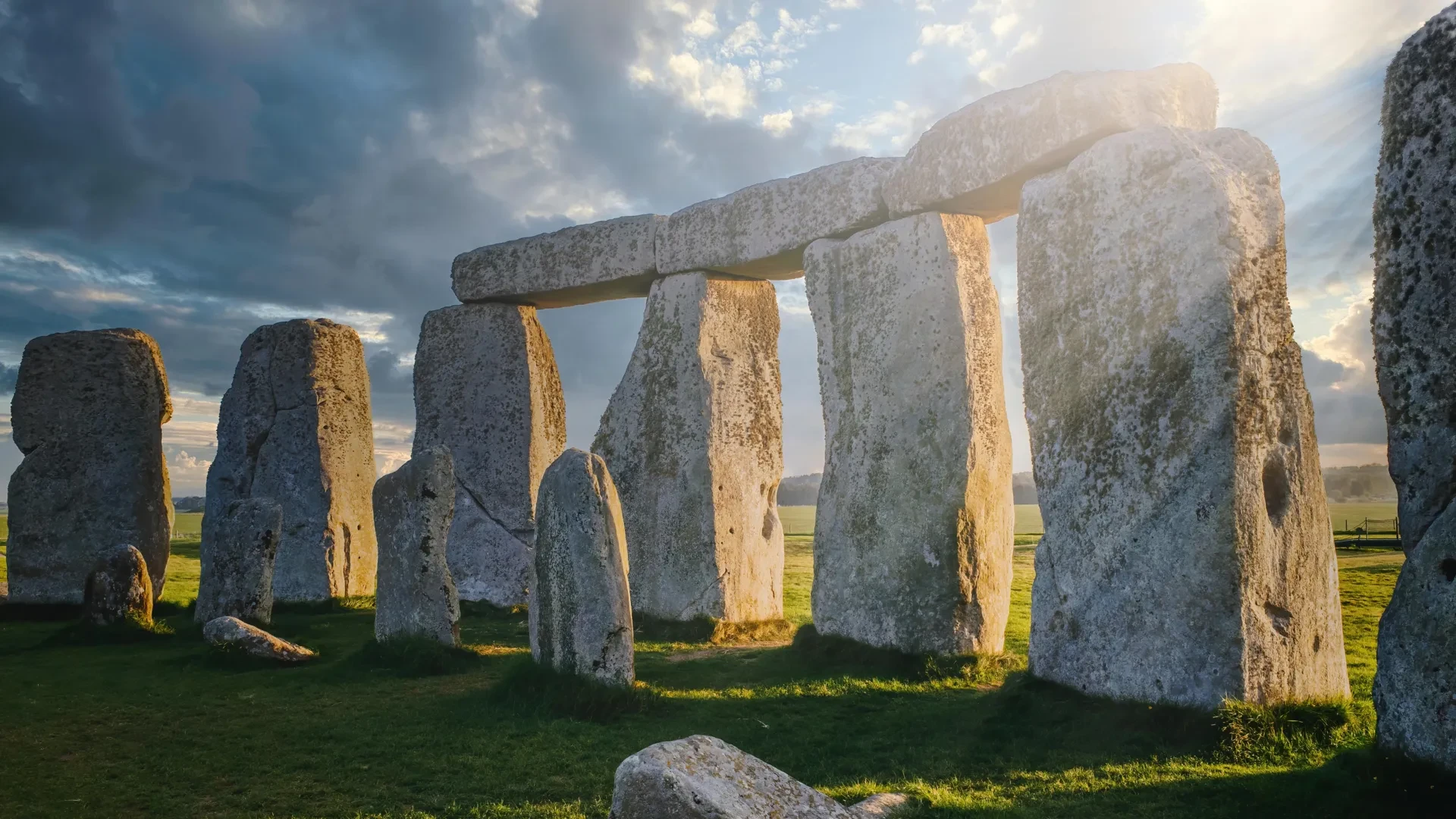
Stonehenge’s central Altar Stone is a massive, six-tonne sandstone megalith that geologists and archaeologists now believe originated in northeast Scotland, roughly 700 kilometers, or approximately 435 miles, away from the famous prehistoric monument in Wiltshire. Its exceptionally distant origin has long raised one of the monument’s most intriguing questions: how did such an enormous stone travel so far across a prehistoric landscape devoid of modern infrastructure?
Tracing the Altar Stone From Scotland
To reconstruct the possible route, the research team combined advanced mineral grain dating techniques with sophisticated computer models of ancient ice sheets. This multidisciplinary approach allowed investigators to examine both the precise geological origins of the stone and whether ancient glaciers could realistically have carried such a heavy mass thousands of miles southward.
Dr. Remy Veness, co-lead author of the research paper from Sheffield Hallam University, discussed the significance of the geological detective work. "We recently discovered that the origin of the Altar Stone is northeast Scotland, but how it traveled 700 km to Salisbury Plain is widely debated," Dr. Veness noted, highlighting the persistent academic debate surrounding the monument’s construction materials.
"Our research gives a new plausible explanation for part of the journey to Salisbury Plain," Dr. Veness continued. "What is exciting about these findings is that they could imply that the people of Doggerland attached cultural significance to the Altar Stone long before it was incorporated into Stonehenge. Hypothetically, the Altar Stone could have been significant enough to be willing to move the stone at least twice; first to potentially save it from being submerged by rising sea levels at the end of the last ice age, and then again to its final resting place on Salisbury Plain."
A Possible Stop in Lost Doggerland
Doggerland was a vast, fertile Neolithic landscape situated off the east coast of England that is now completely submerged beneath the waters of the North Sea. Because the area lacked natural rock outcrops of this specific geological composition, any large stones found there would have had to arrive from somewhere else, most likely carried by massive sheets of moving ice during periods of glaciation.
The researchers suggest that the Altar Stone could have been deposited directly in the Dogger Bank region by glacial activity. People living in the area during the Mesolithic or Neolithic transitions may then have interacted with the monolith and eventually moved it again as the surrounding landscape underwent dramatic environmental changes, including the relentless rise of sea levels that ultimately swallowed Doggerland whole.
From the prehistoric terrain of Doggerland, the stone could eventually have been transported toward the Berkshire Ridgeway, a high-elevation trackway widely regarded as the oldest road in Europe. Historical and archaeological evidence indicates that this ancient route was in active use around the time Stonehenge was constructed, meaning it may have provided an important, well-traveled corridor facilitating movement directly toward Salisbury Plain.
Glaciers Could Only Explain Part of the Journey
Co-lead author Dr. Anthony Clarke, representing the Timescales of Minerals Systems Group within Curtin University’s School of Earth and Planetary Sciences, emphasized that the physical evidence points toward a complicated journey involving multiple distinct stages rather than one simple, direct natural route.
"Rather than being carried naturally by ice, the evidence points to a deliberate, carefully planned movement across a challenging and varied landscape," Dr. Clarke explained.
"Our modeling shows glaciers may have transported rocks part of the way during the last Ice Age—potentially as far as Dogger Bank in the North Sea—but not into southern England, meaning the stone would still have needed to be moved hundreds of kilometers by people. The research indicates there were no viable glacial pathways linking the source region directly to Stonehenge, reinforcing the conclusion that human transport was required. Instead, this suggests the stone was likely moved in stages, potentially combining overland hauling with river or coastal transport where possible."
A Remarkable Neolithic Transport Effort
If the proposed route and multi-stage migration theory are correct, successfully moving the Altar Stone to the Stonehenge site would have demanded extraordinary social cooperation, labor, and resource-sharing among dispersed Neolithic communities. Transporting such an immensely heavy rock through varying and often treacherous landscapes over hundreds of kilometers would have required meticulous organization, engineering ingenuity, and a detailed, generational knowledge of possible transit corridors.
Dr. Clarke stressed that the new findings point to a level of logistical planning, societal coordination, and structural foresight that may not have been fully appreciated by modern historians and archaeologists studying prehistoric Britain.
"Transporting a stone of this size over such a long distance would have required planning, coordination, and a deep understanding of the landscape—not to mention tremendous determination," Dr. Clarke said. "The study demonstrates how combining modern geological analysis with advanced computer modeling can help resolve long-standing questions about how Stonehenge was built and where its raw components truly came from."
Building upon these revelations, researchers now hope to narrow down the Altar Stone’s precise source location within northeast Scotland. They also aim to investigate in much greater detail the specific overland paths, river systems, and coastal routes that prehistoric communities may have utilized to complete the monumental task of bringing the stone south.
The groundbreaking research was co-led by academic teams from Sheffield Hallam University and Curtin University, working in close collaboration with scientific experts from the University of Sheffield, Wessex Archaeology, and the University of Bristol.