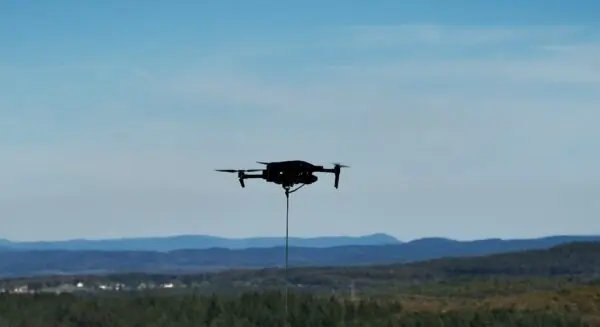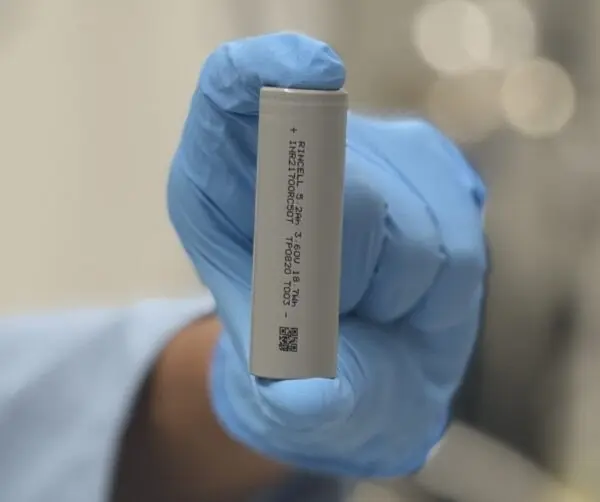
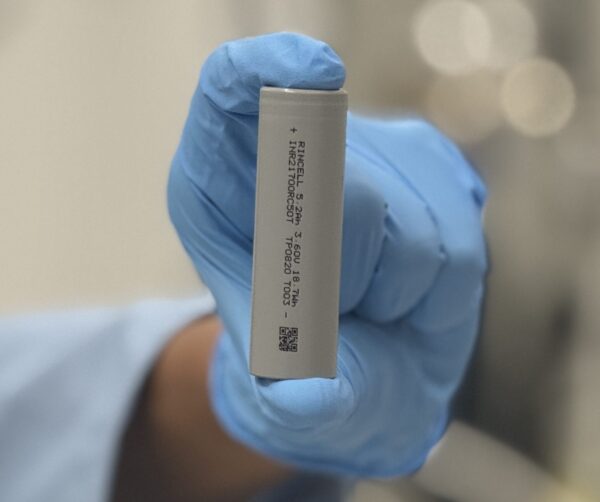
LONDON — U.S. battery cell manufacturer Rincell is making its official European debut at the upcoming DroneX exhibition, bringing its advanced energy storage solutions directly to the international uncrewed aerial systems market. Headquartered in Fremont, California, the company is showcasing its newly launched RC50T cell—an NDAA-compliant, tabless 21700 lithium-ion battery engineered specifically to meet the rigorous demands of modern commercial and defense-grade drone operations.
The announcement comes as the company confirms that volume production of the RC50T is already well underway, with shipments actively reaching manufacturers ahead of the trade show, which runs from September 29 to 30, 2026, at the ExCeL London venue. For Rincell, the event serves as a pivotal moment to introduce its proven hardware portfolio to European industry leaders who are increasingly seeking reliable, localized, and regulatory-compliant supply chains.
Engineered for High-Stress Flight Phases
The RC50T has been meticulously designed by Rincell’s engineering team to handle the most demanding, high-load phases of an aerial mission. Uncrewed aircraft systems face their most severe energy drains during critical maneuvers, including vertical take-off, rapid climbing, heavy payload lifting, and sudden directional adjustments. Traditional cylindrical cells often struggle to maintain stable voltage under such intense stress, leading to thermal throttling or premature capacity degradation.
Built within a standard 21700 cylindrical format, the RC50T addresses these performance bottlenecks by delivering a robust 100 amperes of continuous discharge and up to 150 amperes of pulse discharge. Despite its heavy power delivery capabilities, the cell maintains a high energy density exceeding 265 watt-hours per kilogram, translating to approximately 120 watt-hours per pound.
A key engineering breakthrough in the RC50T is its advanced tabless construction. By eliminating traditional internal tabs and creating a continuous conductive path along the jelly roll, Rincell has drastically reduced internal resistance to a remarkably low 3 to 4 milliohms. This architectural refinement ensures that a significantly higher percentage of stored electrical energy is successfully routed to the aircraft’s motors as usable propulsion power, rather than being wastefully dissipated as internal heat. Furthermore, the cell is engineered to accept rapid charging currents of up to 15 amperes, drastically reducing turnaround times between flight missions for commercial operators who rely on high daily aircraft utilization.
A Philosophy Rooted in Proven Production
Reflecting on the company’s strategic trajectory, Jignesh Parikh, co-founder and chief executive officer of Rincell, emphasized that the firm prioritized tangible manufacturing milestones over speculative research and development announcements.
"In an industry often driven by future promises, we chose to focus on proven results," Parikh stated. "For three years we have kept our heads down, taken our cells from the lab into volume production and shipped them to customers. DroneX is the first time we have told that story. Everything visitors will see on our stand is a product they can order and fly today. That includes the RC50T, our highest power 21700 cell, and it is already in the air."
This sentiment is echoed by early adopters in the aerospace sector who have integrated the new hardware into advanced airframes. Shashank Sripad, co-founder and chief technology officer of PROPEL AERO, noted the tangible operational advantages provided by the new cell chemistry and architecture.
"The RC50T gives us power headroom, without any loss in energy, that we have not had from a 21700 cell before," Sripad explained. "With internal resistance this low we can build lighter, cooler packs and let the aircraft use more of the energy it is carrying."
Rincell RC50T and RC50 Specifications
The newly introduced RC50T strategically complements Rincell’s existing flagship product, the RC50. The RC50 is a 5-ampere-hour 21700 cell that has already achieved widespread commercial adoption, currently shipping in volume quantities to drone manufacturers operating across diverse sectors, including defense, precision agriculture, and critical infrastructure surveillance.
Both the RC50 and the RC50T utilize advanced silicon-graphite lithium-ion chemistry operating at a nominal voltage of 3.6 volts. Both cells are engineered to function reliably across a broad thermal operating window, performing consistently in ambient temperatures ranging from -20 to 60 degrees Celsius, which equates to -4 to 140 degrees Fahrenheit.
Despite sharing foundational chemistry and physical dimensions, the two cells are tailored for distinct operational priorities. The baseline RC50 offers a higher energy density of roughly 276 watt-hours per kilogram, a continuous discharge rate of 5C, a pulse discharge rate of 10C, and an extended operational lifespan exceeding 1,000 charge-discharge cycles. Conversely, the newly unveiled RC50T deliberately trades a portion of its long-term cycle life—projecting a robust lifecycle above 500 cycles—in exchange for substantially elevated peak power capabilities and a slightly higher nominal capacity of 5.2 ampere-hours.
Because Rincell maintains comparable pricing structures for both models, uncrewed system designers are empowered to select the optimal cell based entirely on their specific mission profiles. Operators prioritizing maximum flight endurance and long-term economic value can deploy the RC50, while missions requiring explosive acceleration, heavy payload lifting, and sustained peak power are ideally suited for the RC50T.
Parikh emphasized that this immediate availability addresses a critical bottleneck for regional manufacturers. "Drone builders in the UK and Europe are looking for cells that combine real performance with a supply chain they can trust, and they want them now rather than at some point in the future," he noted. "We are bringing both to London. Our approach is simple: we do not show anything that is not in production, so when we say a cell is available, it is."
Manufacturing Footprint and Global Supply Chain
Rincell was established in January 2023 by Jignesh Parikh and Dr. Jagjit Nanda, who serves as the director of the SLAC-Stanford Battery Center. The enterprise maintains a bifurcated operational structure designed to accelerate innovation while ensuring scalable manufacturing capacity. Research, development, and initial prototyping are centered in the United States, where the company operates a dedicated 6,500-square-foot pilot production line located in Fremont, California.
Meanwhile, high-volume manufacturing takes place primarily in established facilities in India, while plans are actively underway to bring a major domestic U.S. production facility online by late 2027. This deliberate expansion timeline arrives as commercial and defense uncrewed aerial vehicle manufacturers navigate mounting global pressures to secure transparent, resilient, and secure battery supply chains that comply with rigorous regulatory standards such as the National Defense Authorization Act.
As a venture-backed enterprise, Rincell has secured strategic backing from prominent institutions, including In-Q-Tel, the U.S. Department of War, and the California Energy Commission, reinforcing its standing as a trusted domestic and allied supplier of advanced electrochemical energy storage.
Rincell is exhibiting at stand U534 during the DroneX event, where engineering teams are displaying the RC50T and RC50 cells alongside comprehensive sample battery pack configurations designed to demonstrate real-world integration possibilities.