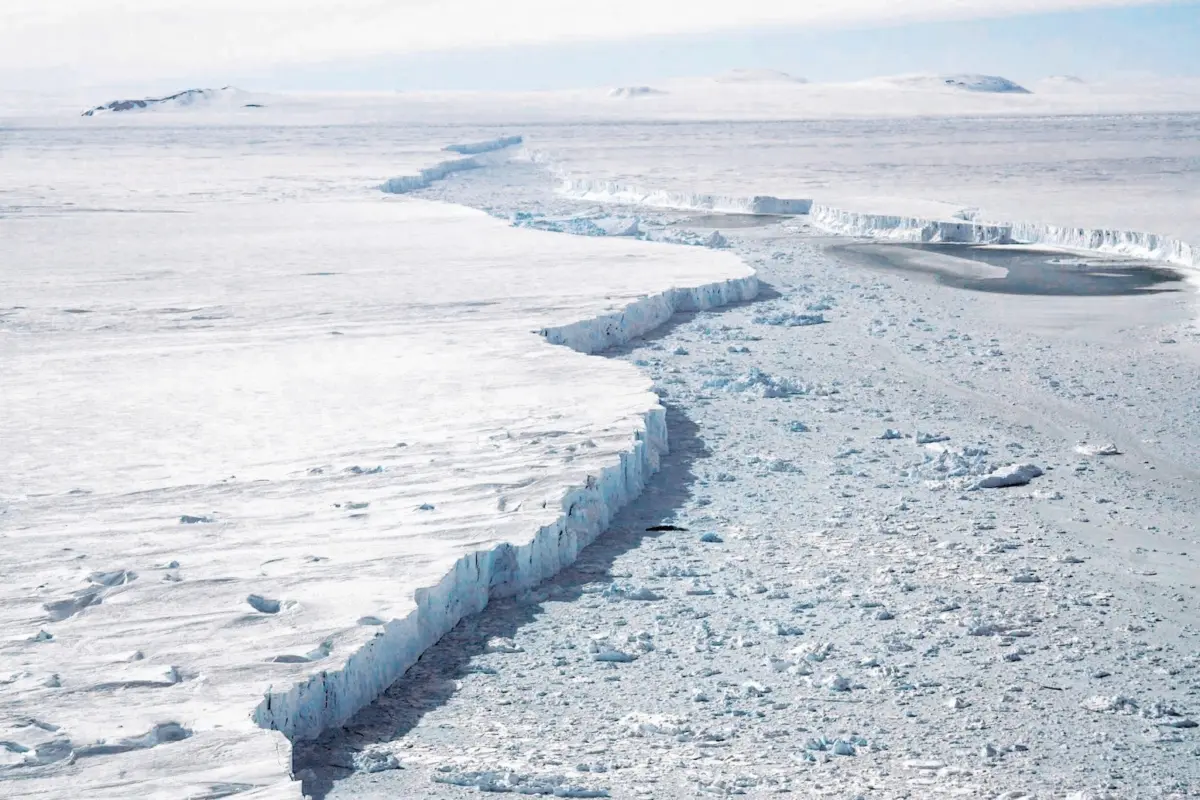
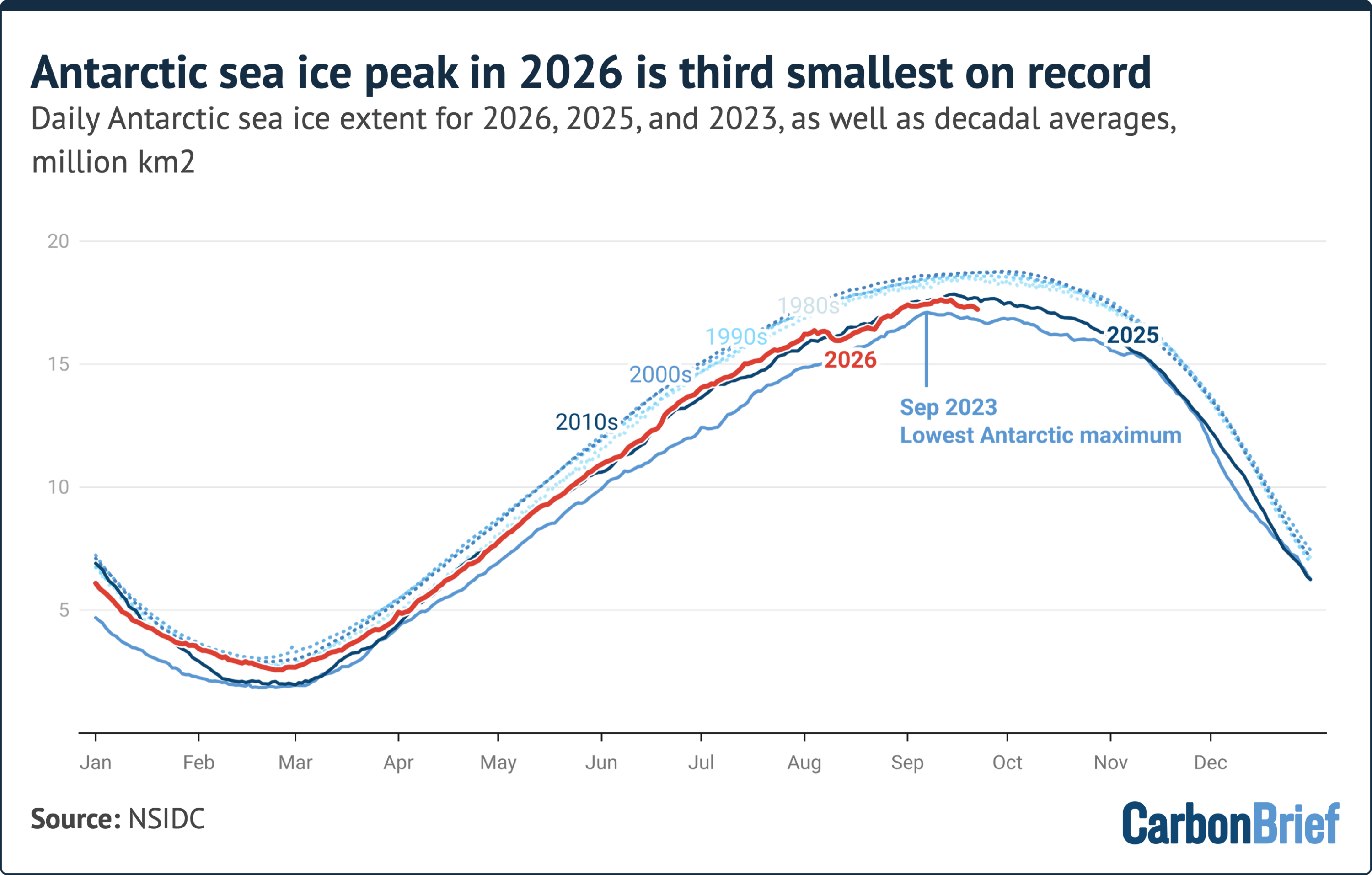
Antarctic sea ice has recorded its third-smallest winter peak extent since satellite observations began 48 years ago, according to new data that underscores the persistent vulnerability of Earth’s polar regions.
Provisional figures from the US National Snow and Ice Data Center (NSIDC) show that Antarctic sea ice reached its annual winter maximum on September 14, spanning an extent of 17.59 million square kilometers. While the NSIDC emphasizes that these figures remain preliminary, the organization notes that large fluctuations in extent are traditionally typical of Antarctic sea ice near its seasonal maximum. Even so, the persistence of these exceptionally low figures has triggered concern among polar climate researchers, who are closely watching the region for signs of long-term structural change.
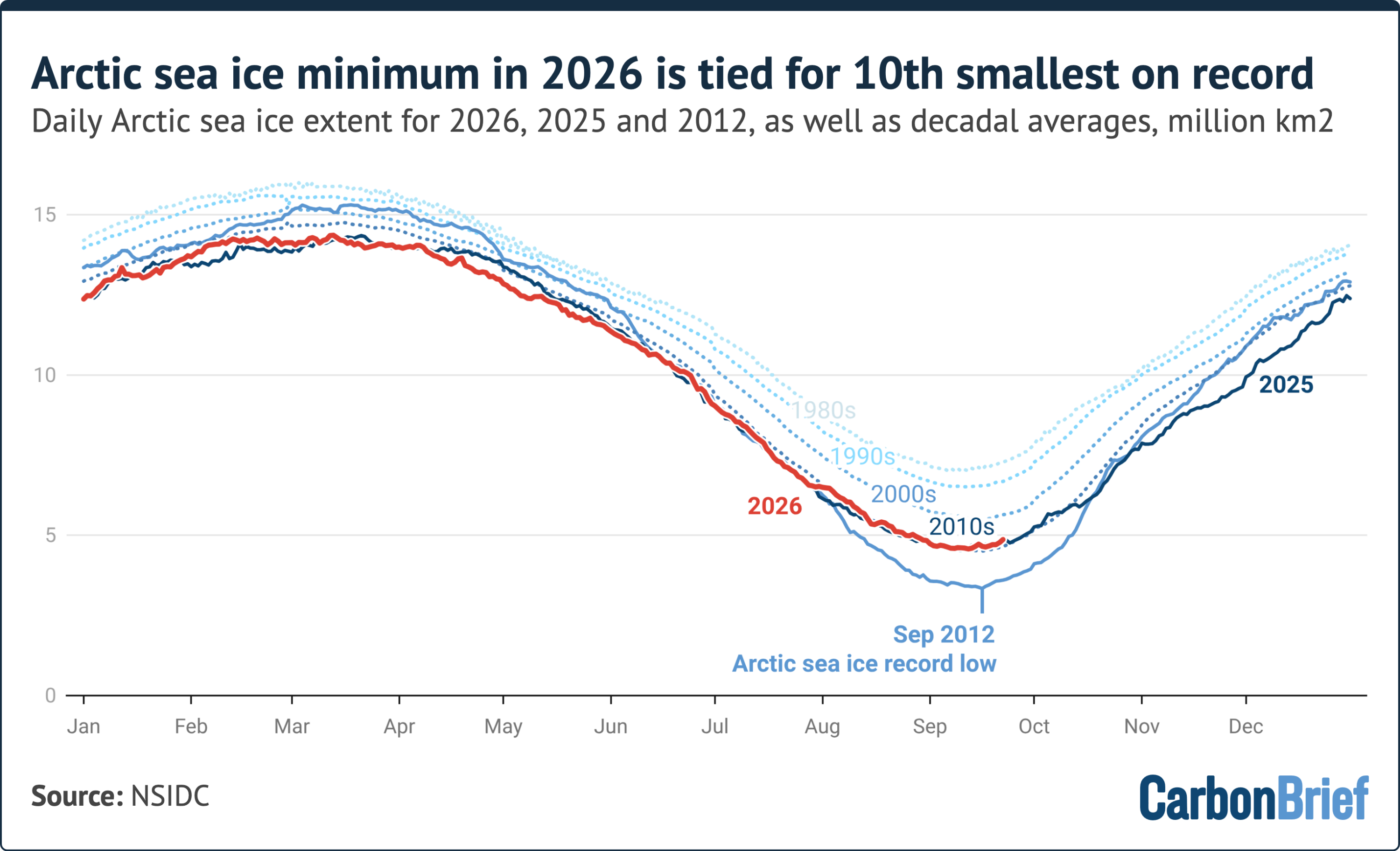
Meanwhile, at the Earth’s opposite pole, Arctic sea ice reached its annual summer minimum on September 12. Ranking as the joint-tenth lowest in the nearly five-decade satellite record, the Arctic minimum further cements a worrying historical trend, with the past 20 years accounting for the 20 lowest Arctic sea ice extents ever recorded by satellites.
The latest developments arrive on the heels of a winter season that also saw Arctic sea ice hit critically low marks. Together, the synchronized updates from both poles paint a sobering picture of changing high-latitude environments under sustained climatic pressures.
The Antarctic Winter Maximum
Dr. Lettie Roach, a polar climate scientist at the Alfred Wegener Institute in Germany, noted that this year’s Antarctic sea ice maximum was remarkably well below average for the season. She pointed out that after several decades of relatively stable or even increasing winter Antarctic sea ice conditions, watching these low values persist across consecutive years is cause for genuine concern.
At the same time, Dr. Roach emphasized the complexity of distinguishing between human-caused global warming and natural climate variability in the southern hemisphere. Compared to the Arctic, she explained, the drivers behind recent changes in Antarctic sea ice remain less straightforward, meaning the scientific community requires several more years of continuous observation to determine whether the current low extents represent a permanent structural shift.
Dr. Clare Eayrs, a postdoctoral researcher at the Korea Polar Research Institute (KOPRI), observed that after recording a near-average February minimum earlier in the year, Antarctic sea ice quickly reverted to unusually low winter coverage. She pointed out that the monthly Antarctic sea ice extents for July and August ranked as the fifth and fourth lowest on record, respectively. Highlighting the speed of recent declines, Dr. Eayrs noted that all five of the lowest July extents in satellite history have occurred since 2022, while all four of the lowest August extents have been recorded since 2023.
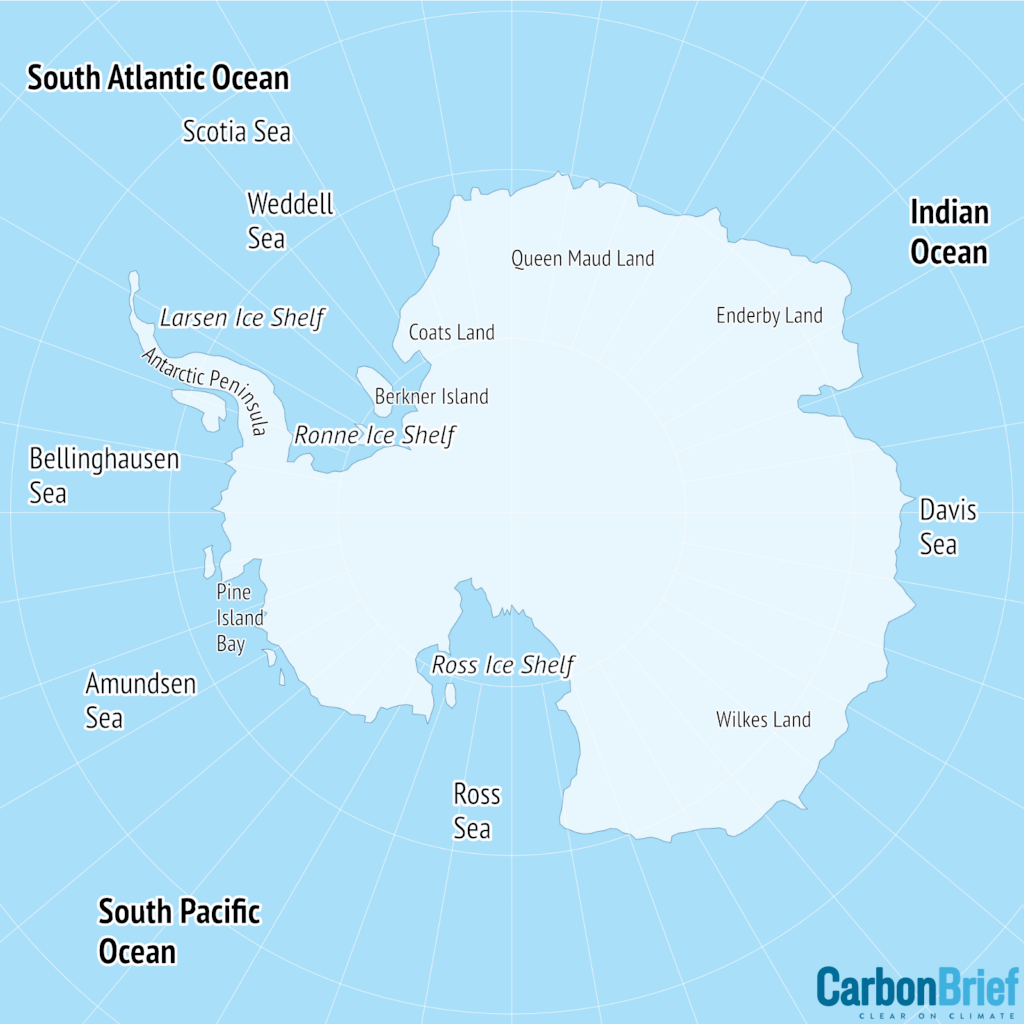
Beneath these continental-scale numbers lies a shifting mosaic of regional patterns. According to Dr. Eayrs, the regional distribution of Antarctic sea ice cover changed substantially throughout the growth season. In April, for instance, the Bellingshausen Sea remained almost entirely ice-free, whereas the neighboring Amundsen Sea maintained higher-than-usual ice concentrations.
However, by late August, shifts in atmospheric pressure profiles and wind patterns altered the landscape once more. The regional deficit in the Bellingshausen Sea largely recovered, while ice became unusually scarce in the Amundsen Sea and across vast stretches of East Antarctica.
Arctic Minimum and Evolving Regional Conditions
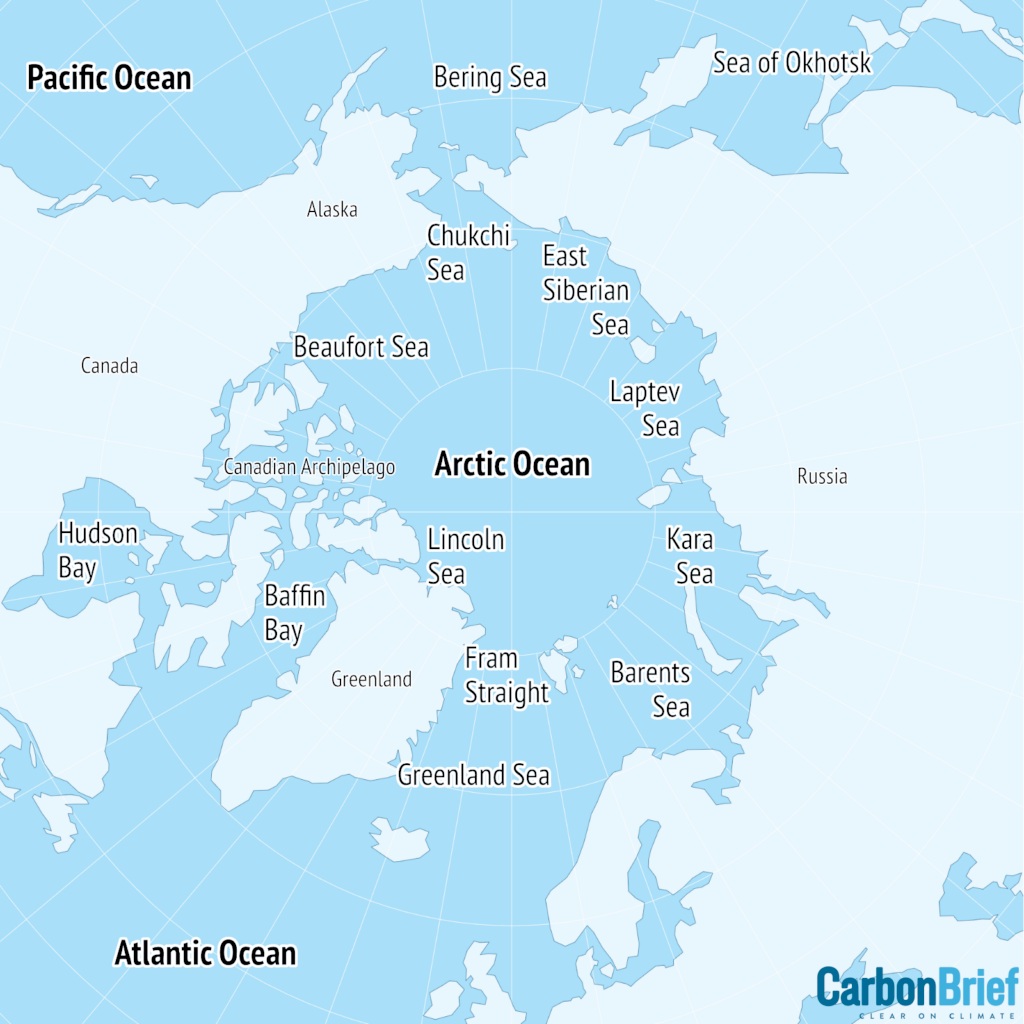
In the northern hemisphere, the Arctic summer minimum recorded on September 12 measured 4.60 million square kilometers, tying with 2025, 2010, and 2008 as the tenth-lowest summer extent on record.
Dr. Roach observed that although the latest Arctic minimum did not set a new all-time record, it remains strikingly lower than any sea ice minimum recorded prior to 2007. Human-caused climate change has fundamentally reduced both the cover and thickness of Arctic sea ice over recent decades, leaving the region radically transformed compared to the late twentieth century.
Tracking these changes in thickness has historically relied on specialized reanalysis tools like the Pan-Arctic Ice Ocean Modeling and Assimilation System (PIOMAS), which has monitored Arctic sea ice volume anomalies since 1979. However, institutional disruptions earlier in the year have complicated these efforts. In March 2026, the National Oceanic and Atmospheric Administration terminated a critical global air pressure dataset that researchers depended on to feed the PIOMAS model, forcing a suspension of updates for both systems.

Operators of the PIOMAS project have indicated that finding alternative data sources for their ice volume reanalysis will require considerable time and effort. They noted that it remains uncertain whether available funding will allow them to secure replacement data and eventually resume the production of a continuous PIOMAS time series.
Despite these observational hurdles, scientists have mapped out the meteorological forces that shaped the Arctic summer. Dr. Zack Labe, a climate scientist at Climate Central, explained that the absence of a new record-low minimum does not mean the northern ice pack is growing more resilient. Instead, year-to-year summer sea ice extents continue to be heavily influenced by regional weather patterns, even as the multi-decadal trend points firmly downward.

During the summer months, Arctic weather was largely dictated by lower atmospheric pressure centered toward the high north, which generated cloudier and cooler conditions that suppressed surface melt and delayed the onset of the melt season across parts of the Beaufort and Chukchi seas. In those areas, heavy melting did not properly begin until after early July, more than two weeks later than normal.
Conversely, the Atlantic side of the Arctic endured a much more aggressive summer. Sea ice in the Barents Sea experienced its earliest complete melt-out on record, driven in part by persistently anomalous warm air and ocean temperatures. Western Siberia, for instance, saw continuous summer temperatures soaring more than five degrees Celsius above the 1981-2010 baseline, extending out over the Kara Sea and accelerating ice loss in that sector.
Dr. Labe emphasized that as the polar ice packs grow increasingly fragmented, relying solely on broad extent metrics becomes insufficient. Moving forward, the scientific community must prioritize high-resolution observations of other essential indicators, such as ice thickness, to gain a clearer and more comprehensive understanding of the overall health and stability of Earth’s vulnerable polar ice packs.