In the modern landscape of data analytics, the transition from gathering information to effectively communicating it remains one of the most persistent hurdles for professionals. Nearly everything taught in data storytelling frameworks—from foundational books and intensive workshops to tailored data makeovers—starts from a singular, vital premise: context. Before choosing a chart type, designing a slide deck, or selecting color palettes and layouts, professionals must understand who their audience is and what specific knowledge or action they require. This foundational truth has always governed effective communication.

However, by the time an analyst begins thinking about how to communicate their findings, a significant amount of work has already taken place. They have explored the data, identified underlying patterns, and surfaced key insights. Many professionals now even turn to artificial intelligence to assist with this exploratory phase. Yet, exploratory work and explanatory work are fundamentally different endeavors. Knowing what the data reveals is not the same as knowing how to communicate it to others. That crucial transition—moving from an analyst focused on numbers to a storyteller focused on people—is precisely where context becomes essential.
This bridging of the gap is an area where artificial intelligence can add immense value as a collaborative thought partner. By engaging with AI right at the beginning, before investing valuable time in content creation, professionals can push back against vague thinking, answer probing questions, introduce angles they might not have otherwise considered, and stress-test their core framing while changes are still easy to make. Unlike asking a busy colleague to carve out time from a packed schedule, an AI tool remains readily available whenever a professional is prepared to think things through.

Maximizing this potential, however, requires thorough preparation. The quality of any conversation with an AI partner depends entirely on the depth of the context brought to the table. This begins with fundamental communication principles: understanding the audience, clarifying what is at stake, and forming a clear point of view before communicating anything outward. Using structured frameworks like the Big Idea worksheet alongside AI as a sounding board allows professionals to refine these critical elements systematically.
Working with AI: Starting with Context
The concept of the Big Idea centers on a single sentence that captures a point of view and clearly conveys what is at stake for the intended audience. Structured worksheets provide a reliable path to this destination, offering professionals two primary approaches. One option is to complete the worksheet independently and provide it to the AI as a starting point. Alternatively, a professional can work through the framework section by section, using the AI to pressure-test their reasoning iteratively—starting with the audience, moving to the stakes, and finally culminating in the Big Idea itself. While the worksheet establishes structural discipline, AI helps sharpen each individual component along the way.
Before diving into complex scenarios, professionals must remain mindful of potential pitfalls when utilizing AI to define context and shape a core message. The quality of the output relies heavily on the specificity of the initial prompts. Rather than accepting the first iteration of an AI suggestion, practitioners must maintain editorial control, ensuring the final narrative reflects their authentic operational reality and nuanced understanding of their organization.
Setting the stage properly involves briefing the AI on the broader framework, establishing its role as an objective thought partner, and providing a concise summary of the project at hand, including the target audience and primary objectives. Once the AI confirms its understanding of these parameters, professionals can systematically address each component of their communication strategy.
In Practice: Navigating Real-World Scenarios
To bring these strategic concepts to life, consider a realistic workplace scenario, adapted from actual corporate environments with anonymized details. Imagine a People Analytics Manager at a mid-sized consulting firm who has been tasked with forming and sharing a data-informed perspective on whether the company’s hybrid work policy is genuinely effective. The analytics team has undertaken a thorough investigation, correlating performance ratings with in-office attendance patterns while also examining collaboration network data and employee attrition trends.
The data reveals a reality far more nuanced than a simple binary conclusion. Consequently, the team’s recommendation—transitioning from the current one-size-fits-all policy to a differentiated approach based on roles and team types—must land effectively with a leadership team holding diverse opinions and competing goals.
This scenario represents precisely the type of high-stakes situation where AI adds tangible value. Because the audience is complex and the consequences of miscommunication are severe, getting the framing right before building content ensures greater efficiency and better outcomes. Rather than immediately generating graphs and slides, the manager begins working through the Big Idea framework using an AI partner.
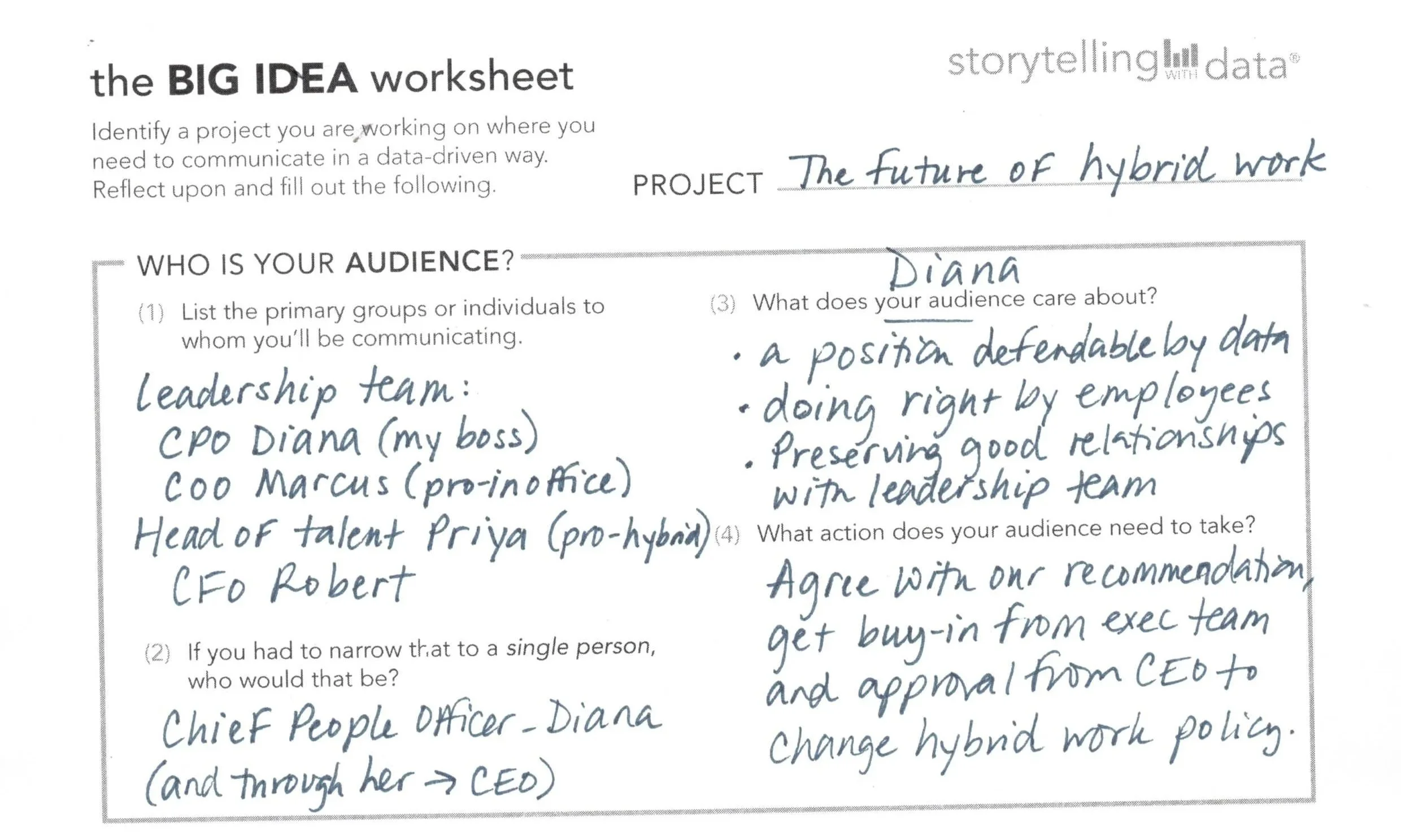
The process starts by establishing context through a brief project description, explaining the manager’s role, the scope of the analysis, and the proposed policy shift. Rather than typing directly into the computer, the manager initially goes analog, printing out the Big Idea worksheet and spending dedicated time completing the top section focused on identifying the audience. This analog step ensures that initial thoughts remain genuinely independent, preventing the professional from anchoring prematurely to the AI’s perspective.
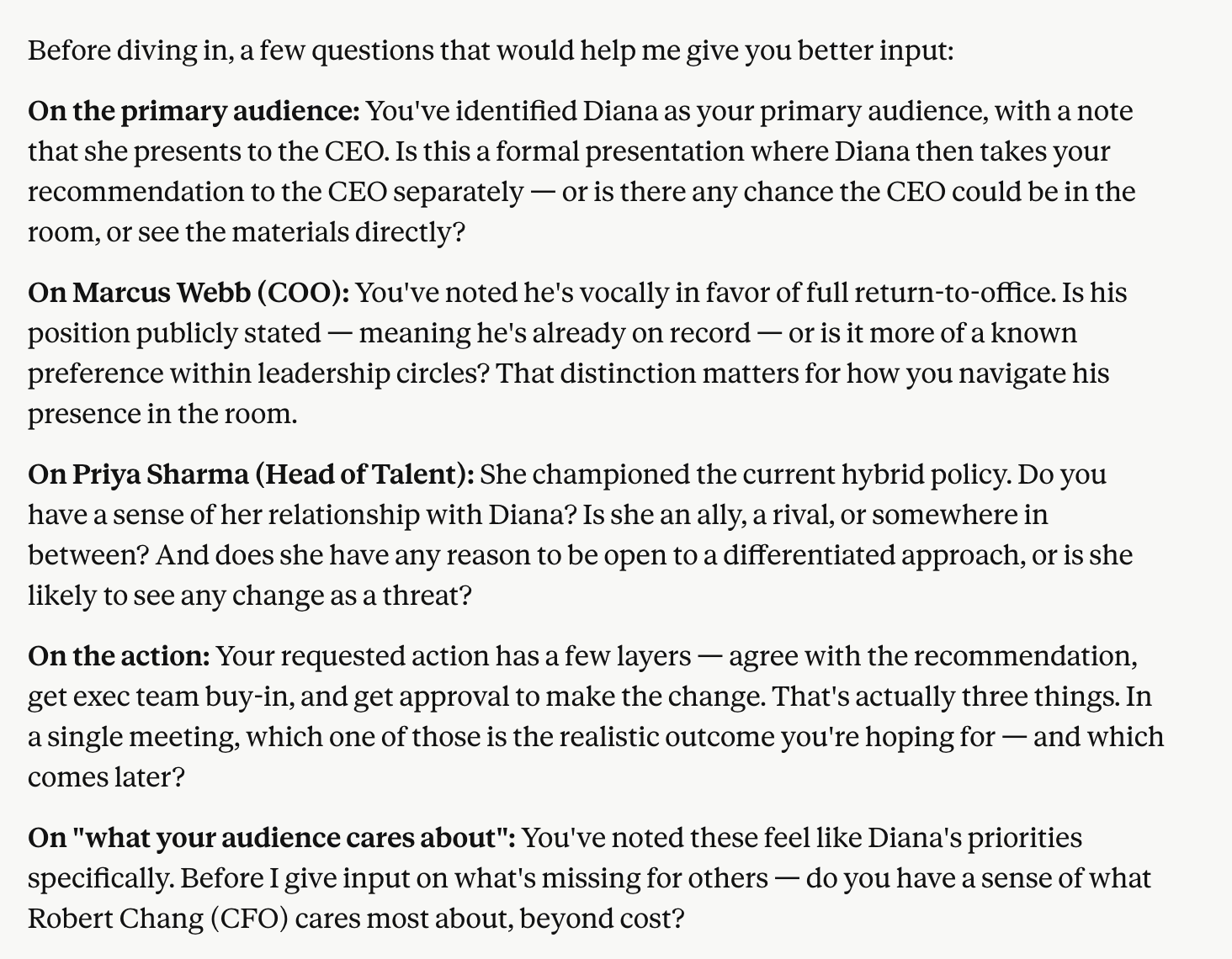
Upon sharing the completed audience analysis with the AI, the tool responds not with immediate praise, but with clarifying questions. It asks about the mechanics of the upcoming presentation, prompting the manager to articulate that they will first meet with a key executive, Diana, to secure her comfort with the recommendation and supporting analysis before she presents it to the broader leadership team and the CEO.
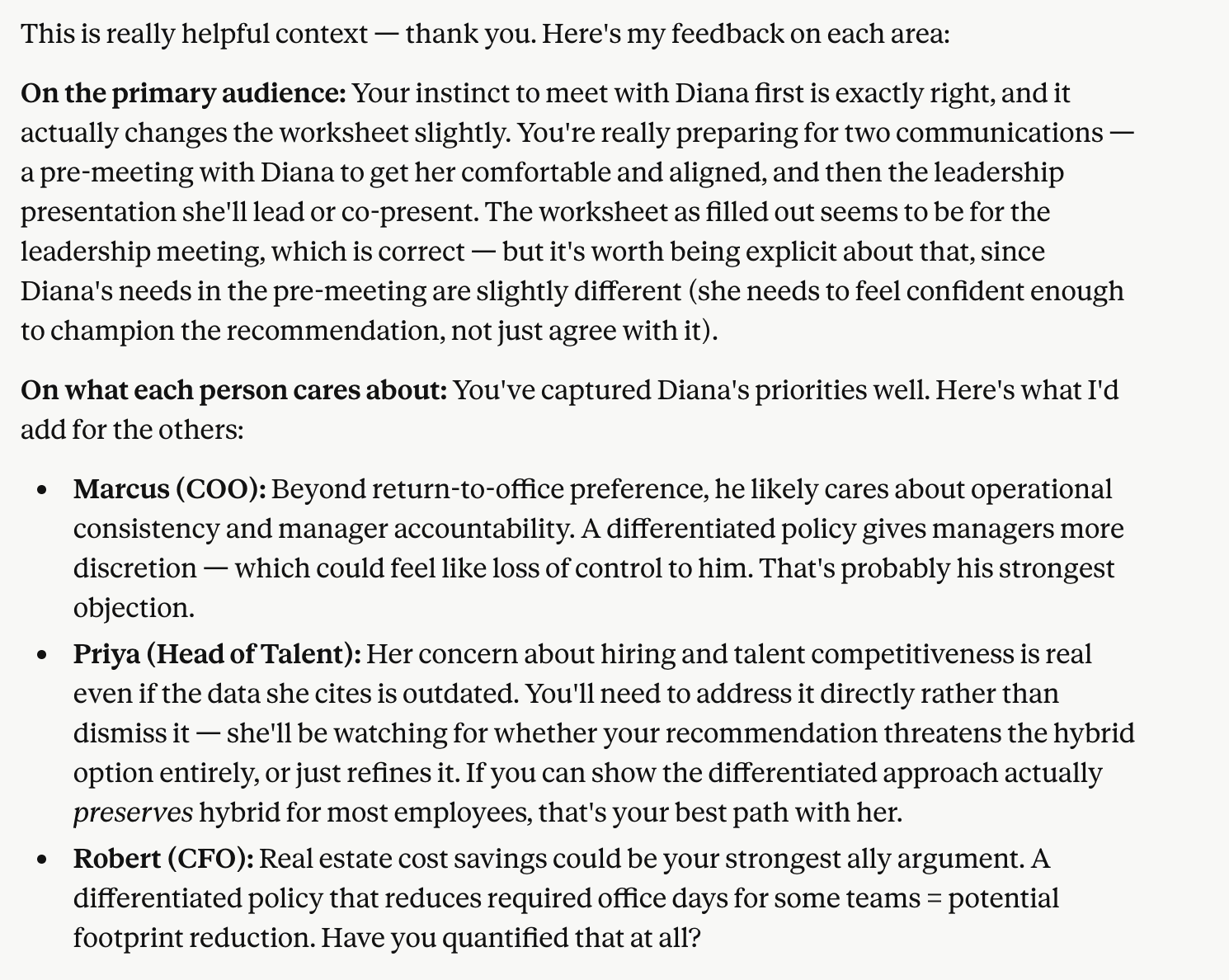
This questioning process reveals that the initial framing focused too heavily on what Diana cared about, overlooking the potential concerns of other key stakeholders. For instance, another leader, Priya, tends to rely on outdated assumptions about employee preferences for remote flexibility and fears negative impacts on talent acquisition. Another executive, Robert, prioritizes real estate cost reduction—a financial outcome that the recommended differentiated policy would actually help achieve. Furthermore, the analysis uncovers multiple distinct actions embedded in the initial notes, clarifying that the ultimate goal is securing leadership team buy-in, which will pave the way for executive approval.
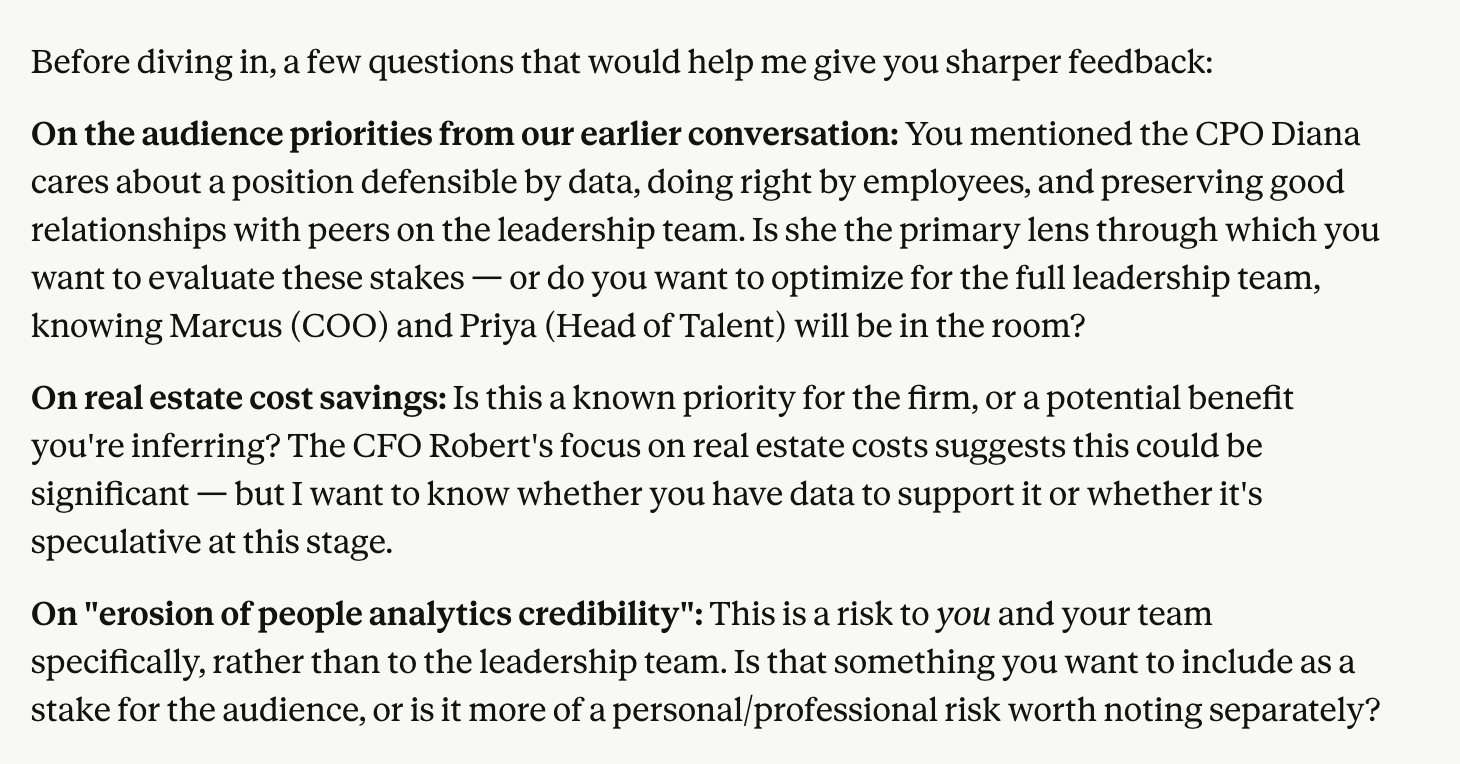
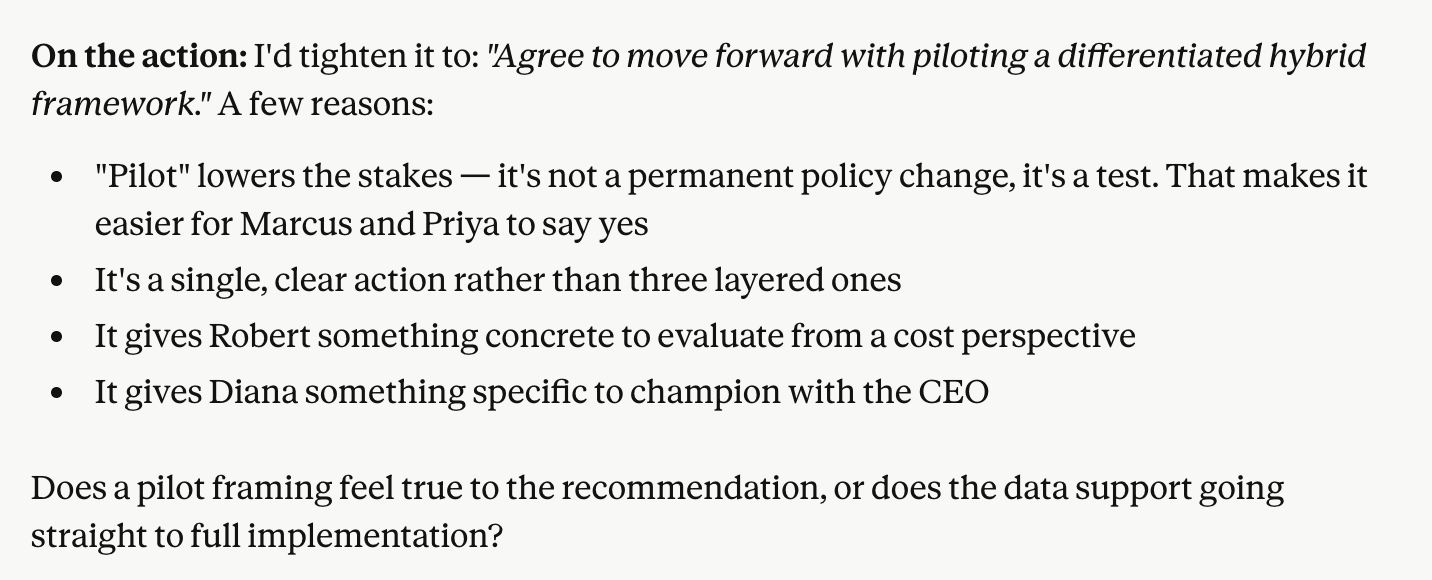
The AI also introduces a strategic reframing concept: positioning the policy change as a pilot. This suggestion feels less threatening to internal stakeholders resistant to structural changes and provides a more comfortable entry point for executive presentation.
Refining the Stakes and Crafting the Big Idea
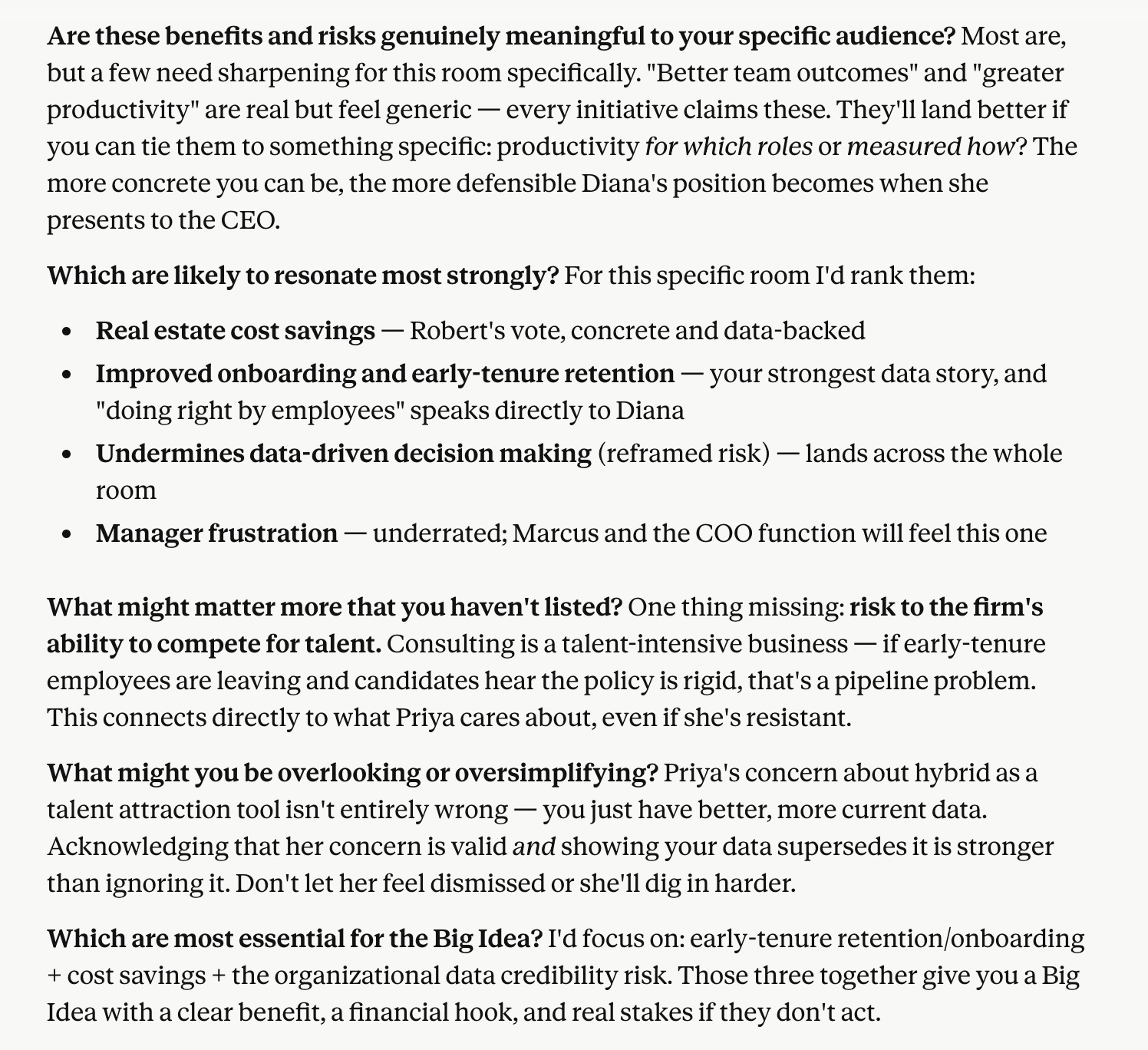
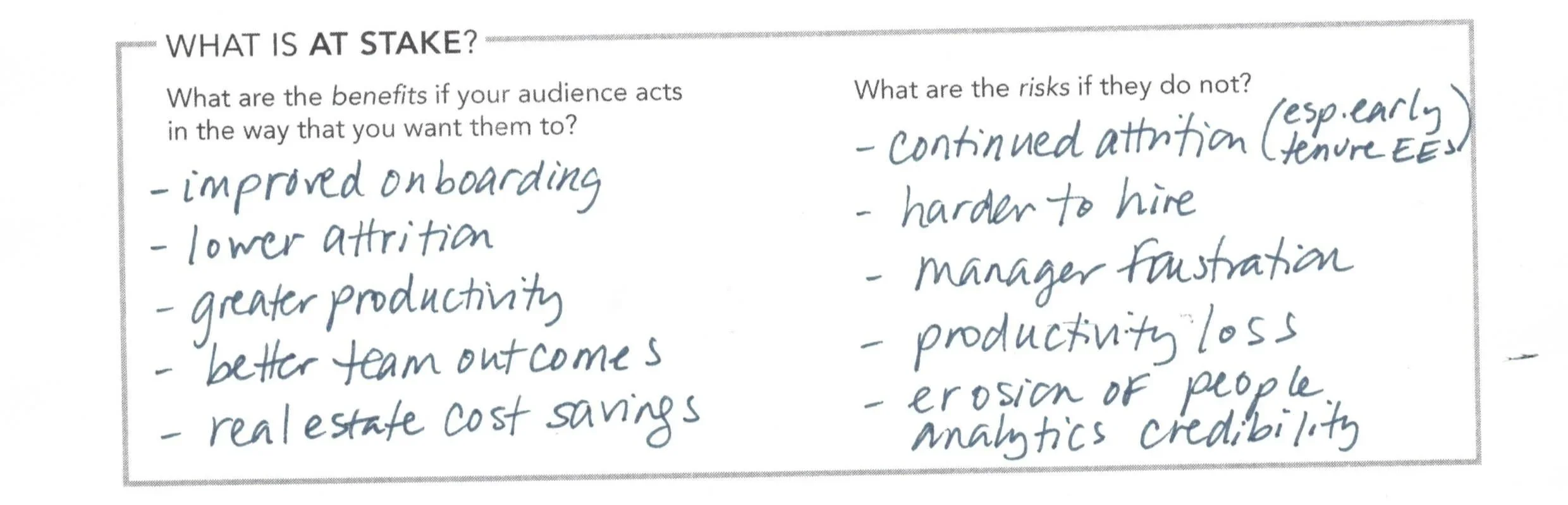
With a clearer understanding of the audience and the desired action, the manager moves to the second section of the framework: identifying what is at stake. By analyzing the data through the lens of individual stakeholder priorities, the manager outlines specific benefits and risks. Sharing these points with the AI helps determine which factors will genuinely resonate and which must be carried forward into the final core message.
This dialogue leads to deeper refinements. While real estate savings appeal directly to financial stakeholders, broader risks—such as the organizational danger of commissioning rigorous analysis and subsequently ignoring it—extend far beyond a single manager’s credibility, ultimately undermining data-driven decision-making as an institutional practice. Similarly, vague notions of productivity are replaced with more concrete organizational outcomes.
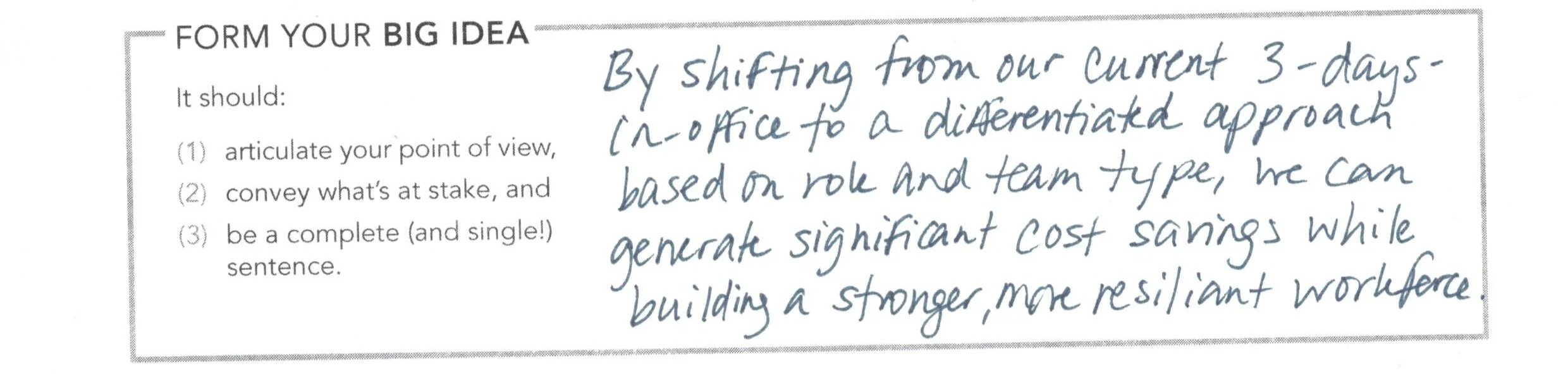
When drafting the Big Idea, the manager decides against adopting the pilot framing as the primary message, recognizing that temporary measures undermine the financial argument for reducing permanent real estate footprints. The pilot concept is kept in reserve for potential pushback, reinforcing the principle that AI suggestions serve as starting points rather than directives, with the human professional retaining ultimate decision-making authority.
Through successive rounds of iteration, the manager moves from a muddled, audience-narrowed draft to a sharp, comprehensive core message: it is time to shift from the current rigid policy to a differentiated approach based on role and team type—one that meaningfully reduces operational costs and enables people to perform better and stay longer.
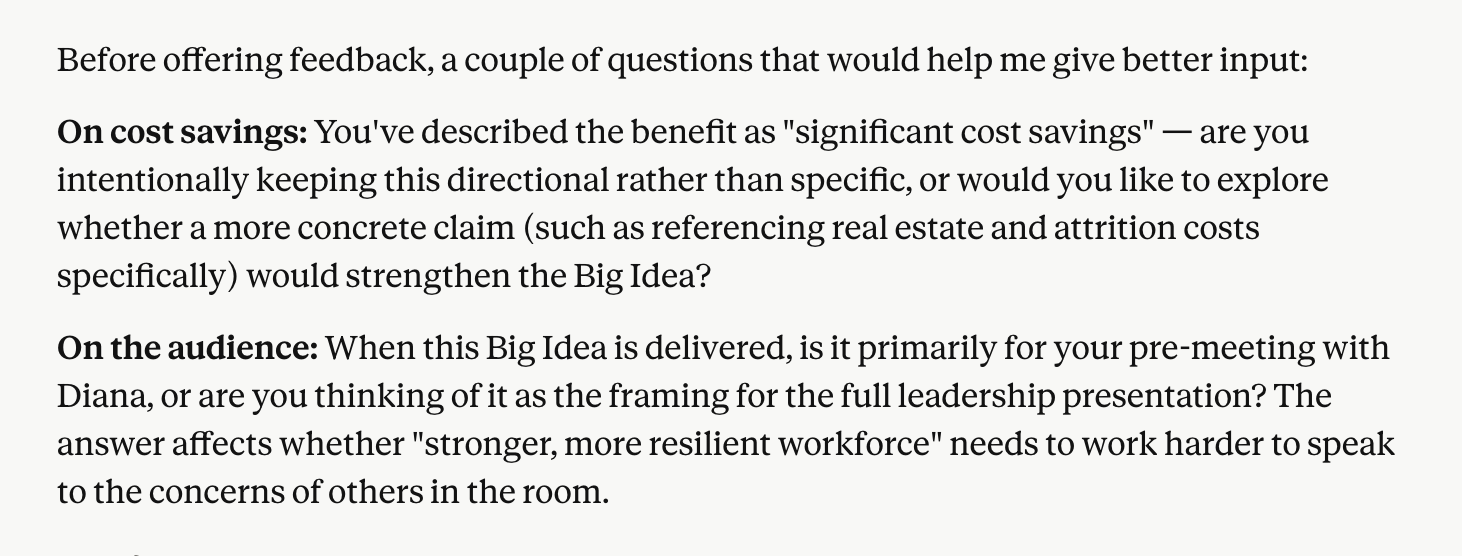
Looking back at the progression from start to finish, the transformation is substantial. The initial approach focused narrowly on a single stakeholder with an unclear call to action, but working through the structured framework with an AI partner expanded the perspective to encompass the entire leadership room, sharpened the understanding of organizational stakes, and produced a confident, defensible narrative. This collaborative dynamic mirrors the benefits of working with a human colleague who can ask probing questions and help navigate blind spots. Context remains the vital foundation upon which all effective data communication is built.