By DRONELIFE Features Editor Jim Magill
The escalating crisis of unauthorized drone interference in restricted airspace has struck yet again, directly impacting critical aerial firefighting operations on the front lines of a major California wildfire. As emergency crews work tirelessly to protect threatened communities, the presence of illegal unmanned aerial vehicles (UAVs) continues to pose severe safety hazards, forcing tactical retreats and drawing sharp warnings from public safety and aviation officials across the United States.
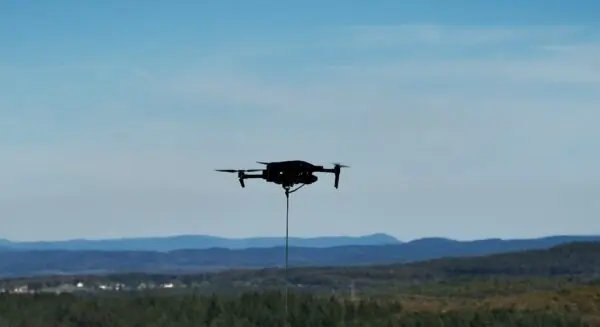
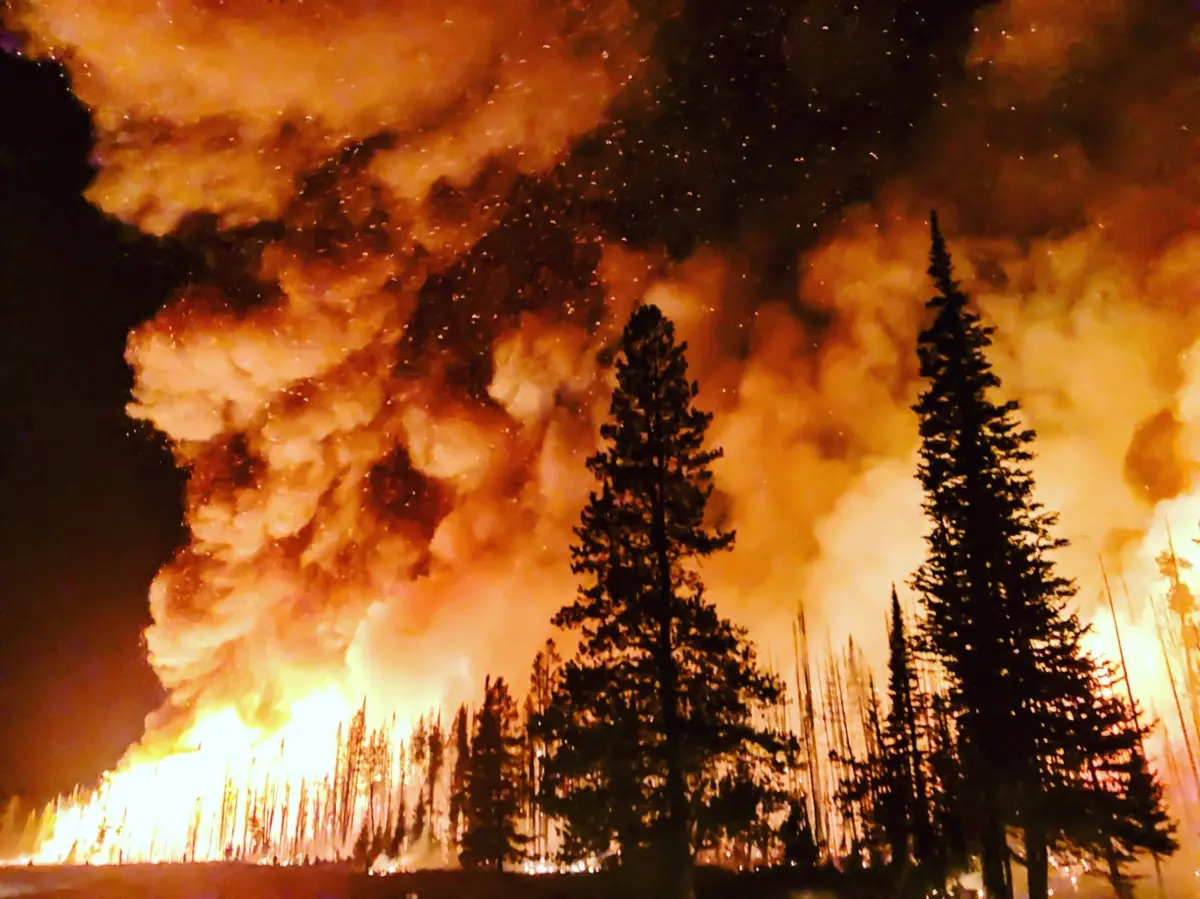
In the latest high-profile incident, unauthorized drone flights near the scene of the Timber Fire in the rugged Big Sur region of California forced manned firefighting aircraft to abandon their designated sectors and relocate their operations to a completely different part of the fire zone.
The Timber Fire, which has been burning aggressively along the picturesque and challenging Big Sur coast, had scorched more than 25,000 acres by September 21. While ground and air crews had achieved significant progress, bringing the blaze to about 60 percent containment, the unauthorized incursions underscored just how vulnerable active disaster zones remain to civilian drone interference, regardless of a fire’s containment status.
According to officials with the California Department of Forestry and Fire Protection (Cal Fire), the airspace above the fire zone was protected by a Federal Aviation Administration (FAA)-imposed temporary flight restriction (TFR) designed to keep the skies clear for low-altitude firefighting aircraft. Despite these strict federal rules, Cal Fire personnel recorded three separate incursions by unauthorized UAVs over three consecutive days. Josh Silveira, the Monterey County UAS coordinator for Cal Fire, noted in an interview that these illegal flights were concentrated near the scenic Keyhole Arch at Julia Pfeiffer Burns State Park.
The presence of the drones forced immediate tactical adjustments by incident commanders. In at least one instance, firefighting crews had to alter their strategy entirely, pulling their aircraft out of a primary target area to avoid any possibility of a catastrophic mid-air collision between a manned firefighting asset and an errant drone.
Using advanced Remote ID sensing equipment, Cal Fire crews successfully detected the radio signals emitted by the rogue UAVs and quickly transmitted the pilots’ location data to local law enforcement officers on the ground. Unfortunately, despite having precise coordinates, law enforcement personnel were unable to locate the pilot or pilots operating the equipment.
Silveira explained that the sheer geographical scale of the temporary flight restriction makes enforcement exceptionally difficult on the ground. Because a TFR covers a vast expanse of rugged terrain, anticipating where unauthorized operators might set up and positioning law enforcement officers in the exact right place at the precise moment of the infraction remains a formidable logistical hurdle. Furthermore, while one of the unmanned aircraft detected was properly registered with the FAA, the other two were completely unregistered, compounding the challenge of identifying and tracking down the responsible parties.
The disruption was particularly impactful because some of the unauthorized drone activity occurred in close proximity to a critical "dip site"—a designated water source where crewed firefighting helicopters actively scoop up heavy loads of water to douse the roaring inferno.
Silveira pointed out that the illicit drones were flying a mere one nautical mile away from this vital water-retrieval point. This proximity forced aviation managers to sequence the firefighting aircraft completely out of the area, reassigning them to work on an entirely different piece of containment line. This forced diversion pulled the aerial assets away from their highest-priority project, which at the time involved tackling a dangerous slop-over on the western edge of the fire.
Reflecting on the mindset of the drone operators, Silveira noted that the individuals flying the equipment appeared to operate under the dangerous misconception that it was safe to fly over that particular sector because the fire appeared to be winding down.
"We monitor a lot of the social media traffic, and on those posts, the common thing that people were saying was, ‘Hey, this fire’s got a very slow tempo at this point,’" Silveira said. "लेकिन it makes no difference to us if it’s a fast-paced, rapidly evolving incident, or if we’re on that slower mop-up phase of fire. Those crewed assets still have no idea where these drones are."
Pilots of Drones Remain at Large as Authorities Weigh Penalties
In the wake of the disruptions, the Monterey County Sheriff’s Office issued a formal press statement warning the public of the extreme dangers associated with operating private drones in areas of active wildfire suppression.
"Unauthorized drone flights can force firefighting aircraft to suspend operations, delaying efforts to protect lives, property and communities. Even a small drone can pose a serious collision hazard to helicopters and fixed-wing aircraft operating at low altitudes," the statement read.
In a follow-up interview, sheriff’s department spokesman Andres Rosas confirmed that while the agency received two separate reports regarding unauthorized drones in the area, investigators were ultimately unable to track down the individual operators. Because violations of a TFR fall strictly under federal jurisdiction, the sheriff’s department has forwarded all collected data regarding the incidents to the federal Transportation Security Administration (TSA) for further investigation. The TSA did not immediately respond to requests for comment.
Operators caught violating flight restrictions in designated disaster zones face severe legal consequences under both state and federal statutes. Under federal guidelines, violators can face civil penalties of up to $20,000, the immediate seizure of their drone as physical evidence, and potential criminal prosecution. Furthermore, California state law expressly prohibits any conduct at an emergency scene that impedes emergency personnel, with specific provisions targeting individuals who operate drones at the scene of an emergency.
At the federal level, U.S. law establishes that knowingly or recklessly operating a drone in a manner that interferes with wildfire suppression, law enforcement, or related emergency response efforts constitutes a federal crime. Convictions can result in hefty financial fines, imprisonment for up to two years, or both.
A Growing Nationwide Problem Threatens Aerial Safety
The Timber Fire incidents are far from isolated. Across the United States, firefighting agencies report a troubling increase in unauthorized drone flights disrupting aerial operations near wildfires and other critical disaster zones. Earlier in the month, sightings of rogue drones forced the temporary grounding of aircraft battling an active wildfire in Arkansas. Similar incursions have recently grounded aircraft responding to the Wrights Spring Fire in Klamath County, Oregon, as well as a series of destructive wildfires in and around Spokane, Washington.
California aviation officials are particularly sensitive to the destructive potential of drones operating near crewed firefighting fleets. Linnea Edmeier, the aviation communications officer for Cal Fire, recalled a terrifying precedent from January 2025, when an unauthorized drone collided directly with a "Super Scooper" firefighting plane that was battling the Palisades Fire.
Although that accident did not cause any injuries to the flight crew, the impact punched a hole straight through the aircraft’s wing, instantly grounding the plane and removing a valuable asset from the firefighting fleet.
"They didn’t even realize that they had a drone strike until they were on the ground checking the aircraft as they were refueling," Edmeier said. "If that drone had hit a rotor aircraft, a helicopter, we may be talking about four souls on board that weren’t going home that night."
While fire officials acknowledge that curious drone operators are often simply trying to capture footage or assess the size and ferocity of fires burning near their homes or properties, Edmeier strongly urged all civilian operators to keep their equipment firmly grounded whenever emergency aircraft are active.
"We understand people looking for information," she said. "But the decision that the drone operator is making in that moment is really a decision that is going to affect potentially the lives on board of that aircraft and the lives of anybody that might be underneath that aircraft."