The rapid transformation of suburban skies and neighborhood logistics took another major leap forward as drone delivery firm Wing and retail giant Walmart officially announced that the Denver and Seattle metropolitan areas are the latest additions to their expanding commercial drone delivery footprint. Scheduled to launch in both regions in 2027, the rollout marks a critical milestone in the companies’ broader strategy to bring automated aerial delivery to nearly 20 major U.S. metropolitan markets.
The inclusion of Denver and Seattle brings fresh momentum to an ambitious initiative that already connects millions of consumers with high-speed aerial logistics. According to leadership from both companies, their existing joint network currently provides accessible drone delivery infrastructure to more than three million customers. By the time the nationwide expansion reaches its full projected scope, Wing and Walmart intend to operate across more than 270 individual Walmart store locations, ultimately bringing fast, automated delivery within reach of over 40 million shoppers across the United States.
However, the high-profile announcement in Denver also illuminates a complex and evolving regulatory puzzle taking shape on the ground. The news arrives precisely as municipal leaders across Colorado grapple with the legal and spatial realities of commercial drone operations, forcing local governments to draft new rules for infrastructure that was barely conceivable a few years ago.
Navigating Local Infrastructure and Land-Use Rules in Colorado
The intersection of cutting-edge retail logistics and municipal governance is playing out vividly across the Denver metropolitan area and its surrounding communities. As local authorities evaluate the physical footprint required to support automated flight, several cities have found themselves racing to establish clear guidelines before applications for commercial hubs flood their planning departments.
Recent municipal developments highlight how rapidly local policy is shifting to accommodate the trend. In the northern Denver suburb of Northglenn, city officials initiated discussions regarding comprehensive land-use regulations specifically tailored for commercial drone delivery hubs. Significantly, Northglenn took this proactive stance even before receiving a formal application to construct a facility within its boundaries.
City research into regional activity revealed that neighboring jurisdictions were already feeling the ripple effects of the logistics boom. Thornton, another nearby municipality, had already received a pre-application for a drone delivery facility, while Longmont reported receiving similar pre-applications involving two separate Walmart locations. These early administrative filings underscore the accelerating demand for strategic launch and landing real estate, as operators seek out optimal suburban locations capable of servicing dense residential neighborhoods efficiently.
This patchwork of local interest has forced municipal planners to consider the broader regional context of flight. Northglenn’s administrative analysis explicitly recognized a fundamental operational reality of modern drone networks: restricting or prohibiting a launch site within a single city’s limits does not necessarily prevent delivery drones from flying over or servicing residents within that municipality, as drones can easily launch from facilities located in adjacent communities. This jurisdictional overlap highlights why regional coordination and predictable land-use policies are becoming paramount as commercial drone networks weave tighter webs across metropolitan landscapes.
Expanding Into New Regions and Climate Zones
Beyond the regulatory debates unfolding on the ground, the addition of Denver and Seattle represents a significant technical and operational leap for Wing’s fleet. Up to this point, much of the public-facing commercial drone delivery infrastructure has been concentrated in regions with relatively benign, predictable climates. By targeting Seattle and Denver, Wing and Walmart are deliberately pushing their technology into new geographical environments characterized by distinct meteorological challenges.
Seattle introduces the persistent variable of frequent rain, while Denver brings colder temperatures, rapid weather shifts, and substantial winter conditions. Successfully scaling operations in these diverse climates will prove critical for proving the year-round reliability of automated aerial delivery systems.
“Adding new metros to our expansion speaks to how quickly people across the country are adopting drone delivery,” said Heather Rivera, Chief Business Officer at Wing. “We’re excited to serve the needs of busy families in nearly 20 major markets spanning diverse communities and climates by delivering the everyday items these families need fast.”
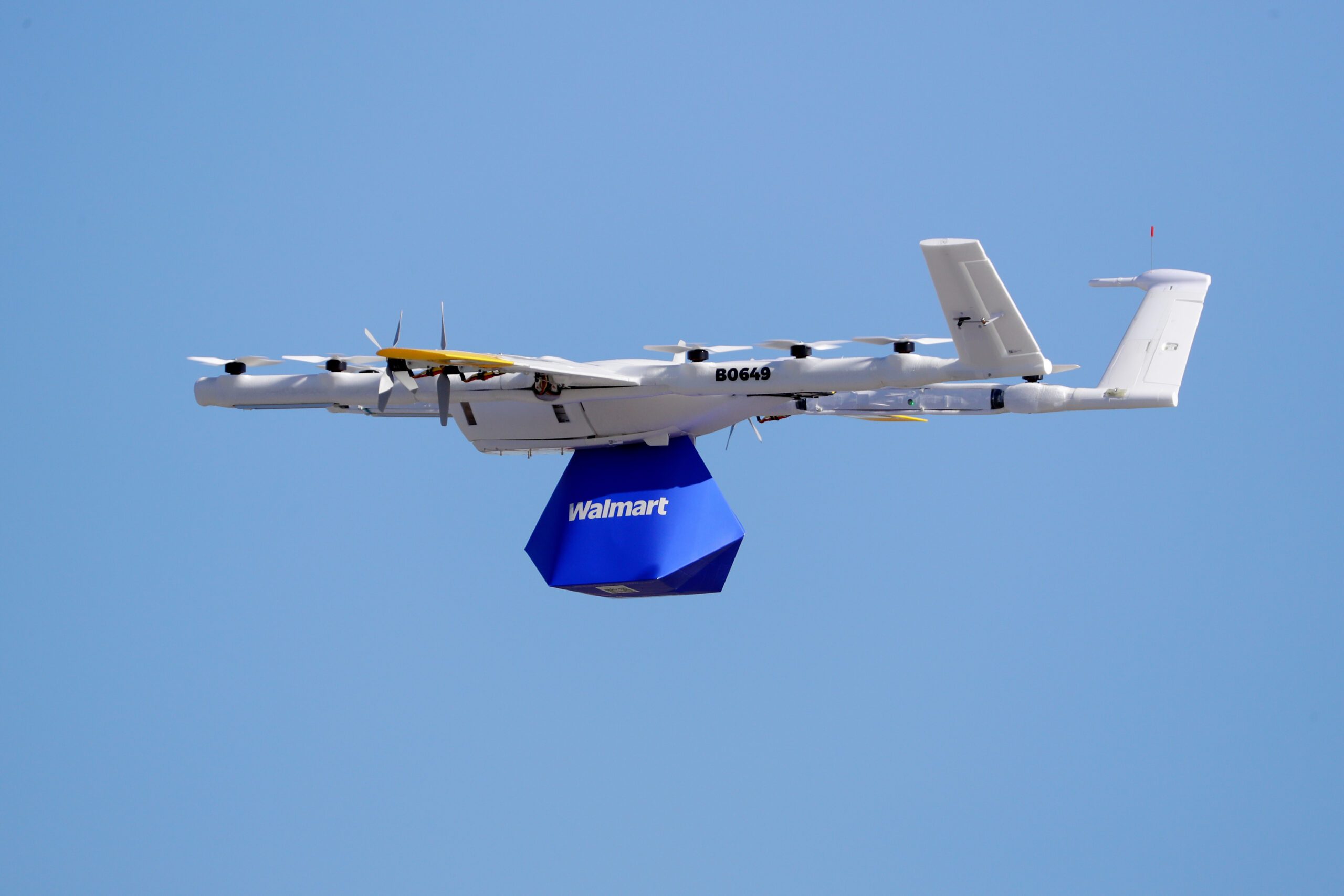
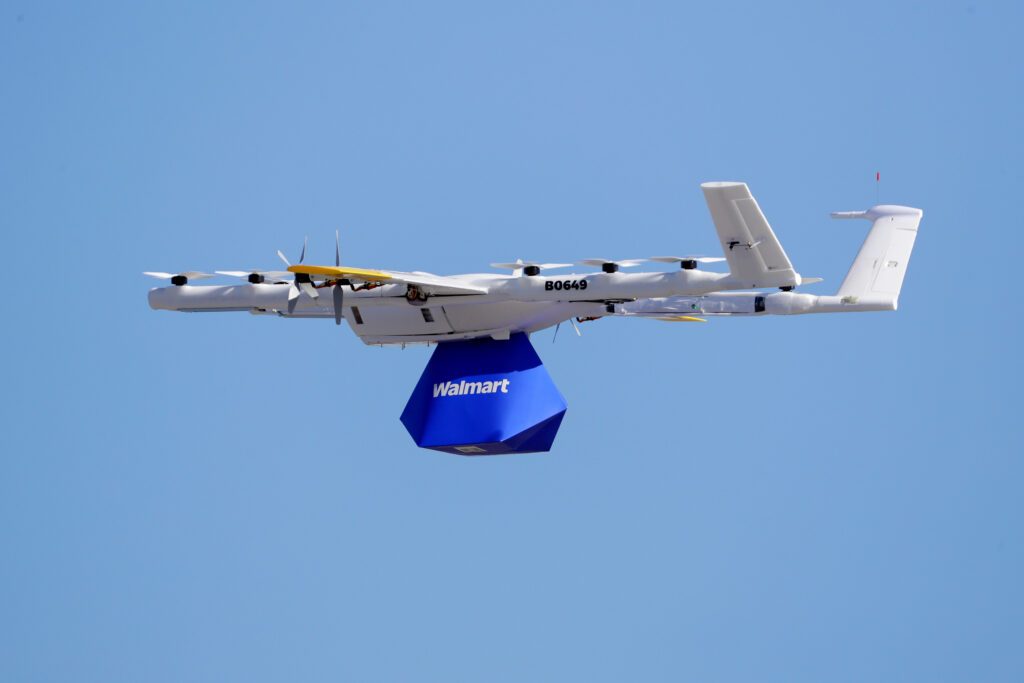
Wing’s current operational model relies on advanced, fixed-wing aircraft capable of vertical takeoff and landing, which can travel at speeds of up to 60 miles per hour and carry payloads weighing up to five pounds. Across existing markets, the company’s automated fleet routinely completes thousands of residential deliveries each day, handling everything from routine grocery restocks to urgent household errands.
Customers utilize the service by ordering from a robust catalog of thousands of Walmart products available for aerial transit. The inventory spans fresh groceries, pantry staples, household cleaning goods, electronics, and over-the-counter medications, transforming what was once considered a novelty into a practical, everyday utility for time-pressed households.
“Expanding drone delivery to Seattle and Denver is about giving more customers a practical option when they need something quickly,” said Greg Cathey, Senior Vice President of eCommerce Transformation at Walmart. “Walmart’s stores put everyday items close to the communities we serve, and Wing helps bring those items to customers’ homes in minutes.”
Regional Enthusiasm and Community Impact in the Pacific Northwest
In the Pacific Northwest, local leaders are embracing the technological shift with open enthusiasm. In the Seattle metropolitan area, the companies specifically highlighted Federal Way as a key community poised to benefit directly from the 2027 rollout, pointing to the region’s historical embrace of technological innovation.
“Innovation is a part of our way of life in Federal Way and around the Puget Sound. We look forward to Walmart and Wing’s drone delivery service bringing the region an incredible new convenience,” said Federal Way Mayor Jim Ferrell. “By bringing advanced delivery solutions to our residents, we are supporting innovation, creating opportunities for future growth, and enhancing convenience for everyday things people need. The future has arrived and it is being delivered by Walmart by drone!”
This municipal backing points to a broader economic narrative surrounding the expansion. While tech companies and retail giants spearhead the logistics, local civic leaders increasingly view advanced delivery infrastructure as a marker of forward-looking economic development capable of attracting residents and supporting modern retail supply chains.
The Division of Federal Oversight and Local Authority
The rapid expansion of drone delivery into bustling metropolitan areas like Denver and Seattle also sharpens the focus on the distinct legal boundaries governing American skies versus American soil. Under the current regulatory framework in the United States, the Federal Aviation Administration maintains absolute authority over the national airspace, commercial aircraft certification, and flight safety protocols. Consequently, local governments do not possess the legal mechanism to regulate the actual flight paths or airborne operations of delivery drones.
However, municipalities retain profound control over ground infrastructure, zoning, and land use. This division of power means that while the FAA clears the aircraft to fly overhead, local city councils and zoning boards dictate where the physical hubs, charging stations, and package-loading pads can be built on the ground.
In response, municipal policy frameworks like the one being discussed in Northglenn are focusing heavily on localized impacts. Proposed regulations typically center on parameters such as facility siting, permitted operating hours, visual and acoustic buffers, noise mitigation, property screening, vehicle parking, and physical security. Balancing these community concerns with the expansive growth goals of retail logistics firms will remain a defining challenge for city planners across the country as the 2027 launch date approaches.
As the preparations continue, the mechanics for consumers remain straightforward. Once service officially goes live in the Denver and Seattle metropolitan areas, eligible Walmart customers will automatically see drone delivery presented as a fulfillment option when placing orders online through the Walmart app or website, with similar ordering capabilities accessible directly through Wing’s platforms.