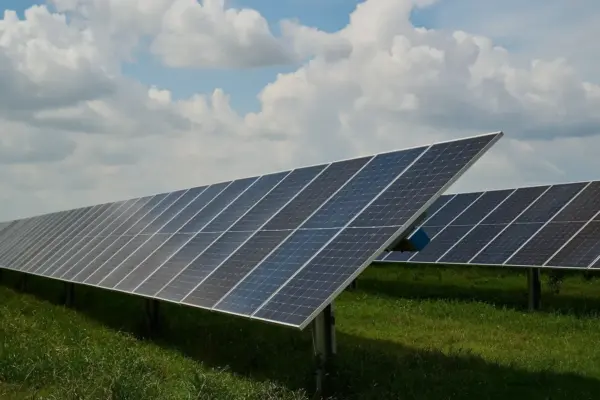
As soaring energy demand collides with ever-rising utility bills across the United States, policymakers, financial institutions, and energy developers are increasingly desperate for solutions. Yet, in the rush to secure power generation, small clean energy projects are too frequently dismissed as insignificant or ineffectual. Wall Street and major energy developers have been quick to turn to massive gas turbines capable of producing hundreds of megawatts from a single site—often at a steep price to public health and the surrounding environment—or to large-scale solar farms that generate cheap clean power but frequently invite intense local controversy due to their massive land-use footprints.
To an observer looking purely at scale, where just one utility-scale facility can produce enough electricity to power an entire small city, turning to smaller, localized projects to solve a national energy crisis might seem counterintuitive. But on this point, appearances are deeply deceiving. Small-scale installations are not a marginal rounding error; they actually account for at least 20% of all solar energy installed across the United States.
Edward Yim, the director of clean energy at Lawyers for Good Government and the former director of state and utility policy at the American Council for an Energy-Efficient Economy, argues that these smaller assets possess a wide array of overlooked advantages that even some dedicated clean energy advocates fail to appreciate. Unlike sprawling remote facilities, small community-scale clean energy projects can immediately reduce monthly electricity bills for everyday consumers, provide critical backup power during grid failures when paired with battery energy storage systems, and reduce local dependence on polluting coal and natural gas infrastructure whose emissions contribute directly to severe heart and lung diseases as well as accelerating climate change.
Importantly, these projects also come with built-in local support in many cases. Unlike massive utility-scale installations that can trigger years of contentious zoning battles and environmental reviews, small-scale solar developers are rarely exposed to the crippling permitting delays that plague larger projects.
Despite these clear benefits, federal policy has recently turned adversarial toward distributed energy. Rather than doubling down on the proven success of small-scale installations, the Trump administration and congressional Republicans have taken deliberate steps to cripple these local efforts. Legislative packages such as the "One Big Beautiful Bill" moved to end long-standing federal tax credits for residential solar while erecting entirely new administrative barriers for existing solar and storage incentives. Concurrently, the Environmental Protection Agency moved to terminate the landmark "Solar for All" program—an initiative designed to slash electricity bills by more than 20% for one million low- and moderate-income Americans—though a federal court stepped in, with a federal judge vacating the EPA’s cancellation decision.
Congress now faces a clear choice and should reverse course. If federal lawmakers decide to revisit wind and solar tax credits, they must preserve vital incentives for distributed, community-scale projects, even if they ultimately conclude that mature, utility-scale projects no longer require the same level of federal financial support.
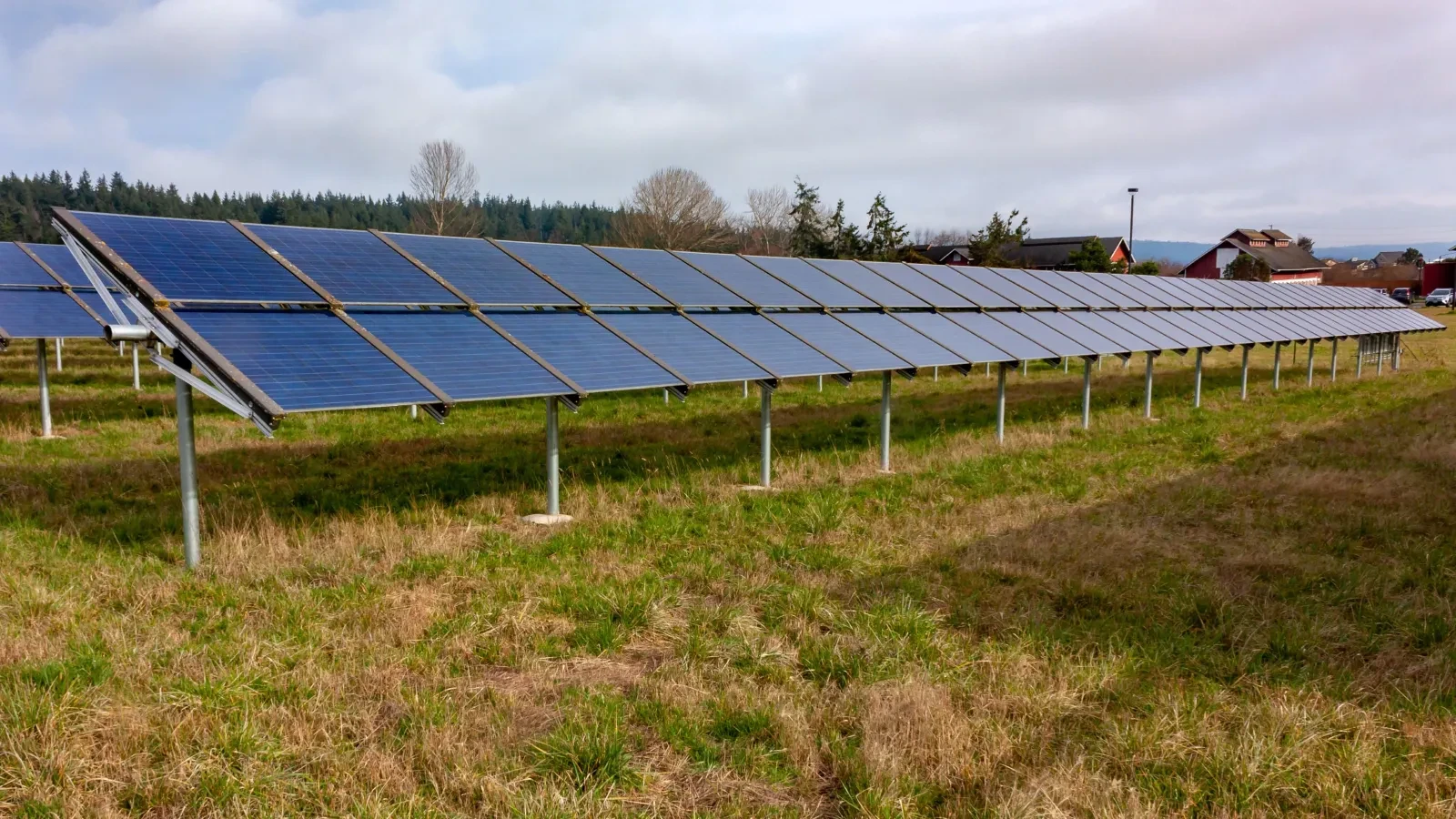
Over the past two decades, the price of solar power has plummeted by more than 80%. That remarkable technological and economic achievement means that many large-scale projects can now generate rapid profits on the open market and may no longer need direct government subsidies. However, the financial and social calculus is completely different for local projects built at houses of worship, community health clinics, local community centers, public schools, and municipal government buildings, where generating corporate profit is never the primary goal.
Instead, communities are intentionally shaping these local projects to fit their distinct practical needs. While low-cost electric power remains a primary benefit, the capacity to maintain reliable backup power during unexpected grid outages has rendered solar-plus-storage projects particularly attractive to local populations. Homes, neighborhood businesses, and public facilities utilizing onsite clean energy enjoy significantly lower levels of localized air pollution and find themselves much better shielded against the notorious price volatility of traditional fossil fuels.
A clear example of this dynamic can be found in San Fernando, California, where federal tax credits established under the Biden administration’s Inflation Reduction Act enabled a local health clinic to install rooftop solar panels alongside a dedicated battery backup system. Today, that single system provides 60% of the clinic’s total energy needs while achieving substantial savings on utility bills. Across the United States, hundreds of similar local healthcare clinics are pursuing parallel projects to safeguard their operations against grid instability.
The clean energy tax credits established by the Inflation Reduction Act, paired with a mechanism known as "elective pay," have been absolute game-changers for advancing these types of community-level initiatives. Elective pay allows tax-exempt entities—including houses of worship, local non-profits, and community health clinics—to directly benefit from clean energy tax credits that were previously out of reach. While the private corporate sector has benefited from energy tax credits for decades, elective pay has successfully leveled the playing field for state and local governments and community organizations.
Congress should actively preserve elective pay and undo the premature phase-outs targeting community-scale solar and storage projects. Encouraging these clean, local installations is also one of the most effective ways to meet rapidly growing power needs without alienating or railroading local communities. These localized projects do not sacrifice or minimize public engagement; rather, they expand and deepen grassroots support for clean energy, creating a firm, enduring foundation for lasting environmental and economic change.
Regardless of which political party controls Congress in the coming legislative sessions, the fundamental American demand for affordable, low-carbon energy will continue to grow. The speedy deployment of utility-scale clean power must remain part of the broader solution, but relying on large projects alone will never deliver the resilient, cost-saving energy network that Americans truly need. When lawmakers revisit federal clean-energy tax policy, they should restore robust incentives for locally driven solar and storage projects and protect elective pay so that communities and local governments can continue using them to bolster energy resilience. While mature utility-scale technologies may well require less government support moving forward, that is no justification for abandoning the targeted incentives that make clean, resilient energy accessible and affordable for everyone else.