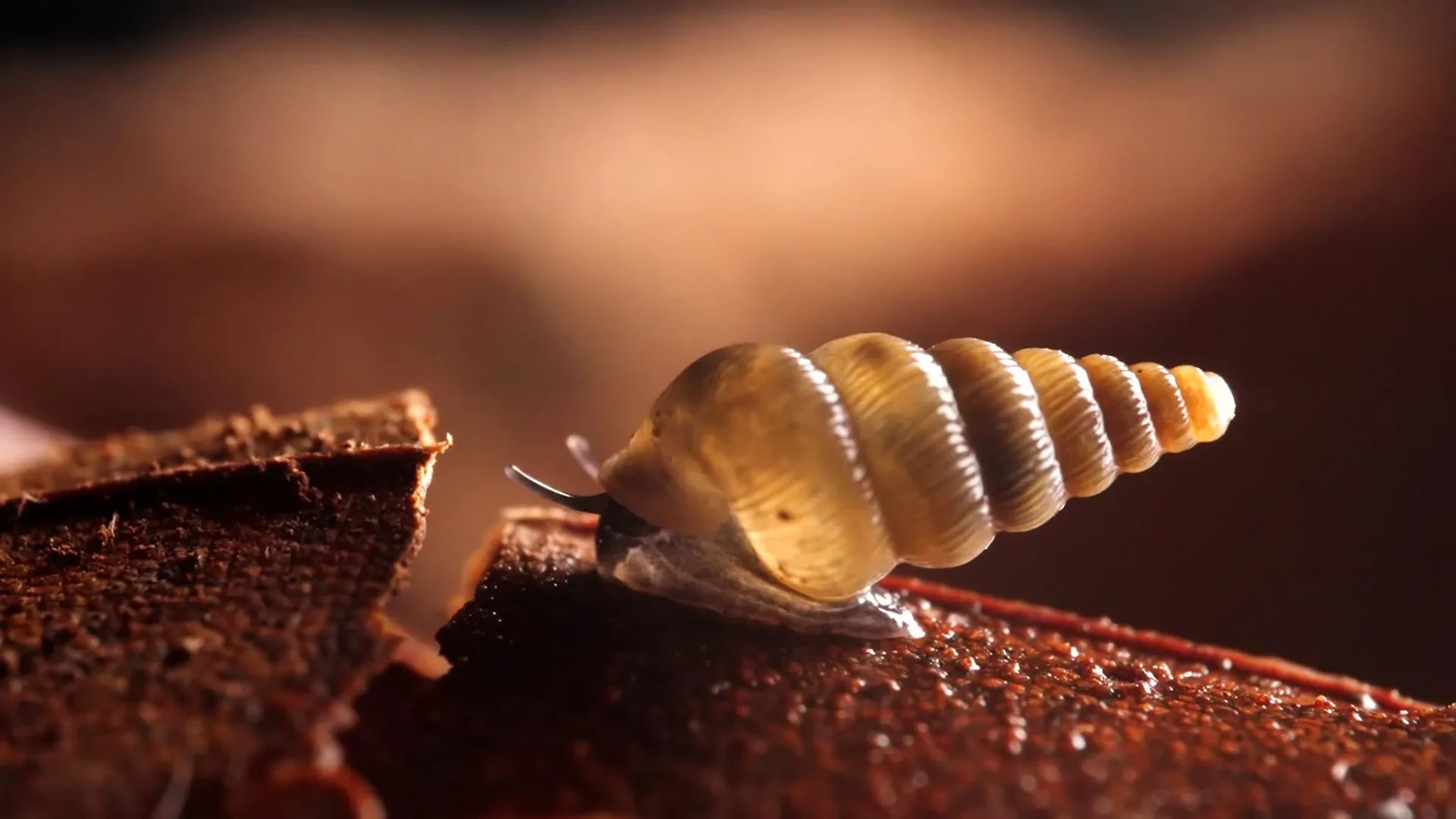
Two newly identified snail species have significantly expanded the known diversity of European land snails, offering a fresh glimpse into the intricate and often overlooked ecosystems of the Balkans. Formally described in a recent study published in the open-access journal Biodiversity Data Journal, the newly discovered organisms have been named Cochlostoma komarnica and Cochlostoma dobrido. While these minute creatures currently lack English common names, their classification marks a notable milestone for malacology—the branch of zoology focused on mollusks—and underscores how much of Europe’s natural heritage remains scientifically undocumented.
Measuring only about six millimeters in length, both species feature diminutive, cone-shaped shells adapted to their specialized microhabitats. They make their homes exclusively on rugged limestone rocks, where they graze on the microscopic algae and lichens that coat the stone surfaces. Despite their unassuming size, these snails possess a suite of fascinating and unusual anatomical adaptations that set them apart from the vast majority of their terrestrial relatives. Most land snails possess eyes perched at the very tips of long, retractable eye stalks; however, Cochlostoma komarnica and Cochlostoma dobrido feature eyes positioned laterally, along the sides of their heads. Furthermore, they are equipped with a specialized circular calcareous disk, known as an operculum, attached to their tails. When environmental conditions turn unfavorable, or when the animals retreat for protection, this disk acts much like a trapdoor, sealing the shell opening tightly to retain moisture and keep predators at bay.
The discovery of these unique micro-gastropods is the direct result of targeted field expeditions organized by Taxon Expeditions, an innovative international initiative that bridges the gap between professional science and the public by allowing everyday citizens to take part in genuine, hands-on scientific fieldwork. Between 2018 and 2025, a series of comprehensive biological surveys were carried out in Montenegro through a collaborative partnership uniting Taxon Expeditions, the non-profit Taxon Foundation, and local environmental advocates from the Montenegrin Ecologists Society (MES).
These field expeditions brought together a diverse cohort of participants, blending the expertise of international academic researchers with the enthusiasm of citizen scientists, local university students, and dedicated conservationists. Together, the teams combed the challenging, vertical landscapes of Durmitor National Park and the neighboring Komarnica Canyon, conducting intensive biodiversity assessments across the region’s dramatic topography.
Encountering the snails in the field required patience and a sharp eye, as the rugged mountain terrain offers countless niches for small invertebrates. Yet, finding the specimens during fieldwork was only the first step; it was not immediately obvious to the team that they were handling animals previously unknown to science. The realization that these populations represented entirely new species only crystallized later, after the specimens underwent rigorous morphological dissection and genetic analysis conducted within a temporary field laboratory set up during the expedition.
In keeping with scientific tradition, the research team chose the formal Latin names for the new species to honor the specific landscapes where they were first discovered, deciding on the designations during a collaborative vote held at their base camp. Cochlostoma dobrido takes its name from the sweeping, windswept expanses of the Dobri Do Plateau, situated high among the dramatic peaks of Durmitor National Park. Meanwhile, Cochlostoma komarnica is named after the breathtaking Komarnica Canyon, a wild and deeply incised river valley lying just south of the park boundaries.
For many who participated in the fieldwork, the experience fundamentally shifted their understanding of European wildlife. Janine Buisman, a musician from the Netherlands who took part in one of the expeditions and subsequently earned co-authorship on the published scientific paper, expressed profound astonishment at the discovery. She noted her surprise that it remains entirely possible to uncover and describe entirely new animal species within the borders of Europe, a continent often presumed to have been thoroughly cataloged by centuries of natural history research.
Biologist Jovana Ćokić of the Montenegrin Ecologists Society, another co-author of the study, emphasizes that these findings point to a much broader reality across the Balkan Peninsula. According to Ćokić, the canyons, high-altitude mountains, and deep gorges characterizing this part of the Balkans harbor an immense wealth of biological diversity. Much of this regional biodiversity remains poorly explored, meaning that countless other species—from microscopic invertebrates to specialized plants—are likely still waiting in the shadows to be documented by science.
However, this rich ecological tapestry is currently facing severe and immediate environmental pressures. Ćokić points out that the existence of such high, undocumented biodiversity makes ongoing industrial development plans in the region exceptionally alarming, particularly those targeting the Komarnica Canyon.
The Komarnica Canyon is currently slated to be radically transformed and flooded by the construction of a major hydropower dam and reservoir. Conservationists warn that this large-scale engineering project will permanently drown and obliterate the wild river canyon, destroying its unique ecosystem and wiping out a wealth of biodiversity, including numerous specialized species that have not yet been formally identified or studied by researchers.
This impending industrial threat has transformed the Komarnica Canyon into a central focus for organized, intensive biodiversity surveys. Researchers, academic institutions, and environmental non-profits are racing against the clock to thoroughly document the canyon’s flora and fauna, utilizing these scientific findings to build a robust, evidence-based case for the legal protection of the area.
In response to the hydropower proposals, the Montenegrin Ecologists Society has launched formal advocacy campaigns, actively calling for the Komarnica Canyon to be incorporated into the existing UNESCO World Heritage site designation of Durmitor National Park. At the same time, conservation groups are demanding that regional authorities abandon the hydropower dam project altogether, arguing that the permanent destruction of such an irreplaceable natural refuge carries an ecological cost that far outweighs any short-term energy benefits.
As researchers continue to analyze the data collected during the expeditions, the newly named snails stand as both a testament to the hidden wonders of European nature and a poignant reminder of what stands to be lost if critical ecosystems like the Komarnica Canyon are sacrificed for industrial development. Emphasizing the broader philosophy guiding the campaign to protect the area, Ćokić notes that energy policies must account for environmental realities, asserting that hydropower cannot be considered green or sustainable when it fundamentally destroys a unique and irreplaceable ecosystem like the one sheltered within the Komarnica river valley.