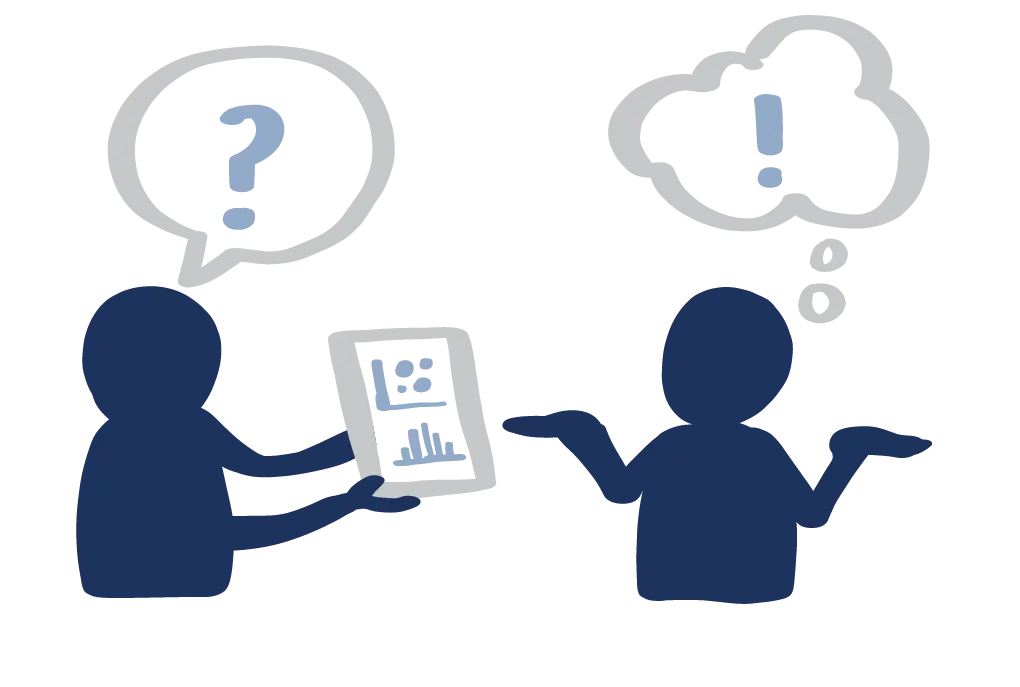
For many professionals, hearing the phrase “This is a great start, but…” can instantly trigger a wave of workplace anxiety. Whether an employee is frantically pulling together slide decks for a high-stakes client presentation or taking a first pass at an unfamiliar data analysis, those six words have historically been enough to sink anyone’s heart. While a manager or senior colleague is usually on their way to offering constructive feedback designed to improve a project, the psychological reception of that critique is often far less positive. Too often, the underlying message heard by the recipient is simply a discouraging judgment: “This isn’t good enough.”
Navigating the delicate ecosystem of professional feedback is a universal challenge in the modern workplace. Recently, at the data visualization and communication firm storytelling with data (SWD), new team members Ryan and Alli took a deep dive into this exact psychological barrier. In their inaugural joint blog post for the organization, the colleagues explored how shifting one’s mindset within a feedback-rich environment can radically transform the way critique is perceived, processed, and utilized for professional development.
The Wake-Up Call of an Immersive Feedback Culture
The journey toward reframing feedback began the moment Ryan and Alli joined the SWD team. Steeped in a culture that treats iterative review as a core operational standard, the new hires experienced an immediate wake-up call on their very first day. During a weekly virtual team meeting, they were asked to introduce themselves to their new colleagues. Rather than treating the introductions as a one-off task, the team spent the remainder of the week actively practicing their introductory remarks and incorporating continuous feedback from peers.
This immersive introduction was not merely a unique onboarding exercise; it served as an introduction to a broader organizational philosophy. It did not take long for this transparent and supportive culture to alter how both employees thought about critique. As they began to internalize and embrace the environment, they noticed a subtle yet profound shift in perspective. They discovered that the exact same words could land very differently depending on the surrounding context and the psychological safety of the workplace. By examining specific phrases commonly used during the review process, the team uncovered how traditional workplace anxieties can be systematically dismantled and replaced with collaborative growth.
Redefining the Early Version: From Fear to Opportunity
One of the most significant shifts in perspective involves the handling of early-stage work. Before joining SWD, Ryan frequently experienced intense workplace pressure, juggling multiple responsibilities and rushing through projects just to meet looming deadlines. This high-pressure environment fostered a counterproductive habit: waiting until a project was nearly complete before requesting any feedback. Often, review requests were submitted only shortly before a deadline, creating a lose-lose scenario for everyone involved.
Under these conditions, feedback providers either felt cornered into avoiding true constructive criticism to spare time, or they felt compelled to be entirely honest, recommending sweeping changes at the eleventh hour. The latter outcome invariably required late nights at the office, scrambling to implement major edits just to cross the finish line. The underlying internal narrative during those earlier career stages was simple and fearful: it is simply too soon to share, and colleagues will judge incomplete work.
The onboarding experience at SWD dismantled this defensive posture. When Ryan shared an in-progress introduction with peers during the eight-week onboarding program, the response was entirely different from past corporate experiences. Instead of labeling the draft as incomplete or fundamentally flawed, colleagues chimed in with a blend of targeted praise and incremental edits at every step of the way. This ongoing input guided the refinement of the verbal introduction into its strongest possible version, long before the final draft had even been fully internalized.
The lesson learned from this cultural immersion was clear: asking for feedback early and often transforms a stressful scramble into an engaging collaborative process. Rather than dreading an offer from a colleague to review early work, professionals can actively jump at the chance. At the same time, recognizing the timing of the review remains crucial. When connecting with a feedback group closer to a deadline, adjusting the nature of the questions ensures that the review remains focused and manageable, leaving deeper structural questions for earlier stages of the creative process.
Decoding the Classic Phrase: "This is a Great Start, But…"
Perhaps no phrase in the professional lexicon carries as much historical baggage as the classic opening: “This is a great start, but…” Reflecting on her early career, Alli shared a familiar story about a more seasoned colleague who would invariably begin his reviews with that exact phrase before systematically changing everything she had produced. Although the comments were presumably meant to be kind, that particular phrasing became internalized as shorthand for a discouraging dismissal: “Let me just do it myself.”
In stark contrast, the culture at SWD proved to be iterative, deeply honest, and inherently supportive. During the preparation of a recent client chart makeover, Alli shared her in-progress files with a colleague named Amy, who offered the familiar evaluation that the project was a great start. Remembering past experiences, Alli braced herself for a completely redone version of her work. Instead, Amy returned a file filled with thoughtful comments, leaving Alli with the full agency to implement those changes in her own unique way. There was no prescriptive list of mandated edits; the colleague genuinely meant that the work was a strong foundation, and that with a little guidance, the next iteration would naturally draw closer to the final product.
This experience highlights a vital truth about healthy feedback cultures: when feedback is seamlessly integrated into the daily process, hearing that something is a "great start" is actually an expression of trust. It signifies trust in the creator’s capability to take the work the rest of the way across the finish line. Viewing the phrase as an invitation to iterate rather than a polite cue to step aside completely alters the creative dynamic. To help internalize this shift in perspective, Alli even turned to an unexpected tool—a classic improvisational comedy game known as "bad gifts," which encourages participants to receive unexpected inputs with grace and creativity, a topic further explored on episode 99 of the SWD podcast.
Directing the Conversation: Taking Control of the Critique
Another common pitfall in professional communication involves casting too wide a net when inviting critique. Prior to experiencing the structured feedback methods at SWD, Ryan frequently sent in-progress projects to peers or managers with vague, open-ended requests such as "any thoughts?" or simple instructions to "please review when you have a chance." Invariably, the responses returned were equally generic: remarks like "great work," "it’s missing something," or commands to "cut it down."
Receiving such contradictory and ambiguous feedback inevitably left the creator with more questions than answers. If a project was supposedly great, should anything actually be changed? What specific element was missing, and did a slide truly need to be cut? How could a presentation simultaneously be too long, missing something, and yet still considered great all at the same time?
The solution cultivated at SWD involves asking precise, targeted questions as an integral part of the input cycle. By formulating clear-cut questions, creators not only gain clarity on their own objectives but also provide their colleagues with the confidence that their commentary will be genuinely useful. Asking a colleague a specific question—such as whether a presentation introduction runs too long before delivery—provides an explicit cue to listen for sections that can be trimmed.
By making a short, prioritized list of specific questions before requesting input, professionals are forced to critically assess their own in-progress work. This intentional preparation ensures that the ensuing review session yields the exact type of productive, actionable edits the creator is seeking, turning a vague chore into a targeted refinement session.
Cultivating a Modern Feedback Environment
Ultimately, the transition from dreading managerial critique to embracing a collaborative, feedback-rich environment requires a deliberate cultural shift. By reframing early-stage sharing as an opportunity rather than a vulnerability, redefining traditional phrases like "great start" as expressions of trust, and taking active control of the review process through specific questioning, organizations can fundamentally alter how their teams grow. Implementing these mindset shifts helps build a positive, resilient workplace where professional development is no longer viewed as a test to be feared, but as a shared journey toward excellence.