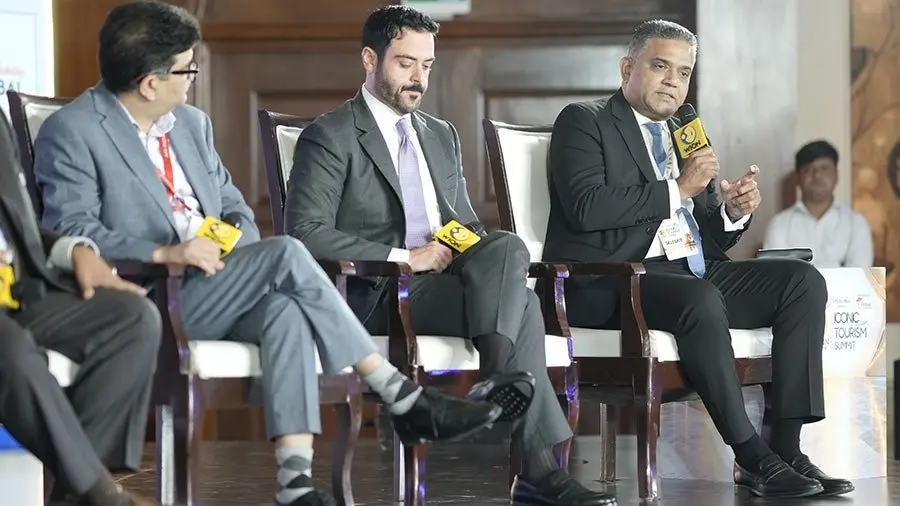
Tourism between India and Sri Lanka has historically been defined by the deep currents of geography, shared history, and cultural familiarity. For generations, travellers have crossed the Palk Strait and the short airspace connecting the two nations, driven by family ties, religious pilgrimages, and leisure pursuits. However, according to Kamal Munasinghe, Senior Vice President – Colombo Hotels for Cinnamon Hotels & Resorts and General Manager of Cinnamon Life at City of Dreams Sri Lanka, the time has come to elevate this relationship beyond traditional frameworks. The next chapter of Indo-Sri Lankan tourism, he argues, must focus on constructing a far more cohesive and integrated tourism corridor between the two neighbours.
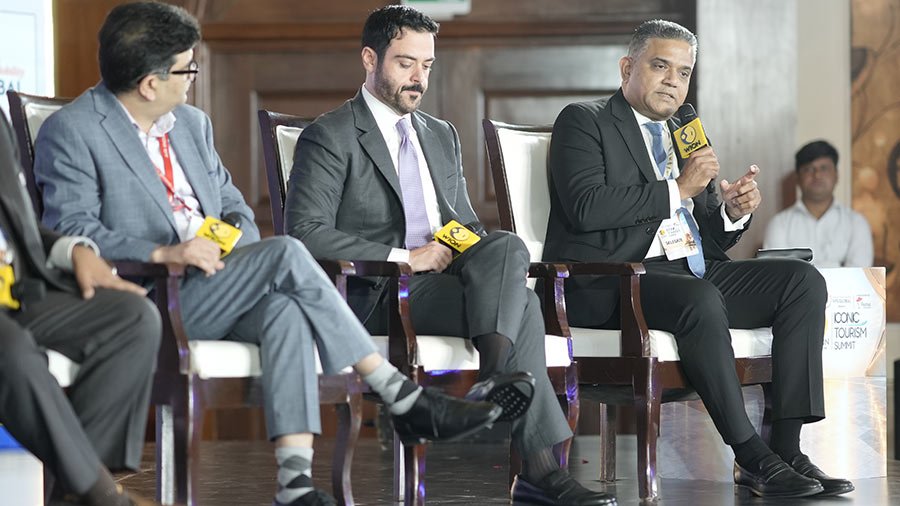
Addressing delegates and industry leaders at the WION ICONIC Tourism Summit and Awards 2026 in New Delhi, Munasinghe urged the travel and hospitality sector to look past conventional metrics such as mere tourist arrival numbers. Instead, he advocated for a deeper evaluation of how people move fluidly between destinations, the underlying motivations for their journeys, and how India and Sri Lanka can actively complement rather than merely compete with one another.
"The India–Sri Lanka tourism corridor must work both ways," Munasinghe observed while reflecting on his participation at the prominent New Delhi summit. "It’s not simply about increasing arrivals, but creating greater movement, stronger connectivity and more reasons to travel between our two countries, for leisure, business, weddings, MICE, entertainment and experiences."
This foundational concept—transforming a traditional, one-way source market dynamic into a dynamic, two-way regional corridor—formed the core of his vision for the future of South Asian tourism.
Connectivity as the Starting Point for Regional Growth
For Munasinghe, seamless connectivity remains the absolute baseline for any meaningful tourism expansion. Yet, he views connectivity as an expansive ecosystem rather than a narrow logistical puzzle of merely adding more flight frequencies to airline schedules.
The primary objective is to make travel between India and Sri Lanka sufficiently straightforward, frequent, and commercially viable to naturally encourage diverse categories of travellers to move in both directions across the maritime border. While India undeniably serves as a vital, high-volume source market for Sri Lanka’s tourism economy, Munasinghe cautioned against treating Indian visitors as a monolithic group. Travellers arriving from India’s vast network of metropolitan cities and diverse states bring with them vastly different culinary preferences, cultural expectations, religious practices, and travel motivations.
During his address at the summit, Munasinghe emphasised the critical necessity of understanding these internal market distinctions when conceptualizing and developing tailored tourism products for Indian consumers. Summarizing this complexity succinctly, he noted, "India is not just one India."
This observation carries immense strategic weight for a destination like Sri Lanka. While geographically proximate to the South Asian subcontinent, Sri Lanka faces intense competition for the outbound Indian traveller from a rapidly growing array of short-haul international destinations across Southeast Asia and the Middle East. Consequently, truly understanding the modern Indian traveller requires looking far beyond broad, aggregate market statistics to grasp nuanced regional preferences.
The Evolution of the Modern Traveller
Munasinghe also used the platform to address the rapidly shifting expectations of today’s global traveller, who is increasingly informed, digitally connected, and deeply conscious of the value they receive for their financial investment. Contemporary travellers conduct extensive research across digital platforms long before booking their journeys and increasingly document their real-time experiences through social media networks.
Throughout the summit discussion, he underscored two paramount considerations that now dictate consumer decision-making: value and experience.
"Number one is your quality and what you’re paying for, what you’re getting in your return," Munasinghe explained, highlighting that modern consumers demand absolute transparency and tangible worth from their hospitality expenditures.
The second critical driver, he suggested, is the powerful human desire to document and share the journey with digital communities. "People want to document that," Munasinghe observed, referencing how travellers eagerly share their locations, itineraries, and sensory experiences through platforms such as Instagram and Snapchat.
For hospitality businesses and destination managers, these shifting behaviors mean that a tourism product can no longer be restricted to the traditional provisioning of a hotel room and basic amenities. The entire destination ecosystem—encompassing hotels, restaurants, entertainment venues, architectural design, and surrounding cultural experiences—now directly influences the decision-making process of the modern traveller.
From Isolated Destinations to Regional Journeys
One of Munasinghe’s most compelling strategic proposals involves moving away from the traditional mindset of promoting individual destinations in absolute isolation. In his view, India, Sri Lanka, and the Maldives possess immense potential to complement one another, creating a unified regional appeal rather than fiercely competing for the exact same pool of travellers.
Elaborating on this vision, he described the opportunity as one of thinking beyond individual national borders and exploring how India, Sri Lanka, and the Maldives can successfully collaborate to attract the global traveller.
This collaborative approach closely mirrors established patterns in European tourism, where international visitors routinely combine multiple countries into a single holiday itinerary. For South Asia, Munasinghe envisions exciting potential in establishing similar multi-destination travel packages.
Under such a framework, an international traveller could seamlessly combine India’s rich cultural heritage and historical monuments with Sri Lanka’s diverse offerings of pristine beaches, wildlife sanctuaries, and vibrant urban experiences, before extending the journey southward to the tranquil luxury of the Maldives. Conversely, for outbound Indian travellers, the concept could manifest as extending a domestic holiday with a brief, high-end excursion to Sri Lanka or the Maldives.
The ultimate proposition, therefore, is not about dividing a finite pool of tourists among neighbouring nations, but rather about collaboratively expanding the overall regional tourism offering to attract a larger share of global tourism spend.
India as Both Market and Strategic Partner
Munasinghe’s commentary highlights a vital philosophical distinction: Sri Lanka does not view India merely as a convenient demographic wellspring for tourist arrivals. Instead, India is regarded as an indispensable partner in building a robust, resilient regional tourism ecosystem.
Sectors such as corporate business travel, destination weddings, MICE (Meetings, Incentives, Conferences, and Exhibitions), entertainment, healthcare, education, and leisure all contribute significantly to the continuous cross-border movement of people between the two nations.
This holistic perspective is particularly relevant to the ongoing transformation of Colombo. The development of large-scale, integrated hospitality and entertainment infrastructure in the capital is actively unlocking entirely new possibilities for regional travellers.
Cinnamon Life at City of Dreams Sri Lanka was conceived precisely with this visionary ethos, designed to transcend the limitations of a conventional hotel by integrating accommodation, fine dining, entertainment, retail, wellness, and dedicated business facilities under one roof. Munasinghe has consistently emphasized that the property’s overarching mission is to help position Colombo as a world-class destination in its own right, rather than merely a transit hub.
Furthermore, the sprawling property has seamlessly integrated into Colombo’s broader ambition to capture a larger share of the international events market, major conferences, destination weddings, and large-scale entertainment productions.
Building Human Connections and Cultural Fluency
Beyond infrastructure and logistics, Munasinghe drew attention to an element of tourism development that is frequently overlooked: the people working within the hospitality industry must cultivate a deep, operational understanding of each other’s markets.
His remarks underscored the absolute necessity of staff exposure and cross-border professional learning. He explained that Cinnamon Hotels & Resorts has actively worked on exposing its employees to different international markets and diverse hospitality environments, enabling operational teams to gain firsthand insight into how tourism functions across different cultural landscapes.
Building a thriving tourism corridor requires much more than simply increasing air connectivity and constructing hotel rooms. A truly resilient corridor demands a workforce that intimately understands the psychological and cultural nuances of the traveller arriving from across the border.
For India and Sri Lanka, this involves navigating and appreciating subtle differences in culinary traditions, cultural practices, religious requirements, family structures, and travel behaviors. Munasinghe’s core argument is that physical connectivity between nations must be mirrored by deep cultural and professional connectivity between their respective tourism industries.
Colombo’s Rising Prominence on the Global Stage
The ongoing urban and economic evolution of Colombo remains central to this entire strategic proposition.
Historically, for many international visitors, Colombo functioned primarily as a logistical entry point to Sri Lanka—a brief stopover before tourists dispersed toward coastal beaches, wildlife national parks, the central tea country, or ancient cultural heritage sites. However, Munasinghe firmly believes that the city now possesses all the essential ingredients required to establish itself as a compelling, standalone destination.
His leadership role at Cinnamon Life places him at the very epicentre of this urban transformation. By positioning Cinnamon Life at City of Dreams as a sprawling, integrated lifestyle destination, the property brings together high-end accommodation, world-class entertainment, diverse dining options, luxury retail, and versatile event spaces.
This sophisticated model directly supports the rapid growth of high-value tourism segments, including large-scale MICE events, destination weddings, and entertainment-led travel. These segments are proven to attract higher-spending visitors while encouraging longer average lengths of stay. Recent industry reporting on Munasinghe’s initiatives at the property has similarly highlighted Colombo’s burgeoning potential to capture a dominant share of the international MICE profile, aided significantly by the venue’s offering of more than 160,000 square feet of flexible event space.
For Indian travellers, this infrastructure unlocks a particularly lucrative and dynamic segment: multi-day weddings, corporate incentive trips, executive conferences, and grand family celebrations that naturally draw cohesive groups of travellers rather than isolated individual tourists.
Harnessing the Power of Regional Tourism
Ultimately, Munasinghe’s overarching proposition champions the vision of South Asia functioning as a unified, highly connected tourism region.
The subcontinent already possesses the fundamental ingredients required for such integration: rich cultural diversity, short geographical distances, strong diaspora networks, complementary tourism products, and steadily expanding air connectivity. Historically, what has lagged behind is the collective packaging and marketing of these shared assets to the international community.
For the global traveller, a multi-country South Asian itinerary offers an eclectic combination of heritage, nature, luxury, and urban energy that no single destination could ever provide on its own. For the regional industry, this integration creates unprecedented collaborative opportunities for commercial airlines, hotel chains, tour operators, cruise lines, MICE organizers, and destination management companies to work in concert rather than operating strictly within rigid national boundaries.
A True Corridor Beyond Market Metrics
Munasinghe’s closing message at the WION ICONIC Tourism Summit and Awards fundamentally calls for a profound shift in perspective across the South Asian hospitality landscape.
India should not be viewed narrowly as a demographic market from which Sri Lanka attempts to extract higher arrival numbers, nor should Sri Lanka be seen merely as one of many competing destinations vying for outbound Indian holidaymakers. The true opportunity lies in forging a robust, mutually beneficial two-way tourism corridor—one that actively fosters leisure, business, celebrations, entertainment, and professional exchange while strengthening the natural flow of people between the two nations.
Achieving this ambitious vision requires reliable physical connectivity matched by authentic cultural understanding. It demands compelling, world-class destinations supported by rigorously trained hospitality professionals, and it requires individual nations to look beyond their own borders to recognize how neighboring countries can mutually enhance their appeal.
For Kamal Munasinghe and the broader regional tourism leadership, the defining question of the future is no longer about asking how many Indian tourists Sri Lanka can attract, but rather how much collective travel India and Sri Lanka can successfully create together. As South Asian tourism grows increasingly interconnected, this distinction is poised to shape how global travellers perceive the region: not as a disjointed collection of separate borders, but as a seamless, vibrant network of shared experiences.