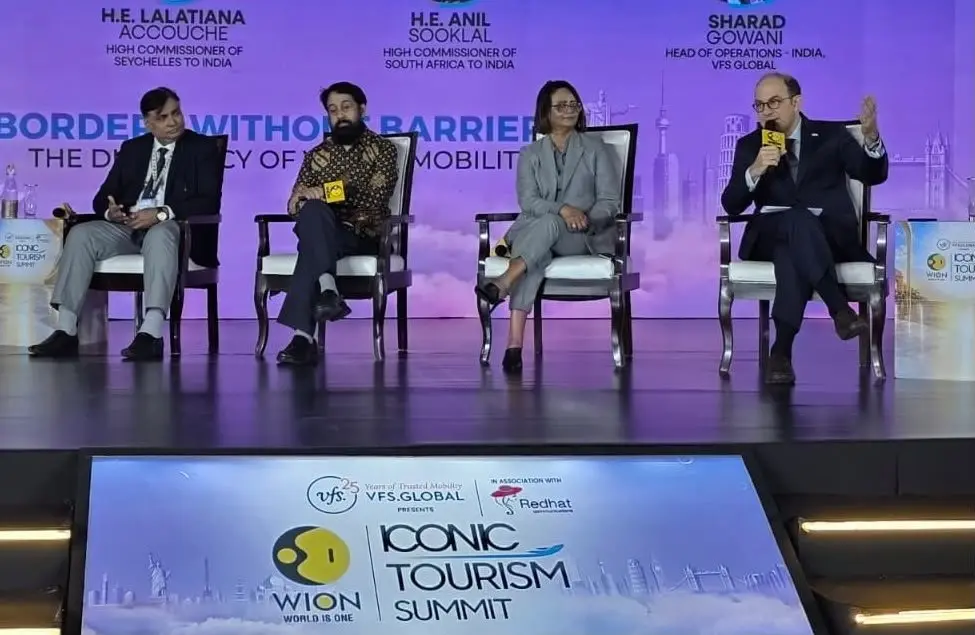
At the recent WION Iconic Tourism Summit, prominent diplomats, high commissioners, and mobility-sector experts convened to examine a critical evolving question in international relations: how nations can make international travel smoother, more accessible, and digitally advanced without ever compromising national security, regulatory integrity, and public trust.
Set against a backdrop of increasing globalization, the panel discussion titled “Borders Without Barriers: The Diplomacy of Visas and Mobility” moved far beyond the traditional, often mechanical conversations surrounding visa processing times and fees. Instead, the session addressed a broader strategic imperative—how streamlining international movement can actively fortify bilateral tourism, expand economic and business opportunities, enhance educational exchanges, and deepen diplomatic ties across continents.
The conversation was moderated by Molly Gambhir and brought together a distinguished panel featuring H.E. Mariano Agustín Caucino, Ambassador of Argentina to India; H.E. Lalatiana Accouche, High Commissioner of Seychelles to India; H.E. Prof. Anil Sooklal, High Commissioner of South Africa to India; and Sharad Gowani, Head of Operations for India at VFS Global. As international travel continues its post-pandemic recovery and adapts to new digital realities, the panel underscored that while borders clearly define sovereign nations, they do not have to stifle the human connections, cultural exchanges, and economic partnerships that bind the global community together.
Lalatiana Accouche: Deepening Ties as Neighbors, Sisters, and Family
For H.E. Lalatiana Accouche, High Commissioner of Seychelles to India, the facilitation of human mobility is deeply intertwined with the historic and evolving relationship between her island nation and New Delhi. The timing of the summit coincides with a significant milestone year, as 2026 marks half a century of formal diplomatic relations between India and Seychelles, running parallel to the island nation’s 50th anniversary of independence. Throughout this landmark year, both governments have actively sought to expand bilateral cooperation across a diverse array of sectors, including maritime security, higher education, hospitality, advanced digitalisation, and robust people-to-people exchanges.
Looking toward the next phase of this enduring partnership, H.E. Accouche stressed that diplomatic objectives must go beyond intergovernmental agreements. True progress, she argued, requires actively strengthening connections directly between citizens through tourism, educational pursuits, cultural integration, and various forms of cross-border mobility.
Her remarks also placed the concept of tourism within the wider strategic framework of the Indian Ocean region. Seychelles and India have consistently collaborated on maritime security and capacity building, leveraging their shared geography into a collaborative security interest. Accouche emphasized that maritime cooperation remains critically important for island nations facing unique geopolitical and environmental realities. India has consistently provided vital assistance to Seychelles in bolstering maritime capacity and security, while both administrations continue regular dialogues to ensure the Indian Ocean remains peaceful and secure.
Ultimately, the High Commissioner’s message highlighted a partnership built on genuine affection and mutual reliance rather than mere geographic proximity. Capturing the people-first character that she believes defines the core of the bilateral relationship, she remarked that the two nations are not merely neighbors, but rather akin to sisters and family.
This mutual momentum reached a notable peak during Prime Minister Narendra Modi’s state visit to Seychelles, where the two leaders unveiled a commemorative logo celebrating fifty years of uninterrupted diplomatic ties. During the visit, both nations formally agreed to intensify cooperation across key pillars, including sustainable tourism development, enhanced direct air connectivity, and other people-centric policy initiatives designed to bring the two populations closer together.
Mariano Agustín Caucino: Opening Borders to Welcome International Travellers
Addressing the practical realities of modern travel diplomacy, Argentina’s Ambassador to India, H.E. Mariano Agustín Caucino, argued that the most tangible expression of a welcoming foreign policy is the systematic removal of unnecessary bureaucratic barriers.
Ambassador Caucino began by reiterating Argentina’s absolute respect for the sovereign right of every independent nation to determine its own domestic immigration and border policies. However, he balanced this acknowledgment by sharing Argentina’s proactive approach to welcoming Indian nationals. In an effort to boost bilateral tourism and cultural exchange, Buenos Aires has actively worked to make entry into the South American nation as frictionless as possible for Indian passport holders.
Highlighting a major policy shift introduced in recent years, Caucino pointed out that Indian citizens who possess eligible, valid United States visas are permitted to enter Argentina for tourism purposes for up to ninety days without needing to apply for a separate Argentine visa. Consular frameworks confirm this policy, which effectively removes a significant administrative hurdle for long-haul travelers who might otherwise find the prospect of dual visa applications discouraging.
For the Ambassador, these types of structural policy changes represent much more than mere administrative conveniences. They frequently serve as the deciding factor in whether a distant, long-haul destination transforms from an aspirational dream into a realistically accessible itinerary for modern travelers.
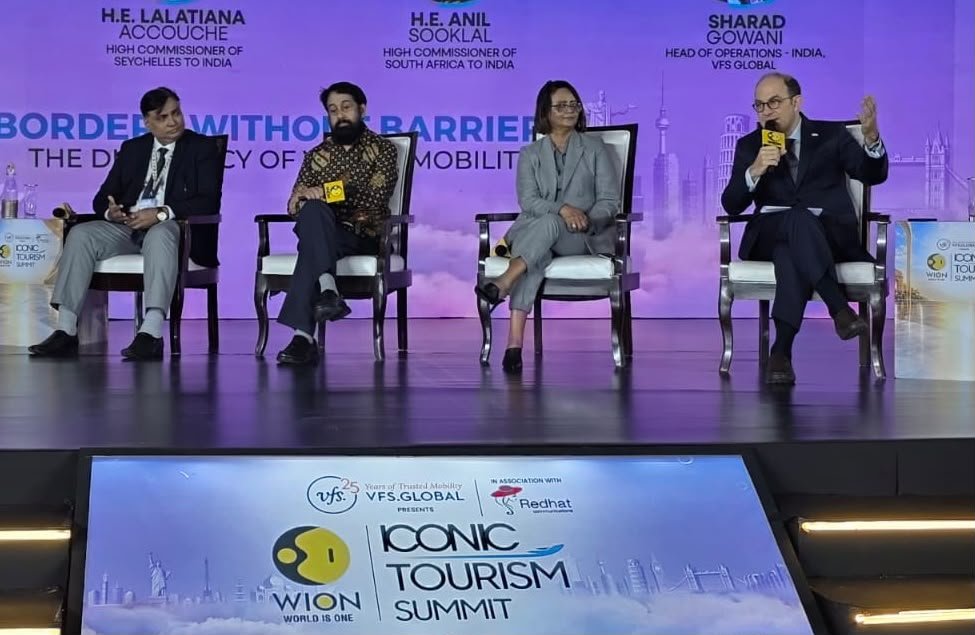
Furthermore, Caucino emphasized that visa facilitation must be paired with robust air connectivity to achieve its full potential. Reestablishing or expanding direct flight paths, as well as optimizing layover connections through major international transit hubs such as Madrid, can drastically reduce the logistical friction and financial cost of traveling between the Indian subcontinent and South America. Concrete, coordinated measures are essential if nations genuinely wish to attract visitors, requiring aviation infrastructure and visa policies to work in tandem rather than operating as isolated silos.
Anil Sooklal: Embracing the Global South Tourism Moment
Broadening the scope of the discussion beyond individual bilateral relationships, H.E. Prof. Anil Sooklal, High Commissioner of South Africa to India, directed attention toward a larger geopolitical and economic shift. According to Sooklal, the contemporary international landscape is experiencing a definitive "Global South tourism moment," characterized by the rising economic influence, cultural confidence, and mutual cooperation among developing nations, with economic powerhouses like India and South Africa leading the charge.
India and South Africa already share deep historical, political, and cultural bonds. South Africa is home to a substantial and vibrant population of Indian origin, and the two countries have cultivated a robust multilateral partnership through influential forums such as BRICS. Despite these profound foundational links, Sooklal pointed out that a glaring infrastructure gap continues to impede seamless travel: the lack of direct commercial aviation connectivity.
Currently, there are no direct passenger flights operating between Mumbai and Johannesburg. Travelers making the journey must rely on connecting flights through regional or international hubs such as Nairobi, Addis Ababa, Mauritius, Doha, or Dubai. Recognizing this deficit, government officials and aviation industry stakeholders from both nations have engaged in ongoing discussions regarding the restoration of direct flight services, identifying the Johannesburg-Mumbai route as a vital underserved market with immense economic potential.
Beyond commercial aviation and traditional visa facilitation, High Commissioner Sooklal articulated a vision of mobility centered heavily on educational and cultural exchange, particularly for the younger generation. Recalling the historical precedent of South African students traveling to India to pursue education during the apartheid era, he advocated for the creation of specialized visa categories and streamlined administrative pathways designed to encourage students and academic researchers to move freely in both directions.
Sooklal expressed a strong desire to see more South African students pursuing higher education in India, while equally encouraging Indian students to consider attending premier academic institutions across the African continent, including South Africa. By placing youth mobility at the center of the diplomatic agenda, both nations can ensure that their historic partnership remains vibrant, relevant, and deeply rooted for generations to come.
Sharad Gowani: Balancing Seamless Accessibility with Rigorous Security
Providing the operational perspective at the summit, Sharad Gowani, Head of Operations for India at VFS Global, addressed the core operational paradox that defines the entire global visa ecosystem: the constant challenge of making international travel faster and more accessible without ever compromising national security or document integrity.
Gowani noted that today’s travelers, accustomed to instant digital services in almost every other aspect of their lives, expect speed, transparency, and flexibility from the visa application process. Whether they are submitting initial documentation, tracking application statuses, or awaiting passport return, modern applicants demand efficiency. However, Gowani firmly emphasized that faster processing times must never equate to compromised safety standards.
Security and accessibility must walk hand in hand, he explained. This delicate operational balance is especially critical for organizations like VFS Global, which function as administrative and technology-services partners to sovereign governments and diplomatic missions worldwide, while final visa adjudication decisions remain strictly the responsibility of the respective government authorities. VFS Global currently partners with dozens of client governments, managing thousands of application centers across numerous countries and processing hundreds of millions of transactions over its operational history.
Outlining the mechanics of modern application management, Gowani described a comprehensive security architecture that begins the moment a traveler initiates an application and continues uninterrupted through secure document handling, biometric data collection, logistical transit, and final passport delivery. He also highlighted the rapid, ongoing digitalisation of the entire workflow.
The global travel sector is steadily moving toward increasingly remote, technology-enabled services. Advanced digital application portals are already reducing the necessity of physical visits for various administrative steps, while emerging biometric verification and digital identity technologies continue to evolve at a rapid pace. Gowani observed that the foundational hardware and technological capabilities are largely already established; the ongoing challenge lies in securely connecting these systems to create a unified global experience.
Ultimately, technology must serve a singular, overarching objective: ensuring that legitimate travelers possessing the requisite documentation can move through vetting systems efficiently, while preserving the rigorous safeguards that sovereign governments require. Striking this precise balance between frictionless consumer convenience and unyielding security integrity will ultimately define the future architecture of international mobility in the years ahead.