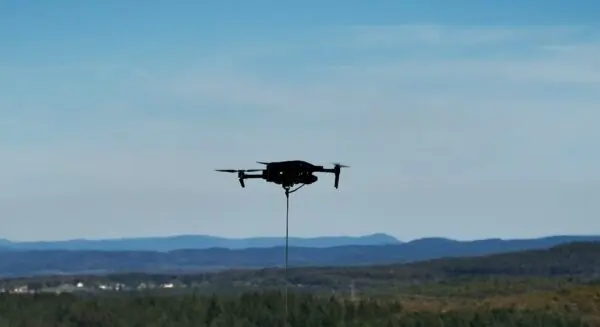
A newly proposed piece of federal legislation introduced in the United States House of Representatives aims to place strict limitations on the government’s use of automatic license plate readers, commonly known as ALPRs. Crucially, the measure also targets advanced data-collection networks that leverage modern technology, including aerial systems such as drones.
Representative Alexandria Ocasio-Cortez, a Democrat representing New York, formally introduced H.R. 10691—widely referred to as the "Ban Flock Act"—on October 1, 2026. If passed into law, the comprehensive bill would significantly restrict federal agencies from utilizing ALPR systems or accessing any captured license plate data unless they have received specific, direct authorization from Congress. Furthermore, the legislation seeks to exert financial pressure on state and local governments by conditioning federal grant funding upon the adoption of comparable restrictions at the regional and municipal levels.
The introduction of the bill comes at a time when the rapid expansion of automated surveillance technology has sparked intense national debates regarding privacy, civil liberties, and the boundaries of government oversight. As police departments and federal agencies increasingly integrate sophisticated tools into their daily operations, lawmakers and privacy advocates are taking a closer look at how vast repositories of location and tracking data are gathered, stored, and shared.
How the Bill Applies to Drones
The legislative text of H.R. 10691 casts a wide net regarding what constitutes regulated surveillance data. Section 2 of the bill provides a comprehensive definition for "captured plate data," explicitly stating that the term includes any information produced by or derived from a vast array of collection mechanisms.
According to the statutory language, this covers fixed cameras, mobile readers, police vehicles, trailers, drones, tolling infrastructure, parking systems, private security networks, homeowners’ associations, commercial parking operators, and data brokers. By incorporating such a wide spectrum of sources, the legislation ensures that modern aerial surveillance methods—such as automated readers mounted on or integrated with unmanned aerial systems—are subjected to the same regulatory scrutiny as traditional stationary and vehicle-mounted hardware.
The definition is similarly expansive regarding the nature of the information itself. It encompasses raw license plate numbers, digital images, precise geographic locations, exact timestamps, specific vehicle characteristics, and any other related contextual data that can be used to track or identify vehicles and their movements over time.

To enforce these definitions, Section 3 of the bill outlines strict prohibitions for federal agencies. It would make it illegal for these entities to acquire, possess, access, or utilize ALPR systems and the captured plate data they generate. However, the legislation does carve out specific exceptions for activities that have received explicit, narrow authorization from Congress, as well as certain traditional toll collection uses where license plate imaging is necessary for operational billing.
The bill’s reach extends far beyond direct federal operations. Section 4 would directly tie federal financial assistance—originating from five major federal departments, including the Department of Justice, the Department of Transportation, and the Department of Homeland Security—to compliance by state and local governments. Under this provision, municipal and state agencies would be forced to adopt comparable ALPR restrictions if they wish to remain eligible for these vital federal grants and financial support programs.
Reinforcing these funding conditions, Section 5 would explicitly prohibit the use of federal grant money to purchase, operate, or maintain ALPR systems, or to acquire data generated by them, save for the few carved-out statutory exceptions. Despite these broad restrictions on automated data collection, industry observers note that the legislation does not propose a general, blanket ban on drones, aerial surveillance writ large, or specialized emergency initiatives such as Drone as First Responder, or DFR, programs, focusing instead specifically on the automated capture and processing of license plate data.
Background: Scrutiny of Flock Safety
The unveiling of H.R. 10691 follows a sustained period of heightened public and political scrutiny directed at automated license plate reader networks. In particular, systems operated by private technology and security firms, most notably Flock Safety, have found themselves at the center of national discussions concerning the commercial and municipal gathering of public surveillance data.
In recent months, growing concerns from civil rights organizations, privacy advocates, and community groups regarding data-sharing practices, internal access controls, and the secondary uses of collected information have prompted widespread questions about how well-regulated these private-public surveillance partnerships truly are. Critics have frequently pointed out that vast networks of cameras capturing millions of vehicle movements daily create persistent digital trails of ordinary citizens, raising profound Fourth Amendment and privacy questions.
At the same time, the market demand for these technologies remains remarkably robust. A report published in mid-October 2026 by Fast Company highlighted that while the broader corporate network faces an intensifying backlash over its surveillance footprint, Flock’s specialized drone sectors have emerged as some of the most profitable and rapidly expanding segments within the company. This juxtaposition between booming commercial success and rising legislative resistance underscores the high-stakes battle currently playing out over the future of aerial and automated street-level monitoring in communities across the United States.
Legislative Status
As it stands, H.R. 10691 remains strictly a piece of proposed legislation. Following its formal introduction in the House of Representatives on October 1, 2026, the bill was referred to multiple House committees for initial review, debate, and potential amendment. It has not been voted on by the full chamber, has not crossed over to the Senate, and has not been signed into law. Whether the measure will gain sufficient bipartisan traction or successfully navigate the legislative process remains to be seen as lawmakers grapple with the complex intersection of public safety, municipal technology adoption, and citizen privacy rights.