As organizations worldwide race to capitalize on artificial intelligence, many find themselves hindered not by the sophistication of their chosen machine learning models, but by a much more foundational hurdle: the data itself. Enterprises frequently struggle to connect AI initiatives to reliable, AI-ready data, leaving teams searching for practical use cases and verifiable business value before committing significant time and financial capital.
To address this friction directly, data integrity specialist Precisely has introduced Precisely AI Studio, a new environment designed to give data builders hands-on access to ready-made applications, intelligent agents, and specialized skills. Working alongside the broader Precisely Platform—a unified data management ecosystem currently in preview—AI Studio aims to provide a builder-first entry point where professionals can explore real outcomes on actual data within minutes, entirely bypassing extensive setup and lengthy implementation cycles.

According to engineering teams that have validated the platform since its early development phases, the focus of AI Studio is speed to insight. Initial user onboarding, including sign-up and connection to Model Context Protocol (MCP) capabilities, typically takes less than five minutes. The platform is aimed squarely at the professionals who build modern data and AI architectures, including data analysts, data scientists, engineers, machine learning specialists, and developers.
By offering a friction-free trial that requires no preliminary sales calls or complex infrastructure deployment, Precisely allows technical teams to immediately test pre-connected assets powered by live data management capabilities. Once validated, these agents and skills can be downloaded and integrated directly into the models, integrated development environments (IDEs), or custom applications already deployed within an enterprise.
Tackling Hidden Costs Through Data Quality
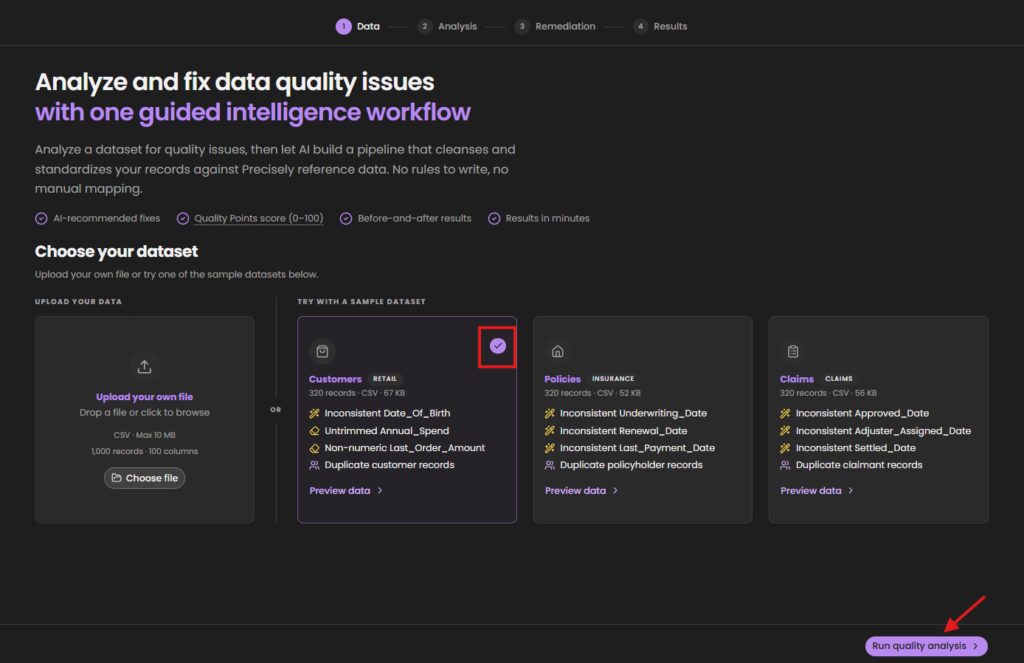
Among the initial offerings featured in AI Studio is the Data Quality Boost application, designed to resolve pervasive data inconsistencies that quietly drain corporate revenue. Real-world datasets routinely suffer from duplicate records and conflicting formats across critical fields such as dates, currencies, and electronic mail addresses.
Consider a global retail enterprise where storefront operations record transactions using the standard United States date format of month, day, and year, while an overseas third-party logistics warehouse system interprets the exact same string using day, month, and year. When orders pass unchecked between these disparate environments, critical details can be systematically misread, triggering fulfillment delays, inventory discrepancies, and ultimately lost sales. Similar data discrepancies reliably degrade the accuracy of corporate analytics, daily operations, and downstream AI initiatives.
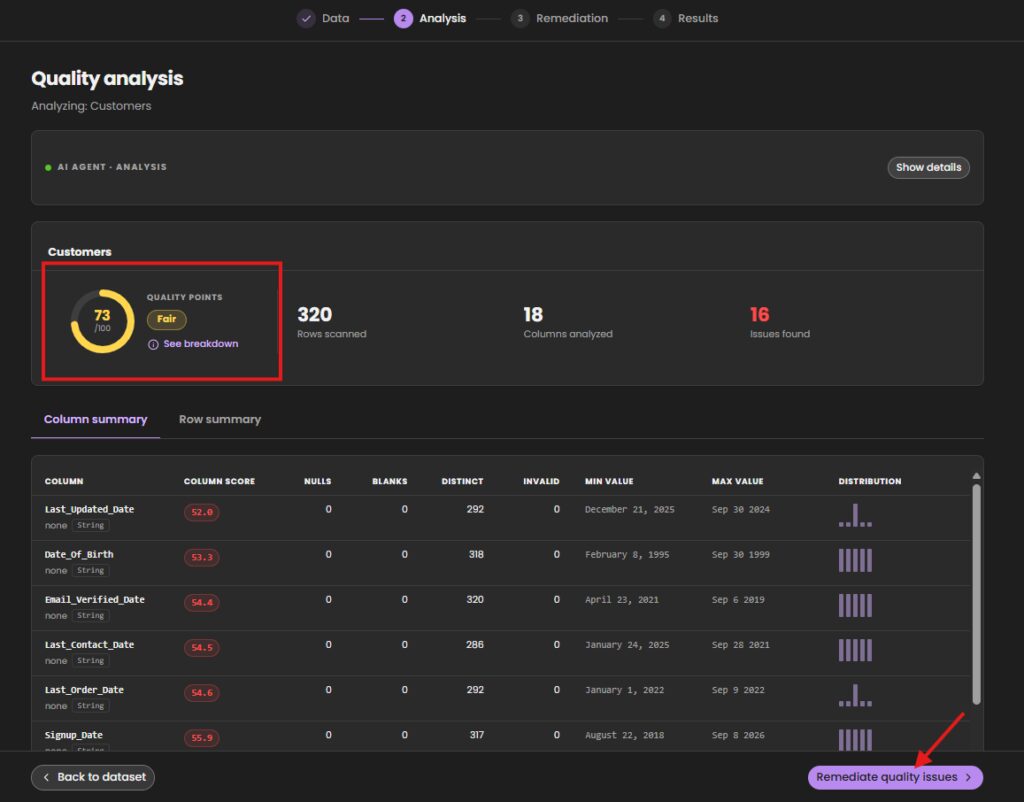
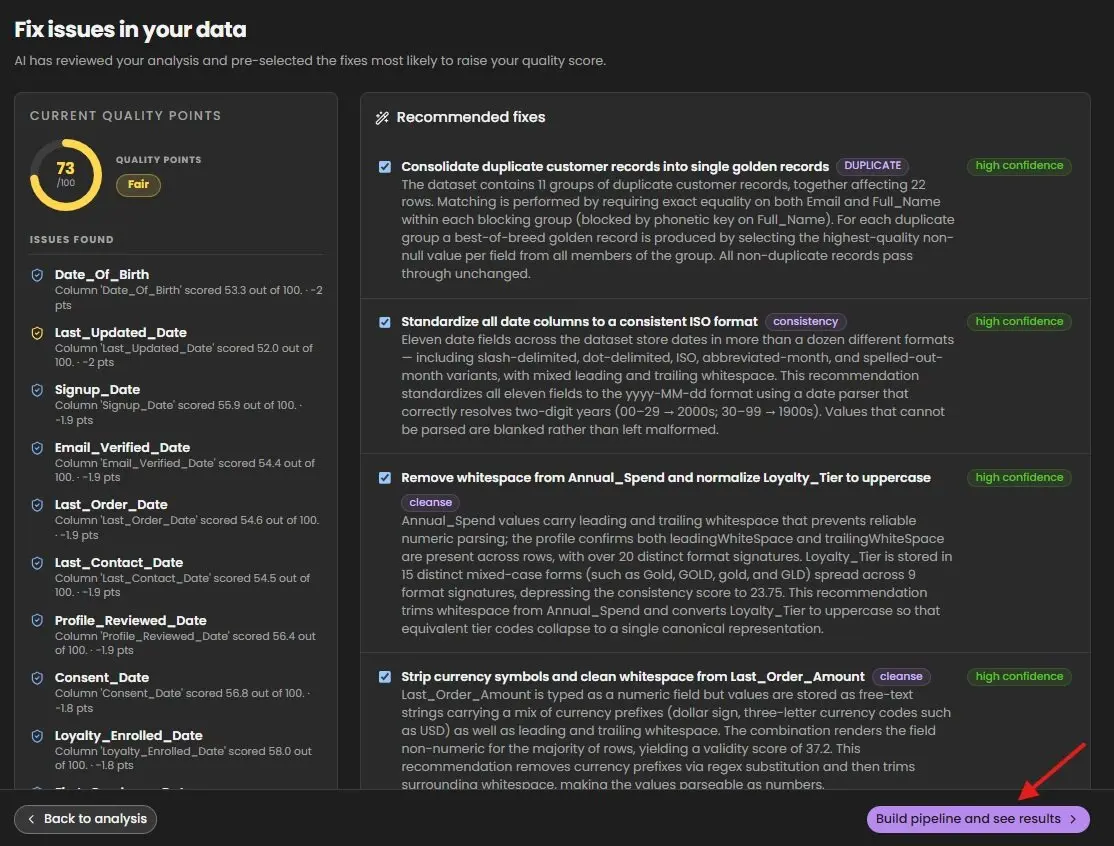
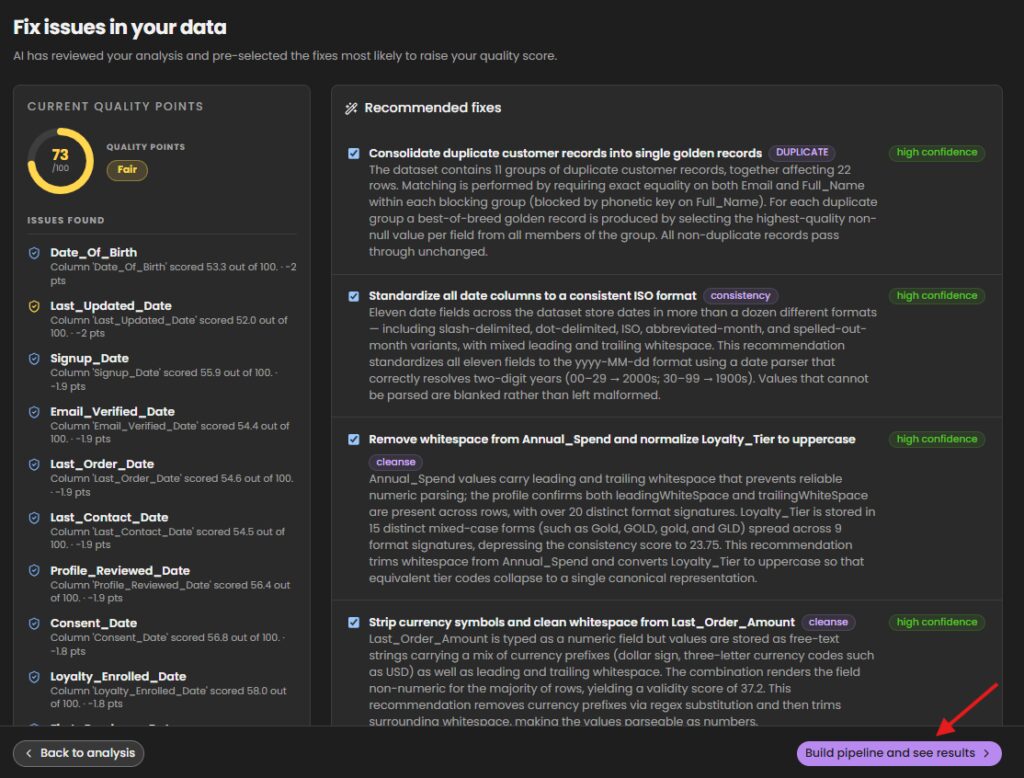
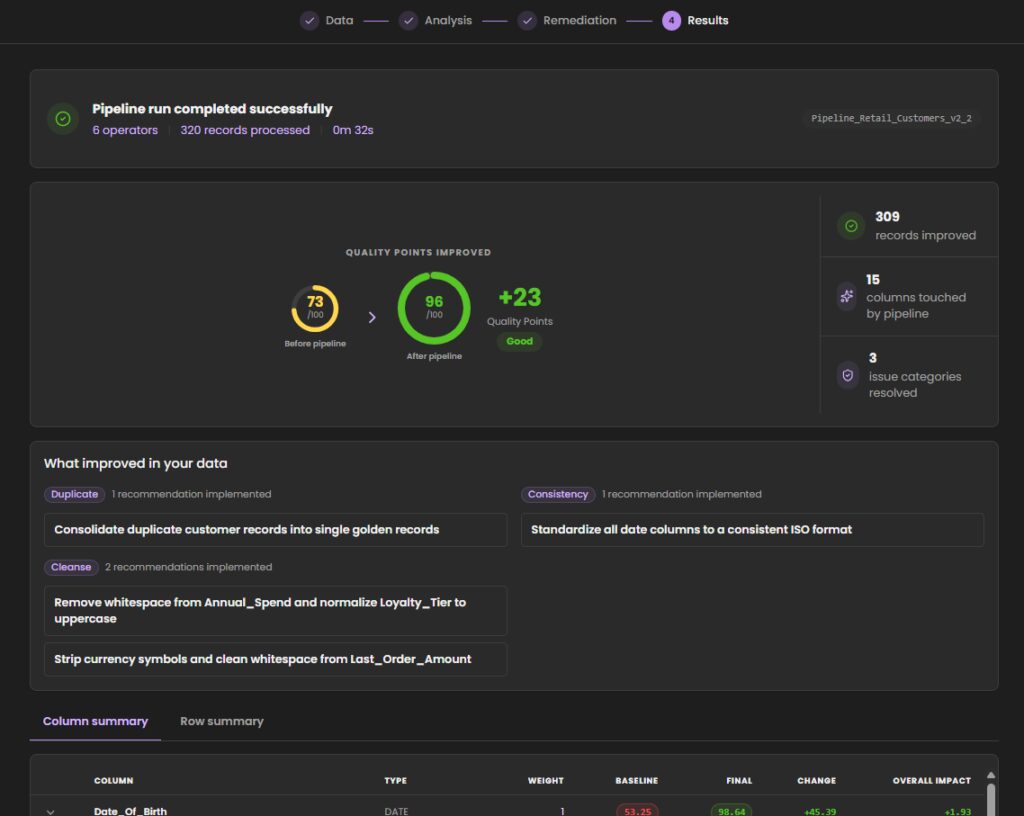
Data Quality Boost allows organizations to address these structural challenges without requiring deep specialist expertise in data cleansing. Users can upload custom comma-separated values files or test pre-loaded sample datasets, instantly profiling records across multiple quality dimensions. The application generates an AI-narrated quality score alongside automated remediation recommendations. In internal testing demonstrations, sample datasets improved their overall quality ratings significantly within minutes by standardizing date and currency values and consolidating duplicate entries into a single, trusted version of record.
Contextualizing Location and Graph Intelligence
Beyond foundational cleansing, the platform introduces specialized applications designed to imbue basic records with critical contextual awareness. Traditional datasets often contain isolated identifiers—such as a street address or a customer name—that reveal where an asset is located without explaining its surrounding environment or inherent risk profile.
The Property Analyzer application within AI Studio addresses this limitation by transforming a standard address into a comprehensive assessment that blends address verification, property intelligence, and risk scoring. For financial institutions, insurance carriers, and real estate investors, this capability consolidates disparate geospatial and property databases into a cohesive, business-oriented evaluation, streamlining initial risk assessment.
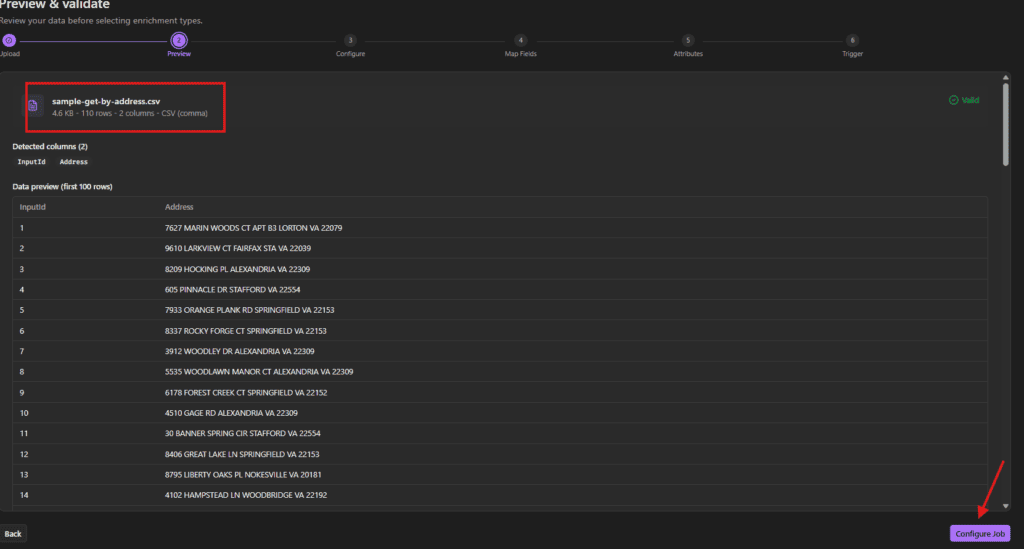
Complementing this approach, the Data Graph Enrich application enables users to upload customer or property files and instantly augment them with attributes drawn directly from the broader Precisely Data Graph. Basic address entries can be rapidly enriched with building identifiers, precise geographic coordinates, structural footprints, and polygon geometries. This immediate visibility allows engineering teams to evaluate the exact value of data enrichment before committing to architectural changes.
Unifying Workflows Through Model Context Protocol
A central technical pillar of AI Studio is its integration with the Model Context Protocol, an interface standard that enables artificial intelligence assistants and development environments to interact securely with trusted enterprise services. While simple data connections merely transfer files, MCP integration within AI Studio ensures that queries are grounded in data an AI can properly interpret and act upon.
The hosted Precisely MCP server provides streamlined connectivity for popular developer environments, including Claude Desktop, GitHub Copilot CLI, Visual Studio Code Copilot, and Databricks. Following a brief configuration process involving bundle installation and API authentication, technical staff can interact with complex Precisely capabilities using natural language rather than manual interface navigation.
This conversational interface allows engineers and analysts to execute complex administrative and analytical tasks—such as creating governance assets, auditing metadata, analyzing data quality, and searching catalog information—directly within their preferred coding environments. As enterprises increasingly transition toward agentic workflows, initiatives like Precisely AI Studio seek to lower traditional barriers to entry, enabling organizations to transition rapidly from experimental curiosity to scalable enterprise deployment.