Across Latin America, governments increasingly recognize public procurement as a powerful lever for advancing broader public policy goals, ranging from aggressive environmental sustainability targets to the economic inclusion of small and medium-sized enterprises. Many nations across the region have successfully integrated sustainable procurement into their foundational legal and institutional frameworks. Yet, translating these high-level policies into everyday administrative practice remains a defining challenge. Technical capacity constraints, a lack of clear operational guidance, lingering reputational risks, and an institutional bias toward short-term budgetary efficiency frequently stall implementation. Consequently, many public procurement systems fall into a familiar trap: comprehensive policies are drafted and theoretical indicators identified, but actual execution stalls and the ultimate results go unmeasured.
Paraguay has emerged as a compelling regional model for overcoming this implementation gap, successfully navigating what experts describe as the "valley of death" in sustainable procurement. Supported by the Open Contracting Partnership (OCP), Paraguay’s national public procurement agency, the Dirección Nacional de Contrataciones Públicas (DNCP), has closed critical gaps in tracking the real-world implementation of its sustainable public procurement policies. Through a phased approach combining multistakeholder collaboration, enhanced data collection, and intuitive digital tools, the agency has embedded sustainable mandates directly into its electronic government procurement (e-GP) architecture.
The journey began with a strong pre-existing legal foundation, as Paraguay had already established some of the most comprehensive sustainable procurement regulations in the region. However, despite these robust pillars, the country lacked a systematic mechanism to measure whether these policies were actually being implemented by procuring entities or generating measurable results. To bridge this gap, DNCP and OCP embarked on a continuous technical assistance program, working hand-in-hand to transform static policy guidelines into active, data-driven workflows.

Incorporating Sustainable Clauses into the e-GP System
The foundational step toward measuring sustainable procurement performance was the precise definition and systemic codification of sustainability clauses. Within public procurement frameworks, clauses serve as mandatory rules embedded within tender documents that suppliers must strictly follow throughout the lifecycle of the procurement process—whether submitting a bid, executing the awarded contract, or receiving final payment. For instance, a regulatory clause might require a supplier to source a specific percentage of its materials from registered family-farming enterprises or to adhere to rigorous environmental standards during project execution. These clauses are typically structured as mandatory pass-or-fail assessments, with compliance verified during the operational execution phase rather than the initial bid evaluation stage.
To operationalize this, DNCP’s sustainability committee conducted a comprehensive review of all standard tender documentation, compiling and categorizing every clause contributing to environmental, economic, or social sustainability dimensions. While Paraguay had already established these standards through previous regulations, they had not yet been integrated into the digital e-GP system. The review initially prioritized cross-cutting administrative clauses, such as those limiting the physical printing of bid documents, before expanding into sector-specific criteria, such as accessibility standards and mandatory labor provisions for public works and security services.
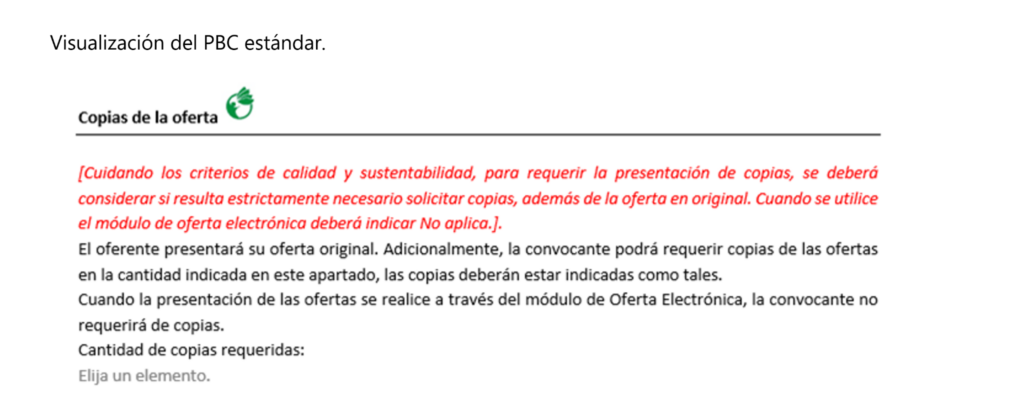
With the launch of DNCP’s modernized e-GP system, the platform provided the necessary technical flexibility to incorporate these sustainable provisions directly into digital standard bidding documents. To ensure external visibility and internal tracking, these clauses were assigned a specific sustainability mark known as CPS, an acronym for Compras Públicas Sustentables. Furthermore, a distinctive green badge was introduced to visually designate any tender clause containing a sustainability component, allowing procuring entities and purchasing officers to identify and apply them intuitively.
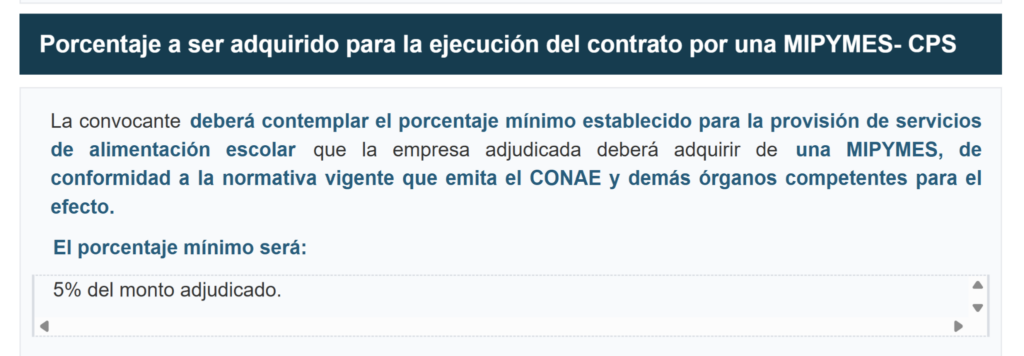
As a result of this digital integration, every time a contracting authority utilizes these standardized documents, the e-GP system automatically captures structured data regarding which clauses have been applied. This mechanism successfully converts administrative policy into quantifiable data points. Internally, the system extracts these records from the database, generating a daily tally of all active procurement processes incorporating these specific sustainability requirements.
An Internal Dashboard for Monitoring Uptake of SPP Clauses
Once these sustainability clauses were securely embedded within standard bidding documents, DNCP gained the structural capacity to query them systematically and monitor their utilization across the entire public procurement landscape. To guide this monitoring effort, the agency collaborated with OCP to define key performance indicators through a series of specialized workshops centered on developing a robust theory of change. These collaborative sessions mapped out the necessary administrative actions required from DNCP, evaluated the data fields available within the new e-GP infrastructure, and established a regular schedule for dashboard updates.
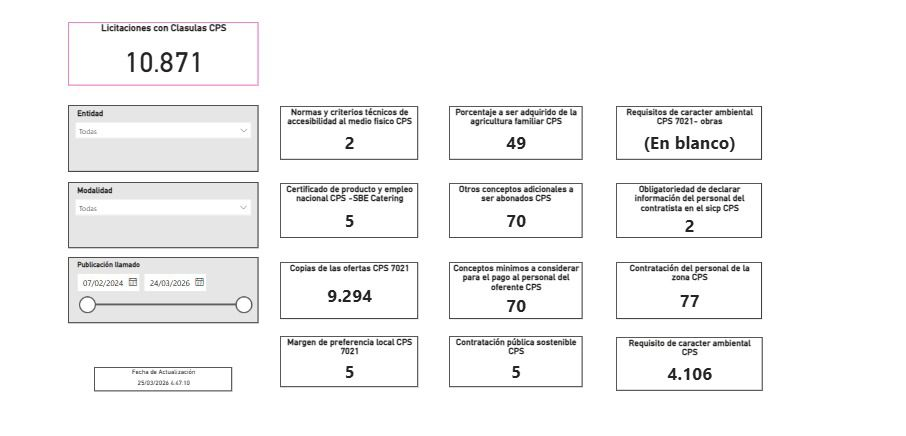
This strategic groundwork fostered deep institutional trust within the DNCP team, empowering leadership to spearhead the development of an agile, user-friendly monitoring dashboard. Launched in early 2025, this internal dashboard represents the most significant output of the joint intervention. Collecting metrics over a comparative multi-year period, the dashboard establishes essential operational baselines to evaluate ongoing progress. For context, while DNCP typically publishes approximately 9,000 tender processes annually, data tracking reveals that uptake varies significantly depending on the clause type—ranging from near-universal adoption for digital document limits to more targeted application in specialized categories.
While the internal dashboard is primarily utilized by members of the sustainable procurement committee and the director of DNCP, agency leadership anticipates making the interface publicly accessible in the future. Additional technical enhancements are already underway to enable more granular, contract-level insights. For example, specific tracking is being applied to clauses governing family-farming sourcing within the national school meals program, known as Hambre Cero, or Zero Hunger. By combining dashboard metrics with Open Contracting Data Standard data, analysts can track not just the overall presence of a clause in a tender, but the actual volume of subcontracts and financial awards flowing to small agricultural producers.
Defining Sustainability Criteria the Market Can Meet
In parallel with embedding clauses into the e-GP infrastructure and developing tracking dashboards, OCP supported DNCP in refining specific sustainability criteria utilized during the critical bid evaluation stage to score and qualify competing suppliers. Prior to this initiative, DNCP had partnered with technical specialists to establish what environmental, social, and economic requirements buyers could reasonably request without exceeding the capacity of the local supplier market.
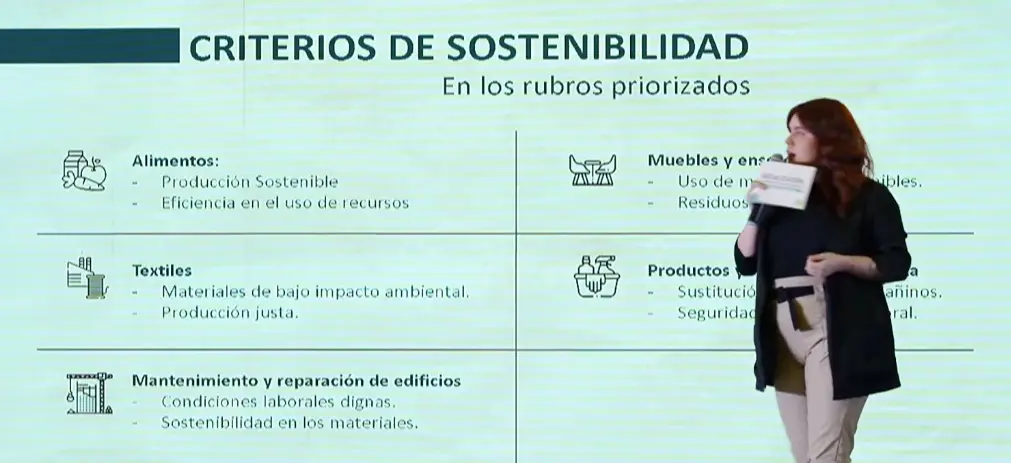
Building on this foundation, DNCP established a strategic distinction between universal sustainability criteria applicable across all procurement types and targeted, category-specific requirements. To effectively prioritize sectors for category-specific criteria, the agency designed a specialized scoring matrix utilizing five weighted variables. Each variable is assigned a numerical score, and the resulting weighted calculations systematically rank procurement categories by urgency and impact.
Facilitated by OCP workshops, this prioritization process brought together the sustainable procurement committee, representatives from other government ministries, and key industry stakeholders. These collaborative sessions ensured market alignment and refined the selection of goods and services categories using standardized classification codes.
Ultimately, this process yielded a concise shortlist of five priority categories: food, building maintenance and repair, textiles, furniture and fixtures, and cleaning supplies and services. For each designated sector, tailored sustainability criteria were established, balancing environmental performance and social responsibility with verified market capacity.
As Paraguay continues to refine its sustainable procurement framework, OCP maintains its advisory role, helping DNCP systematically measure bidder compliance and expand the public availability of open contracting data. Through these concerted efforts, Paraguay demonstrates how a public procurement agency can successfully bridge the gap between ambitious sustainability policies and measurable, data-driven administrative results.