When individuals are first confronted with the reality of recovering from foot surgery, a broken leg, or other lower-body medical conditions, exploring alternative mobility aids can feel overwhelming. The sheer volume of specifications, figures, and technical jargon found in marketing materials—ranging from inches and pounds to weight capacities and material compositions—can easily confuse a prospective buyer. Selecting the right device is critical for ensuring a safe and independent recovery process, and understanding the core features of a knee scooter can significantly streamline the decision-making process.
At the foundation of any reliable knee scooter is its frame material. It is crucial to understand what material has been used to manufacture the structure, as the device is intended to support the entire weight of the human body. Manufacturers typically rely on durable, high-strength materials such as aluminum or steel to ensure optimal support and protect users from further injury. A sturdy frame also proves invaluable when navigating various weather conditions outdoors, preventing premature tarnishing or structural degradation during unexpected rain or storms.
Equally important to structural integrity is the brake system, which serves as perhaps the most critical safety feature on any mobility device. No user wants to experience a runaway scenario while navigating a decline or slope. Industry experts suggest prioritizing models equipped with bicycle-style hand brakes positioned directly on the handlebars for immediate stopping power. Consulting the manufacturer’s documentation or website can provide deeper clarity regarding a specific model’s braking mechanism.
Weight capacity is another major consideration. Different knee scooters are engineered to support varying weight ranges. While a standard model typically accommodates around 300 pounds, specialized options such as the BodyMed Folding Knee Scooter offer higher weight thresholds. Purchasing a scooter with an inadequate weight capacity can compromise structural stability and expose the user to the risk of re-injury.
Beyond safety and support, everyday convenience plays a notable role in recovery. A quality knee scooter generally features an attached storage basket or utility box, allowing users to transport personal items safely while moving about. For models that lack an integrated compartment, compatible storage attachments can frequently be purchased separately.
Tire quality dictates how smoothly a scooter handles diverse terrains. For outdoor use, durable materials like polyurethane are preferred. Tires must also perform reliably under wet or adverse weather conditions to prevent slipping or loss of control on slick ground surfaces. Finally, ease of assembly and transportation remains a priority for users who wish to avoid complicated setups requiring specialized tools. Selecting a model that simplifies folding, cleaning, storage, and transport minimizes daily physical strain.
Understanding how these devices function helps contextualize their growing popularity compared to traditional alternatives. Generally featuring four wheels, knee scooters provide firm support for one leg while allowing the user to propel themselves independently with the opposite foot. A padded knee platform provides extensive comfort during transit.
Most modern knee scooters are foldable, utilizing a lever connected to the handlebars or positioned over the seat to collapse the frame for effortless storage and transport. When weighed against traditional crutches, many users favor knee scooters because they demand less upper-body strength, offer faster and more fluid mobility, and require fewer complex adjustments.
Insurance coverage for knee scooters remains a frequent point of discussion among patients. Typically, insurance providers prefer covering cheaper alternatives like crutches, though coverage ultimately depends on individual policy terms and qualifications for government aid programs such as Medicare or Medicaid. Patients are advised to consult directly with their insurance providers to determine potential reimbursement options. For those paying out of pocket, online platforms such as Amazon cater to budget-conscious shoppers, while specialty retailers like 1800Wheelchair offer broader inventory flexibility.
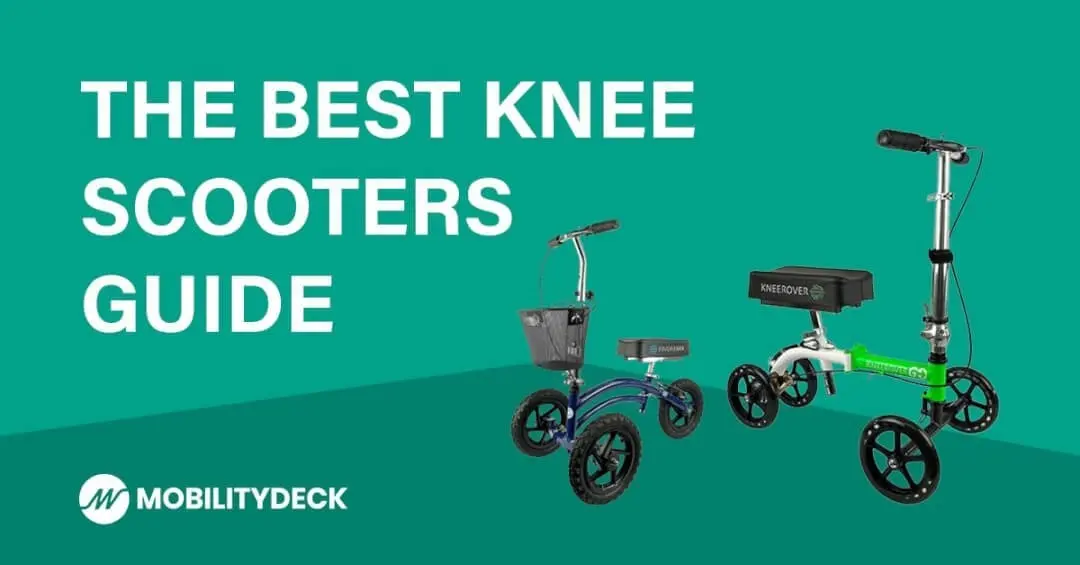
The broader market features a wide array of specialized knee walkers tailored to distinct user needs and environments. Among the notable alternatives, the KneeRover GO Knee Walker stands out as a compact, high-quality, and economically priced option. For individuals requiring rugged outdoor performance, the All Terrain Heavy-Duty KneeRover Steerable Knee Walker utilizes 12-inch pneumatic tires designed to maneuver smoothly across dirt, grass, gravel, and sidewalks. Featuring a tie-rod steering system for tight spaces, a 3-inch thick knee platform, and an impressive 400-pound weight capacity, it serves as a robust choice for users needing maximum durability.
Similarly, the Roscoe Knee Scooter offers a lightweight 30-pound build with wide rear wheels to absorb road bumps, complemented by adjustable padding and a thumb-release folding mechanism. The KneeRover HYBRID introduces a detachable pneumatic front axle upgrade on a four-wheel platform, balancing stability with fluid 9-inch front wheel mobility. Vive’s Steerable Knee Walker focuses on ergonomic comfort with a contoured foam cushion designed to distribute weight evenly and promote airflow, backed by dual rear brakes and an included storage bag.
For pediatric patients or smaller adults, the KneeRover Jr. Knee Walker scales down the frame while maintaining high manufacturing standards, featuring responsive handbrakes and adjustable lightweight foam cushioning. Meanwhile, the Roscoe Economy Knee Scooter provides a budget-friendly alternative with 7.25-inch indoor-focused wheels and a 250-pound weight limit, though its padding is comparatively minimal.
Advanced maneuverability is highlighted in models like the Swivelmate Knee Walker, which incorporates a patent-protected belt drive and 90-degree turning front wheels alongside a unique fifth center wheel for enhanced stability in tight indoor spaces. Essential Medical Supply’s Free Spirit Knee and Leg Walker prioritizes a distinctive turning mechanism to prevent over-steering during transit. Isokinetics Inc. offers a dual-steel-frame scooter with a single-brake system and parking brakes tailored for indoor use. Finally, the ELENKER Steerable Knee Walker delivers a lightweight 23-pound frame capable of supporting up to 300 pounds, incorporating memory foam padding to alleviate inflammation and discomfort during recovery.