For most of the modern satellite record, the story of the Arctic sea ice melt season was defined by relentless expansion. Year after year, spring thaws arrived earlier, autumn freezes came later, and the window of time when the ocean remained uncovered by protective ice stretched wider and wider. This multi-decade lengthening of the melt season became one of the most prominent indicators of a rapidly warming planet, contributing heavily to dramatic losses in both the extent and thickness of the polar cap.
Around 2010, however, that long-running trend abruptly and unexpectedly flattened.
According to a new NASA-led study tracking polar changes, while the Arctic sea ice melt season has lengthened dramatically since satellite monitoring began in the late 1970s, its average duration has changed relatively little over the past decade and a half. The findings offer a nuanced look at a rapidly evolving polar environment, suggesting that while the Arctic continues to undergo profound climate transformation, the mechanisms driving seasonal ice loss have shifted into a different, more variable phase.
To better understand these long-term trends and short-term anomalies, a team of researchers analyzed comprehensive satellite observations spanning from 1979 through 2023. By meticulously tracking surface conditions across the Arctic Ocean, the scientists were able to pinpoint precisely when melting began each spring and when the sea ice started reforming each autumn.
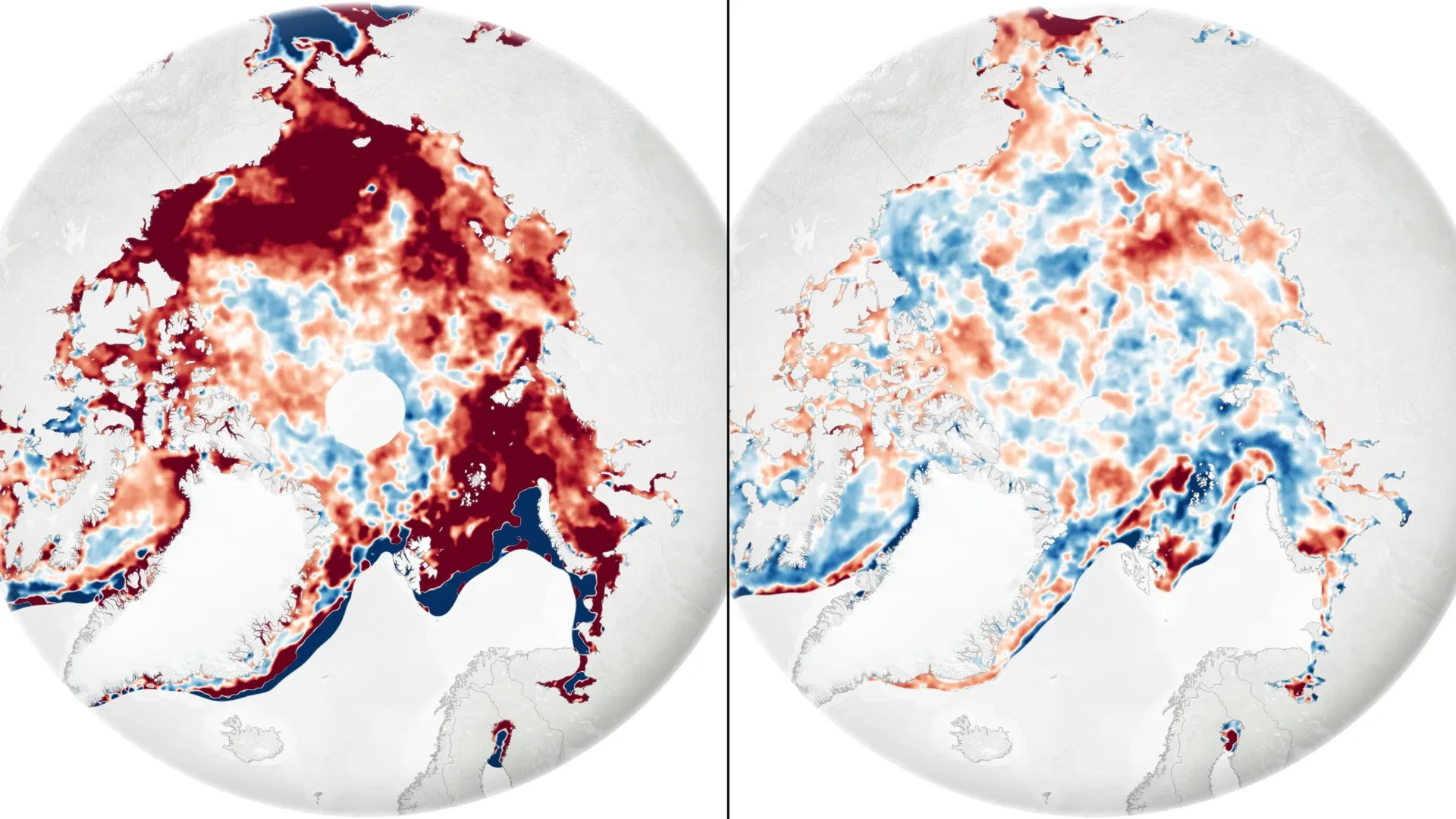
The analysis confirmed that the Arctic sea ice melt season is now roughly 40 days longer overall than it was in 1979. However, the vast majority of that monumental increase occurred prior to 2010. Since that threshold, the average length of the melt season has remained fairly steady, even though individual years continue to experience sharp, weather-driven variations in timing and severity.
A closer look at the historical data revealed that the decades-long lengthening of the melt season was driven primarily by a delayed autumn freeze-up rather than a massive shift toward significantly earlier spring melting. As the climate warmed, autumn cold snaps took much longer to establish themselves, leaving open water exposed to the elements for weeks longer than historical averages.
"Previously, there was more of this multiyear ice that didn’t melt away each summer," said Linette Boisvert, a co-author on the study and an ice scientist at NASA’s Goddard Space Flight Center in Greenbelt, Maryland. "Now that the ice is thinner and there’s less of it, there’s a lot more variability."
Even with this recent stabilization, the broader downward trajectory in sea ice thickness and overall coverage that accelerated significantly throughout the 2000s appears to have paused for the time being. This unexpected plateau has prompted researchers to investigate the underlying physical processes governing the Arctic environment to determine why the previous rapid pace of change slowed down.
Why the Earlier Rapid Change Slowed
To decipher why the historical trend shifted so abruptly, the research team examined the complex energy balance of the Arctic region. This scientific metric measures the net difference between the energy entering the polar system from incoming sunlight, atmospheric heat, and ocean currents, and the infrared energy that escapes back into the cold void of space.
During the period of rapid sea ice loss observed in the 2000s, shrinking ice cover left vast expanses of dark ocean water exposed to the elements. This dynamic created a powerful feedback loop. Bright, white sea ice is exceptionally efficient at reflecting the majority of the Sun’s incoming energy back into the atmosphere, a property known as high albedo. In contrast, much darker ocean water absorbs a vastly higher percentage of that solar radiation.
As more dark water was exposed earlier in the year, the upper ocean absorbed substantial amounts of solar heat during the peak summer months. That accumulated heat had to be dissipated before the water column could cool enough to support new ice formation, effectively postponing the autumn freeze-up and extending the duration of the overall melt season.
Spatial data from that era highlights the regional nature of these changes. In the areas where the melt season lengthened most rapidly during the 2000s, increases reached as much as five days per year.
Simultaneously, the physical characteristics of the Arctic ice pack underwent a fundamental transformation. Much of the sea ice that survives today is younger, seasonal ice that forms and melts within a single year, contrasting sharply with the thick, durable multiyear ice that was once far more widespread across the high northern latitudes.
Because thinner ice is structurally weaker and far easier to fracture, break up, or melt, the remaining cover has become profoundly more sensitive to short-term meteorological fluctuations, including shifting cloud covers, passing storms, and persistent winds.
Cloud Changes May Be Playing a Larger Role
Since 2010, shifts in regional cloud patterns have altered the amount of sunlight reaching certain sectors of the Arctic Ocean. These meteorological adjustments appear to have played a critical role in helping hold the average melt season relatively steady over longer periods, counterbalancing some of the warming pressures that previously drove runaway ice loss.
While individual years can still differ substantially from one another based on local weather phenomena, the multi-year average has flattened out compared to the steep climbs of previous decades.
Crucially, the study’s authors emphasize that these findings do not suggest human-induced climate change has stopped affecting the Arctic. The region continues to warm at a staggering rate—nearly four times faster than the global average—and the sea ice that manages to survive the summer melt is significantly thinner and more vulnerable than it was several decades ago.
Instead of signaling a recovery of the polar ice pack, the researchers explain that the Arctic may simply have entered a different transitional phase, one in which yearly atmospheric conditions exert a much stronger, more direct influence over how long the melt season lasts from one year to the next.
"Melt season length is much more dependent on atmospheric effects," Boisvert noted. "They seem to be playing a bigger role because the ice is generally thinner and more vulnerable to begin with."
The Plateau Could Be Temporary
Despite the reassuring appearance of a plateau in melt season duration, the scientific team cautions that this stabilizing trend may not continue indefinitely.
Resilient pockets of thick Arctic sea ice still survive year-round, primarily packed tightly north of Greenland and cradled within the islands of the Canadian Arctic Archipelago. This old, thick ice represents the last bastion of the historical polar ice cap.
If that remaining thick ice continues to experience thinning due to ongoing atmospheric and oceanic warming, the Arctic could eventually cross another critical threshold. Should that happen, the region could re-enter a period of rapid sea ice decline, causing the annual melt season to resume its upward climb in duration.
For now, the study underscores the vital importance of maintaining continuous, high-resolution satellite monitoring of Arctic sea ice dynamics, alongside detailed observations of the complex energy balance that dictates how ice forms, persists, and melts in the Earth’s northernmost reaches.
At present, scientists cannot definitively say whether the recent stabilization represents a permanent shift in the behavior of the Arctic melt season or merely a temporary pause—a deceptive quiet period before another wave of rapid environmental transformation sweeps across the polar north.