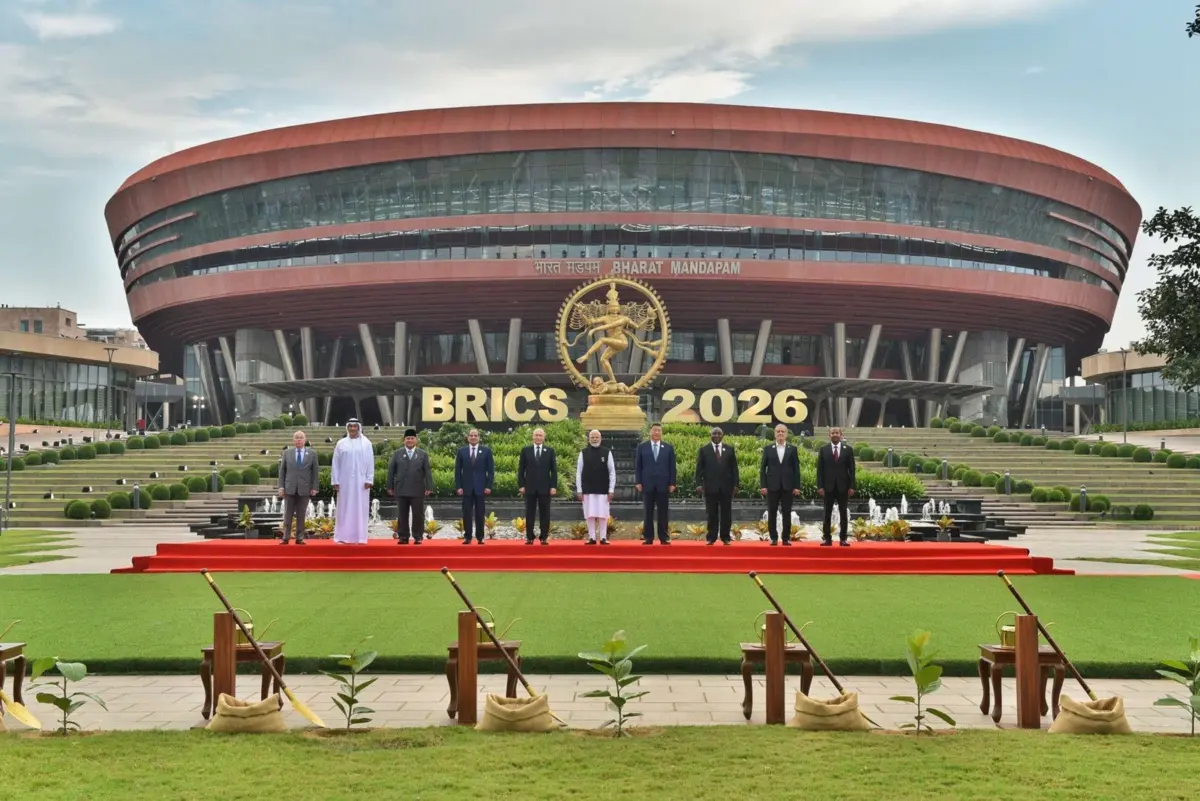
The successful conclusion of the 18th BRICS Summit has firmly reaffirmed India’s pivotal standing in the evolving international system, while simultaneously underscoring the rising diplomatic leverage of the Global South.
Addressing the high-stakes gathering, Prime Minister Narendra Modi declared that the intergovernmental bloc has reached a crucial "coming of age" moment after two decades of steady growth. He strongly urged member nations to transform the grouping’s internal unity and consensus-building mechanisms into tangible, real-world outcomes on the global stage.
Speaking at the capital where the summit was hosted, PM Modi emphasized that the grouping has meticulously carved out a distinct global identity. This has been achieved, he noted, by consistently respecting diverse viewpoints, advancing strictly through consensus, and seeking collective progress by taking all member nations along rather than positioning itself in opposition to any external power.
"Today, BRICS, too, has reached a moment of ‘coming of age’. Over the past two decades, BRICS has established a distinct identity on the global stage. We respect each other’s perspectives and move forward through consensus. We strive to advance not by opposing anyone, but by taking everyone along. Now is the time for us to translate our unity and consensus within BRICS into tangible results on the global stage," PM Modi stated during his address.
For New Delhi, successfully steering the BRICS presidency has delivered something far more valuable than just a smoothly run diplomatic event. It has provided the nation with crucial operational room to maneuver for its broader foreign policy and strategic missions.
The summit wrapped up in the national capital with all 11 member nations officially signing off on a comprehensive 140-paragraph declaration. For a diverse and often fractious grouping, achieving this level of alignment was a monumental diplomatic achievement in its own right.
This consensus was forged against a remarkably volatile geopolitical backdrop. The summit convened while a devastating war raged in the Middle East, conflict continued to tear through Ukraine, global trade disputes piled up, and a web of heavy international sanctions steadily reshaped how sovereign countries conduct cross-border business. Yet, despite these deep-seated fractures, the members agreed upon a unified declaration that significantly buttresses India’s importance in the contemporary international system.
The central question now facing foreign policy analysts is what New Delhi chooses to do next with the substantial diplomatic goodwill it has just accumulated. India must carefully navigate its path forward to prove that securing a stronger, more influential seat at the BRICS table does not come at the direct expense of its vital, established relationships with Washington and Brussels. In doing so, it continues to gently challenge the long-standing supremacy of a Eurocentric world order.
Moving forward, the primary diplomatic goal for New Delhi will be to build its strategic autonomy with sharper, more defined edges. India is certainly not pulling away from the West, but it is deliberately working to strengthen its own national capacities to reduce its over-reliance on Western powers.
One of the most obvious victories for India during the summit was its ability to bring 11 countries with wildly different, and often competing, national interests to sign a single, cohesive document.
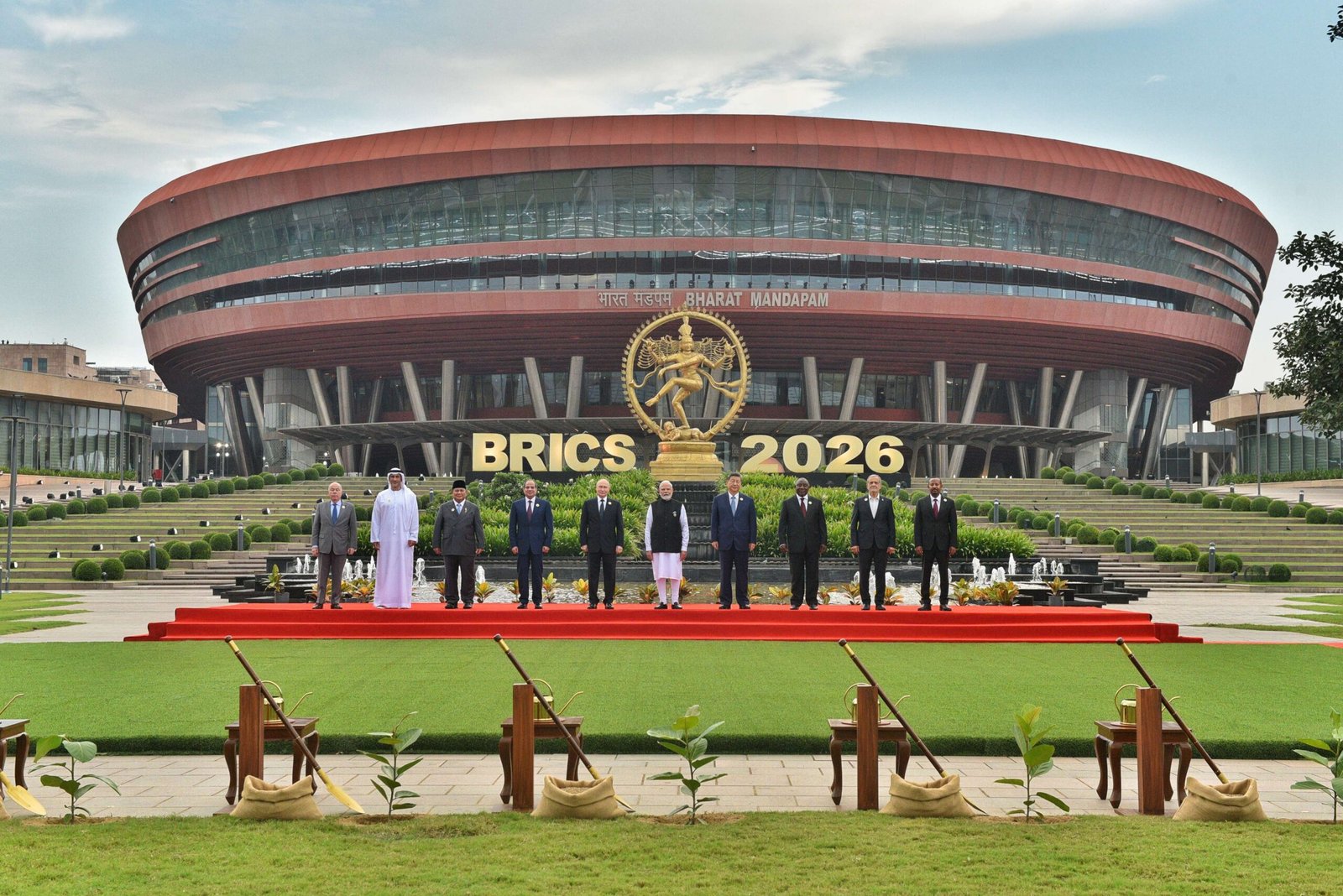
A prime illustration of this diplomatic tightrope was the presence of both Iran and the United Arab Emirates in the same room. With both nations positioned on opposite sides of a deeply fractured and war-torn region, their mere presence nearly derailed the fragile consensus entirely, according to reports from Reuters. However, diplomatic intervention ensured that the final text firmly called for regional restraint and dialogue while deliberately avoiding any provocative language that could have blown up the talks.
To fully understand the weight of this achievement, it is necessary to examine the composition of the bloc. BRICS is an intergovernmental organization comprising nine foundational and expanded countries: Brazil, Russia, India, China, South Africa, Iran, Egypt, Ethiopia, and the United Arab Emirates. Alongside this, forums like IBSA bring together India, Brazil, and South Africa.
These multilateral organizations often present different and occasionally conflicting approaches to the international system. A major structural obstacle to permanent, seamless cooperation within BRICS has always been the fundamental lack of socioeconomic and political similarity among its diverse member countries.
The member states represent vastly different geopolitical tiers. Brazil functions as a prominent regional power in South America, Russia remains a major traditional power in Eurasia, India stands as a rising great power in the Asia-Pacific, China operates as a formidable rising superpower, and South Africa serves, at best, as a regional power on the African continent.
What truly unites these diverse nations is their shared dissatisfaction with the current international order, which remains heavily dominated by Western powers, particularly the United States. Even within India—which views China as its primary and most immediate strategic threat—there remains significant domestic skepticism toward the cultural and political values persistently promoted by the West and the United States well into the second decade of the 21st century.
Despite this shared discontent, serious questions remain regarding whether these countries can genuinely forge a cohesive, effective alternative to the Western-led international system. Each of these nations continues to rely, to varying degrees, on the United States or Western markets to balance against immediate security threats within their respective regions—a diplomatic strategy that has historically worked in Washington’s favor since the late 19th century.
For instance, Brazil often seeks American diplomatic support in its regional struggles for hegemony against Argentina. Meanwhile, Russia finds it increasingly difficult to quietly accept China’s rapidly growing economic and political influence in Central Asia and the Middle East. India harbors similar reservations regarding Beijing’s footprint in South and Southeast Asia.
Similarly, South Africa’s traditional diplomatic and economic position in Africa is increasingly threatened by China’s aggressive infrastructural and resource presence across the continent. Furthermore, Beijing’s well-documented disregard for human rights standards remains a persistent point of ideological and diplomatic contention for both Brazil and South Africa.
Another underlying risk frequently discussed by strategic analysts is the possibility that BRICS could gradually evolve into a platform primarily utilized to promote China’s narrow foreign policy objectives, much in the way Moscow historically employs various interregional cooperative bodies to further its own geopolitical goals. Should this scenario materialize, the long-term legitimacy of the organization could be severely jeopardized, forcing remaining members to fundamentally reconsider their level of active involvement. On the other hand, countries like Brazil possess the distinct potential to emerge independently as true global players in their own right.
Ultimately, the 18th BRICS Summit has demonstrated that the grouping has attained a formidable new stature on the global stage, cementing India’s central role and growing influence in shaping the future trajectory of the international system.