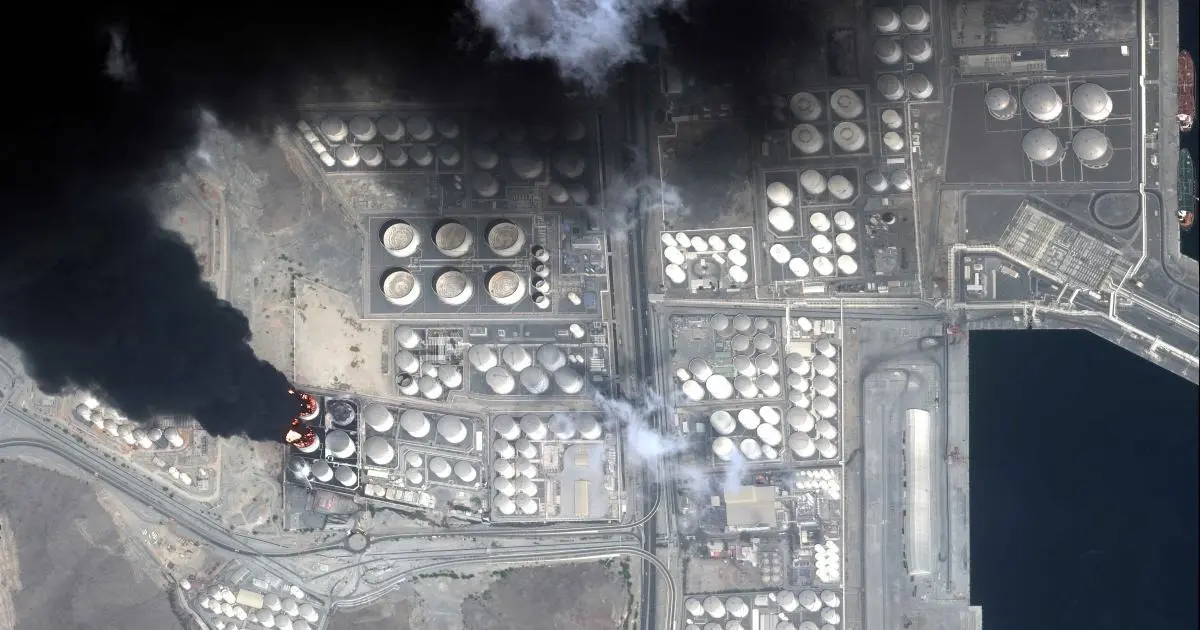
On July 17, a precision Iranian missile struck the Muwaffaq Salti Air Base in Jordan, leaving three American soldiers dead and four others wounded. The attack was characterized by an unusual degree of tactical precision. In the weeks that followed, U.S. intelligence and military officials uncovered a critical underlying factor: prior to the strike, Tehran had obtained high-resolution satellite imagery of the installation that directly aided its targeting capabilities. Following the attack, Iran acquired additional imagery, seemingly to assess the damage and refine parameters for future operations. These crucial intelligence assets originated from Chinese commercial or state-affiliated entities.
Beijing, however, is not acting alone in providing critical assistance to Tehran. Moscow has similarly aided the Iranian military in identifying and striking American and allied positions across the Middle East. Just two days before a March 27 assault on Prince Sultan Air Base in Saudi Arabia—an attack that wounded 12 American personnel—fourteen Russian spy satellites passed directly overhead. U.S. officials subsequently concluded that Moscow funneled vital satellite intelligence to Iran, directly facilitating the precision strikes. Beyond intelligence-sharing, Moscow has supplied Iran with advanced weaponry and military expertise, including upgraded iterations of Iranian-designed drones that have been heavily refined on active battlefields in Ukraine. Furthermore, Russian engineers are actively assisting Iran in developing supersonic cruise missiles capable of evading sophisticated U.S. and Israeli air defense systems.
Neither Russia nor China has formally or directly entered Iran’s ongoing military conflict with the United States. Crucially, they have found that they do not need to. By channeling vital intelligence regarding American targets, supplying critical military technology and components, and offering robust economic and diplomatic backing, these powers can effectively provide Tehran with what it requires without formally stepping into the theater of war.
The United States entered these overlapping conflicts equipped with considerable structural advantages that its adversaries historically lacked: a vast, formalized network of international allies, strategically positioned military bases, deep intelligence-sharing arrangements, institutional defense partnerships, and highly interoperable forces spanning Europe, the Middle East, and Asia. Yet, as these crises have unfolded, many of Washington’s traditional partners have displayed a marked reluctance to closely associate themselves with current U.S. campaigns. Some allies have denied the United States specific forms of military access, at least temporarily, while others have publicly resisted American calls to help secure vital maritime chokepoints like the Strait of Hormuz.
This dynamic illustrates a striking and consequential shift since the concept of Russia, China, Iran, and North Korea as a coherent "axis of upheaval" was first identified two years ago. Washington’s adversaries initially entered this era of geopolitical friction with a comparatively weaker, disjointed network, whereas the United States boasted the far superior coalition. However, after years of close cooperation helping Russia sustain its war effort in Ukraine, members of this revisionist axis have successfully adapted their network to function seamlessly in entirely new theaters. They are fine-tuning their mutual cooperation to render each partner more resilient—and consequently more dangerous to the United States—while successfully managing to limit their individual costs and risks. Conversely, Washington is increasingly creating friction within many of its core partnerships rather than deepening them, risking the erosion of its alliance network just as its adversaries are learning to maximize the utility of theirs.
Sources of Upheaval
The global security landscape has shifted dramatically since 2024. Most visibly, the United States itself has transformed into a distinct source of turbulence within the international system. The current administration has repeatedly challenged long-standing international institutions, strained traditional alliances, and adopted a starkly transactional framework for foreign policy. It has upended major trade agreements, openly questioned the sovereignty of close allies such as Canada and Denmark, and embraced strategic unpredictability as a core diplomatic tool. At the same time, Washington has pursued improved relations with China, North Korea, and Russia while simultaneously attempting to isolate and weaken Iran. Yet none of these diplomatic overtures have succeeded in loosening the deep ties binding America’s primary adversaries together.
Early in the current presidential term, U.S. officials expressed cautious optimism that normalizing diplomatic relations with Moscow might peel Russia away from the broader anti-Western coalition. However, presidential expressions of warmth toward the Kremlin have failed to create any substantive wedge between Moscow and its partners. From the perspective of the Kremlin, the administration has proven incapable of delivering a durable diplomatic settlement regarding the war in Ukraine. Furthermore, any rapprochement driven by the current White House is viewed in Moscow as ephemeral, given that the U.S. Congress maintains relentless pressure on Russia and a future administration could easily adopt a significantly harsher posture.
More fundamentally, attempts by Washington to peel members away from the axis misunderstand the core grievances that hold the coalition together. Its member states share a deep-seated objection to an international order they view as permanently enshrining Western dominance at their direct expense. More pointedly, they fiercely oppose the extraordinary unilateral power wielded by the United States to constrain, isolate, and punish them, as well as the perpetual potential threat Washington poses to their regime security. Recent high-profile U.S. actions have only served to rekindle those foundational concerns. The American capture of Venezuelan leader Nicolás Maduro and the targeted killing of Iranian Supreme Leader Ali Khamenei reinforce long-standing fears in Beijing, Moscow, Pyongyang, and Tehran regarding aggressive U.S. interventionism.
While these axis nations may occasionally moderate their anti-American rhetoric when tactical utility demands it, their underlying motivation to systematically reduce their vulnerability to American power remains absolute. The White House’s inherent skepticism toward the established international order does little to ease anxieties in axis capitals. On the contrary, transactional and coercive foreign policy maneuvers likely increase the tangible value of their mutual partnerships. In an environment where international rules constrain behavior less and brute geopolitical power matters more, nations naturally seek reliable partners to help blunt economic sanctions, secure access to critical technologies, compensate for individual military weaknesses, expand their strategic maneuverability, and resist diplomatic isolation. Axis cooperation is rapidly evolving to meet this exact moment.
New Regions, New Problems
When Russia launched its full-scale invasion of Ukraine in 2022, cooperation among these four nations was relatively straightforward to map and categorize. Iran supplied Russia with foundational loitering munitions, while North Korea funneled critical artillery ammunition, ballistic missiles, and eventually military personnel. China emerged as Moscow’s most critical economic lifeline, purchasing sanctioned Russian oil while supplying the essential machine tools, microelectronics, and dual-use components required first to sustain and subsequently to expand Russian military industrial production. Russia, in turn, reciprocated by transferring increasingly sophisticated military technology to its partners.
While these early exchanges were undeniably consequential, they could largely be understood as a series of distinct bilateral transactions centered almost exclusively on supporting Russia’s war in Ukraine. That paradigm is increasingly obsolete. Today, cooperation has grown deeply networked and specifically geared toward solving complex strategic problems across multiple new geographical regions.
The evolution of Russia’s domestic drone program illustrates this systemic shift. Iran initially sold its Shahed-series kamikaze drones to Moscow before actively assisting Russian state enterprises in establishing domestic manufacturing hubs. Rather than simply replicating the foreign technology they received, Russian engineers incorporated advanced Chinese electronic components and continually modified the drones’ onboard navigation, communication systems, payloads, propulsion mechanisms, and tactical deployment methods in direct response to Ukrainian air defenses. Specialized new military units systematically fed successful battlefield modifications back into the industrial production cycle, generating an exceptionally rapid rate of adaptation.
Last year, the Russian armed forces established specialized Unmanned Systems Forces—a dedicated drone-and-robotics branch—to fully institutionalize this cycle of continuous improvement. The combination of domestic manufacturing adaptation and deep axis partnership has proven devastatingly effective. Russia’s latest jet-powered Geran drones, for instance, are substantially faster, carry heavier payloads, and are significantly harder for Ukrainian air defense forces to intercept than earlier propeller-driven variants.
Significantly, these Russian military advancements do not remain localized within Russia. They circulate fluidly through the broader axis network. For Iran, the technological know-how that originally flowed to Moscow is now returning home, augmented by invaluable tactical advice drawn directly from Russia’s brutal combat experience in Ukraine. As these advanced, jet-powered drones inevitably appear in the Middle East, future Iranian and proxy attacks against U.S. forces and regional energy infrastructure will become considerably more difficult and costly to defend against.
North Korea and China are also reaping significant benefits from this collaborative loop. According to intelligence reports from Ukraine, Russia struck a bilateral arrangement to help Pyongyang expand its own production capacity for Shahed-type munitions. North Korean engineers have gained hands-on technical experience by working directly inside Russia’s massive Yelabuga drone manufacturing complex, while North Korean troops deployed alongside Russian forces have acquired firsthand exposure to the integration of unmanned systems into modern high-intensity combat. Similarly, Chinese military personnel have observed drone warfare tactics utilized by Russian forces, and Chinese commercial suppliers are gaining invaluable empirical data on how their dual-use technologies perform under actual combat stress. Beijing is thus deriving substantial strategic dividends from an evolutionary cycle of drone warfare that originated with Iranian technology and was perfected on the battlefields of Ukraine.
The Model Can Travel
When initial partnerships among these four nations crystallized years ago, it remained an open question whether their alignment would outlast the specific conflict that accelerated its formation. Observers questioned whether an eventual end to the war in Ukraine—and a subsequent drop in Russian demand for Iranian drones, North Korean ammunition, and Chinese economic support—might cause the relationships to wither.
Yet the prolonged conflict has done more than merely create an immediate operational necessity for cooperation; it has provided a concrete proof of concept for what these allied authoritarian partnerships can accomplish collectively, far exceeding what any single nation might achieve in isolation. Ukrainian defenses, sweeping Western sanctions, ongoing U.S. military assistance, and persistent diplomatic isolation have all proven less effective than they would have been had Moscow been forced to operate entirely alone. By actively helping one another withstand external pressure, axis countries successfully raise the cost for the United States and its allies attempting to compel a change in their strategic course.
Iran is currently demonstrating that this collaborative model is readily transportable to other regions. Russia’s support for Tehran has been operationally meaningful yet carefully bounded. Even while bogged down in its own grinding war in Ukraine, Moscow has managed to provide Iran with vital diplomatic cover and material support designed to help strike American targets, while deliberately stopping short of actions that could drag Russia into a direct, catastrophic military conflict with the United States. China has maintained an even more cautious public posture, but its steady provision of dual-use electronics and its continued purchases of sanctioned Iranian oil have similarly enhanced Tehran’s capacity to withstand severe U.S. economic pressure.
Such calculated restraint is not evidence of a weakening axis; rather, it is a defining characteristic of how these modern partnerships operate. With the notable exception of North Korean combat troops deployed directly on Russia’s behalf, axis nations have largely avoided fighting one another’s direct wars. Instead, they strategically provide political backing, economic lifelines, intelligence inputs, advanced technology, and limited military assistance whenever doing so advances their own national interests at an acceptable level of risk.
Furthermore, the ongoing wars in Ukraine and the Middle East have taught axis leadership another vital lesson: supporting a fellow member does not merely strengthen the immediate recipient. Conflict localized in one theater can systematically create strategic opportunities for partners elsewhere. Iran’s actions affecting the Strait of Hormuz, for example, sent global energy prices soaring, delivering an unexpected financial windfall to Moscow and prompting Washington to temporarily ease certain restrictions on Russian oil exports. In this manner, regional escalation generated resources that Russia could readily harness to sustain its own military campaigns.
Prior to escalating tensions with Iran, the United States was forced to redeploy critical military assets, including scarce air and missile defense systems, away from the Indo-Pacific theater and into the Middle East. As fighting persisted, the U.S. military concentrated two aircraft carriers in the region, leaving the Indo-Pacific temporarily devoid of carrier strike group presence. This dynamic affords China unprecedented operational freedom resulting from a thinned-out U.S. military posture in the western Pacific, while concurrently reducing Beijing’s vulnerability as American munition stockpiles are depleted. If Washington settles into a protracted, open-ended strategy of containing Iran reminiscent of its containment policies toward Iraq in the 1990s, Beijing stands to reap the strategic benefits of those military diversions for years to come.
Do No Further Harm
The experiences of this modern axis of upheaval demonstrate that the sheer size and nominal strength of an alliance network matter very little if its member states cannot effectively translate their individual capabilities into collective power. The United States and its traditional allies start from a position of immense structural advantage: they possess vastly superior economic and technological resources, more capable professional militaries, and an incomparably larger network of formal international partners. The central question is which coalition will ultimately prove more adept at maximizing the utility of its available assets.
That challenge begins at the highest levels of leadership. For decades, Washington championed an international order explicitly designed to forbid wars of conquest, safeguard freedom of the seas, maintain an open global economic framework, and protect democratic governance. U.S. leadership coupled this grand vision with an implicit strategic bargain: any sovereign nation willing to abide by the rules of the order could join and benefit from it. Upholding these foundational principles conferred substantial advantages directly from Washington, including preferential trade relations, deep diplomatic backing, and formal military alliances.
For states that fundamentally rejected this open international order—as the contemporary axis countries do today—the tangible benefits were severely limited, while institutional penalties were substantial. Historically, the United States utilized economic sanctions, diplomatic pressure, and direct military force against rogue states while actively resisting the establishment of competing revisionist blocs, such as the communist alliances of the Cold War. U.S. foreign policy was anchored in the premise that Washington should steadfastly befriend like-minded democracies and treat them markedly better than ideological rejectionists.
Current trends, however, sometimes suggest the opposite inclination. Recent diplomatic proposals concerning arms sales and strategic realignments have occasionally sidelined traditional democratic partners while offering transactional overtures to adversaries. Expressions of warmth toward autocratic leaders contrasted with cooler relations with democratically elected allies can strain institutional trust. Furthermore, intermittent pressure on front-line partners facing existential aggression, combined with unpredictable diplomatic rhetoric toward long-standing regional friends, risks compounding these vulnerabilities. Such policy inconsistencies simultaneously strengthen axis capitals and weaken the internal cohesion of the very network best positioned to confront them.
Adopting a posture of doing no further harm would represent a constructive initial step in addressing the axis challenge. Beyond that baseline, Washington must actively help its partners grow stronger. Just as axis countries are systematically assisting one another in evading sanctions, preserving access to critical components, and sustaining their wartime economies under extreme external pressure, the United States should deliberately reinforce its own coalition. This requires fortifying supply chains that run exclusively through trusted partners, expanding technology-sharing arrangements, and encouraging capable allies to shoulder greater responsibility for regional security.
Washington must take careful precautions, however, not to transfer defense responsibilities faster than allies can realistically develop the institutional capabilities to assume them, and must avoid doing so in ways that erode mutual trust, tactical interoperability, and strategic coordination. Without careful management, the United States and its allies risk becoming individually more capable on paper while remaining collectively less effective in practice.
Additionally, policymakers in Washington should urgently reverse policies that inadvertently undercut their own coalition. Broad tariffs and heavy protectionist measures can damage allied industrial bases and create economic friction. Projecting jarring strategic uncertainty and unpredictable transactional pressure does little to foster a cohesive international network. Instead, the United States must project enduring vision, stability, and reliable leadership to its friends.
Even if the United States successfully changes course and repairs its foundational partnerships, American and allied policymakers must prepare themselves for a protracted, generational struggle. As demonstrated by the complexities of managing hostile regimes, there are no simple shortcuts to overcoming a coordinated axis of revisionist powers, whether approached collectively or individually. This ongoing contest of rival networks will be nearly global in scope, waged across multiple economic, technological, and military domains, with immense strategic stakes riding on the final outcome. The United States and its allies retain the institutional and material capacity to prevail. They must now demonstrate the sustained collective will to do so.