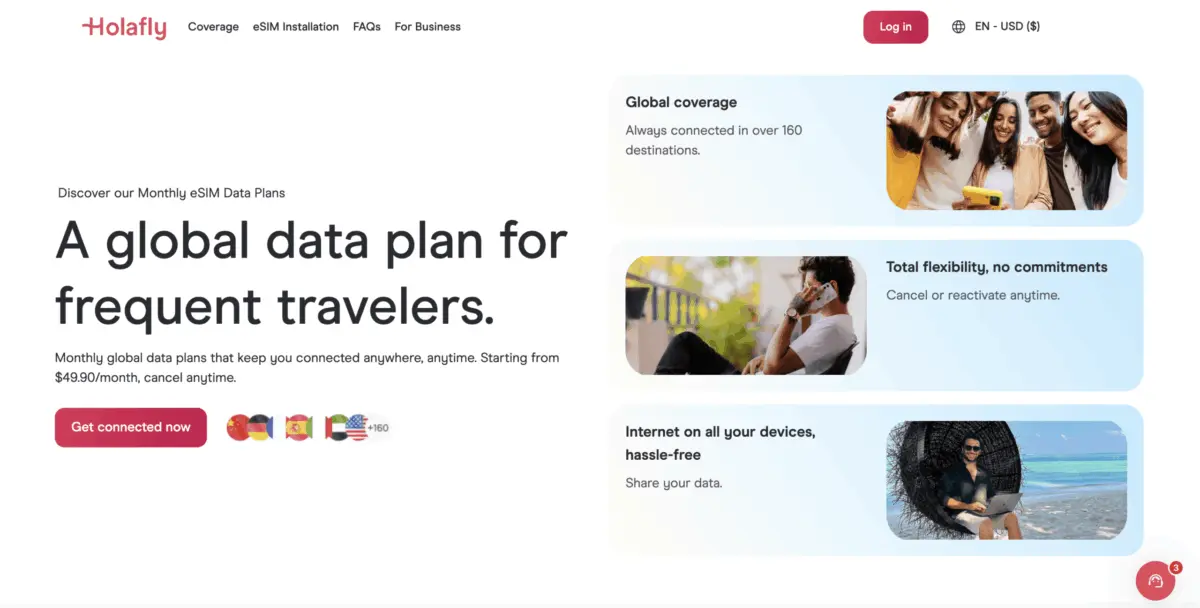
Travel connectivity provider Holafly has introduced a new subscription-based product called Holafly Plans, designed to provide continuous global data coverage across more than 160 destinations under a single digital SIM. The launch marks a shift from traditional single-destination, short-term eSIM packages toward an ongoing, borderless mobile service tailored for long-term travelers and digital nomads.
The telecommunications landscape has shifted significantly in recent years with the rise of embedded SIM, or eSIM, technology. Unlike physical plastic cards that must be swapped out at local shops upon arrival in a new country, an eSIM is built directly into a smartphone’s hardware. Users activate plans digitally by scanning a QR code or installing them through an application, enabling devices to connect to networks within minutes. Modern smartphones can store multiple eSIM profiles simultaneously, allowing travelers to maintain a home number while switching effortlessly to international data plans without physically handling the device.
While numerous companies offer travel eSIMs with similar deployment methods, Holafly has established a notable presence in the market through competitive pricing and user-friendly software. The newly announced Holafly Plans build upon this foundation by consolidating international roaming into a single, ongoing subscription rather than requiring distinct purchases for every separate trip or country.

Under the new subscription model, users buy and install a single global eSIM once. As travelers move across international borders, the service automatically reconnects to local partner networks without requiring additional QR codes, manual re-purchasing, or new SIM card installations. The system functions similarly to a traditional domestic mobile carrier’s network coverage, but at a significantly lower price point for international travel.
The subscription is available on monthly, quarterly, or annual billing cycles, with no long-term contracts required, allowing customers to cancel at any time. Holafly offers two primary tiers for the service: the Light Plan and the Unlimited Plan.
The Unlimited Plan features unmetered data usage along with an unlimited mobile hotspot capability, enabling subscribers to tether laptops and other devices on the go. This tier is specifically targeted at digital nomads who handle bandwidth-intensive tasks such as uploading video content, participating in video conference calls, or maintaining constant connectivity. Additionally, the Unlimited tier includes a local phone number from the United States, the United Kingdom, or Canada, granting users the ability to receive SMS messages while abroad.
For travelers with more modest data requirements, the Light Plan provides 25 gigabytes of high-speed data per month while retaining the mobile hotspot feature and the same 160-plus country coverage. This option is aimed at users whose primary overseas data needs involve navigation apps, messaging services, and occasional web browsing.
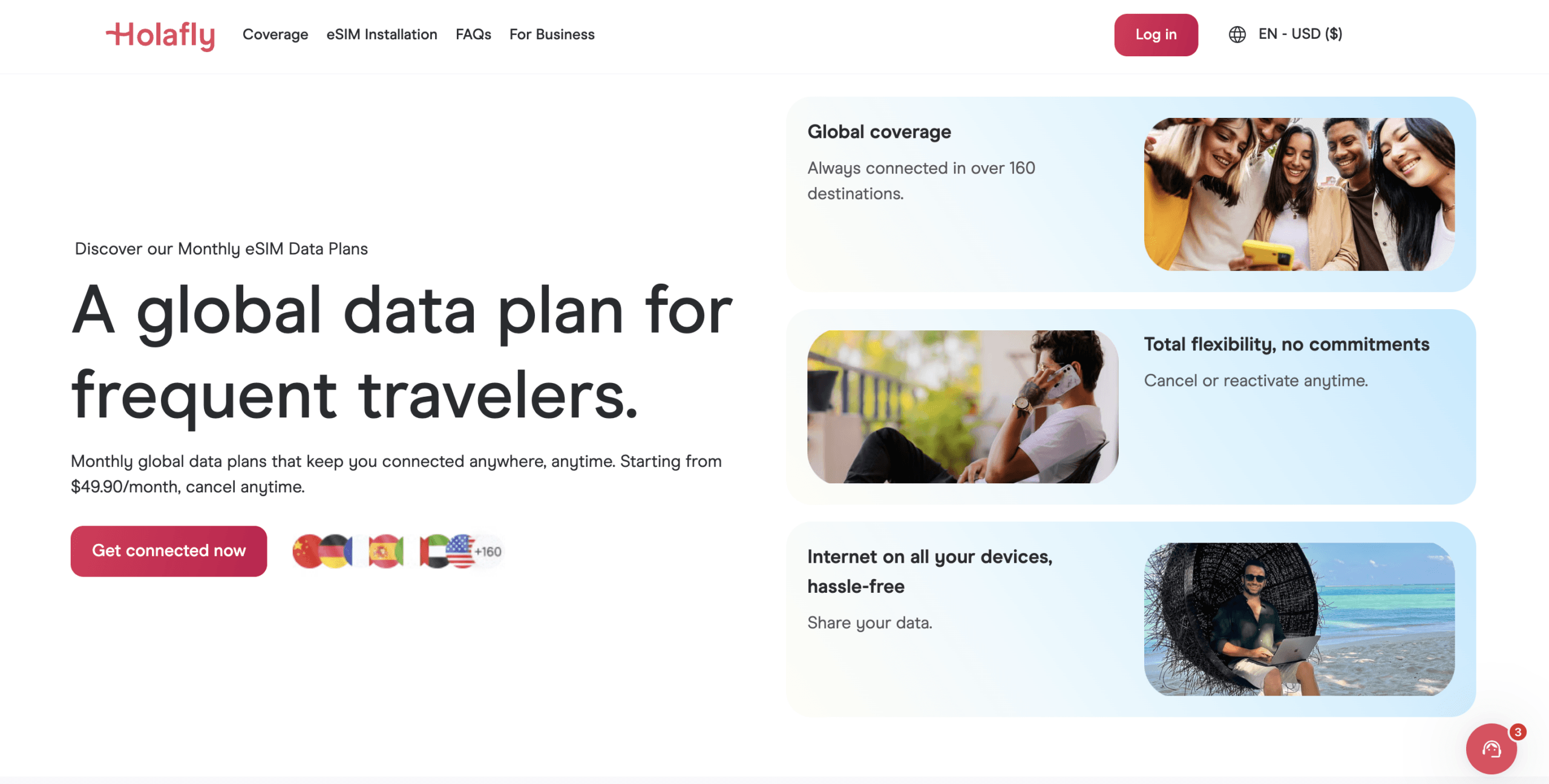
Both tiers incorporate Holafly’s "Always On" feature, which automatically provisions one gigabyte of backup data every month for life once a plan has been activated, even if the user eventually decides to cancel the subscription entirely. Pricing varies by region and currency, but as a baseline reference, the unlimited subscription is offered at approximately $55 USD per month when purchased on an annual plan. Quarterly commitments offer a savings of approximately 10 percent, while annual plans reduce the cost by roughly 15 percent. These rates position the service well below the international roaming fees charged by major domestic carriers for comparable overseas usage.
Classic eSIMs vs Plans
To understand the positioning of Holafly Plans, industry observers point to the distinct differences between traditional single-trip eSIMs and the new standing subscription. Classic Holafly eSIMs remain engineered for specific, short-term journeys. Customers select a single country or region from a catalog of over 200 options and purchase a predetermined number of days of data. For a standard two-week vacation to a single destination, a classic, one-off eSIM remains the simpler and more cost-effective choice. Travelers who take only one or two brief international trips per year will likely find little need to change their habits.
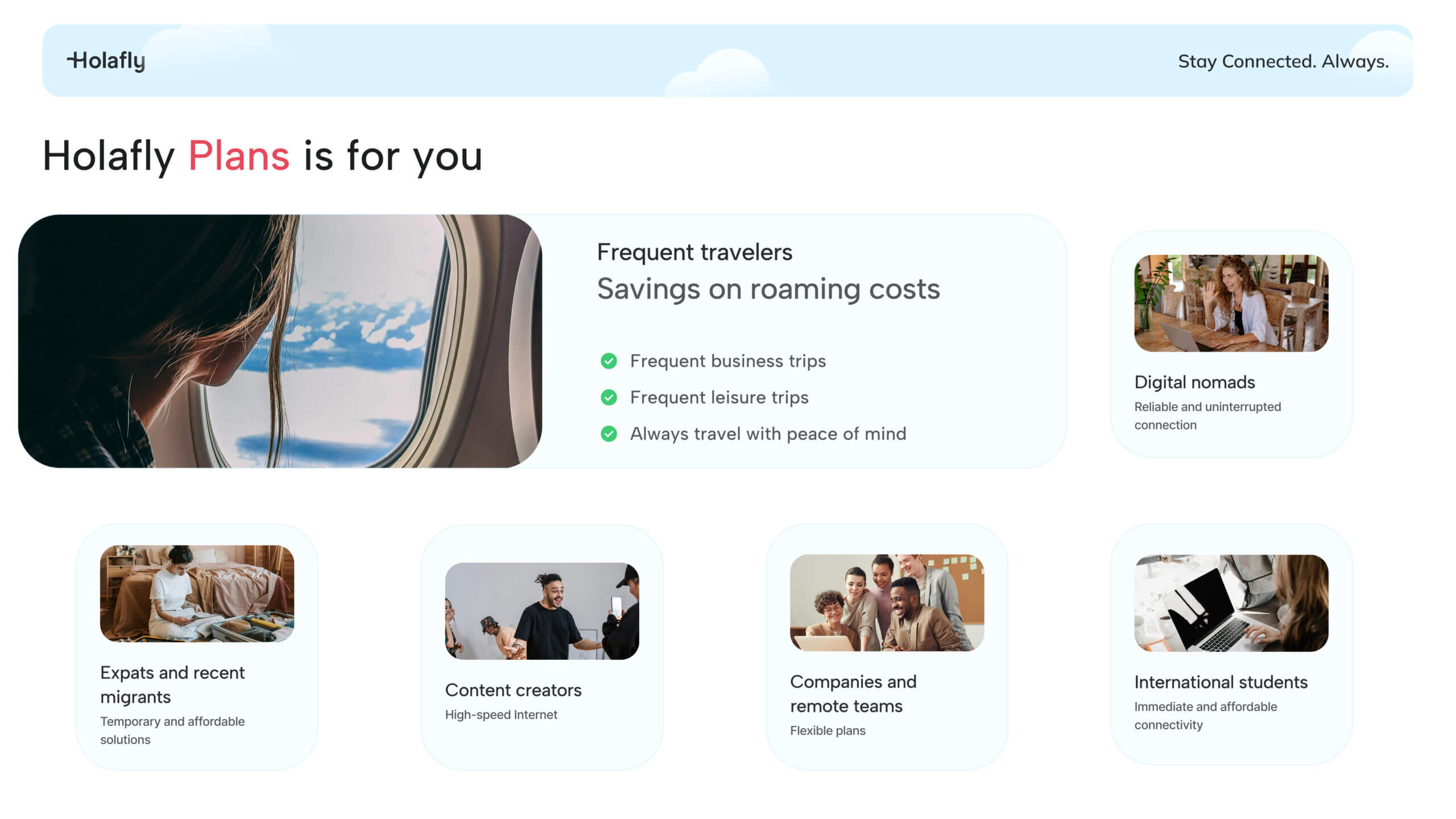
Conversely, the subscription model is tailored for individuals who spend a significant portion of the year outside their home countries and frequently transition between multiple nations. For long-term travelers, purchasing a new regional eSIM every time an itinerary changes can become cumbersome. Holafly Plans eliminates this friction by maintaining a single connection, a single account number, and a consolidated recurring bill that follows the user across international borders indefinitely.
Traditional international roaming passes offered by major domestic carriers in markets like the United States frequently involve high daily add-on fees that can accumulate to hundreds of dollars per month, often paired with strict data caps or throttling after a certain threshold. By comparison, the Holafly subscription provides unmetered data at a predictable monthly rate that undercuts traditional carrier roaming fees while offering broader device-sharing capabilities through unrestricted tethering.
How It Works and Market Positioning
Getting started with Holafly Plans requires a brief digital setup process through the provider’s application. The service is backed by round-the-clock customer support to assist users with network configuration or connectivity inquiries.
The company acknowledges that the subscription product is not intended for every type of traveler. Short-term vacationers taking isolated trips abroad will generally spend less by purchasing a destination-specific classic eSIM. However, frequent flyers, remote workers, and expatriates who require continuous, high-volume connectivity across multiple jurisdictions stand to benefit from the reduced administrative friction and lower long-term costs of the subscription tier.
Market reaction to the product launch highlights the ongoing evolution of travel telecommunications away from physical infrastructure and rigid carrier contracts. As remote work and international mobility continue to grow, services that bridge the gap between domestic phone plans and traditional travel SIM cards are expected to play a central role in how global citizens manage their digital connectivity abroad.