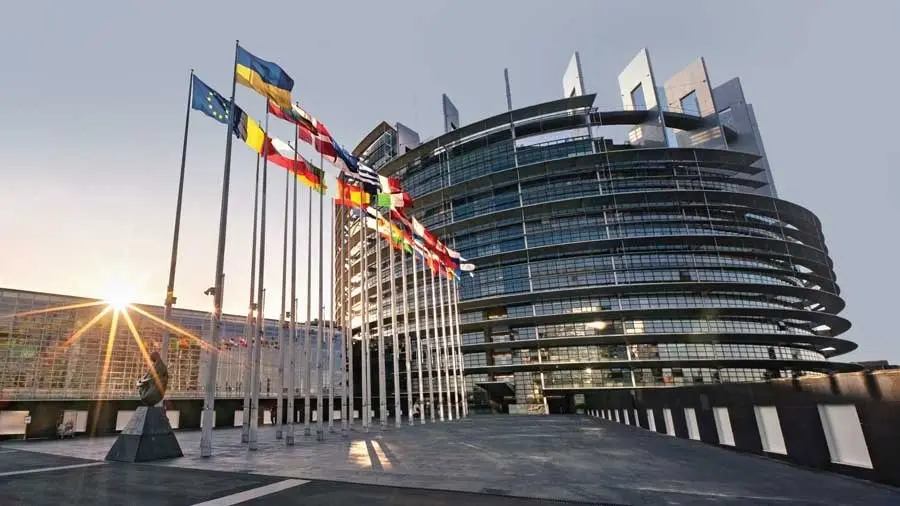
The European Union stands as the most successful modern experiment in regional integration. Established in 1957 as the European Economic Community, it has transformed organically over the decades from a rudimentary customs union into a comprehensive common market, and ultimately into a profound political union. Its reach now spans the economic, social, political, and security domains. Economic integration has achieved remarkable success through the establishment of a single market and a single currency, while social and political union is vividly demonstrated by borderless travel and the Schengen Area. Yet, a persistent lag in security and defense cooperation has historically prevented the EU from emerging as a fully realized geopolitical actor on the global stage.
A close examination reveals why a coherent and robust security and defense policy remained conspicuously absent for so long, and what viable options now exist for the EU to assert an effective geopolitical role. Two fundamental reasons stand out. First, for generations, Europe basked comfortably under the North Atlantic Treaty Organization security umbrella, failing to invest adequately in its own indigenous defense infrastructure. NATO was largely funded and underwritten by the United States. That long-standing comfort, however, has been profoundly disturbed by renewed pressures—most notably from former U.S. President Donald Trump’s second-term demands that European allies assume a greater financial share of their own defense. In response, Europe is scrambling to secure its own defense wherewithal.
The statistical reality shows a decisive turning point in European defense policy. According to European Defence Agency data released on July 16, 2026, EU defense spending reached EUR 343 billion in 2024, representing a 19 percent increase over 2023. This upward trajectory continued aggressively with spending hitting EUR 418 billion in 2025—a further 20 percent jump—which accounted for 2.2 percent of the bloc’s collective GDP. Furthermore, the EDA projects defense expenditures to reach EUR 454 billion, or 2.4 percent of GDP. Twenty-three member states now successfully meet NATO’s 2 percent benchmark, a dramatic increase from just six nations in 2021. Equipment investment is currently at record highs, and defense research and development rose to EUR 17 billion in 2025, with projections indicating it will reach EUR 20 billion. Simultaneously, both individual member states and the EU as a collective body are extending robust support to Ukraine.
The financial architecture underpinning this military pivot is entirely unprecedented. The European Commission’s Readiness 2030 and ReArm Europe plan, launched in March 2025, mobilizes up to EUR 800 billion in financing capacity. This is not a centralized cash pot, but rather a structural mobilization mechanism. It includes up to EUR 650 billion unlocked through the activation of the national escape clause of the Stability and Growth Pact over a four-year period, alongside EUR 150 billion in joint Security Action for Europe (SAFE) loans designed specifically for joint procurement. SAFE operates strictly on loans rather than grants, with the first disbursements reaching frontline states in early 2026. Essentially, this represents national capital being deployed at an accelerated pace, facilitated closely by EU mechanisms.
The second major historical impediment to the EU’s geopolitical growth has been deep-seated divergence among three key member states: Britain, Germany, and France. Having joined the European project 16 years after its founding, Britain consistently insisted on widening the bloc rather than deepening its integration. This approach dispersed central authority while London maintained its primary security alliance through Washington, preserving a privileged transatlantic tie entirely outside the institutional framework of the EU. This ongoing structural dependence on the United States significantly decelerated the consolidation of an independent European security apparatus.
France, by contrast, has historically harbored ambitions to create an autonomous power center capable of balancing against both the United States and the former Soviet Union. Following the implosion of the Soviet Union, the French desire to build the EU as a distinct third pole remained very much alive, though it perpetually required backing from Berlin and the containment of British resistance—a dynamic that fundamentally shifted only with Brexit in 2020.
Germany, meanwhile, long remained hesitant regarding active geopolitical engagement. Having suffered the devastation of the Second World War, Berlin focused its post-war identity on economic rebuilding and commercial expansion. Unlike France and Britain, Germany lacked former colonies and urgently required open international markets, finding the European integration project uniquely suited to its needs. Without Germany committing substantive resources to collective European security or showing genuine interest in assuming an assertive international role, the EU was structurally unable to advance further. Its halting and ineffective involvement in the violent breakup of Yugoslavia during the 1990s starkly exposed severe deficits in its common foreign and security policy strategy.
Today, the paradox of the European project is that the EU is actively rearming itself and aggressively seeking geopolitical space, yet it remains caught in a fundamental economic and strategic dilemma: how to successfully interface trade with security. The EU, and Germany in particular, officially recognizes China as a systemic strategic rival, yet German investment and trade with Beijing continue to grow. In the era of post-globalization, the conventional assumption was that trade could be cleanly separated from security—a philosophy that China frequently advocates and advises nations like India to adopt. This logic underpins why India currently maintains a trade deficit exceeding USD 100 billion with China while simultaneously confronting ongoing military skirmishes along their shared contested border. Yet, the strategic question remains: how logical is it to deliberately build up a rival economy that ultimately risks becoming a Frankenstein’s monster?
Germany’s current trajectory vividly illustrates both this rapid turnaround and its inherent strategic tensions. Germany became NATO’s second-largest spender in 2023, allocating EUR 90.6 billion in 2024—a 20 percent increase—and it remains the single largest absolute financial contributor to the broader European rearmament effort. Across the continent, Poland and the Baltic states are firmly on track to exceed 3.5 percent of GDP in defense spending. According to The Military Balance 2026, Denmark has raised its defense spending by an astounding 114 percent, Belgium by 59 percent, Spain by 43 percent, and Sweden by 31 percent. Yet, even as these rearmament figures soar, Berlin continues to export heavily to Beijing while simultaneously labeling China a systemic rival. This persistent duality defines the new European reality.
What is increasingly discernible is that the European Union envisions a multipolar world order built upon the foundation of strategic autonomy. India likewise champions such a multipolar international order, making this a point of common diplomatic language that requires careful decoding. Claiming strategic autonomy simply as an abstract sovereign right is trite; virtually every nation claims sovereignty over its affairs. Upon deeper analytical inspection, if strategic autonomy means genuine independence from hegemonic, coercive alliances and the sovereign freedom to navigate global affairs, it becomes an entirely understandable and rational objective.
Yet, in a deeply interconnected world, alliances remain both unavoidable and highly desirable. The European Union itself is, at its core, an alliance. India famously pioneered the Non-Aligned Movement, yet that non-aligned bloc operated effectively as an alliance of developing nations. Historically, true multipolarity has rarely been fully evidenced across the major epochs of modern history—including the First World War, the Second World War, the Cold War, and the recent era of hyper-globalization. While the principal antagonists in the first three phases are well documented, the contemporary era is increasingly defined by a contested dynamic between the West and a growing Sino-Russian-Iranian axis. Nevertheless, a genuine multipolar system remains an attainable objective.
Creating the multipolarity that the EU aims to achieve will be best accomplished by strengthening other regional organizations using Europe’s own unique model of integration as an operational example. This approach provides emerging regional blocs around the world with a credible opportunity to assert economic and political diversity, ultimately ushering in a balanced multilateral system characterized by multiple functional poles.
Crucially, however, Europe’s current wave of rearmament must successfully overcome internal fragmentation. At present, defense spending remains overwhelmingly national in character, with only limited coordination in joint procurement. The European Defence Agency remains strictly intergovernmental, and member states frequently prioritize domestic defense industries over unified European capabilities. Unless funding mechanisms like SAFE and Permanent Structured Cooperation initiatives are tightly bound to strict, EU-wide capability targets, Europe risks merely duplicating military systems rather than building the interoperable deterrence urgently required to manage security threats from Russia.
Ultimately, comprehensive integration must recognize the deep interface linking economics, geopolitics, and security. Massive rearmament spending alone will not automatically transform Europe into a cohesive geopolitical actor; without centralized procurement, a shared strategic culture, and selective economic decoupling where strategically necessary, massive financial outlays risk purchasing twenty-seven fragmented and uncoordinated national armies. If Europe successfully resolves this structural puzzle, its integration model will remain the finest template available. That achievement would unlock a profound EU-India partnership centered on resilient supply chains, robust maritime security, and advanced technology standards, helping to anchor genuine multipolarity beyond mere rhetorical diplomacy and finally delivering credible strategic autonomy for the Global South in the coming decade.