The Federal Aviation Administration (FAA) is overhauling a key component of its commercial drone certification process, introducing new image-based testing formats designed to challenge future aviators beyond traditional rote memorization. Beginning October 26, individuals sitting for the official remote pilot exam will encounter fresh graphical elements integrated directly into the testing interface, marking a notable shift in how foundational aeronautical knowledge is evaluated nationwide.
The upcoming regulatory update targets the Unmanned Aircraft General-Small (UAG) knowledge test, the standardized examination that every aspiring commercial drone operator must successfully pass to secure their initial remote pilot certification under Federal Aviation Regulation Part 107. According to details outlined in the FAA’s August 2026 Airman Testing Community Advisory, the federal agency has partnered closely with PSI, its official testing provider, to seamlessly incorporate dynamic image-based questions directly into the computerized exam platform.
Rather than relying strictly on static, predictable figures found in legacy testing supplements, test-takers will soon be required to analyze and interpret unfamiliar visual excerpts on the fly. This modernization effort reflects the administration’s broader push to evolve airman testing standards, ensuring that certified pilots possess genuine, real-world analytical capabilities rather than simply memorizing answers from historical question banks.
What Is Changing on the Exam?
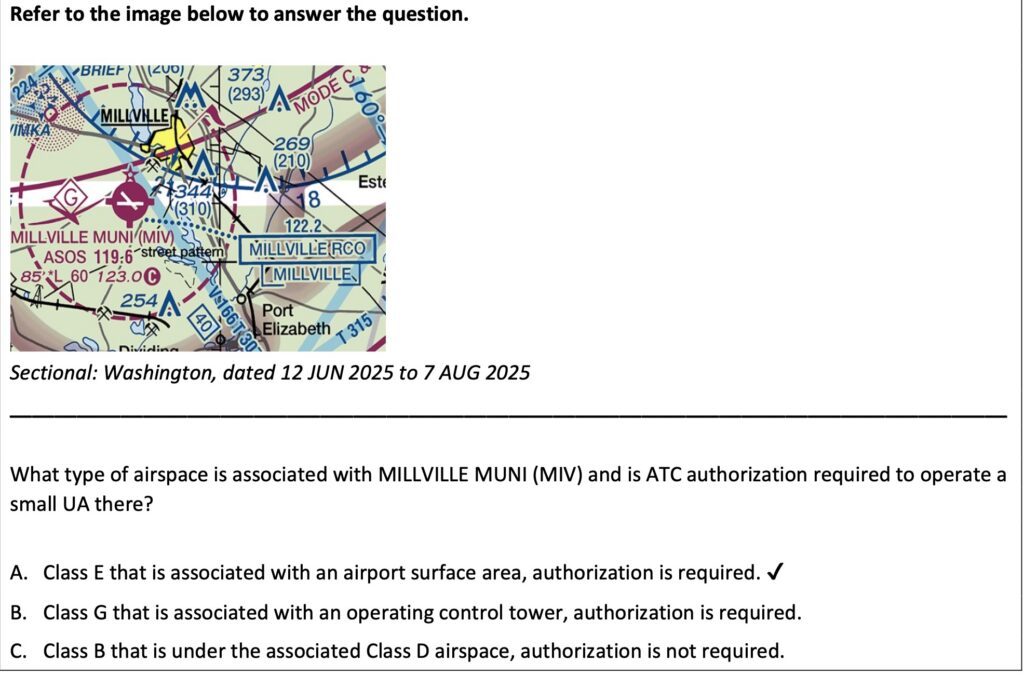
Under the newly revised testing framework rolling out this autumn, applicants will face questions featuring updated aviation chart images that do not appear anywhere in the currently circulating printed testing supplements. The core intent behind this modification is to test an applicant’s true comprehension of airspace geography, cartography, and operational rules by presenting them with novel visual scenarios.

To help candidates prepare for the transition, the FAA highlighted two representative sample questions within its recent advisory. The first scenario challenges applicants to carefully examine a specific aviation chart snippet, identify the complex airspace surrounding a designated airport, and accurately determine whether proposed drone operations within that zone necessitate prior air traffic control authorization. The second sample scenario tasks test-takers with pinpointing the correct, up-to-date airport communications frequency from an unfamiliar visual graphic.
These alterations mean that future remote pilots must cultivate strong chart-reading skills. Memorizing existing study materials or relying solely on familiar figures from legacy preparation guides will no longer guarantee success on the exam.
Despite these graphical updates to the testing interface, the underlying regulations governing commercial drone operations remain entirely untouched. The update does not alter any existing Part 107 operating rules, nor does it introduce brand-new certification requirements for commercial operators. The legal framework governing how, where, and when small unmanned aircraft systems may be flown safely in the National Airspace System remains stable.
Furthermore, the FAA has confirmed that it will not immediately eliminate printed testing supplements. Applicants will maintain access to these traditional materials during their examinations until the agency officially transitions away from them at a later, yet-to-be-announced date.
Resources and Preparation for Prospective Drone Pilots
Navigating the updated examination format will require proactive preparation from candidates planning to test on or after October 26. The FAA strongly recommends that all prospective applicants review the newly released sample questions directly through its official testing partner, PSI, to familiarize themselves with the digital layout and visual styling of the updated exam questions.
Industry training organizations are also adapting their curricula to support candidates through the transition. Independent training provider Fly107Prep has published a comprehensive, free explanation detailing the October 26 modifications, complete with targeted study tools aimed specifically at improving aviation chart interpretation skills. Alongside these complimentary educational resources, the provider also offers a dedicated paid test preparation application designed to help students master the new visual formats.
As the commercial drone industry continues to mature and integrate deeper into the national airspace, the FAA’s latest testing modernization represents a vital step toward maintaining high safety standards. While the fundamental knowledge required to safely pilot a commercial drone remains consistent, the methodology for testing that knowledge is entering a new era.