At the turn of the century, the European Union’s labor productivity followed a steady upward trajectory, reaching nearly 95 percent of U.S. levels. Since then, however, that positive trend has sharply reversed. Today, EU productivity sits roughly 20 percent lower than that of the United States, a widening economic chasm driven largely by Europe’s failure to fully participate in the digital revolution. Of the world’s 100 most valuable high-tech companies, only two are headquartered within the EU. The bloc possesses no global-scale enterprises in cloud computing, online advertising, mobile devices, or advanced chip design, while retaining only a single contender—France’s Mistral—in the fierce global race to build the large language models that power the contemporary artificial intelligence surge.
This stark reality has triggered growing alarm among policymakers and economic analysts. The publication in 2024 of a comprehensive report on European competitiveness by former Italian Prime Minister Mario Draghi heralded a notable shift in political attitudes. The report recommended several critical policy interventions, including heightened public investment in research and development alongside the creation of a unified capital markets union. By mid-2026, approximately 30 percent of these recommendations had been implemented, representing a constructive start. Yet, economic experts warn that even if the proposals outlined in the Draghi report were adopted in their entirety, they would still fall short of reviving Europe’s flagging competitiveness because they fail to confront the root cause of the malaise.
The fundamental problem is not that the EU and its national governments are failing to take action to spur competitiveness; rather, it is that they are doing far too much to impede it. Through the slow accretion of overlapping layers of labor laws, intricate tax policies, heavy bureaucratic red tape, and stringent technology regulations, European authorities have erected formidable barriers against the creation of the kind of large, vibrant startup ecosystem currently thriving in the United States. This American ecosystem has long served as the cradle for many major innovative high-tech firms, as well as the catalyst for growth and modernization across traditional sectors. Unless the EU actively creates the conditions necessary for similar homegrown companies to develop and scale, the economic decline of the bloc may soon become irreversible.
Drive On
Large corporations are notoriously difficult to transform, and global enterprises with long histories and deep-rooted historical success are perhaps the hardest of all to shift. Europe possesses many such institutions. On average, the 50 most valuable companies in the EU trace their origins back more than 150 years. When these legacy organizations are suddenly confronted by fast, broad, and deep technological disruption, they consistently struggle to mount an effective response. The divergent trajectories of the European and U.S. automotive and space industries—sectors that have historically driven broad economic growth and industrial innovation—vividly illustrate the critical importance of fostering a healthy, dynamic startup ecosystem.
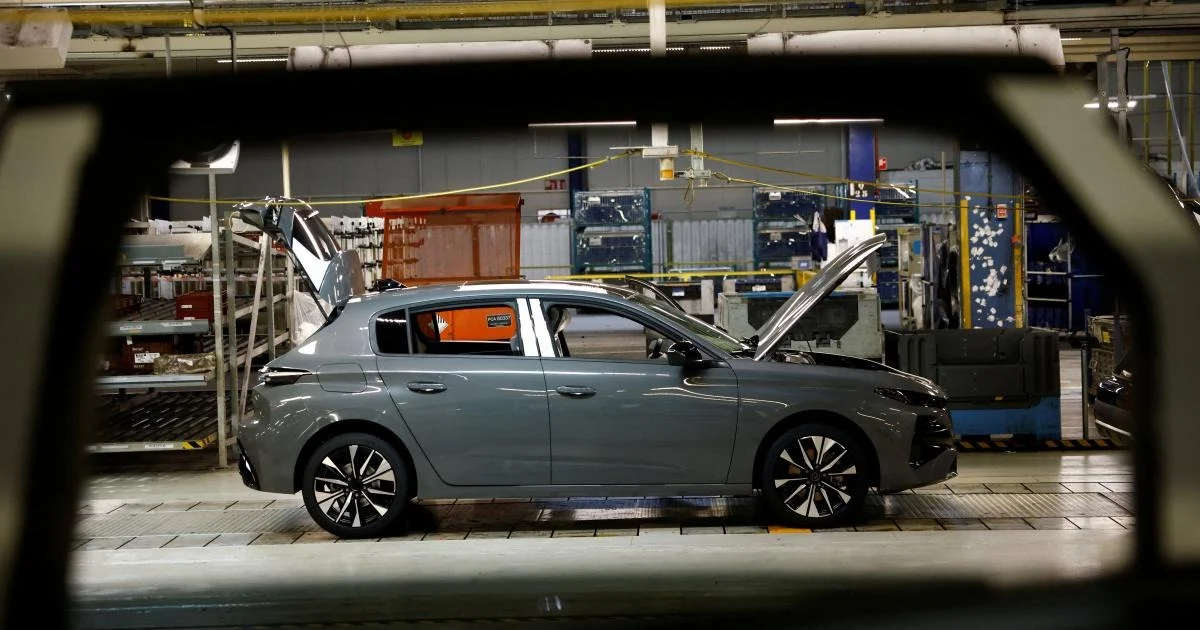
During the first quarter of the twenty-first century, major global automakers have experienced two immense structural transformations. First, driven by a combination of stringent regulatory mandates and shifting consumer demand, manufacturers have been forced to initiate the complex transition from producing traditional internal combustion engine vehicles to building electric vehicles. Second, rapid breakthroughs in digitization and automation have necessitated profound changes in the digital features and overall architecture of their vehicle lineups. Europe’s historic carmakers have largely floundered in the face of these dual challenges. Volkswagen, perhaps the most proactive among them, committed to an entirely new electric vehicle platform as early as 2015, announced ambitious electrification goals across all brands within the VW Group, and established Cariad, a dedicated software subsidiary, to spearhead digital development.
Since those initial strategic moves, Volkswagen has sold approximately two million electric vehicles. Nevertheless, it remains difficult to categorize the automaker’s overall electrification effort as a success. Cariad was subjected to multiple internal reorganizations, crucial software updates arrived chronically late, and several high-ranking executives, including the chief executive officer, ultimately departed the company. Other prominent brands within the broader VW Group, such as Porsche, Audi, and Bentley, announced major, costly delays to their electric vehicle models and underlying platforms, with Porsche absorbing approximately $5 billion in financial write-downs directly associated with its faltering electrification initiatives.
In China, which remains Volkswagen’s single largest overseas market, car buyers have rapidly shifted toward electric vehicles, but they have largely bypassed European models. Consequently, profits generated from Volkswagen’s critical Chinese operations plummeted by 80 percent over the decade leading up to 2026. The market capitalization of the entire VW Group followed a similarly dire trajectory, dropping by more than 60 percent in real terms between the end of 2015 and the second quarter of 2026. By mid-2026, the VW Group as a whole found itself in deep financial trouble, with media reports indicating that CEO Oliver Blume had proposed the drastic step of shuttering four major manufacturing factories in Germany and laying off as many as 100,000 workers.
Europe’s other major legacy automakers have fared little better against the shifting tides. Mercedes has seen its market capitalization decline by more than half since the end of 2015, while BMW has experienced a drop of nearly 60 percent. Meanwhile, Stellantis absorbed more than $20 billion in electric vehicle-associated write-downs in 2026 alone, watching its market capitalization tumble by 76 percent since the company first floated shares in the first quarter of 2021. According to the European Automobile Manufacturers’ Association, the auto industry accounts for approximately ten percent of all manufacturing employment in the EU, representing more than three million vital jobs. That total figure appears destined to shrink further unless there is a substantial surge in foreign-owned production or a dramatic, unforeseen reversal in fortunes among traditional European car manufacturers. The current valuation trajectories of these legacy giants indicate that global financial investors anticipate no such turnaround.
Alongside car manufacturing, the fields of space exploration and commercialization have been fundamentally transformed in recent years. And, much like their counterparts in the automotive sector, European space enterprises have continually stumbled. The Ariane 6 rocket, developed by Europe’s ArianeGroup, was originally scheduled to begin operational service in 2020 but did not launch until 2024. Its estimated development cost escalated from approximately $2.7 billion in 2015 to about $4.2 billion by 2022, and its ongoing operations are propped up by annual government subsidies of up to $370 million committed jointly by the French, German, and Italian governments. Similarly, the EU’s sovereign IRIS² satellite network has faced persistent delays; originally scheduled to enter service in 2024, its initial rocket launches are now pushed back to 2029.
This identical pattern of decline and delay holds true across multiple other European industries, where legacy companies have steadily lost competitiveness and surrendered global market share to foreign rivals. A quarter-century ago, European companies accounted for 36 percent of the total market capitalization of the world’s 100 most valuable corporations. By the end of 2025, that figure had plummeted to below ten percent. Warning of the profound dangers posed by these trends during a 2026 speech, Mario Draghi outlined the ultimate stakes for the continent: "This is a future in which Europe risks becoming subordinated, divided, and deindustrialized at once. And a Europe that cannot defend its interests will not preserve its values for long."
Way Out West
The United States has consistently outcompeted the European Union in recent decades, driven in part by the fact that legacy American companies have responded more effectively to digitization, globalization, and other twenty-first-century economic disruptions. Yet, American incumbent firms in the automotive and aerospace industries have hardly been immune to difficulties. Neither General Motors nor Ford has managed to produce a runaway commercial hit in the electric vehicle market, and both have dramatically scaled back their ambitious production targets. Over the past year alone, General Motors has recorded financial write-downs of at least $8 billion related to electric vehicles, while Ford has posted nearly $20 billion in similar losses. The United Launch Alliance—a joint venture between Lockheed Martin Space and Boeing—has likewise suffered a series of operational setbacks, leaving its Vulcan rocket program years behind schedule. Furthermore, a 2024 crewed test flight to certify Boeing’s Starliner spacecraft encountered such grave technical problems that NASA ultimately refused to permit the capsule to return from the International Space Station with astronauts aboard.
Despite the struggles of these traditional corporate giants, the United States continues to launch far more rockets and place significantly more payload into space than the rest of the world combined, while holding a near-monopoly outside of China in satellite-based internet connectivity. The United States also produces the only fully driverless commercial cars operating on public roads in the West and manufactures the top-selling electric vehicle models both domestically and across European markets. These significant industrial accomplishments are generated not by legacy firms, but by the nation’s dynamic, venture-backed startup ecosystem.
Silicon Valley serves as a convenient shorthand for this broader entrepreneurial ecosystem. Originally, the region’s founders and investors concentrated their efforts narrowly on computer hardware, software, and networking infrastructure. In recent years, however, the ambitions of Silicon Valley have expanded dramatically, bringing rapid innovation to a wide array of new industrial sectors. A prominent example is Tesla, which since its founding in 2003 has designed, produced, and sold more than ten million electric vehicles and built a proprietary charging network comprising roughly 40,000 stalls in the United States and 20,000 in Europe. According to its annual reports, Tesla has generated $45 billion in profit since 2020. The company currently operates commercial robotic taxi fleets in six U.S. cities and has begun testing the Cybercab in Texas—a specialized vehicle designed to accommodate two passengers that operates entirely without a steering wheel or foot pedals.
More recent startup companies have similarly transformed their respective industries. The defense technology startup Anduril, founded in 2017, managed to beat out established aerospace heavyweights like Boeing, Lockheed Martin, and Northrop Grumman in early 2024 to be named one of the two primary suppliers for the U.S. Air Force’s Collaborative Combat Aircraft program. By 2026, Anduril’s autonomous aircraft progressed past the prototype phase, securing a major production contract to provide advanced drone wingmen.
A parallel story of disruption can be observed in space technology. SpaceX, founded in 2002, became the first enterprise to successfully relaunch an orbital-class rocket booster 15 years later, a feat it has now repeated more than 600 times. Meanwhile, Jeff Bezos’s Blue Origin has managed to relaunch an orbital booster just once, and the remainder of the global aerospace industry combined has yet to accomplish the feat even once. SpaceX also commands a dominant position in the global market for space-based internet connectivity, with its Starlink service boasting approximately 11,000 satellites currently in orbit and 12 million active customers across roughly 160 countries and territories. Moreover, when Boeing’s Starliner mission faltered in orbit, it was a SpaceX Crew Dragon spacecraft that safely returned the stranded astronauts back to Earth.
These successful American companies have all benefited from varying combinations of government-funded foundational research, federal subsidies, procurement contracts, and public loans. Many have also profited from the willingness of regulatory bodies to permit controlled experimentation in high-risk domains, such as the deployment of autonomous driving software on public roads. None of these individual factors is strictly unique to the United States or to Silicon Valley. Yet, the broader ecosystem of Silicon Valley remains distinct. As financial historian Sebastian Mallaby aptly observed, Silicon Valley is "the most durably productive crucible of applied science anywhere, ever."
Copy What Works
It remains essential for Europe to develop its own productive entrepreneurial crucible. Recent high valuations achieved by a handful of continental startups have occasionally sparked optimism that the region’s startup ecosystem has finally turned a corner. However, the fundamental economic indicators remain poor, punctuated by previous false dawns. In 2023 and 2024, overall venture capital investment within the EU jumped to more than 20 percent of the U.S. total. By 2025, however, that figure dropped sharply back to roughly 12 percent, aligning closely with its stagnant average since 2010. For the past dozen years, the total combined valuation of European unicorns—private, high-growth companies valued at $1 billion or more—has hovered stubbornly around ten percent of the U.S. total, slipping further to approximately eight percent through 2025 and early 2026.
Reversing these numbers and building an EU startup ecosystem capable of supplying the new growth engines Europe urgently needs will prove exceptionally difficult. Nevertheless, imitating successful foreign models provides a practical starting point. The experience of Silicon Valley strongly indicates that high-powered employee financial incentives, such as stock options that are not taxed until exercised, flexible labor markets, pass-through partnership legal structures favored by venture capital firms, and minimal bureaucratic paperwork are all essential elements of a vibrant technology ecosystem. Crucially, all of these policy areas remain under the direct control of individual EU member states, meaning they do not require complex, drawn-out legislative coordination across national governments. Several European nations have implemented pieces of this puzzle; Denmark, for instance, maintains a highly flexible labor market, and Luxembourg has enabled U.S.-style limited partnerships. Yet, no single European country currently possesses a comprehensive bundle of tax and labor policies as welcoming to entrepreneurs and early-stage startup investors as that found in the United States.
Europe could also draw valuable lessons from much smaller nations. Israel successfully transformed itself into a recognized "startup nation" after implementing sweeping structural changes, including opening up pass-through partnerships to foreign investors. The resulting economic performance has been striking. Despite having a population smaller than that of Belgium and a primary national language shared by no other country, Israel currently boasts nearly four times as much unicorn valuation per capita as France, and more than three times as much as Germany. This impressive performance challenges the common argument—outlined by Bo Becker and other researchers at the Center for Policy Research—that an insufficient domestic home market size represents an insurmountable impediment to scaling up young European companies.
No More Red Tape
Brussels must fundamentally reevaluate its overarching approach to technology regulation. EU officials at times appear to operate under the assumption that heavy regulation imposes few, if any, meaningful constraints on innovators and entrepreneurs, occasionally even suggesting that stricter regulatory oversight might actively unleash innovation and entrepreneurship. In 2023, Margrethe Vestager, then the executive vice president of the European Commission, embodied this mindset when she maintained that the EU’s landmark Artificial Intelligence Act would "not harm innovation and research, but actually enhance it." The AI Act was formally adopted in 2024, piling on top of the Digital Services Act and the Digital Markets Act passed in 2022, as well as the General Data Protection Regulation implemented in 2016. As empirical evidence regarding the actual economic effects of these regulations has steadily accumulated, maintaining the belief in a harmonious relationship between industrial competitiveness and European red tape has become increasingly difficult.
The General Data Protection Regulation, for example, has measurably decreased venture capital investment flowing into the EU, increased the dominant market share of already powerful U.S. technology firms, hurt the financial results of companies targeting the European consumer market, and added daily inconveniences for everyday users. A comprehensive empirical study conducted by researchers Rebecca Janssen, Reinhold Kesler, Michael E. Kummer, and Joel Waldfogel revealed that the regulation led to the disappearance of roughly one-third of all mobile applications previously available on the Google Play Store, alongside a 50 percent reduction in the number of new applications added over time. The regulation achieved these restrictive outcomes primarily by imposing substantial compliance costs and strictly limiting the ability of companies to collect efficiency-enhancing data.
Despite such documented consequences, Brussels has shown little appetite for fundamentally altering its regulatory strategy toward technology. While the European Parliament introduced targeted simplifications to the Artificial Intelligence Act, it insisted that its core provisions and risk-based regulatory approach must be strictly maintained. Similarly, a 2026 official report examining ways to improve EU startup financing acknowledged industry stakeholders’ widespread complaints regarding the crippling costs of regulatory compliance, yet it ultimately neither made nor endorsed concrete reforms to address them. These industry warnings carry significant weight. Many requirements embedded within the AI Act—including complex rules related to risk management, data governance, technical documentation, operational logging, transparency, human oversight, accuracy, and technical robustness—apply strictly prior to market entry. Complying with these burdensome rules represents a costly and time-consuming hurdle for any mature enterprise, let alone an agile startup. Venture capitalists and ambitious entrepreneurs factor these substantial expenses directly into their calculations, and many ultimately choose to take their innovative businesses, and themselves, elsewhere.
The European Union cannot successfully close its widening competitiveness gap without pursuing deeper, more fundamental reforms than those currently under active consideration. Brussels needs to reverse course and rethink its onerous technology regulations. Simultaneously, national governments across the continent must adopt established best practices to create genuinely attractive environments for top-tier innovators, entrepreneurs, and venture capitalists. Europe undoubtedly possesses great intrinsic strengths; it remains a populous, prosperous region anchored by strong institutions, excellent educational systems, and an abundance of talented builders. However, it is equally true that local entrepreneurs currently face steep structural barriers that impede their ability to scale businesses, attract world-class risk capital, and make a decisive global impact.
Unless those regulatory and structural barriers are decisively dismantled, the EU will inevitably fall further behind its global competitors. Furthermore, Brussels no longer enjoys the luxury of time. European industries will face increasingly stringent economic and technological challenges in the coming years, and near-term policy choices will ultimately determine whether the new growth engines rising to meet those challenges are built on European soil. As things currently stand, they will not be.