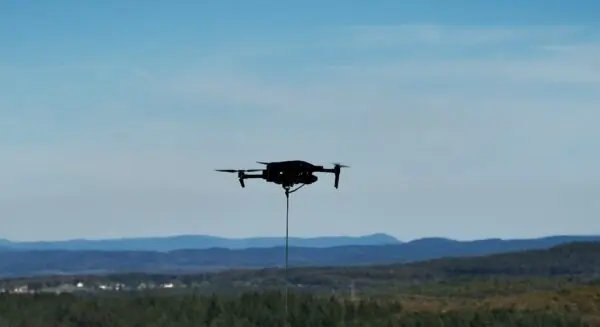
The Department of Defense is accelerating its push for affordable, scalable military technology with a major new procurement initiative. The Defense Innovation Unit (DIU) has officially launched a $100 million competition designed to identify, test, and field low-cost intelligence, surveillance, and reconnaissance (ISR) aircraft capable of being manufactured and deployed at scale.
The initiative, designated as the Low Cost ISR (LC-ISR) Challenge, opened on September 29, 2026, with an initial response window closing on October 14. Through this program, the DIU is actively seeking mature unmanned aerial systems (UAS) and alternative airborne platforms capable of delivering reliable medium- or long-endurance ISR capabilities to modern military operators.
According to government defense planners, current military ISR systems have increasingly become prohibitively expensive, complex, and difficult to deploy rapidly. Traditional platforms often rely heavily on vulnerable airfields, lengthy logistical tails, and established fixed infrastructure. Furthermore, limited domestic and allied manufacturing capacity has historically restricted the volume of systems available for continuous operations in contested operational environments, creating critical bottlenecks when commanders need persistent eyes in the sky.
Addressing these shortcomings directly, the DIU has emphasized a strict requirement for practicality and readiness. "The Government seeks mature solutions, not concepts," the official solicitation states, signaling that the military is looking to bypass lengthy research phases in favor of existing technology that can be put to work immediately.
A Major Investment in Scalable Production
The LC-ISR Challenge represents a substantial financial and strategic opportunity for both traditional defense contractors and commercial drone manufacturers. Beyond the initial $100 million prize pool and follow-on contracts, the government has budgeted up to an additional $250 million dedicated explicitly to further development, system enhancements, scaled production, and sustained theater integration.
However, defense officials note that this additional funding stream is not a guaranteed payout. Allocation of the $250 million will depend heavily on evolving government requirements, successful program execution, and how quickly participating companies can transition from successful demonstrations to mass manufacturing.
The program is structured around two sequential fly-offs designed to test participating aircraft under realistic conditions. Companies featuring systems that are already mature enough for immediate operational demonstration are invited to participate in an accelerated fly-off scheduled for early fiscal year 2027. Successful participants in this initial round will be awarded an initial $250,000 cash prize.
A second fly-off, slated for the third quarter of fiscal year 2027, provides additional runway for companies that require more time for final development, payload integration, and system refinement. Participants meeting the benchmarks in this second wave will receive a $50,000 award and will remain eligible for subsequent development and production agreements.
Defining the Capabilities: What DIU Is Looking For
To meet the rigorous demands of modern theaters of operation, the DIU has outlined specific performance and operational criteria for the LC-ISR Challenge. The competition is divided into two primary endurance tiers. Medium-endurance aircraft must be capable of delivering between three and 12 hours of flight time, while long-endurance systems are expected to operate continuously for 12 to 24 hours or more.
In addition to endurance, participating aircraft must be capable of carrying a variety of modular sensors designed to feed actionable intelligence directly into operational and targeting pipelines. Desired payloads include electro-optical and infrared (EO/IR) cameras, synthetic aperture radar (SAR), and advanced signals intelligence (SIGINT) suites.
Flexibility and expeditionary readiness form another cornerstone of the solicitation. The military wants systems that can be launched, recovered, refueled, and swiftly returned to service with minimal reliance on established commercial airports, fully prepared concrete runways, or permanent ground infrastructure. This expeditionary focus is intended to allow forward-deployed units to operate dispersedly without anchoring themselves to vulnerable logistical hubs.
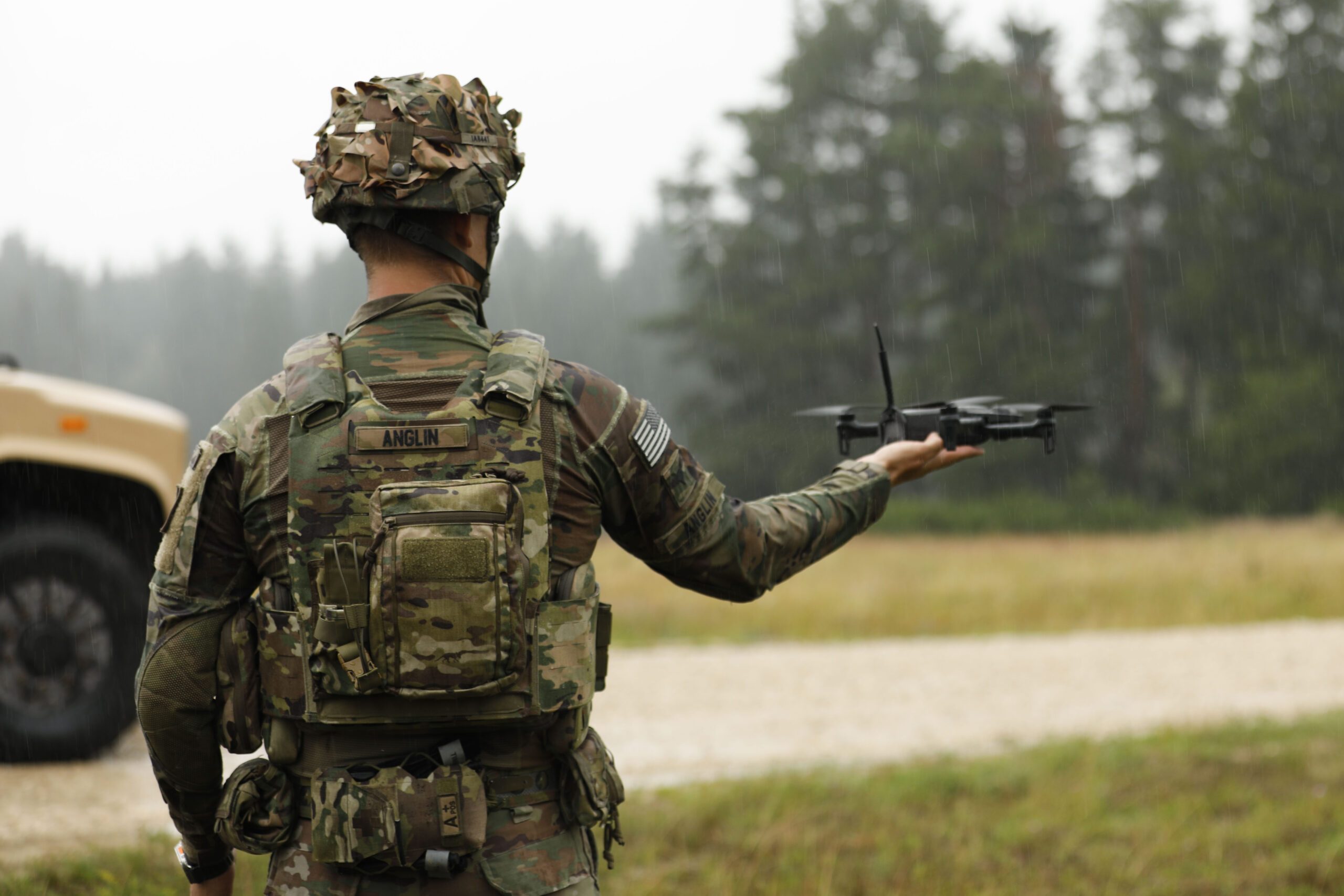
To ensure long-term utility and interoperability, the DIU is also prioritizing open architectures, advanced onboard autonomy designed to minimize operator workload, and seamless integration with third-party command-and-control networks. Additionally, entries must demonstrate reliable beyond-visual-line-of-sight (BVLOS) operational capabilities, alongside robust navigation resilience for environments where Global Positioning System (GPS) signals are routinely jammed, degraded, or entirely unavailable.
Affordability remains central to the entire initiative. Rather than focusing solely on raw aircraft performance, the DIU will evaluate mission effectiveness relative to total lifecycle costs. This holistic evaluation encompasses the price of the aircraft, the embedded sensors, required personnel, ongoing maintenance, logistics footprints, and long-term sustainment.
Opening Doors to Domestic and Foreign Manufacturers
In a notable departure from policies that strictly favor domestic sourcing, the LC-ISR solicitation explicitly extends its invitation to manufacturers located outside the United States.
"The DoD is interested in both U.S. and non-U.S. capabilities," the DIU stated in the program guidelines. Companies are permitted to enter the competition independently or through collaborative teams, corporate partnerships, and international joint ventures.
Both domestic and international participants will be subject to standard security screenings before being accepted into the competitive fly-offs. This open posture is particularly significant as the U.S. government works aggressively to revitalize its domestic defense industrial base and reduce reliance on fragile foreign supply chains. By casting a wider net through the LC-ISR Challenge, the military hopes to capture the most mature, field-ready technology available globally to meet urgent operational requirements.
For international drone manufacturers—particularly those operating within allied nations—the solicitation offers a rare, direct pathway to showcase advanced systems to U.S. defense buyers. At the same time, compliance with stringent security requirements and navigating potential regulatory conditions attached to future procurement contracts will remain crucial factors for foreign entrants.
Manufacturing Readiness and the Path to Procurement
For the companies involved, the LC-ISR Challenge transcends a simple technology contest. It serves as a definitive demand signal from the U.S. military for a specific class of capability: affordable, highly capable ISR platforms that can operate independently of fixed infrastructure and be rapidly manufactured in large quantities.
This governmental push mirrors broader strategic efforts across the Department of Defense, such as the Replicator initiative, which aims to field thousands of autonomous commercial systems at scale to counter near-peer competitors. By leveraging the DIU’s streamlined acquisition model, the military hopes to compress the traditionally lengthy timeline required to move commercial technology from experimental prototypes into active military inventories.
For manufacturers and their financial backers, a clearly defined government requirement backed by hundreds of millions of dollars in potential production funding reduces much of the market uncertainty traditionally associated with defense contracting. However, winning the competition requires more than just a high-performing aircraft. Applicants must clearly demonstrate their manufacturing readiness, outlining precisely how they plan to ramp up production volumes, identify potential supply chain constraints, and systematically drive down unit costs as production scales.
The message to the global drone industry is clear: the U.S. military is searching for mature, cost-effective ISR systems ready to move rapidly from demonstration to mass production, and it is prepared to look far beyond domestic borders to find them.