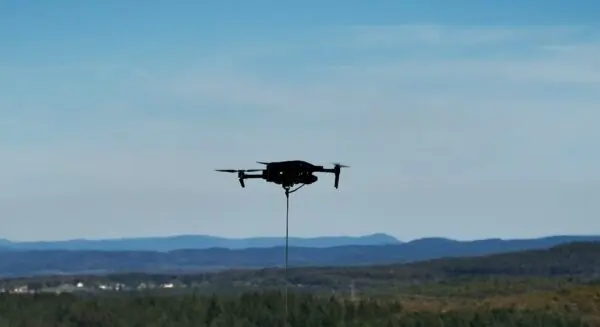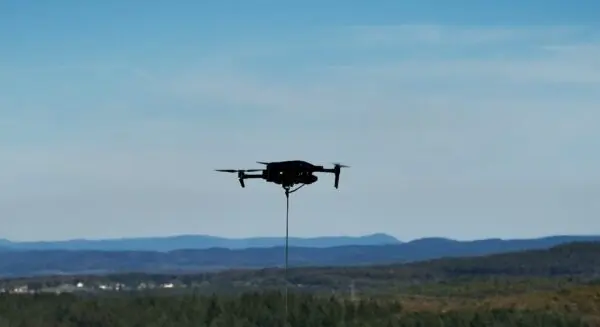
A high-stakes legal battle playing out before the U.S. Court of Appeals for the D.C. Circuit this week has far-reaching implications for telecommunications regulation and national security policy, with a direct and immediate connection to the future of the commercial drone industry. At the heart of the litigation is a fundamental question regarding the regulatory powers of the Federal Communications Commission: Does the agency possess the legal authority to restrict, modify, or revoke equipment authorizations that it has previously granted to manufacturers?
The outcome of this federal court proceeding could significantly empower or constrain the FCC as it contemplates broad new restrictions on foreign-produced drones and critical drone components currently operating within the United States.
Hikvision Challenge Tests Limits of Federal Communications Commission Authority
The legal challenge, designated as Hikvision USA, Inc. v. FCC (Case No. 25-1274), centers on a specific rule established in a 2025 FCC order. This regulation introduced a novel procedure empowering the Commission to target equipment listed on the agency’s official "Covered List"—a roster of communications and surveillance technologies deemed to pose an unacceptable risk to U.S. national security.
During oral arguments before the D.C. Circuit, a judicial panel consisting of Judges Srinivasan, Millett, and Garcia heard arguments from both sides regarding the scope of the agency’s statutory mandate. In its filings and oral presentations, the FCC has defended the rule as an essential mechanism for addressing evolving national security threats through its established equipment authorization program. According to the Commission, the regulatory framework creates a targeted procedure through which the agency can limit previously granted authorizations to prohibit the continued importation and marketing of covered equipment, while deliberately stopping short of banning the continued operation or use of devices that are already owned and deployed by end-users.
Hikvision, the petitioner in the case, is vigorously challenging the FCC’s statutory authority to adopt and enforce such a retroactive or restrictive rule on previously approved devices. The company argues that the Commission is overstepping the boundaries of the powers delegated to it by Congress when it attempts to alter the status of equipment that has already cleared the agency’s rigorous authorization process.
A Direct Connection to the FCC’s Proposed Drone Restrictions
While the Hikvision litigation itself directly involves surveillance and telecommunications equipment rather than uncrewed aircraft systems, the legal principles at stake mirror an ongoing regulatory proceeding that threatens to reshape the American commercial drone landscape.
The connection between the courtroom and the drone sector lies in the FCC’s consideration of a parallel regulatory framework for foreign-manufactured drones and their vital components. On July 21, the Commission officially opened PS Docket No. 26-189, initiating a public comment period on a sweeping policy proposal. This proposal targets certain foreign-produced UAS and UAS critical components that appear on the agency’s Covered List and satisfy the Commission’s proposed definitions for "military-grade UAS and UAS critical components."
Crucially, the language utilized in the FCC’s drone proposal mirrors the core mechanism challenged in the Hikvision litigation: the concept of restricting "previously authorized" hardware. The proposed rule under consideration in PS Docket No. 26-189 would prohibit the continued importation and marketing of specified foreign-produced drones and components that have already received prior FCC authorization.
Furthermore, the structure of the FCC’s drone proposal shares another vital characteristic with the rule at the center of the Hikvision lawsuit. Just as the telecommunications rule allows for restrictions on future distribution and marketing without banning the physical operation of existing hardware, the proposed drone regulations would not prohibit commercial operators and public safety agencies from continuing to use the equipment they already own and fly. This nuanced distinction is central to the Commission’s defense of its regulatory strategy, as the agency attempts to balance national security imperatives against the operational continuity of domestic industries currently utilizing foreign-made hardware.
Broader Implications for the Commercial Drone Sector
The D.C. Circuit’s eventual ruling in Hikvision USA, Inc. v. FCC will not automatically resolve every complex legal and regulatory question surrounding the Commission’s proposed UAS restrictions. Because the underlying lawsuit focuses on different hardware categories, the court’s opinion may not directly strike down or validate the drone-specific docket.
Nonetheless, the timing of the litigation creates a profound intersection of administrative law and national security policy. By putting the precise scope of the FCC’s authority over previously authorized Covered List equipment before a federal appeals court precisely as the Commission considers applying that exact legal framework to foreign-produced drones and drone components, the judiciary’s decision will serve as a vital bellwether.
If the D.C. Circuit upholds the FCC’s authority to restrict and limit previously granted authorizations, the Commission will likely feel emboldened to move forward with its proposed rules targeting foreign-produced UAS. Conversely, a ruling that curtails the agency’s ability to alter past authorizations could force the Commission to fundamentally rethink its approach to mitigating supply chain and national security risks across both the telecommunications and commercial drone sectors. As the legal arguments conclude and the industry awaits a judicial decision, stakeholders across the commercial drone ecosystem continue to monitor the proceedings closely for indications of how federal regulators will handle the delicate balance between national security and technological integration.