The United Kingdom is pioneering the deployment of advanced "super batteries" capable of storing electrical energy for extended periods, marking a critical evolution in the nation’s strategy to smooth the variable output of wind and solar power as it accelerates toward its net-zero carbon targets.
As part of this nationwide shift, the country is scaling up its capacity for "long-duration energy storage" (LDES). These systems are designed to absorb and bank vast amounts of energy when generation from renewables is plentiful, holding it in reserve to cover extensive shortfalls when the wind fails to blow and the sun fails to shine. Such protracted lulls in renewable generation can stretch across days or even weeks—a meteorological phenomenon frequently referred to as dunkelflaute, a German term meaning "dark doldrums." In contrast, traditional utility-scale batteries currently deployed across the electricity grid are typically limited to discharging power for a matter of hours.
Addressing this critical infrastructure gap, the UK’s energy regulator, Ofgem, has identified 16 prominent LDES projects that it is "minded to" support under a newly established cap-and-floor regulatory scheme. The selected technologies span a diverse range of mechanical, chemical, and electrical methodologies designed to store energy over prolonged horizons. These include traditional pumped hydro schemes, large-scale lithium-ion battery installations, novel electrochemical flow batteries, and compressed-air energy storage facilities. According to industry projections, the widespread integration of these technologies is expected to slash total UK energy system costs by more than £24bn between 2030 and 2050.
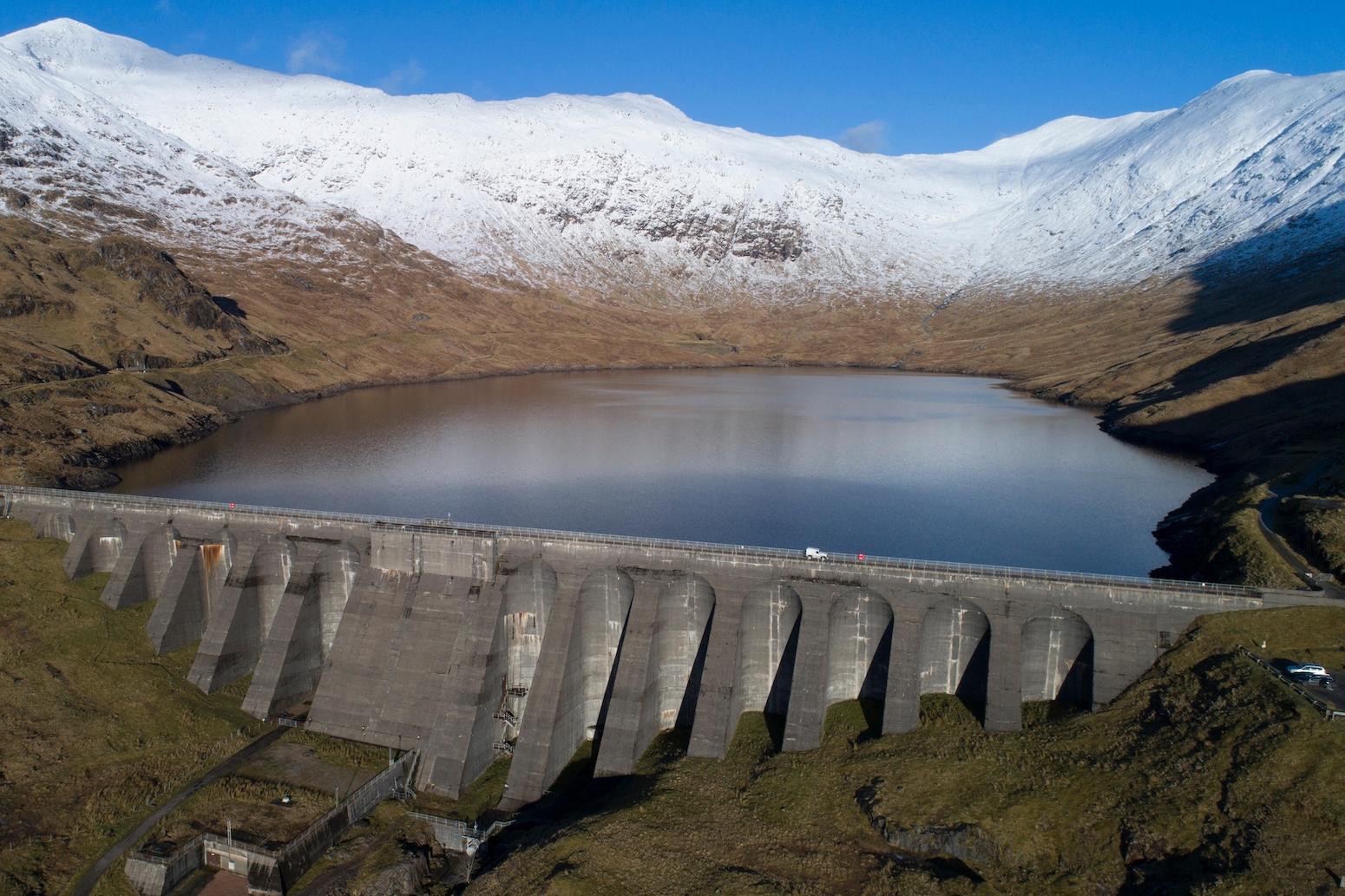
What is LDES?
Long-duration energy storage encompasses a broad category of technologies, though precise definitions vary across government and regulatory bodies. The UK government generally defines LDES as systems capable of storing energy anywhere from four hours up to several years. Meanwhile, Ofgem applies a slightly tighter threshold, categorizing technologies as long-duration if they can discharge power continuously for eight hours or upwards.
Sir Chris Llewellyn Smith, emeritus professor of physics at the University of Oxford and lead author of a comprehensive Royal Society report on large-scale electricity storage, highlights the broad scope of these definitions. He notes that government departments often group medium-duration storage into the LDES category, whereas physicists and researchers view true long-duration storage as capacity that extends well beyond daily cycles into seasonal and multi-year timeframes.
LDES plays an indispensable role in supporting multiple facets of a modernized electricity network, most notably by facilitating the seamless integration of variable renewable energy sources. Currently, Great Britain possesses approximately 2.8 gigawatts (GW) of established LDES capacity, entirely concentrated within four major pumped-hydro energy storage assets located in Scotland and Wales.
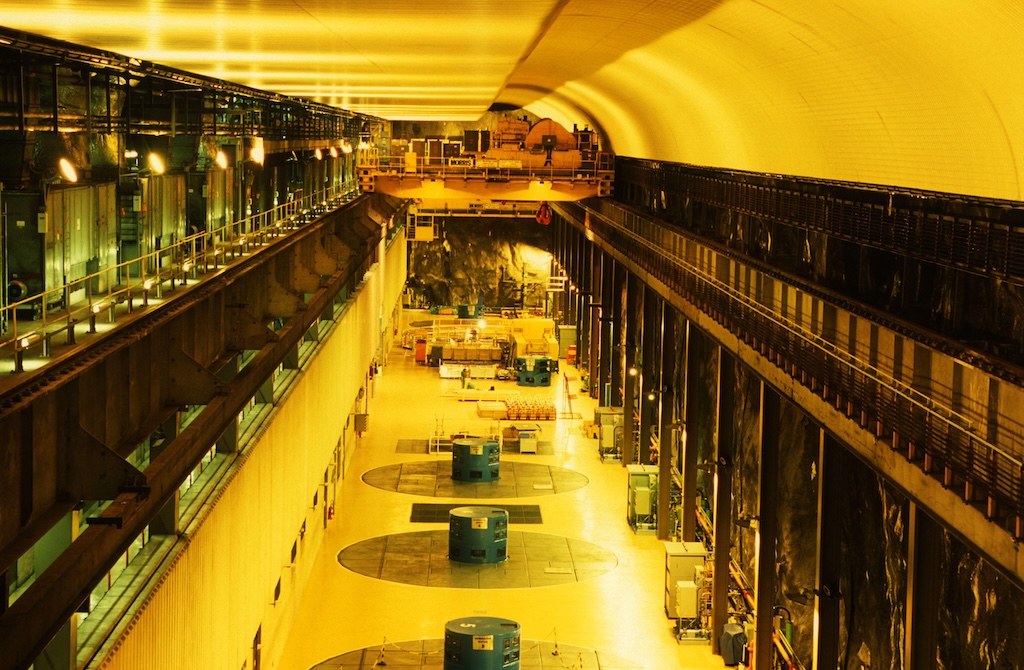
The largest of these operational facilities is the Dinorwig power station in North Wales, colloquially known as the "electric mountain." Commissioned in the 1980s, this 1,728-megawatt (MW) pumped-storage plant was originally engineered to manage short-term surges in national electricity demand. For instance, during major public events, such as England’s football match against the Democratic Republic of Congo, national electricity demand routinely spikes by gigawatts at half-time and full-time—an instantaneous load equivalent to the combined electricity consumption of major urban centers like Glasgow and Leeds.
While traditional pumped storage and short-duration batteries have historically sufficed for balancing sudden, fleeting surges in demand, the rapid expansion of weather-dependent renewables has exponentially increased the requirement for true long-duration flexibility. George Martin, principal for power system modelling at analytics firm LCP Delta, emphasizes that wind-dominated grids experience much sharper peaks and troughs in generation, making LDES indispensable for mitigating multi-day weather slumps.
To meet this rising demand, the UK is actively expanding both its storage capacity and its technological diversity. In May 2025, the nation’s largest vanadium flow battery site commenced operations in Uckfield, East Sussex, co-located with a solar farm. Utilizing liquid chemical mixtures pumped between storage tanks through electrochemical cells, the 90-unit facility can store 21 megawatt-hours (MWh) of electricity—enough to capture peak daytime solar generation and power roughly 3,000 households for an entire day. Meanwhile, alternative LDES mechanisms capable of retaining energy across weeks, months, or entire seasons—such as compressed-air systems and hydrogen storage—are being developed to handle deep seasonal deficits.
What Types of LDES Are Available?
Energy storage technologies generally fall into four primary classifications: mechanical, thermal, chemical, and electrochemical. Mechanical systems include pumped hydro and compressed-air storage, where surplus electricity is used to pump water uphill or compress air into underground geological formations like salt caverns, releasing the stored energy through turbines when electricity is needed. Electrochemical storage encompasses conventional lithium-ion batteries and advanced flow batteries, while thermal storage involves heating dense materials such as gravel with excess power to later warm water or drive generation cycles. Chemical storage refers to the retention of energy within molecular bonds, such as producing and storing hydrogen from water.
A central metric for evaluating any LDES technology is its energy capacity, measured in watt-hours, alongside its duration—the length of time it can sustain a continuous output of power. Furthermore, the economic viability of storing energy for extended periods without prohibitive degradation or financial loss remains a core design challenge for developers.
Over the past decade, lithium-ion battery technology has dominated the UK storage landscape, scaling from virtually zero in 2015 to over 6GW of capacity today. While historically limited to durations of one to four hours, recent engineering advancements have enabled lithium-ion systems to extend their discharge windows to eight or even twelve hours. As Ed Porter, European director at Modo Energy, noted following the recent cap-and-floor announcements, the debate regarding whether lithium batteries can operate effectively beyond standard short-duration windows has largely been settled.
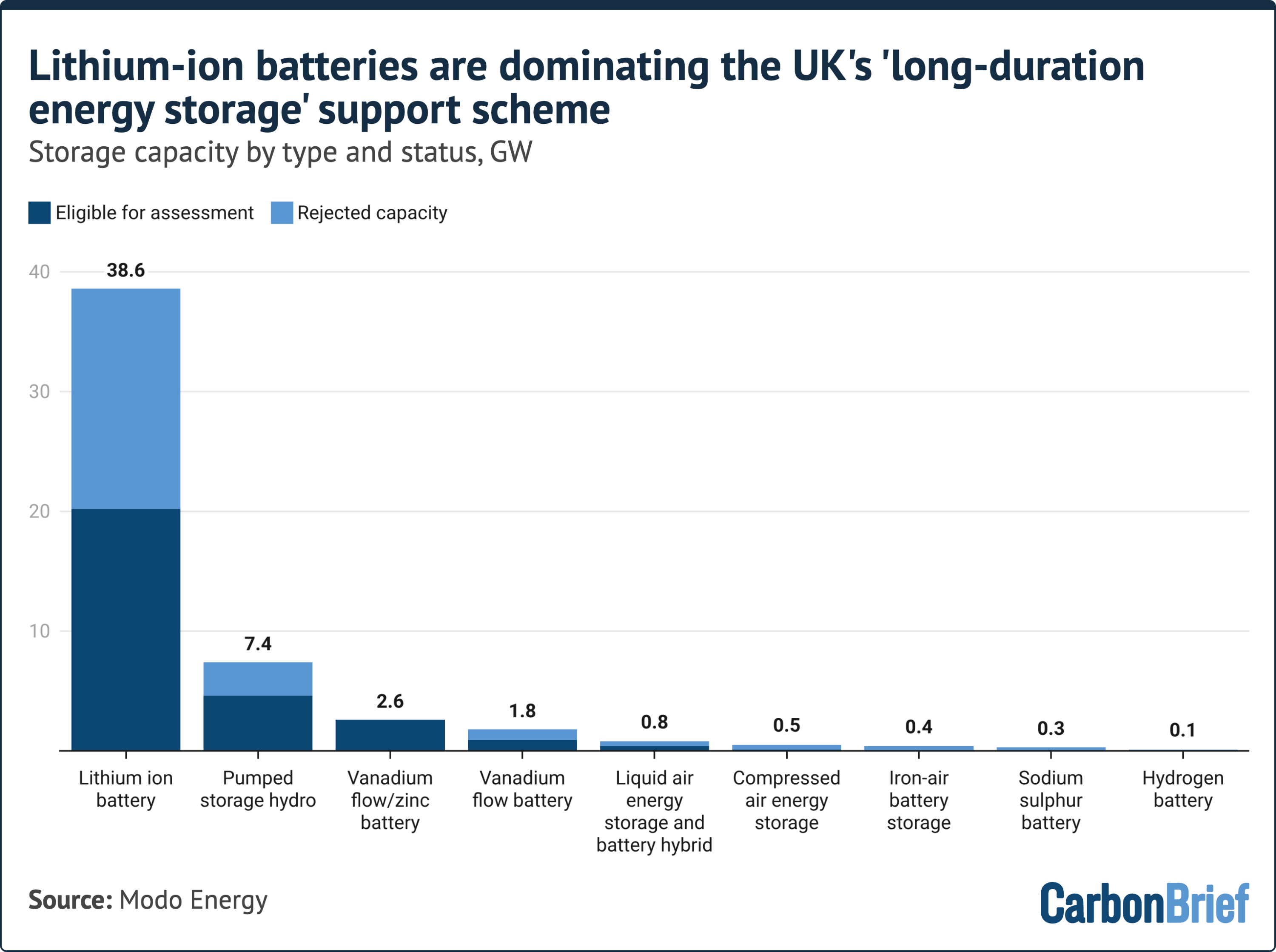
Nevertheless, lithium-ion systems alone cannot bridge multi-day or seasonal generation gaps. Technologies such as vanadium-redox flow batteries, liquid-air energy storage, compressed-air facilities, and hydrogen salt-cavern storage are required to provide deep seasonal flexibility. Industry experts emphasize that deploying a diversified portfolio of storage technologies is essential to match the complex structural needs of a net-zero grid. Julia Souder, CEO of the LDES Council, notes that while the UK is leading the charge in technology diversity, a core group of proven solutions will ultimately provide the heavy lifting required over the coming decade.
How Much LDES Will the UK Need?
As the UK phases out dispatchable fossil fuels like natural gas, long-duration energy storage is projected to become a fundamental pillar of the national grid. The government’s ambitious target to achieve a fully decarbonized power sector by 2030 relies heavily on massive expansions in renewable generation, including plans to double offshore wind, triple onshore wind, and quadruple solar capacity.
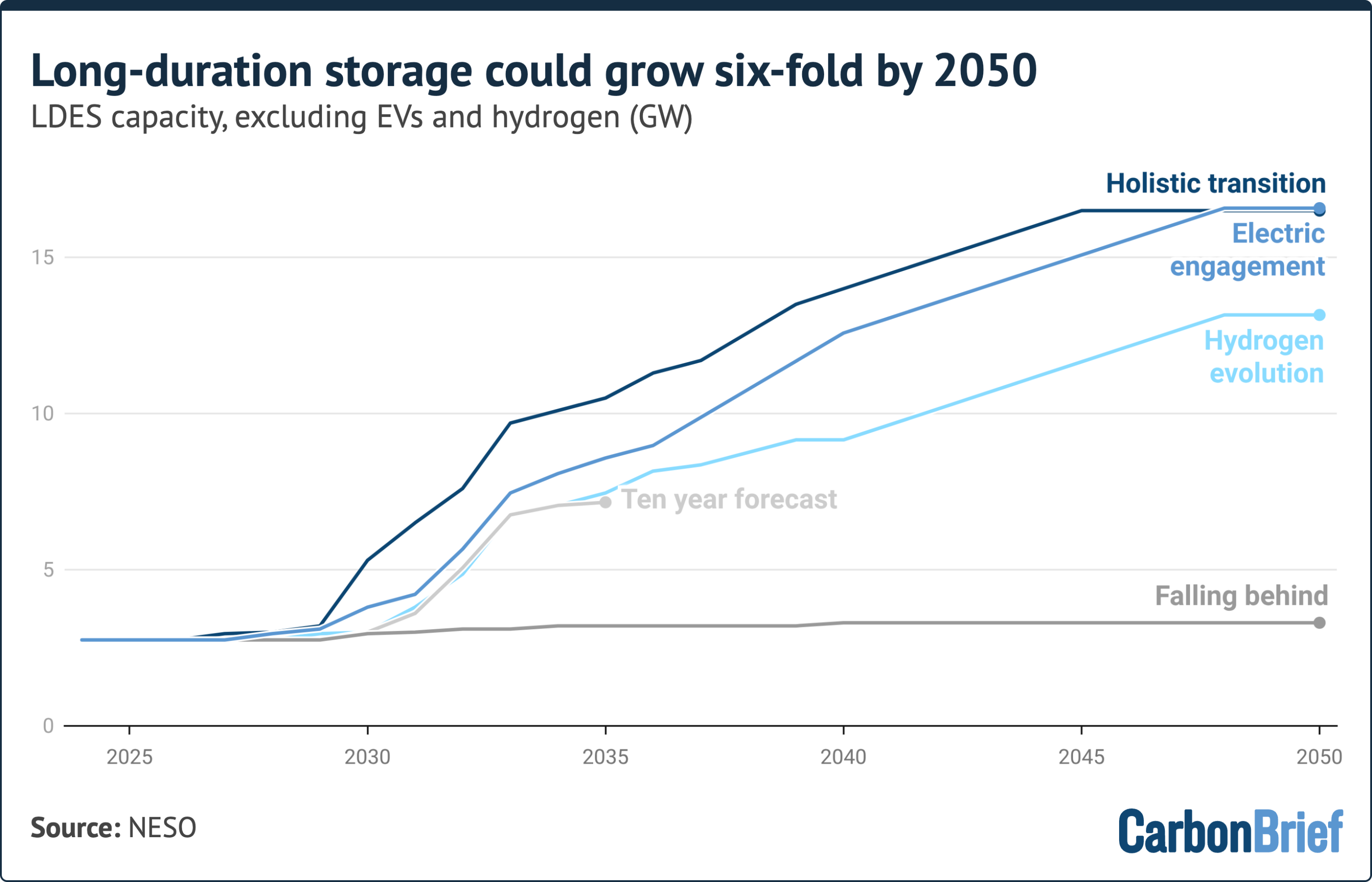
Alongside these generation targets, official action plans and modeling from the National Electricity System Operator (Neso) explicitly outline the need for significant expansions in grid flexibility. Neso scenarios project that the UK will require between 3.8GW and 5.3GW of LDES capacity by 2030, scaling upward dramatically to between 13.2GW and 16.6GW by 2050, depending on the wider adoption of hydrogen infrastructure. However, analysts caution that due to lengthy project development timelines, complex planning procedures, and high capital expenditure requirements, only a fraction of this necessary LDES capacity is projected to come online before the end of the decade.
Which Types of LDES Is the UK Planning to Use?
To overcome the financial barriers associated with high upfront capital costs, the UK government and Ofgem introduced the cap-and-floor regulatory mechanism. Designed to guarantee minimum revenue floors for operators while capping excessive profits, the scheme mirrors successful financing frameworks previously used to fund high-cost energy infrastructure such as cross-border interconnectors.
Following an extensive application window that attracted tens of gigawatts of proposed projects, Ofgem announced its "minded-to" decision to support 7.6GW of LDES capacity across 16 distinct projects. Roughly 4GW of this approved capacity is expected to be operational by 2030, meeting the lower bound of government targets for the clean power mission.
The provisional selection comprises four primary technologies: pumped storage hydro contributing 3.9GW across three massive Scottish projects (Earba, Coire Glas, and Loch Kemp); lithium-ion batteries providing 3.6GW across multiple regional sites; a 65MW vanadium-zinc flow battery in North Wales; and a 50MW compressed-air energy storage facility in north-east England.
Energy Minister Michael Shanks welcomed the announcement, highlighting that the government is reviving Britain’s pumped-storage construction sector for the first time in forty years. The deployment of these assets will capture homegrown renewable energy that would otherwise be wasted, lower consumer bills, and reinforce national energy security. Following the conclusion of Ofgem’s public consultation, the regulator is set to finalize the list of supported projects, while innovation agencies continue to funnel targeted grant funding into ultra-long-duration storage initiatives capable of multi-day discharge.
How Could LDES Impact Energy Bills?
The large-scale rollout of long-duration energy storage is widely projected to exert downward pressure on consumer energy bills by optimizing the operation of a renewables-dominated electricity system. Although considerable financial investment is required upfront, independent economic assessments indicate that LDES will deliver massive net savings by the middle of the century compared to counterfactual scenarios lacking flexible storage.
Research commissioned by the Department for Energy Security and Net Zero indicates that deploying 20GW of LDES could reduce overall electricity system costs by between £16bn and £51bn through 2050. These savings are primarily achieved by mitigating grid curtailment—the expensive practice of paying renewable generators to switch off when transmission networks become congested, and subsequently firing up costly natural gas plants to meet demand elsewhere. In recent financial years, grid balancing and constraint costs have added billions of pounds to system operation expenses, translating directly into higher household energy bills.
Because a substantial share of the UK’s wind generation capacity is located in northern Scotland behind congested transmission corridors, nearly 80% of the newly approved LDES storage capacity is sited in the north. Analysts note that positioning large storage assets strategically near generation hubs allows excess wind power to be captured locally rather than curtailed.
Ultimately, economists estimate that while each gigawatt of long-duration storage requires billions of pounds in initial capital outlay, it yields hundreds of millions of pounds in annual operational savings once commissioned. By cutting emissions, reducing reliance on peaking gas generation, and optimizing the efficiency of the national clean energy fleet, LDES infrastructure is projected to repay its initial capital investment several times over in the decades leading to net-zero.