By Shailja Khetan
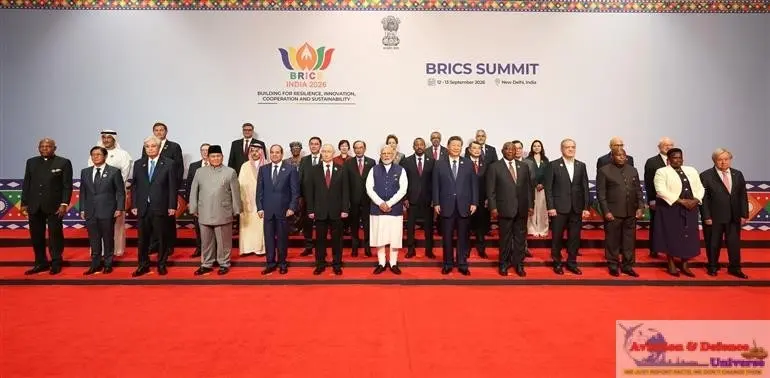
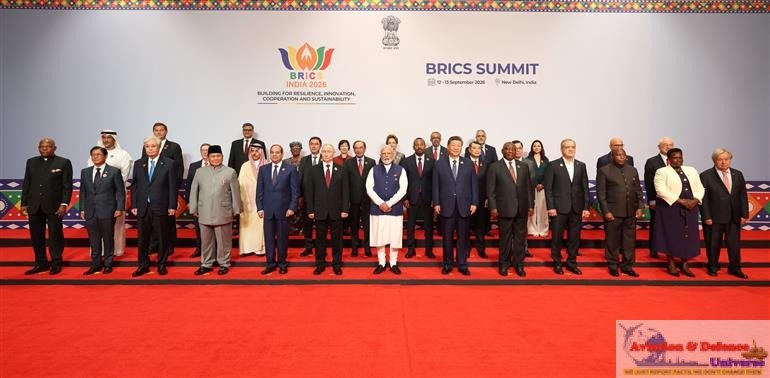
In an era defined by intensifying geopolitical friction and a fast-shifting international landscape, the states of the Global South have demonstrated a remarkable capacity to compartmentalize bilateral disputes in pursuit of broader collective goals. The 18th BRICS Summit, hosted in New Delhi, stands as a prime case study in this diplomatic balancing act. Bringing together diverse and occasionally rival nations amidst a turbulent global order, the summit reaffirmed that BRICS functions not as a rigid anti-Western coalition, but rather as a flexible platform designed for strategic autonomy, institutional reform, and effective collective bargaining.
The New Delhi joint declaration sent a clear and resounding message to the international community: while bilateral tensions and regional rivalries inevitably persist among emerging economies, they can be successfully set aside when larger, systemic issues require unified prioritization. By convening leaders from across the developing world, the summit highlighted the growing maturity of the bloc as it navigates complex multilateral dynamics without collapsing under the weight of its internal contradictions.
The Paradox at the Heart of BRICS
BRICS is by no means an ordinary or homogenous geopolitical group. Its member states encompass vastly different political systems, distinct economic priorities, diverse languages, and unique cultural and strategic interests. Furthermore, the bloc houses significant internal rivalries and divergent worldviews. For instance, India and China continue to manage complex border disputes and strategic competition, while Brazil and South Africa have historically shown reluctance to steer BRICS down a path that would transform it into a purely anti-Western alliance.
At the same time, Russia and China often view BRICS through the lens of facilitating a strategic transition away from Western predominance in global governance and finance. Additional complexities arise from regional disagreements, such as differing perspectives on the volatile situation in West Asia, particularly concerning the roles and positions of Iran and the United Arab Emirates. Given this intricate web of competing interests, achieving a comprehensive consensus during the New Delhi summit was far from a minor achievement. It required intense diplomatic engagement, mutual accommodation, and a shared recognition that unity yields greater leverage on the world stage than fragmentation.
Why Does the Global South Need to Unite?
To fully understand the weight and significance of the New Delhi declaration, one must examine the historical and structural imperatives driving the Global South toward closer cooperation. The term "Global South" was originally coined by Carl Oglesby in 1969. Oglesby utilized the phrase to describe nations that had been politically and economically exploited by the developed industrial powers of the Global North. Decades later, remnants of that historical exploitation and an enduring paternalistic mindset remain visible across multiple international forums and diplomatic platforms.
This systemic inequality is not merely limited to the specific terms and conditions found in bilateral and multilateral economic agreements; it is woven into the very architecture of how the so-called "rules-based international system" is implemented and enforced. Developing nations frequently find themselves grappling with asymmetrical trade rules, restrictive financial frameworks, and governance structures in international institutions that heavily favor established Western powers. Consequently, unity has transformed from a theoretical ideal into an urgent practical necessity for the Global South, serving as a vital mechanism to challenge systemic paternalism and advocate for equitable global governance.
How the 18th BRICS Summit Delivered on Global South Priorities
Measured against the persistent structural challenges faced by developing nations, the New Delhi declaration proved to be strikingly on point. The summit addressed the core concerns of the Global South by emphasizing the urgent need for comprehensive reforms in global financial institutions, greater representation for emerging economies, and fairer terms of trade. By focusing on practical areas of cooperation—ranging from sustainable development and climate finance to resilient supply chains and technological exchange—the summit offered a tangible blueprint for how developing nations can collaborate to mitigate external shocks.
The discussions in New Delhi underscored that strategic autonomy is not about isolating oneself from the global economy, but rather about possessing the collective weight to negotiate from a position of strength. Through open dialogue and pragmatic compromise, the participating nations demonstrated that the platform can accommodate diverse economic models while maintaining a laser-like focus on reforming an international order that has long marginalized the developing world.
Conclusion
The 18th BRICS Summit in New Delhi was a watershed moment that successfully bridged deep-seated internal differences through constructive diplomatic language. The enabling text of the joint declaration allowed countries harboring distinct contradictions and bilateral frictions to coexist under a single, cohesive banner. However, as the Prime Minister of India aptly emphasized during the proceedings, the true measure of success and the ultimate legacy of the summit will materialize only when these high-level commitments translate into tangible, real-world results for their populations.
The ability of these diverse nations to find common ground would have remained impossible without an unwavering commitment to the foundational principles of mutual respect and inclusivity. As the international community continues to grapple with uncertainty, the New Delhi summit stands as a true and enduring example of how strategic flexibility and collective resolve can pave the way toward a more balanced and representative global order.