On October 5, exactly one day after the first round of Brazil’s tense general elections, the country’s financial markets experienced a wave of euphoria. Investors and market analysts, grappling with a sluggish economy defined by high sovereign debt and stagnant growth, have long been eager for political leadership willing to tackle deep structural reforms. The market consensus looks favorably upon measures such as reducing budget deficits, deregulating industries, cutting taxes, and potentially privatizing state-owned assets. After nearly four years under the left-wing administration of President Luiz Inácio Lula da Silva—widely known as Lula—who has moved slowly to implement these sweeping changes, investors had pinned their hopes on a conservative or right-wing government to finally unlock bold economic restructuring.
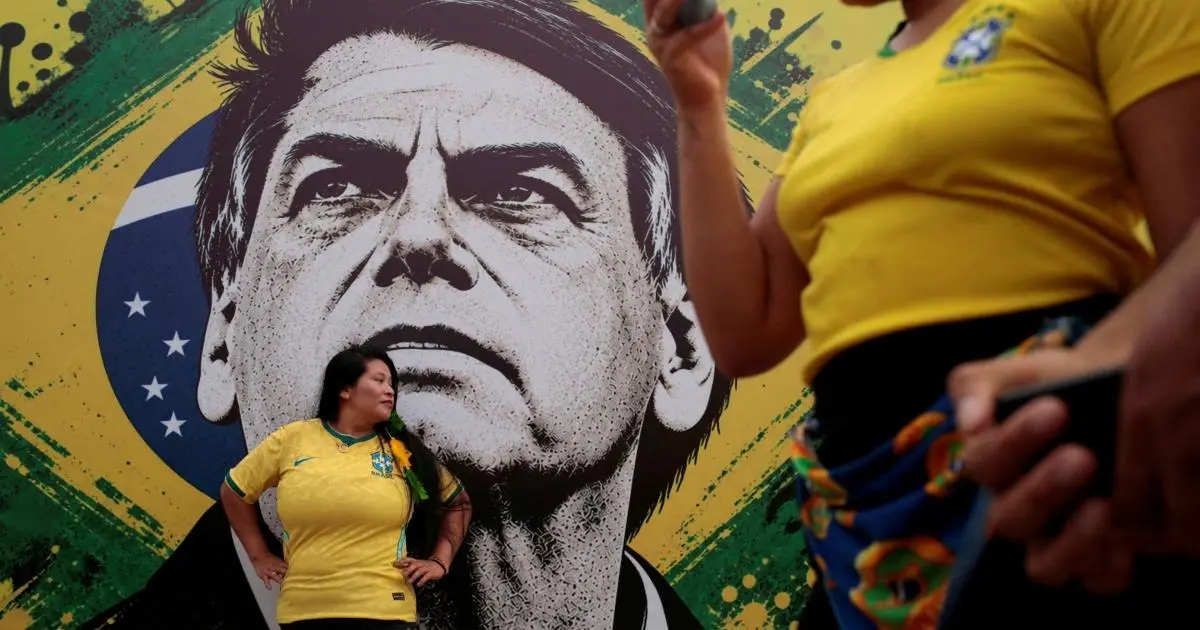
That shift toward the right may well be the political reality that Brazil ultimately confronts. In the legislative contests, the far-right Liberal Party made substantial gains, securing its position as the single largest faction in both the Senate and the Chamber of Deputies. Meanwhile, in the presidential race, Flávio Bolsonaro—the son of notorious former President Jair Bolsonaro—edged ahead of the aging incumbent, Lula, leading by nearly two percentage points in the initial round of voting. While Lula has repeatedly demonstrated an impressive capacity for political comebacks over his decades-long career, Flávio Bolsonaro enters the decisive runoff vote scheduled for October 25 as the clear favorite.
Yet, even if Bolsonaro secures victory and takes the presidential sash, the medium-term prospects for the Brazilian economy remain decidedly dim. The policy proposals put forward by the Bolsonaro campaign fall well short of the substantial, rigorous fiscal consolidation program urgently required to bring down runaway public debt and sustainably stimulate private investment. Furthermore, the candidate’s explicit determination to undermine Brazil’s core political and judicial institutions generates precisely the kind of institutional uncertainty that frightens domestic and international investors alike. Economic growth has already been sluggish under Lula, whose administration has struggled to alleviate the crushing debt burdens afflicting both the public sector and ordinary households. However, what would truly doom the country to a severe economic crisis is the brand of authoritarian-inspired politics that a Bolsonaro government could usher into power.
CRISIS IN THE MAKING
Brazil is undeniably trapped in serious economic trouble. The country’s sovereign debt-to-GDP ratio has ballooned to a staggering 83 percent, fiscal deficits leave virtually no room for additional government spending, and stubbornly high interest rates are squeezing both consumers and corporate investors. Compounding these domestic pressures, international shocks—such as the war involving Iran—have driven up the price of fuel and imported goods, heavily weighing on household balance sheets already strained by debt. As a result, millions of Brazilians find themselves desperate for leadership capable of alleviating their daily hardships.
This precarious economic predicament has been years in the making. Before Jair Bolsonaro was elected to the presidency in 2018, his predecessor, President Michel Temer, enacted a strict cap on public spending designed to contain Brazil’s runaway fiscal trajectory. Temer introduced this spending ceiling as a constitutional amendment specifically to prevent future governments from altering the limit to suit short-term political needs. Yet, once in office, Jair Bolsonaro repeatedly bypassed the cap, a process that required convincing Congress to repeatedly amend the constitution. In exchange for legislative compliance, the executive branch effectively ceded control of the national budgetary process to lawmakers.
Consequently, when Lula returned to the presidency, he inherited a rigid system that offered him very little room for independent fiscal adjustment, and his administration made minimal headway in rectifying the underlying structural issues during his term. The resulting high budget deficits and persistent inflation forced the central bank to hike interest rates substantially. In turn, these high interest rates damaged household balance sheets, depressed overall capital investment, and stifled national economic growth.
PROMISES, PROMISES
Had Lula managed to secure re-election, he would have found it exceptionally difficult to introduce new fiscal reforms or growth-oriented measures. Although he campaigned on promises to reduce government spending and proposed a comprehensive overhaul of Brazil’s complex tax system—steps that would theoretically help increase the budget surplus and reduce public debt—Bolsonaro’s Liberal Party and its conservative allies now command a solid majority of seats in both the Senate and the Chamber of Deputies. This legislative dominance would give them the power to effectively block any policy or legislation pursued by a returning Lula administration.
However, it is overly optimistic, if not entirely unrealistic, to expect that a Bolsonaro presidency would fare any better in managing the economy. Throughout the campaign, neither candidate has provided detailed, credible blueprints outlining precisely how they plan to rescue the financial system. Instead, Bolsonaro has frequently spoken in broad terms about sweeping "institutional reforms." These proposed changes include amending Brazil’s 38-year-old constitution to introduce greater flexibility into existing labor and environmental regulations, directly meddling with the independence of the Supreme Court, and granting a formal amnesty to his father, who is currently serving a prison sentence for leading a failed coup attempt in 2023.
Such steps are almost certain to drive away investors, who rely on stable, predictable legal and political institutions for a market economy to function efficiently. A government that actively undermines the judicial system and the constitution fundamentally compromises the integrity of its own economic policies, regardless of how sound those policies might appear on paper or how favorable the reputations of the technocrats crafting them might be.
Furthermore, gathering the necessary political support to force such a radical overhaul of the country’s constitutional and political institutions would require difficult political compromises that could actively worsen Brazil’s fiscal troubles. To secure the votes required in Congress to advance Bolsonaro’s priorities—such as the two-thirds Senate majority needed to remove a Supreme Court justice, or the three-fifths supermajority in both legislative houses required for a constitutional amendment—the government would have to buy off legislators outside its immediate political coalition. Those politicians would almost certainly demand substantial federal funds and pork-barrel projects for their local constituencies in exchange for their support, thereby expanding the budget deficit even further.
At the same time, Bolsonaro’s far-right movement remains laser-focused on preserving its recently forged coalition of state governors, mayors, and grassroots voters. A significant portion of this electoral constituency is comprised of lower-middle-class Brazilians who managed to lift themselves out of poverty during the commodity boom years two decades ago, while Lula was serving his first two terms in office. After experiencing stagnant income growth in the years since, these voters have swung toward the Liberal Party, though their political loyalty remains volatile. Most are self-employed workers navigating acute economic precarity. Both Bolsonaro and Lula have sought to court these voters by promising targeted initiatives designed to boost household incomes and offer debt relief. Yet, delivering such costly programs—assuming it is logistically possible—would only exacerbate Brazil’s already severe fiscal woes.
What Bolsonaro has publicly revealed regarding his specific economic platform offers little reassurance to financial markets. His party has pledged to slash government spending by $40 billion, equivalent to roughly 1.5 percent of GDP, while delivering primary budget surpluses—a key fiscal metric that excludes interest payments. Yet, the campaign has failed to explain how it intends to achieve these savings, nor has Bolsonaro elaborated on his vague plans for controlling the relentless rise in public debt. Ultimately, financial analysts view it as highly unlikely that a Bolsonaro administration could deliver on these ambitious promises, particularly given his competing pledge not to touch pensions and key social assistance programs.
A core flaw in the Liberal Party’s economic agenda is the absence of any viable plan for reducing structural costs. The platform proposes eliminating at least ten government ministries, yet offers no realistic estimate of the resulting cost savings. When Jair Bolsonaro implemented similar structural cuts after assuming office in 2019, abolishing cabinet positions and laying off public servants, those maneuvers had a negligible impact on overall fiscal outcomes. Additional policy promises include reducing Brazil’s value-added tax, phasing out a tax on financial transactions, lowering taxes on electricity and fuel, investing $180 billion in infrastructure over four years, and constructing 2.5 million new homes. Far from solving Brazil’s underlying fiscal crisis, these measures would likely accelerate it.
The same critique applies to the remainder of Flávio Bolsonaro’s tax agenda. His economic advisers have stated their intention to systematically reverse every tax created or raised under Lula’s finance minister, Fernando Haddad. Haddad’s tax increases were originally designed to shift the national tax burden onto higher-income brackets, boost government revenues, and reduce glaring inequalities within the tax code. While these taxes contributed to a modest increase in state revenue, they still fell short of generating the desired primary budget surpluses. Bolsonaro has argued that these measures stifle investment by heavily taxing the wealthy, but empirical evidence supporting this claim is lacking. On the contrary, repealing all of these revenue-generating measures would severely worsen Brazil’s fiscal standing.
Simple macroeconomic calculations demonstrate that Brazil needs to improve its primary budget balance by approximately six percent of GDP—either through increased revenues, decreased spending, or a combination of both—just to prevent its sovereign debt from rising further. To prevent triggering a severe recession, that fiscal adjustment would need to be spread out over at least three years, giving indebted households and corporations adequate time to adapt their consumption and investment patterns. Slashing taxes without corresponding expenditure cuts, however, would drastically reduce government revenues and push the national debt to dangerous new heights.
Brazil’s punishingly high interest rates present yet another major constraint. The central bank’s benchmark interest rate currently stands at 13.75 percent, an astronomical figure by regional Latin American standards that sets the baseline borrowing costs across the entire economy. Consequently, public debt service payments alone consume roughly 8.7 percent of GDP. A Bolsonaro administration would find it impossible to lower interest rates significantly without sparking an immediate recession, meaning he would face the exact same intractable dilemma that has plagued Lula’s latest term: a severe lack of viable options for containing a rapidly expanding debt burden.
AUTHORITARIAN ECONOMICS
Neither Lula nor Bolsonaro is ideally positioned to resolve Brazil’s deep-seated structural and economic challenges. However, a decisive turn toward illiberalism under a Bolsonaro presidency would all but guarantee economic disaster.
Flávio Bolsonaro has consistently refused to disavow his father’s vocal praise of Brazil’s brutal military dictatorship, which ruled the country from 1964 to 1985, and his Liberal Party traces its direct political lineage to the movement that sustained that historical regime. Moreover, he has explicitly pledged to pardon and release his father and various political allies currently serving prison sentences for staging an insurrection and an attempted coup in 2023. Flávio’s brother, Eduardo Bolsonaro, a former federal legislator who would likely wield significant influence within a potential Bolsonaro administration, has openly expressed his profound admiration for Prime Minister Viktor Orbán’s illiberal regime in Hungary. Eduardo has previously voiced a desire to study and adopt the "best practices" of a political movement that systematically rewrote Hungary’s constitution, packed its courts, silenced independent media outlets, and deployed overtly authoritarian tactics to consolidate power.
Furthermore, the substantial far-right bloc entrenched in Brazil’s congress actively supports policies designed to undermine democratic institutions, including launching impeachment proceedings against members of the Supreme Court—a measure these parties advocated well before corruption allegations emerged against several justices. (Flávio Bolsonaro himself faces ongoing investigations regarding his alleged involvement in related corruption scandals.)
Although modern Brazil is not currently at immediate risk of reverting to direct military rule, the shadow of the historical authoritarian regime serves as a stark historical warning of the economic ruin that can follow when a government pursues illiberal policies to their logical conclusion. During those two decades of military dictatorship, Brazil maintained unsustainable spending levels—primarily funneling capital into inefficient state-owned enterprises to preserve the regime’s political grip on power. The eventual result was a sovereign debt default, corrosive hyperinflation, and a skyrocketing income inequality gap. Six successive economic stabilization plans failed, and national growth stagnated for years.
Brazil is far from unique in this historical trajectory. No Latin American country that transitioned from democracy to authoritarian rule over the past century has ever benefited economically from the shift. By contrast, nations elsewhere in the world that successfully achieved long-term prosperity after such political transitions—such as certain economies in East Asia—did so by liberalizing their political systems during their periods of major economic ascent.
Ultimately, Brazil’s current rightward political shift mirrors a broader regional pattern. The common thread uniting Brazil with neighboring nations like Argentina, Chile, and Colombia is the crude libertarian worldview espoused by their respective far-right movements. These political forces frequently campaign on the romanticized notion of citizens operating as self-reliant entrepreneurs completely free from state intervention. They pitch their populist economic visions to voters who are stuck in unstable employment and lack basic economic security, promising that deregulation will unlock universal prosperity. Yet, this brand of populism rarely commands the confidence of serious investors. Much like its regional peers, when the Brazilian far right claims it can overcome deep structural problems through institutional demolition and a threadbare economic agenda, it offers little more than empty promises.