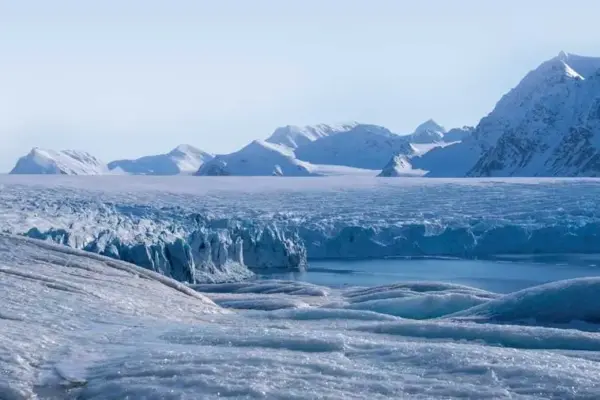
In the winter of 2016, a sudden and massive crack in the ice opened directly beneath the site of the U.S. Navy’s flagship Arctic exercise, situated several hundred miles north of Prudhoe Bay, Alaska. The unforeseen rupture forced researchers and military personnel to terminate their experiments well ahead of schedule and left logistics teams scrambling to coordinate an emergency evacuation. Five years later, the unpredictable nature of the Far North struck again when an unusually early freeze trapped roughly two dozen commercial cargo and support vessels in the icy expanse of the East Siberian Sea. Some of these trapped ships were forced to wait weeks for heavy Russian icebreaker assistance to clear a path to safety.
Most recently, during a Canadian-led multinational military exercise in 2025, allied forces encountered a grueling combination of environmental hurdles that tested the limits of modern equipment. Extreme cold temperatures grounded helicopters, snapped snowmobiles, and completely knocked out sensitive communications equipment. At the same time, thinning sea ice forced American pilots to scour 25,000 miles of rugged coastline just to locate a patch of ice thick enough and stable enough to land on.
These harrowing incidents were by no means the result of failures by unprepared, inexperienced, or negligent Arctic actors. On the contrary, they involved three of the region’s most proficient and technically capable nations, each operating in sovereign or familiar territory it knew intimately. Yet they all pointed to a common, inescapable thread: the Arctic has an unforgiving way of humbling those who attempt to operate within its boundaries. Its vast distances, prolonged darkness, extreme weather conditions, and sparse infrastructure consistently expose the hard operational limits of even the most capable governments and advanced militaries.
This harsh reality creates a profound strategic paradox for Washington. The Arctic serves as a primary northern approach to the U.S. homeland and a critical platform for projecting military power at the top of the world. That foundational geography is precisely why, as geopolitical competition intensifies across the globe, Washington is becoming increasingly focused on protecting its sovereign rights and securing its national interests in the region. Yet, no single country—not even a military and economic superpower like the United States—possesses the unilateral capacity to see, maneuver, and sustain itself effectively across the entire Arctic expanse. True, effective sovereignty at the top of the world relies fundamentally on building robust networks of dependence.
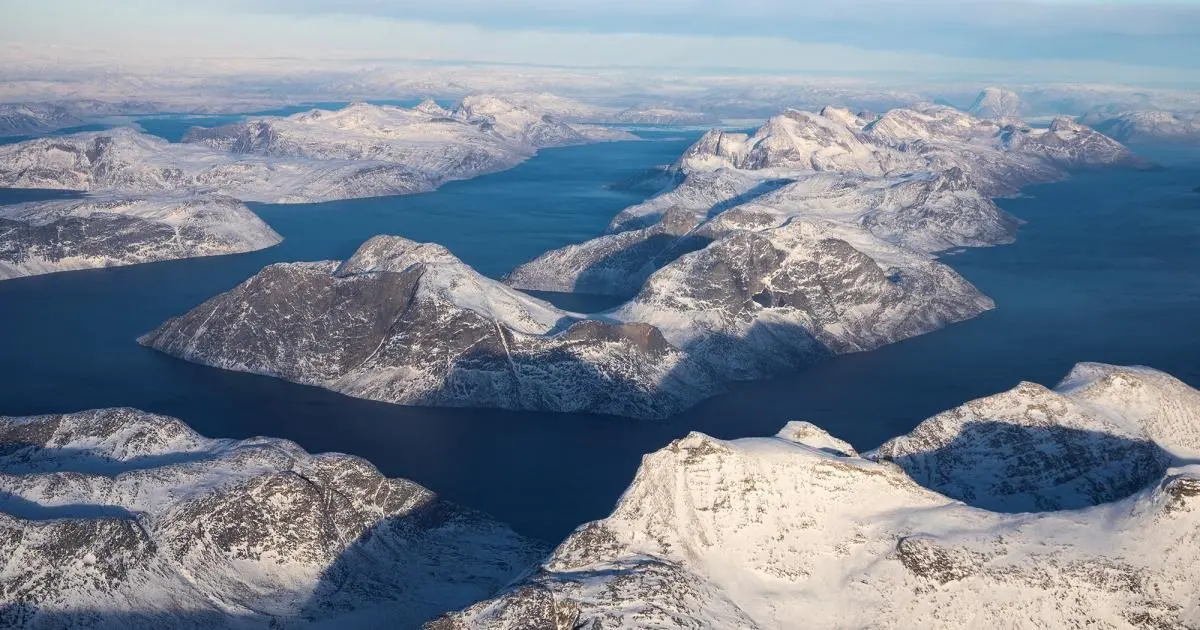
A recent trilateral agreement struck this week between Greenland, Denmark, and the United States illustrates this vital point with sharp clarity. After months of intense and delicate negotiations, the three parties finalized a symbiotic deal that formally codifies U.S. military access while concurrently affirming Danish and Greenlandic self-governance. U.S. President Donald Trump has publicly hailed the arrangement as a major win for American strategic interests, while officials in Denmark and Greenland have similarly framed it as a major victory for local sovereignty. Both assertions hold true, as nearly every mission that renders Greenland strategically indispensable to Western defense—including early missile warning, submarine detection, forward basing, and complex resupply operations—only functions successfully because the United States is deeply embedded within a cooperative alliance system.
This milestone agreement could ultimately mark a critical turning point in how Washington approaches Arctic security architecture. Early in his tenure, Trump’s provocative rhetoric regarding the potential acquisition of Greenland or making Canada the 51st U.S. state cast self-reliance as the ultimate national goal, inadvertently straining relations with key Arctic partners. By contrast, this new trilateral agreement signals a far more pragmatic and productive direction. Working closely with established allies preserves the distinct strategic advantages the United States already holds while actively closing the critical gaps—in both physical presence and allied political unity—that geopolitical adversaries are eagerly waiting to exploit.
However, fully embracing the indispensable role that allies and partners must play for the United States to achieve its strategic objectives in the Arctic will require a fundamental shift in a long-held national mindset. For Washington, pursuing true strategic interdependence has historically been an uncomfortable endeavor. Complete self-reliance remains deeply associated with the traditional projection of national power, and U.S. policymakers have historically approached Arctic shortfalls by reflexively asking what additional unilateral capabilities the Pentagon needs to generate.
Decades of relative political deprioritizing in the Arctic, however, compounded exponentially by the region’s vast, forbidding, and unforgiving geography, leave the United States with little viable choice other than to work hand-in-hand with trusted partners. In practice, the interdependence that Washington needs to cultivate with its allies in the Arctic is a reality mirrored in almost every other theater—and the urgent task now is to systematically build upon that foundation.
Seeing Together
The United States’ basic operational ability to observe, understand, and communicate what is transpiring across the massive Arctic region depends entirely on reliable partnerships. Comprehensive Arctic domain awareness remains uniquely fragmented across three distinct geographic regions: North America, Europe, and the Pacific. This critical information is further dispersed across a bewildering variety of militaries, scientific institutions, intelligence agencies, and local Indigenous communities, whose ancestral knowledge of the rapidly changing environment far exceeds the capabilities of any newly deployed sensor.
Since the early 1960s, shortly after the creation of the binational U.S.-Canadian North American Aerospace Defense Command (NORAD), the United States has intentionally based some of its most vital strategic missile-defense systems deep within Canadian and Greenlandic territory. Because of persistent coverage gaps in its own domestic sensor architecture, the United States now relies heavily on a Japanese satellite to accurately detect the fluctuating extent of Arctic sea ice, a metric that is completely integral to understanding the evolution and viability of commercial and military sea routes.
Furthermore, the United States depends on continuous allied monitoring over the European Arctic to properly evaluate emerging threats approaching American territory, as well as on allied geopolitical judgment to correctly interpret competitors’ long-term intent in the Far North. Nordic nations possess decades of accumulated experience observing the operational behavior of the Russian military around the Kola Peninsula, which serves as the home base for a vast majority of Moscow’s strategic nuclear capacity. Their meticulous observations remain utterly indispensable to Washington’s ongoing ability to accurately distinguish between routine military patrols and genuinely escalatory behavior. The United States, for its part, contributes critical intelligence by monitoring patterns of Chinese and Russian naval activity near Alaska that European allies might otherwise miss.
While the United States already gains a substantial amount of visibility from its partners in the Arctic, these surveillance and data systems are not always engineered to connect seamlessly across different geographies and organizational stakeholders. NORAD and NATO, for instance, each maintain a vital piece of the overall Arctic picture, yet vital intelligence information and tactical communications do not flow effortlessly between them.
Addressing this structural problem does not require the creation of one monolithic operational picture or the surrendering of control over sensitive national security information. Instead, it requires the United States to play the same standard-setting role it has historically maintained to keep allied military systems interoperable. That imperative matters even more today as individual allies independently construct their own sovereign sensors and communications networks. At the same time, scientific cooperation demands a similarly intentional and collaborative approach. Because the Arctic is warming and changing faster than anywhere else on Earth, ongoing climate and environmental research is increasingly integral to understanding daily operating conditions—ranging from submarine sonar performance and search-and-rescue response times to escalating wildfire risks.
Moving Together
The absolute necessity of U.S. reliance on partners in the Arctic becomes even more pronounced whenever Washington needs to maneuver forces into the region. The nation faces a distinctive and intractable geographic dilemma: it seeks to project military power into both the Atlantic and Pacific sectors of the Arctic, yet Alaska remains its sole sovereign Arctic territory. Everywhere else across the sprawling North Atlantic and European Arctic, America’s strategic reach runs exclusively through its allies.
Over many decades, the United States has invested considerable effort in building and maintaining that necessary access. A vivid historical example occurred in 2018, when the aircraft carrier USS Harry S. Truman conducted the first U.S. carrier strike group operation in the Arctic since the end of the Cold War. The formidable warship entirely depended on Norwegian and wider NATO logistics networks for resupply, as well as the natural shelter of Norway’s deep fjords when a severe storm suddenly swelled open-sea waves to 30 feet.
Similarly, in 2023, Iceland made the historic decision to allow a U.S. nuclear-powered attack submarine to sail into its territorial waters to receive vital supplies and conduct a crew exchange for the first time. The following year, Finland, Norway, and Sweden signed sweeping defense cooperation agreements that granted the U.S. military routine access to dozens of strategic sites across their territories.
Crucially, these bilateral and multilateral agreements were never mere favors granted to Washington. They reflected a clear-eyed calculation by Nordic states that a sustained U.S. military presence, advanced equipment, and reliable resupply networks significantly strengthen overall deterrence against Russian aggression. They also stem from a pragmatic recognition that allied geography and U.S. military capacity are exponentially more valuable when joined together.
The United States does not need to maintain a physical presence everywhere in the Arctic; indeed, the physical and economic reality is that it simply cannot. Even as the Pentagon deepens its operational ties with allied Arctic militaries, Washington should empower its regional partners to take primary responsibility in areas where they are naturally best positioned to act. This approach would constitute a deeply meaningful and effective form of burden sharing within the NATO alliance.
For instance, Norway and other Nordic states have already taken the lead in investing heavily in essential infrastructure, maritime platforms, and specialized sensors to monitor aggressive Russian hybrid activities—such as undersea cable sabotage and deliberate GPS jamming—along the northern maritime approaches to the Atlantic. Sharing this vital security burden would allow the United States to concentrate a greater share of its attention and financial resources on Alaska and the Pacific Arctic, where decades of systemic underinvestment continue to affect nearly every category of local infrastructure, including deepwater ports, icebreakers, runways, energy grids, and search-and-rescue facilities.
Building Together
Beyond the pressing need to think creatively about regional access, the Arctic offers an expanding array of opportunities to advance collective allied industrial capacity. This includes highly specialized domains like space programs and heavy icebreakers, which Washington has historically treated as exclusive symbols of sovereign national power. Many advanced Arctic systems are unusually specialized and extraordinarily expensive, requiring an industrial base and technical expertise that very few individual countries can sustain entirely on their own.
Icebreakers are a primary case in point. After struggling for years through repeated delays and financial hurdles to rebuild its own aging domestic fleet, the United States finally turned to Canada and Finland in 2024 to cooperate on pooling shipyards, technical knowledge, and specialized labor. Over time, this collaborative effort will not only create much-needed maritime presence in northern waters but will also actively help rebuild depleted U.S. shipbuilding expertise and strengthen the broader allied industrial base.
Washington should fully embrace this cooperative model rather than treating it as a rare exception to the rule. U.S. leadership could spearhead the development of a comprehensive Arctic industrial strategy that draws upon the absolute best capabilities available across the entire alliance. Doing so would allow the United States to leverage its own robust defense industrial base while continuing to shape the technical standards and interoperability that make allied systems function smoothly together.
Clear, pragmatic opportunities for such a strategy already exist. Washington could easily facilitate collaborative architectures for secure Arctic military satellite communications, ensuring that allied nations can interact seamlessly during a crisis. It could invite select key allies—with Canada as an absolute minimum—to participate directly in the ground- or space-based operational elements of broader missile defense initiatives, thereby extending the coverage and physical redundancy that allied geography naturally provides.
Furthermore, Washington could coordinate closely with northern allies on producing specialized cold-weather gear uniquely tailored to the harsh North American Arctic climate, generating significant cost-sharing benefits. It could pool crucial scientific research for advanced energy technologies—such as cold-hardened batteries and small modular reactors—that would dramatically enhance troop operational reach while offering isolated off-grid communities a reliable alternative to costly diesel generators. Finally, Washington could pursue critical mineral development, processing deals, and strategic stockpiling agreements to shore up fragile supply chains that underpin a vast array of new technologies.
Such a collaborative industrial strategy would not require the United States to become dangerously dependent on single foreign suppliers, nor would it demand the creation of sprawling, bureaucratic multinational procurement programs. Instead, the United States and its trusted allies would simply make deliberate, rational choices about what each nation is best equipped to build, what they should buy from one another, and where developing capabilities jointly makes far more economic and strategic sense than duplicating scarce engineering expertise.
Join or Die
America’s primary geopolitical rivals already fully understand the inherent value of Arctic cooperation. Although Russia exercises sovereign control over roughly half of the entire Arctic coastline, Moscow is increasingly turning toward Beijing for financial capital, infrastructure development, satellite-based navigation and positioning support, and collaborative scientific endeavors in the region. While these two powers have no absolute guarantee that their long-term strategic interests will align indefinitely, they are deepening their institutional and economic interdependence in the Arctic regardless.
By contrast, the United States begins from a vastly more advantageous geopolitical position. It possesses a network of capable allies across the Arctic and beyond whose unique geography, localized expertise, infrastructure, and industrial capabilities directly complement its own. If organized intentionally, these alliances will transform into an indisputable source of strategic strength.
Operational cooperation among Arctic allies is arguably at an all-time high. Ongoing Nordic military integration, expanded NATO strategic planning, and newly forged industrial partnerships have created unprecedented opportunities for collective action. However, the United States’ ability to fully capitalize on these opportunities depends entirely on sustaining deep political trust—both with allied capitals and with local Indigenous communities, whose traditional knowledge and voices remain integral to any enduring decisions regarding the region’s future.
Historically, Washington has periodically tested this precious trust. During moments of diplomatic friction, such as when the United States temporarily suspended intelligence sharing with Ukraine, several Arctic allies quietly moved to accelerate investments in their own sovereign satellite and surveillance capabilities explicitly to reduce their long-term dependence on Washington. Other partners have similarly sought ways to diminish their reliance on sensitive U.S. defense technologies. Furthermore, in the wake of early rhetoric regarding Greenland, even closely aligned capitals have privately wondered whether reliance on U.S. military access could eventually become a source of political leverage rather than genuine reassurance.
This is precisely why political cohesion must be treated as an absolute pillar of operational military capability. The reflexive domestic instinct to maximize unilateral U.S. control and freedom of action can inadvertently produce the exact opposite effect if it progressively weakens the diplomatic relationships upon which all effective U.S. action depends. The United States does not become more powerful in the Arctic by making its allies less willing to share vital intelligence, grant strategic access, or build side-by-side.
Critics of strategic interdependence may argue that relying on foreign sovereign partners inherently creates its own distinct vulnerabilities—such as the risk that a partner might fail to share intelligence quickly enough, deny operational access when requested, or lack sufficient capacity during a crisis. Yet, pure self-sufficiency carries its own severe risks, particularly when that self-sufficiency exists more as political rhetoric than as an operational reality. A United States that talks like a dominant Arctic power without the physical capabilities to match is inherently weaker than one that relies deliberately and transparently on trusted allies.
Since the United States first unveiled its official Arctic Strategy in 1994, successive administrations have espoused grand visions for the region, repeatedly promising to protect both national interests and the fragile environment. Yet, multiple administrations over the course of three decades have never fully resourced these ambitious plans. While this pattern reflects the reality that the Arctic has rarely been Washington’s sole global priority, it is a dangerous shortfall that the United States can no longer afford to maintain as the region undergoes rapid environmental change and competitors aggressively move to fill the void.
A hardheaded realist reading of modern history leads to one inescapable conclusion: Washington’s overarching ambitions in the Far North can only be achieved by relying heavily on its partners. In the unforgiving Arctic, the cold reality is that the future will ultimately be shaped by the coalition best able to act in concert, not by the single country that attempts to guard its sovereignty entirely alone.