Berlin-based climate tech innovator Dryad Networks has been awarded $800,000 in the prestigious XPRIZE Wildfire competition, recognizing the exceptional performance of its Silvanet sensor network and Silvaguard drones during the grueling Autonomous Wildfire Response finals held in the wilderness of Alaska.
The achievement marks a major milestone in a grueling, four-year global competition that originally began with roughly 300 international entrants. In June 2026, the field was narrowed down to three elite finalists tasked with an exceptionally demanding objective: autonomously detecting and completely suppressing a high-risk wildfire within just 10 minutes of ignition across a sprawling 1,000-square-kilometer (approximately 386 square miles) expanse of remote Alaskan terrain. Competing systems also had to successfully distinguish between real threats and decoy fires, leaving the decoys entirely untouched.
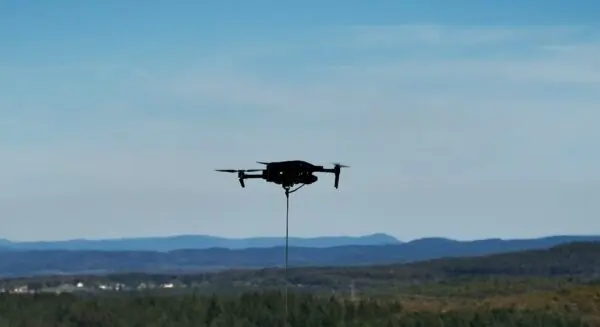
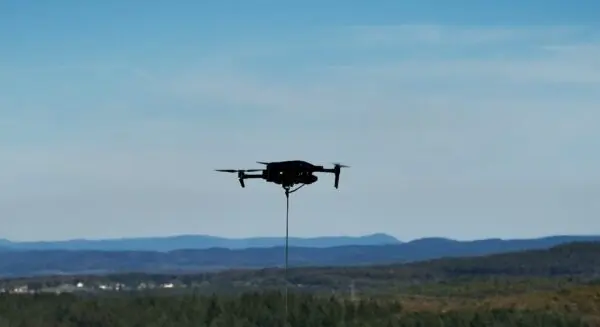
During the high-stakes operational tests, Dryad’s Silvanet sensor network successfully detected and verified the target fires in 12 minutes or less, instantly triggering an autonomous response while completely bypassing the decoy targets. Once the alert was raised, the Silvaguard Observation Drone was deployed to provide vital situational awareness, immediately followed by a Suppression Drone that delivered a targeted payload of fire suppressant directly to the ignition site.
The XPRIZE Wildfire judging panel ultimately distributed a total of $2.5 million across the three Track B finalist teams, a group that also included Fire Foresight and the AURA Foresight team. In Dryad’s specific case, the judges praised the company’s deployment of a 170-sensor persistent Silvanet field network seamlessly integrated with Silvaguard drones, noting that the combination successfully demonstrated true end-to-end autonomy in a harsh, real-world environment.
“This award is a tremendous external validation of our technology and vision,” said Carsten Brinkschulte, chief executive officer and co-founder of Dryad Networks. “Our vision is fully aligned with XPRIZE Wildfire: detect and extinguish fires within 10 minutes of ignition. To achieve this, fires must be detected within minutes, ideally during the smoldering phase before open flames appear and spread rapidly.”
Brinkschulte emphasized that ultra-early detection serves as an absolute prerequisite for effective autonomous suppression. While aerial drones possess the capability to suppress a small, localized ignition, their inherently limited payload capacities render them largely ineffective once a wildfire has grown out of control and expanded across a landscape. By contrast, Silvanet is engineered to catch a fire while it remains microscopic, allowing Silvaguard to verify, precisely locate, and suppress the threat autonomously before disaster strikes.
At the core of the detection architecture is Silvanet, which utilizes solar-powered, AI-enabled gas sensors acting as an advanced "electronic nose." These specialized sensors are capable of identifying the distinct chemical signatures of a wildfire within minutes of ignition. Because the devices are engineered to form a robust, solar-powered mesh network, they maintain the ability to communicate across vast distances deep inside dense forests, operating entirely off-grid and independently of traditional mobile networks. Dryad has already scaled up its manufacturing operations significantly, producing more than 40,000 sensors to date, including recent major deliveries of 10,000 units to France and over 7,000 units to Italy.
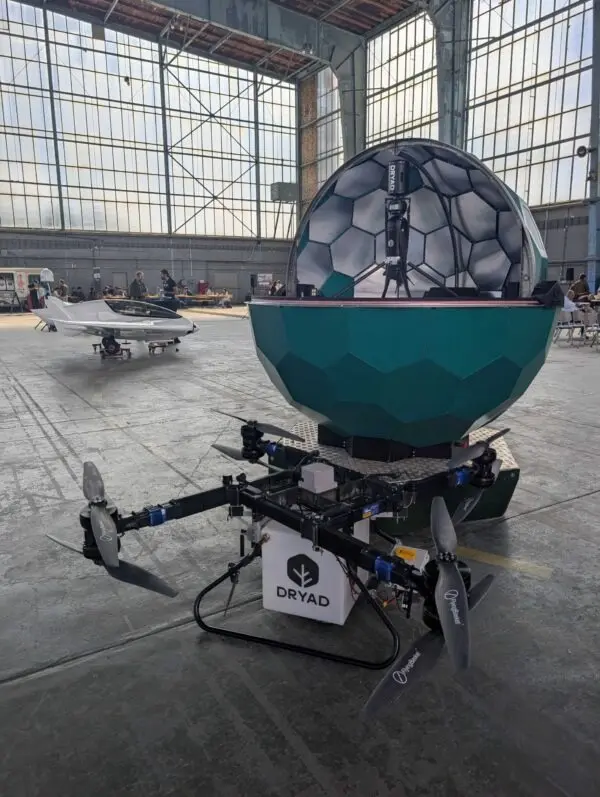
Silvaguard extends this initial detection capability into a fully automated physical response. When an individual sensor in the mesh network detects a threat and triggers an alert, an Observation Drone launches automatically from its station. Using a combination of advanced infrared and optical cameras, the aircraft verifies and geolocates the fire with pinpoint accuracy. Immediately afterward, a Suppression Drone deploys, carrying up to 100 liters—roughly 26 gallons—of suppressant to douse the flames. Notably, both aircraft operate entirely without a human operator in the loop. Dryad designed the entire system to be housed in solar-powered protective hangars strategically positioned throughout forested areas, ensuring the drones remain continuously charged and ready to respond at a moment’s notice.
Path to Commercial Availability
Building upon the momentum and validation gained from the XPRIZE competition, Dryad is now preparing to make significant investments into the productization of the Silvaguard system. Operational pilots for the technology are officially planned for 2027, with full commercial availability targeted for rollout by 2028.
“Wildfires are a race against time,” Brinkschulte noted. “Instead of building bigger machines to fight bigger fires, our goal is to prevent fires from becoming big in the first place. XPRIZE has provided powerful validation that autonomous wildfire response can make that vision a reality.”
Following the conclusion of the competitive testing phase, the XPRIZE Wildfire initiative is now transitioning into an Impact Phase. This next stage is heavily focused on translating the most promising, innovative technologies evaluated during the competition into durable, deployable solutions for real-world wildfire management and prevention. Additional information regarding Dryad Networks and its ongoing technological developments can be found directly through the company’s official channels.